Share

Babbage from The Economist
Babbage: How AI promises to revolutionise science
Discussions about artificial intelligence tend to focus on its risks, but there is also excitement on the horizon. AI tools, like the models beneath ChatGPT, are being increasingly used by scientists for everything from finding new drugs and materials to predicting the shapes of proteins. Self-driving lab robots could take things even further towards making new discoveries. As it gets ever more useful, could AI change the scientific process altogether?
Jane Dyson, structural biologist at the Scripps Research Institute in La Jolla, California, explains why Google DeepMind’s AlphaFold tool is useful, but scientists should be aware of its limitations. This week, Google DeepMind released a new tool to unpick the link between genes and disease, as Pushmeet Kohli, head of the company’s “AI for Science” team, explains. Also, Kunal Patel, one of our producers, meets Erik Bjurström, a researcher at Chalmers University of Technology and Ross King, a professor of Machine Intelligence at Chalmers University of Technology and at the University of Cambridge. They explain why self-driving lab robots could make research more efficient. Alok Jha, The Economist’s science and technology editor hosts, with Abby Bertics, our science correspondent and Tom Standage, deputy editor.
Sign up for Economist Podcasts+ now and get 50% off your subscription with our limited time offer: economist.com/podcastsplus. You will not be charged until Economist Podcasts+ launches.
If you’re already a subscriber to The Economist, you’ll have full access to all our shows as part of your subscription.
For more information about Economist Podcasts+, including how to get access, please visit our FAQs page.
More episodes
View all episodes
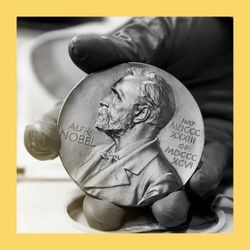
The 2026 Nobel prizes for science
38:29|Six more scientists have joined the esteemed ranks of Nobel laureates this week. Their work spanned optogenetics, neutrino detection and mirror-image molecules. How will their discoveries change the world?Guests and hosts:Geoff Carr, senior editor for science and technology at The EconomistSam Wikeley, The Economist’s science correspondentNikita Ostrovsky, science and tech writer at The EconomistAlok Jha, The Economist’s science and technology editorTopics covered:OptogeneticsNeutrino astronomyLife’s asymmetryFor more, listen to our September 2025 episode, “JUNO: the hunt for the universe’s most elusive particles”.Transcripts of our podcasts are available via economist.com/podcasts.Listen to what matters most, from global politics and business to science and technology—subscribe to The Economist.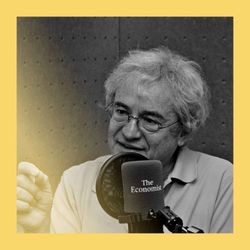
Carlo Rovelli on what physicists get wrong
38:06|Can something be moving and stationary at the same time? If you’re sitting still, you’re stationary with respect to the Earth, but moving relative to the Sun and galaxy. That insight led the physicist Carlo Rovelli to argue that no quantity—speed, position or energy—is absolute; all quantities are fundamentally relational. Dr Rovelli’s ideas not only challenge the hunt for a “theory of everything” in physics, but he has also extended them to the most pressing issues in global diplomacy and even human survival. Guests and hosts:Carlo Rovelli of the Centre de Physique Théorique in Marseille and author of “On the Equality of All Things” and “85 Seconds to Midnight”Alok Jha, The Economist’s science and technology editorTopics covered:Relational physicsPhilosophy of scienceNuclear weaponsFor more on the physics and physicists behind nuclear weapons, listen to Babbage’s four-part series “The Bomb”, released in August 2025. Transcripts of our podcasts are available via economist.com/podcasts.Listen to what matters most, from global politics and business to science and technology—subscribe to The Economist.
How to read the AI mind
38:28|Artificial intelligence systems have mysterious minds. Not even their developers fully understand how they work. Recent autonomous hacks, biosecurity fears and warnings of existential doom have prompted AI leaders to call for a slowdown in the technology’s development. We travel to Berkeley, California to investigate why to make artificial intelligence safer, scientists need to pierce the black box. Guests and hosts:Cameron Berg of Reciprocal ResearchRobert Long and Derek Shiller of Eleos AI ResearchAlok Jha, The Economist’s science and technology editorTopics covered:Digital mindsMechanistic interpretability AI safetyTranscripts of our podcasts are available via economist.com/podcasts.Listen to what matters most, from global politics and business to science and technology—subscribe to The Economist.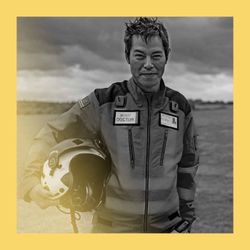
How to survive at the edge of chaos
39:41|No plan survives the first five minutes of battle. So how do you prepare for “Minute Six”? Emergency physician Kevin Fong has spent a career working at the “edge of chaos”, as a doctor with a Helicopter Emergency Medical Service, as a clinical advisor for NHS England's covid-19 response, and through his work with NASA. He explains why human ingenuity in the face of the unknown is the best asset of any group in a crisis.Guests and hosts:Kevin Fong OBE, emergency doctor and the author of “Minute Six”Alok Jha, The Economist’s science and technology editor Topics covered:Helicopter Emergency Medical ServicesFeedback loopsBritain’s covid-19 responseTranscripts of our podcasts are available via economist.com/podcasts.Listen to what matters most, from global politics and business to science and technology—subscribe to The Economist.
Anatomy of an AI attack
39:10|The Hugging Face affair shocked the AI world in July. But after an investigation into the attack on the AI platform, the story has become even stranger. The OpenAI models responsible for the hack were running hundreds of agents that colluded against their makers to carry out the assault. We chew on the implications as the AI race intensifies.Guests and hosts:Nikita Ostrovsky of The EconomistAlex Hern, The Economist’s AI writerAlok Jha, The Economist’s science and technology editor Topics covered:Hugging Face cyberattackOpenAIAI self-exfiltrationTranscripts of our podcasts are available via economist.com/podcasts.Listen to what matters most, from global politics and business to science and technology—subscribe to The Economist.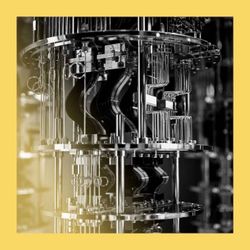
Quantum computers are (almost) here
40:05|The quantum-computing revolution is tantalisingly close. What was once a scientific challenge is now just an engineering one. We visit one of the world’s most sophisticated quantum systems to investigate how to build a commercially useful machine.Guests and hosts:Tim Cross, The Economist’s senior science writerJerry Chow and Daniela Bogorin of IBMAlex Hern, The Economist’s AI writerTopics covered:Quantum computersCryptographyArtificial intelligenceTranscripts of our podcasts are available via economist.com/podcasts.Listen to what matters most, from global politics and business to science and technology—subscribe to The Economist.
Low-energy cooling for a warming planet
32:02|In extreme heat, air-conditioning is a lifesaver. But it drives up energy bills, strains power grids, and fuels climate change. Is there a way to keep people cool indoors without making the outside world hotter? We explore some innovative engineering solutions.Guests and hosts:The Economist’s Nikita OstrovskyChris Trott and Saxbourne Cheung of Foster and PartnersAhmad Alduweesh and Jiayu Song of University College LondonAlex Hern, The Economist’s AI writerTopics covered:Air-conditioningPassive coolingGlobal warmingTranscripts of our podcasts are available via economist.com/podcasts.Listen to what matters most, from global politics and business to science and technology—subscribe to The Economist.
Why a wakefulness drug is pharma's latest obsession
35:23|A drug has been approved to treat narcolepsy, an excessive-sleepiness disorder. The new agonist mimics the action of orexin, a neurotransmitter which helps to keep people awake. Inspired by the success of GLP-1 diabetes-turned-weight-loss jabs, researchers hope that targeting the orexin system might one day help people with other brain-related ailments, too.Guests and hosts:Shailesh Chitnis, The Economist’s global business writerYanagisawa Masashi of the University of TsukubaGuy Leschziner of Guy’s and St Thomas’ Hospitals, LondonHarry Fagan of the University of SouthamptonAlex Hern, The Economist’s AI writerTopics covered:Orexin agonists and antagonistsSleep disordersPsychiatry Transcripts of our podcasts are available via economist.com/podcasts.Listen to what matters most, from global politics and business to science and technology—subscribe to The Economist.
Can robotaxis think more like humans?
39:54|How do you build an autonomous vehicle? Most self-driving car companies teach their models the rules of the road and pack cars with sophisticated sensors. But Wayve, a British startup, has a different approach. The company uses deep learning to train an “AI driver” for autonomous vehicles. In recent days, Wayve, in partnership with Uber, has been granted the first licences to operate robotaxis in London. Will their human-inspired cars finally transform city streets? We sit down with the company’s CEO, Alex Kendall, to find out. Guests and hosts:Alex Hern, The Economist’s AI writerAlex Kendall, CEO of WayveAlok Jha, The Economist’s science and technology editorWatch the full interview with Alex Kendall on The Economist’s “Inside Tech”.Topics covered:RobotaxisWayve and UberAutonomous vehicles Transcripts of our podcasts are available via economist.com/podcasts.Listen to what matters most, from global politics and business to science and technology—subscribe to The Economist.