Share
The Curator Podcast
14 - Will Gould and Ian Miles from Creeper
•
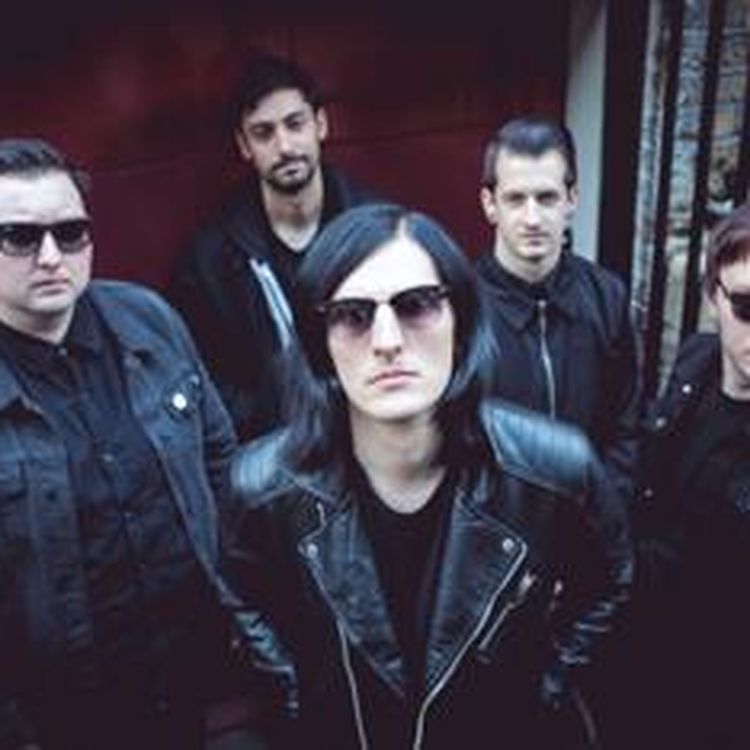
On this episode I have Ian and Will from Southampton goth punks Creeper. At first I thought this would only be a short chat but ended up being a fifty minute half drunken diatribe on Creeper, punk, DIY and all things related as we sat around a tent at Hevy festival. And it's awesome.
WARNING: I drop a "hard C". That is to say, I use the C-word.
Some back story for you.
When we arrived in Ashford, Kent, we procured a sizable cache of booze and jumped in a taxi bound for the campsite. Upon our arrival and much to my dismay, we found out that I was the only one on the guestlist for the festival. After contacting one of the site managers I managed to secure a pass for my compadre Craig and we made our way to the press area to pitch our tent.
Originally, I had agreed with Creeper’s PR person that I would interview them between 1.30 and 2pm. We didn’t get into the campsite until 1.30 and by the time we finished erecting our tent we had completely missed our allotted time slot.
Later that day, after I completed the hastily rearranged Fightstar interview, I bumped into Ian and Will and apologised for missing our interview slot. They suggested that we do it there and then, so after retreating to a safe area (outside our tent) and cracking open a crate of Fosters, we sat down and began talking.
What unfolded is one of the most natural, open ended and honest interviews so far. It’s also perhaps one of my favourites. I had no time to look out my questions because of the impromptu nature of it, but what happened when we sat down was, I think, a pretty remarkable conversation.
My sound man Craig does a lot of talking. Not that that’s not a bad thing. Just a notice for you.
Highlights include:
- Funeral for a Friend and some straight edge chat.
- Creeper write music using tea, a crap keyboard and researching the themes of their records.
- The Callous Heart is the culmination of an attempt to write a punk record they hadn’t heard before.
- Taking influence from Jim Steinman, his middle 8s and using a mellotron.
- “Borrowing” from Elvis Presley.
- “The Creeper Workshop” and how the band is very hands on about everything, particularly with references to the video for The Honeymoon Suite.
- Still DIY despite being on Roadrunner and how the label give them complete creative control.
- Having to adopt a character on stage to perform but walking a fine line between being pretentious and stepping outside of yourself.
- The character is basically like putting on someone else’s shoes.
- Playing with sincerity and appreciating where they are now.
- The gender and race gap in punk rock – how we need to sort out equality in the punk scene.
- How the key to touring is not to party every night.
- The chorus is the most important part of the song.
- Caring about song craft and and trying to be better songwriters.
- The Bouncing Souls, Alkaline Trio, My Chemical Romance and AFI and great choruses.
- The “relief” feeling of a good chorus.
- Appreciation of Bangers.
More episodes
View all episodes

28. S2: Episode 28 - Tom May from The Menzingers Drinks Mysterious Coffee and Talks About The Band's Creative Evolution
22:47||Season 2, Ep. 28I've chased this interview for years. The Menzingers are without a doubt one of my favourite bands. Having been a fan for so long, I feel as though I've grown up with them in a way, experiencing the weirdness of being in your 20s in an age where everything seems primed to keep us in a state of suspended adolescence. Their earnest and sincere songwriting won me over from the moment I first heard 'Chamberlain Waits', and I've stayed with them ever since. A lot of their thoughts echoed my own as I drifted through my 20s and into my 30s. It was surprising and wonderful to find out that their new album is a meditation on what it's like to move into your 30s, and I think that's got a lot to do with why 'After the Party' resonates with me so much.Tom is a very nice chap. Let that be said from the outset. Continuing to be humble in the wake of their continued success. In many ways, it feels like The Menzingers have been building up to 'After the Party', and as Tom discusses in the interview, they've looked at each record as the next one towards the perfect Menzingers' record. Perfection is impossible of course, but progress is not and it was really awesome to be able to spend some time talking to Tom about that progress, their drive to keep at when everyone was telling them to stop, and so much more. Also, I'm fairly sure the interview took place in the world's most echo-y room. But hey, ambience amirite?I hope you enjoy this interview.
Unsung Podcast Episode 5 - Entroducing by DJ Shadow
32:28|This is one of my favourite albums and I was so happy we had a chance to talk about it on this show. You can find out more about this and the podcast over at www.unsungpod.net
(Rebroadcast) 21 - Casey Crescenzo from The Dear Hunter
01:10:12|A rebroadcast of one of my favourite ever interviews with Casey from The Dear Hunter. This podcast is primarily about creativity, and over the course of the past twenty episodes I’ve spoken to some pretty productive people. Casey Crescenzo is probably amongst the most productive. Over the course of ten years The Dear Hunter’s oeuvre is as impressive in its scope as it is in its musical diversity, with their album/EP collection ‘The Color Spectrum’ comprising 36 songs all on its own. Which is wonderful, because the genre hopping nature of their music is about is staggering as the sheer volume. As you’ll find out when you listen to the podcast, Casey is the kind of guy who treats songwriting like a job and it’s this approach which many productive artists seem to share in common, whether they’re aware of it or not. Except, Casey is a super passionate and insightful guy, and is just so thankful that he gets to do what he does. There’s no lengthy story in this week’s show notes about how I first got into The Dear Hunter. Instead, all I can offer is rumination on their music – it’s deep, it’s cinematic, it somehow feels weighty. How people classify progressive rock music is anyone’s guess, but to me this just feels like epic rock music, and that’s why I’m drawn to it. It’s bursting with ideas, it’s driven by a strong sense of narrative yet still somehow feels hugely personal. They are, in just about every single way, the exact opposite of the punk rock that I grew up listening to. Except, their sound is more immediate than most prog bands. There’s a peppiness to the melodies which means that hooks come thick and fast, and never leave your head. Highlights include: - The connotations of the very term “prog rock” and the diversity of that genre - He tries not to pigeonhole the sound because it can limit the creative scope - The music he grew up on sounds nothing like his band - Casey thinks that perhaps one of the reasons they aren’t a huge band is because they aren’t in a specific genre - Coming from a creative household and when Casey remembers wanting to be a guitar player/songwriter - When people who consider themselves high art conduct interviews like they’re special, I never look at myself like that. I just think, this is a way for me to speak. - Parents being receptive to being a musician, but also being wary because they’d seen the pitfalls of being a career musician - His parents worry more about Casey when he does something different as opposed to worrying about the pressure of the work - “Do the thing that you believe you should do – don’t worry about what they’re going to think until it’s too late” - “The moment when I worry about people think is when an album is finished, mastered and ready to go out” - On the fear of having your art accepted - “As a creative person it should only be self-expression, but that’s the scariest thing: if you’re doing it only out of self-expression, at some point it goes through a filter and becomes a product…and it’s up to whoever buys it to think whatever they want about it.” - Wanting people to take away something from a record that you put into it, and hoping that the opposite doesn’t happen - Wanting to give people what they want after letting him do The Dear Hunter for ten years, but it doesn’t have any bearing on what he’s doing when he’s doing it – only after the creation is complete does the hope and fear set in - It’s taken a lot of hard work to find an audience for The Dear Hunter - It’s good that there are musicians out there that still makes music that makes people think and isn’t all about creating hits - Music as a product is okay, but it’s a different world from the kind of world bands like The Dear Hunter operate in where people want music that provides them a little bit more - The discipline of creating music and treating it like work comes from his parents - The feeling of euphoria after completing a piece of work is worth any amount t...
Unsung Podcast Episode 4 - Violator by Depeche Mode
38:51|This is episode four of Unsung Podcast. Violator by Depeche Mode is one of my favourite albums, and I was so stoked that people voted it into our canon. You can listen to it here and find out more information about the podcast over at www.unsungpod.net
Unsung Podcast Episode 3 - Foo Fighters by Foo Fighters
36:12|On this episode of Unsung we chat about Foo Fighters' self titled debut album and ask if it's really worthy of inclusion in our canon of classic albums. On this particular occasion, the public voted no (I'm releasing these a week behind our main feed), but you can still voice your opinion on if that's the right or wrong call over on our Facebook page.If you want to know more about the podcast head to www.unsungpod.net and subscribe to our feed there. As ever, reviews and comments are appreciated!
27. S2: 27 - The Return of Conor Anderson from Dialects, Talking About the Creative Process Behind Their Debut Album and Much More
40:13||Season 2, Ep. 27I like looking in on previous guests with this podcast. It's good to check in and see how things have been.We’re back to the start with this one. Conor was my first guest on this podcast, and with the release of their long anticipated, and slightly delayed, debut album, it seemed only fitting to bring him back on to the show so we could talk about their fortunes in the two and a half years since our previous conversation.Things have changed for the band since our first chat. They’ve lost members, gained new ones, toured extensively, recorded in legendary surroundings and went through all the different stages a new band goes through as they find themselves and their sound.Talking to Conor made me realise how far we’ve both come since this wee podcast began. Our approaches to our creative ventures have changed over the years but we’re still in it, doing our own things, learning as we go along and absorbing new information in the process. In the whole time I’ve been doing this podcast Dialects are the only band I’ve featured who I’ve known since the beginning of their career.It’s been great to see his band grow. I’ll never forget our first chat in the back of their tour van. It’s exciting to follow the growth of a band from the beginning, to see them realise the potential that you always presumed they had.Makes you wonder if it’s the same for everyone.I hope you enjoy this conversation.
Unsung Podcast Episode 2: Jane Doe by Converge
38:21|This is episode two of Unsung Podcast, a new podcast that I'm a co-host on.We're asking you to listen to Jane Doe by Converge and vote on if you think it should be added to a discography of all time great records. You can vote on this episode by going to https://www.unsungpod.net/episodes/2017/12/21/episode-2-jane-doe-by-converge
26. S2: 26 - P.O.S Tours Europe Using Trains
32:00||Season 2, Ep. 26Back in my car for this interview. This time it was on a freezing December night where the thermostat was definitely in the minus figures, so when we got inside I turned the engine on and the AC up to get some heat into the damn thing. You can probably hear that in the interview. I think it lends it a certain ambiance. You are, of course, welcome to disagree.P.O.S approaches hip hop in a punk rock way. I initially heard him when a friend turned me onto his song ‘De La Souls’, which features Greg from The Bouncing Souls. This was around the time Never Better came out. I got both Never Better and Audition on the same day and was impressed by his approach. Those two albums are mostly loud and abrasive, and both feature contributions from punk rock singers (as mentioned, Greg from the Bouncing Souls, and Jason from Kid Dynamite on a track called ‘Terrorish’ on Never Better). I read an interview at the time which said he was just making hip hop people could skate too. That sums up a lot of what Audition and parts of Never Better sound like. It’s loud, brash, snotty and in your face.We Don’t Even Live Here came next and he’s right when he calls it a dance party. It’s mostly electronic and it goes hard. It seemed a bit of a left turn to begin with, but like everything else it’s got the same abrasive nature.His new record chill, dummy is a lot more laid back. It’s also great and we do harp on about closer Sleepdrone/Superposition at length in this interview. I’ve never heard a hip hop song – or any song – like it.I met him a couple of times when he hit Glasgow to support Never Better. He was the consummate gentleman, of course, and I was just as impressed with his work ethic and ethos as I was his music. When I was thinking of guests I wanted on this podcast before I begab, he was definitely up there. So in a way, talking to him fulfils another long held dream I had for this podcast.Goals. We all gotta have em.And so we move to this interview, which is certainly up there with some of the most fun ones I’ve conducted. He was so up for it, really game for a chat and having a bit of a laugh. The whole thing is easy and flows really well. I didn’t even get to look at my questions, instead just riffing as I went. That’s how I know it’s a good interview.I hope you enjoy it.
TEASER - Unsung Episode 1
02:06|In league with a couple of fine gentlemen named Chris Cusack and David Weaver, I've started a new podcast called Unsung. In it we'll be dissecting perceived classic albums and discussing whether or not they deserve to be inducted into a discography of all time great albums. Then we'll be turning it over to you, the general public, to vote on if we're right or wrong. We'll also occasionally be covering some records we think are classics and are overlooked, and telling you why we think you should listen to them.