Share
The Big Idea
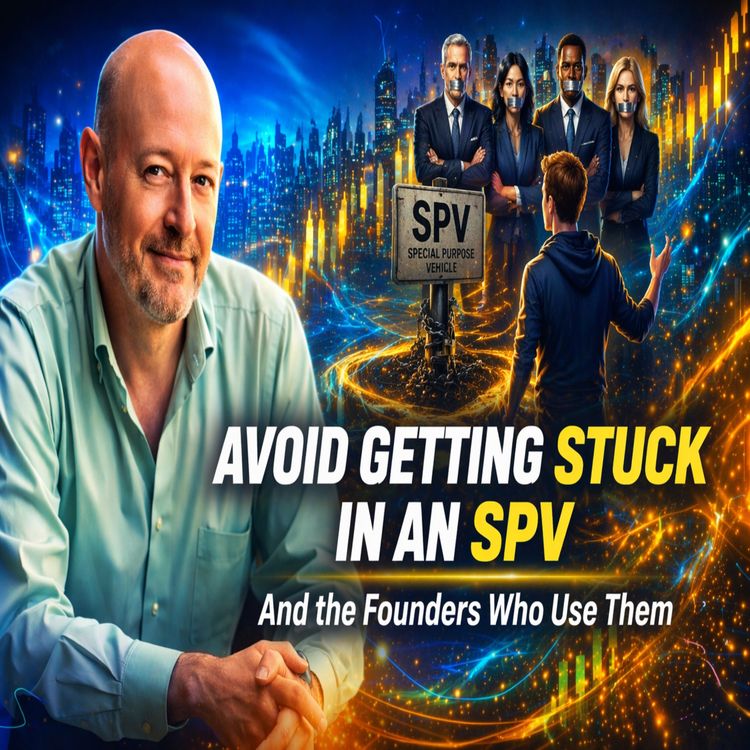
Avoid Getting Stuck in an Special Purpose Vehicle
This deep dive demonstrates that Special Purpose Vehicles (SPVs) are often unnecessary tools that benefit founders at the expense of investor rights and transparency. According to David Duccini, the common belief that a large cap table scares away future funding is a myth used to manipulate entrepreneurs into adopting restrictive structures. Instead of using SPVs, companies can manage large numbers of backers by utilizing non-voting stock classes and professional transfer agents to maintain control without sacrificing efficiency. Duccini warns that SPVs create conflicts of interest and double the administrative burden while potentially stripping investors of their ability to vote or protect their interests. Ultimately, he suggests that investors should reject these entities and instead seek direct ownership in companies that value their supporters.
More episodes
View all episodes

11. The Founder Integrity Test
20:27||Season 1, Ep. 11Investment professional David Duccini introduces the Founder Integrity Test, a provocative concept that questions the character of entrepreneurs who seek capital from strangers while refusing to approach their own friends and family. He argues that founders who avoid their inner circle due to a fear of failure are demonstrating a "sociopathic" double standard by being willing to risk an outsider's money but not that of people they love. This reluctance often reveals a lack of conviction in the business or a desire to avoid personal accountability if the venture collapses. Duccini suggests that raising funds is the process of converting social capital into financial capital, starting with those who already trust the founder. Ultimately, he asserts that a founder’s inability to pitch to their own community signals a fundamental honesty issue that should warn professional investors away. Those who fail this test are often protecting their own egos from judgment rather than protecting their families from financial risk.
9. Warning: Beware of Pickpockets!
14:40||Season 1, Ep. 9In this deep dive we dig into the insights from David V. Duccini, the leader of Silicon Prairie, regarding the necessity of maintaining professional boundaries and valuation in business. Duccini argues that service providers must reject clients who demand "success fee only" arrangements, as refusing to pay an upfront retainer signals a lack of professional integrity. He utilizes a vivid analogy of a pickpocket at a nightclub to illustrate how such requests essentially ask the provider to subsidize the client's own financial risk. Furthermore, the text warns against offering discounts on initial sales based on the hollow promise of future work, as this often leads to long-term revenue loss. To protect one's brand, any price reductions should be clearly labeled as exceptional, one-time courtesies rather than a new standard. Ultimately, the source emphasizes that financial commitment from a client is a vital prerequisite for a legitimate and respectful business partnership.
8. Failed to Pivot
21:16||Season 1, Ep. 8In this episode we examine the fundamental reasons why startups collapse, challenging the conventional data provided by CB Insights. While industry lists often cite running out of cash as the primary cause of failure, the author argues that this is merely a symptom of deeper strategic errors. True failure stems from violating basic business principles, such as failing to address a verified problem for a customer base willing to pay. Founders often struggle because they ignore the necessity of maintaining a profitable price point that exceeds their operational costs. Ultimately, the source suggests that businesses do not just lose funding; they fail because they lack a sustainable value proposition.
7. Founder Fuel
12:15||Season 1, Ep. 7In this episode, Silicon Prairie Founder & CEO David V. Duccini outlines a strategic framework for entrepreneurial success by prioritizing the protection of Time, Money, Morale, and Focus. He describes these four pillars as Founder Fuel, warning that neglecting emotional health or allowing distractions can lead to catastrophic burnout. Duccini identifies external threats, such as predatory service providers and "emotional vampires," who drain these vital resources through unnecessary demands. To filter for high-potential investments, he utilizes a Venture Power Matrix that distinguishes true, profit-driven leaders from those pursuing vanity projects. Ultimately, he emphasizes that investable founders must demonstrate a disciplined commitment to solving real problems while maintaining the stamina to reach profitability. Sustaining a startup requires a vigorous defense of one’s personal and financial assets against those who offer little value.
6. Avoid Capital Punishment
24:46||Season 1, Ep. 6Founder and CEO of Silicon Prairie Capital Partners David V Duccini warns that inexperienced entrepreneurs often face severe legal penalties by soliciting investments on social media without proper regulatory exemptions. He identifies various predatory actors, including dishonest advisors and ineffective accelerators, that frequently exploit founders during the capital raising process. Successful fundraising relies on building social capital through "know, like, and trust" factors across three distinct waves of investors. To avoid wasting time, founders should verify a potential investor’s liquidity and interest in their specific business stage before meeting. Ultimately, the source emphasizes that people invest in individuals rather than just ideas, beginning with one's immediate personal network. Effective capital formation is framed as the strategic conversion of personal relationships into financial backing.
5. Pitch Slapped!
18:29||Season 1, Ep. 5This episode outlines the "High Five / Thumbs Up" method, a strategic framework developed by Silicon Prairie Capital Partners to help entrepreneurs craft effective investment pitches. This approach prioritizes a radical re-ordering of the traditional pitch deck, moving founder biographies to the end so that the core business logic takes center stage. To pass the initial screening, founders must demonstrate a transparent need for capital, a logical revenue model, and a realistic plan for returning funds to investors. The "High Five" portion focuses on five essential slides: identifying a genuine problem, analyzing current competition, highlighting a competitive advantage, detailing marketing strategies, and projecting a break-even timeline. By following this narrative structure, startups can move beyond "Cargo Cult Capitalism" and present a compelling hero’s journey that resonates with seasoned investors. The method ultimately shifts the focus from vanity metrics to validated hypotheses and practical execution.
4. The Silicon Prairie 1,000 Investor Challenge
19:40||Season 1, Ep. 4Silicon Prairie founder David Duccini is challenging the traditional venture capital model, which he criticizes as an ineffective and predatory "vampire" system that fails most entrepreneurs. He argues that founders should reject the myth of the "messiah" investor and instead utilize Regulation Crowdfunding to build a broad base of support. By leveraging modern securities laws and alternative trading systems, companies can achieve the benefits of going public without the restrictive control typically demanded by private equity firms. This Silicon Prairie blueprint emphasizes maintaining founder control through non-voting shares and utilizing technology to manage a large number of individual investors. Ultimately, the strategy advocates for financial independence by raising capital directly from the community to ensure long-term stability and liquidity.
3. How to Go Public in 2026
20:35||Season 1, Ep. 3This episode details how Silicon Prairie is redefining the process of becoming a public company by utilizing an Initial Crowd Offering (ICO). By leveraging specific SEC exemptions such as Regulation Crowdfunding, the firm allows founders to bypass traditional Wall Street hurdles and sell securities directly to the public. This strategy utilizes an Alternative Trading System (ATS) to provide investors with early liquidity through the trading of tokenized assets. CEO David Duccini suggests that these "mini-IPOs" empower entrepreneurs to maintain equity control and access capital without relying on venture capitalists. Ultimately, the text argues that this digital approach to finance offers a more efficient and accessible pathway for firms to transition into the public sphere.