
Latest episode
48. From the Heart, Tartuffe (Remixed), Jerker & Hay Fever
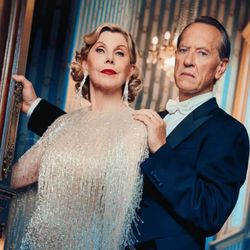
49:47||Season 6, Ep. 48This episode, we're covering four very different theatrical experiences, from an exclusive press-junket sneak peek at legendary lyricist Don Black's West End celebration From the Heart to a bold reimagining of Molière's Tartuffe, the provocative intimacy of Jerker, and Noël Coward's gloriously chaotic comedy Hay Fever.It's an episode packed with theatrical royalty, wicked humour, unexpected tenderness and some wonderfully questionable behaviour.Don Black's From the Heart - Press Junket Sneak PeekWe kick things off with a special behind-the-scenes visit to the press junket for Don Black's From the Heart, returning to the Garrick Theatre.Celebrating the extraordinary career of Oscar-winning lyricist Don Black, the show brings together much-loved classics from Sunset Boulevard, Aspects of Love and the James Bond films, alongside brand-new material. Featuring Clive Rowe, Caroline O'Connor, Michael D. Xavier, Shona McGarty and Frances Mayli McCann, this promises to be a celebration of one of musical theatre's greatest lyricists. We share a sneak peek at what's in store.Tartuffe (Remixed) Mark Rylance returns to the stage as the deliciously manipulative Pastor Blake in Tartuffe (Remixed), a vibrant reinvention of Molière's classic comedy.Adapted and directed by Darren Raymond, the action moves into a contemporary Nigerian–Jamaican household where family loyalties, religion and an impending wedding collide with one very convincing con artist. With Usifu Jalloh, Nakeba Buchanan, Suzette Llewellyn and Sara Mokonen among the terrific company, this is a bold, funny and surprisingly moving retelling.We discuss Rylance's remarkable ability to disappear into a character and why this 17th-century story about hypocrisy, greed and gullibility feels so wonderfully relevant today.JerkerProvocative, explicit and unexpectedly tender, Jerker by Robert Chesley returns in a 40th-anniversary production directed by Henry Adams.Set in 1980s America against the emerging AIDS crisis, two men begin a relationship through a series of increasingly intimate telephone conversations. Paul Dennison and James Lee play strangers whose sexual fantasies gradually reveal something far more vulnerable and deeply human.We explore how a play that initially appears to be about sex becomes a moving examination of connection, loneliness and queer history.Hay Fever And finally, theatrical royalty behaving very badly!Christine Baranski makes her West End debut opposite Richard E. Grant in Noël Coward's gloriously mischievous Hay Fever, directed by Emily Burns.Baranski plays the outrageously theatrical Judith Bliss, with Grant as her novelist husband David. Joined by Ophelia Lovibond, Will Close, Nancy Carroll and Charles Edwards, the wonderfully self-absorbed Bliss family and their unfortunate house guests embark on a weekend of flirtation, social embarrassment and spectacularly bad manners.We discuss whether Coward's century-old comedy still has the power to delight, and what happens when two major stars share the stage with an ensemble of accomplished comic performers.From Don Black's timeless lyrics and Mark Rylance's masterful deception to intimate late-night phone calls and Christine Baranski causing chaos in the country, it's another gloriously varied week at Theatre Audience Podcast.Four productions. Some extraordinary performers. And absolutely no shortage of drama.
More episodes
View all episodes

47. “I Am Not Nora”: Kirsten Shepherd
43:08||Season 6, Ep. 47What if one of theatre’s most famous female characters was inspired by a real woman whose own voice was subsequently pushed into the margins?In this episode, we’re joined by Kirsten Shepherd, Professor of English and Theatre Studies at the University of Oxford and leading Ibsen scholar, to uncover the remarkable story of Laura Kieler - the writer and friend of Henrik Ibsen whose personal experiences were transformed into the story of Nora in A Doll’s House, without her knowledge or permission.Kirsten’s research lies at the heart of Breach Theatre’s new production Burning Down the House, which brings Laura out of the footnotes and places her centre stage. We discuss Ibsen’s complicated legacy, the ethics of turning real lives into art, the silencing of women in literary history, and whether knowing Laura’s story changes the way we view A Doll’s House today.We also discover how Laura attempted to reclaim her own narrative through Men of Honour, the play she wrote in response to Ibsen’s actions, now being presented in English for the first time. A fascinating conversation about authorship, appropriation, feminism and who gets to tell our stories - and what happens when the person whose story has been taken finally gets to speak.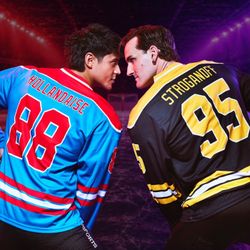
46. Deep-Heat Rivalry, The Mirror Crack’d, The Human Voice / The Seven Deadly Sins & Still Life
55:36||Season 6, Ep. 46This episode, we’re covering four wildly different theatrical experiences: a double bill of opera at Charing Cross Theatre, Noël Coward served with afternoon tea at Theatre Royal Drury Lane, an Agatha Christie mystery at the Mill at Sonning, and the gloriously outrageous Deep-Heat Rivalry at The Other Palace.The Human Voice / The Seven Deadly SinsOne woman, two operas and two very different journeys.Charing Cross Theatre brings together The Human Voice and The Seven Deadly Sins in a fascinating double bill exploring women pushed to their emotional limits.Francis Poulenc and Jean Cocteau’s The Human Voice unfolds through a single devastating telephone conversation as a woman speaks to her former lover for what may be the final time. It’s paired with Kurt Weill and Bertolt Brecht’s The Seven Deadly Sins, a biting satire infused with Weimar cabaret and American jazz, in which Anna is divided into two halves of the same soul and sent across America to earn enough money to build her family a home.We discuss two very different musical worlds brought together to create one intriguing psychological portrait.Still LifeBefore there was Brief Encounter, there was Noël Coward’s Still Life.Theatre Royal Drury Lane’s magnificent Grand Saloon is transformed into the refreshment room at Milford Junction station for an intimate, immersive production directed by Tam Williams.With afternoon tea served as part of the experience, the audience sits inside Coward’s world as Rachel Pickup and Alasdair Craig play Laura and Alec, two married strangers whose chance meeting develops into an intensely restrained love affair.Supported by Elizabeth Elvin, Antony Jardine and Seren Sandham-Davies, with music performed live by the company, this is Coward served with tea, sandwiches, longing and heartbreak.We discuss whether placing the audience right inside this quintessentially British love story makes its famous emotional restraint even more powerful.The Mirror Crack’dThere’s been a murder in St Mary Mead - which can only mean one thing: Miss Marple is on the case.Liza Goddard takes on Agatha Christie’s legendary detective in The Mirror Crack’d at the Mill at Sonning, adapted for the stage by Rachel Wagstaff.When Hollywood star Marina Gregg arrives in the village and throws a glamorous party at Gossington Hall, the celebrations end in murder. Secrets emerge, suspects multiply and Miss Marple begins piecing together what really happened.We discuss Goddard’s interpretation of Miss Marple, Sara Crowe’s turn as fading Hollywood star Marina Gregg, and a production directed by Jonathan O’Boyle that left us with plenty to talk about.Deep-Heat RivalryAnd then things get hot. Very hot.Deep-Heat Rivalry at The Other Palace takes the world of professional ice hockey, adds forbidden romance, powerhouse vocals, Shakespeare, tiny towels and an impressive quantity of innuendo - while proudly admitting to having absolutely no understanding of sport.Written and directed by Trevor Ashley, the outrageous parody follows hockey superstars Shane Hollandaise and Ilya Stroganoff, sworn rivals who discover that all that aggression might actually be disguising something considerably steamier.Sario Solomon brings enormous charm and vulnerability to Hollandaise, while Jason Leigh Winter knows exactly what he’s doing from the moment Stroganoff makes his deliciously sultry entrance. Diana Vickers lets rip as The Diva, delivering powerhouse vocals and fearless comedy, while Ross Chisari as Puck provides narration, Shakespeare and some scene-stealing one-liners.Filthy, ridiculous, unapologetically queer and enormous fun, we discuss why Deep-Heat Rivalry might just be one of the best Saturday nights out in London.From Poulenc and Brecht to Christie and Coward - before ending with sweaty hockey players ripping each other’s clothes off - you really can’t accuse us of lacking variety this episode.
45. In Conversation with Freddie Opoku-Addaie
36:57||Season 6, Ep. 45In this episode, we sit down with Freddie Opoku-Addaie, Artistic Director & Co-CEO of Dance Umbrella, London’s annual international contemporary dance festival.Freddie takes us through his journey from performer and choreographer to artistic leadership, reflecting on the experiences that shaped his creative voice and what changes when an artist becomes the person making decisions about whose work reaches an audience.We explore what he looks for when programming Dance Umbrella, the responsibility of championing new and underrepresented choreographic voices, how we can broaden our understanding of what contemporary dance can be, and the ongoing challenge of making dance genuinely accessible to wider audiences.Freddie also takes us inside Dance Umbrella Festival 2026, running across London and online this October. This year’s international programme brings together artists including Mamela Nyamza, Akram Khan, Omar Rajeh, Poliana Lima, Yinka Esi Graves, Arno Schuitemaker, Jack Anderson, Charlotte Mclean and Malin Lewis, with work exploring cultural inheritance, identity, community and the joy of gathering together through movement. A warm and wide-ranging conversation about dance, artistic identity, representation, leadership - and what it means to create space for the next generation of artists.
44. Crybabies, Jane Eyre & Man to Man
46:13||Season 6, Ep. 44This episode, we’re tackling three wildly different theatrical experiences: the bonkers horror-comedy of Crybabies: The Scaring at Soho Theatre, the musical adaptation of Charlotte Brontë’s Jane Eyre at Southwark Playhouse, and Tilda Swinton’s remarkable return to the stage in Man to Man at the Royal Court Theatre.Crybabies: The ScaringGenuinely scary one minute and completely ridiculous the next, The Scaring proves exactly why comedy trio Crybabiesbecame such a hit at the Edinburgh Fringe.Directed by Jon Brittain, this fast-paced horror-comedy sees the trio transform themselves into a gloriously chaotic collection of characters as an increasingly bonkers story unfolds. It’s inventive, unpredictable and performed with the kind of chemistry that comes from three comedians completely trusting one another - even when everything around them descends into madness.We discuss the joy of watching performers commit wholeheartedly to the absurd, how successfully the production jumps between laughs and genuine scares, and why this Fringe favourite feels right at home at Soho Theatre.Jane Eyre: The MusicalCharlotte Brontë’s literary classic gets the musical treatment at Southwark Playhouse in an ambitious new production with a book by John Caird and music and lyrics by Paul Gordon, directed by Caird alongside Megan McGinnis.There are definite echoes of Les Misérables in this sweeping retelling of Jane’s journey from a difficult childhood to her complicated relationship with Mr Rochester. Charlie Burn confidently leads a terrific ensemble as Jane, but one of the evening’s great discoveries is Emily-Rose Samuel, making her professional stage debut and proving utterly captivating as both young Jane and Adèle.We discuss the production’s strong performances, effective design and score, while asking whether trying to include quite so much of Brontë’s enormous story ultimately weighs the musical down. It’s beautifully staged - but could a little less Jane Eyre actually have given us more?Man to ManAnd finally, one of the theatrical events of the year.Tilda Swinton returns to the Royal Court in Man to Man, Manfred Karge’s extraordinary play translated by Anthony Vivis and revised by Stephen Unwin.From curtain up to curtain down, Swinton never leaves the stage. Surrounded by the props of the production inside Bunny Christie’s stark, brilliantly illuminated white box, there is nowhere for the performer to hide - and nowhere else for the audience to look.The result is an astonishingly exposed performance, filled with surreal theatrical choices, moments of complete stillness and an extraordinary connection between Swinton and her audience. We discuss her ability to actively listen to a room, the moments where actor and character seem almost to blur together, and a performance that deservedly brought the audience to its feet.With lighting by Ben Ormerod and the creative team reunited for this landmark revival as part of the Royal Court’s 70th anniversary season, Man to Man becomes more than simply an opportunity to see a major screen star on stage. It’s a reminder of what an exceptional theatrical performer Tilda Swinton is.And in a rare Theatre Audience Podcast occurrence, Darren and Natalie actually saw this one together - so they compared notes on an unforgettable night at the Royal Court.Three shows. Three completely different theatrical languages. From screams and silliness to Brontë and Swinton, there’s plenty to unpack.
43. Alexander Campbell
32:44||Season 6, Ep. 43The former Royal Ballet Principal joins us to talk about an extraordinary life in dance, leaving the stage behind and his vision for the future as Artistic Director of the Royal Academy of Dance.In this special In Conversation episode, Darren sits down with Alexander Campbell, Artistic Director of the Royal Academy of Dance, to explore a remarkable career that has taken him from a young dancer growing up in Sydney to the very highest levels of classical ballet.Alexander reflects on discovering dance, training at The Royal Ballet School and joining Birmingham Royal Ballet before returning to The Royal Ballet, where he rose through the company to become a Principal dancer in 2016.But what does it really take to sustain a career at that level? Alexander talks candidly about the discipline and pressures behind the apparent effortlessness audiences see on stage, the roles and performances that have stayed with him, and the enormous transition that comes when a dancer decides it's time to step away from performing.Now, as Artistic Director of the Royal Academy of Dance, Alexander is looking firmly towards the future. We discuss his ambitions for the organisation, nurturing the next generation of dancers, widening access to dance and how ballet can continue to evolve while respecting the traditions that have shaped it.It's a warm and insightful conversation about ambition, artistry, leadership and reinvention - and, above all, a lifelong love of dance.
42. The Gilbert Twins: Under the Influence
30:42||Season 6, Ep. 42In this episode, we’re joined by Carine and Frances Gilbert - The Gilbert Twins - identical twins, comedians, writers and content creators who have built an online audience of more than three million followers.After creating hundreds of viral comedy sketches, the twins are returning to their musical theatre roots with Under the Influence, their original musical comedy co-written with Shona Maule. Following a critically acclaimed run at the Edinburgh Festival Fringe, the show has now transferred to London’s King’s Head Theatre. And the inspiration behind it? They really did go to couples therapy together.We chat to Carine and Frances about what led two sisters into couples therapy, turning that very personal experience into comedy, and the strange reality of building a career around the relationship you’re simultaneously trying to understand.They open up about co-dependency, sisterhood and finding an individual identity when the world has always viewed them as a pair. We also explore the pressures of having millions of people watching online, the leap from 60-second sketches to telling a story on stage, writing about each other without destroying the relationship, and what Edinburgh audiences taught them about their own show.Plus, we discover whether there are limits to what they're prepared to reveal about one another - and ask the rather terrifying question: what happens if one twin gets the dream opportunity and the other one isn't invited?A funny, candid and wonderfully chaotic conversation about twinhood, therapy, social media, musical theatre and finding your own voice when you've spent your entire life sharing one.