Share
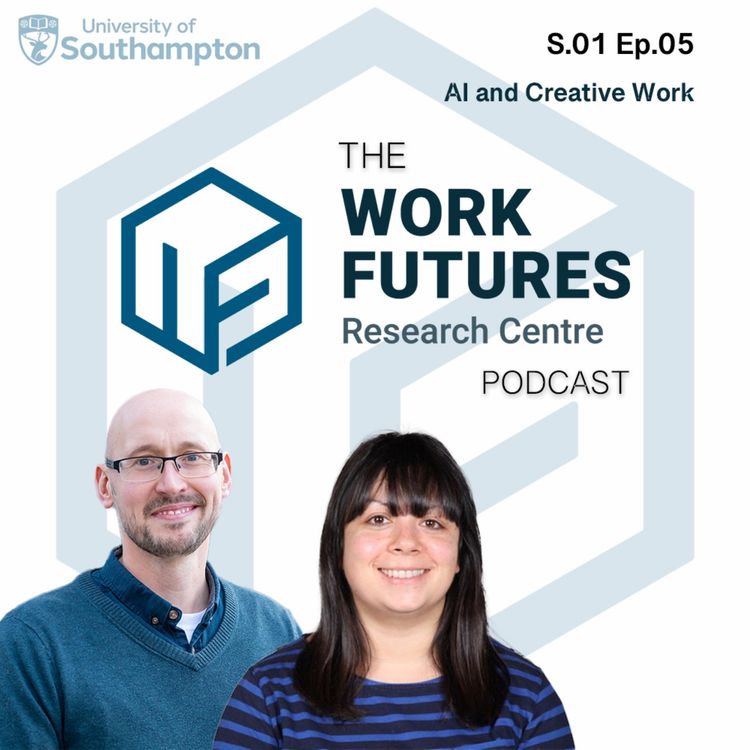
The Work Futures Research Centre Podcast
Artificial Intelligence and Creative Work
In this podcast Dan Ashton (Professor of Cultural and Creative Industries at the University of Southampton and one of Work Futures Research Centre Co-Directors) and Dr Karen Patel (Associate Professor in Media in the College of English and Media and Co-Lead of the Centre for Equality, Diversity and Inclusion in the Arts (CEDIA) at Birmingham City University) explore the relationship between Artificial Intelligence (AI) and creative work. Set within the quickly changing landscape of AI and the creative industries where there are ongoing debates around intellectual property, the nature of creativity and the impact on work practices, this podcast explores their research on construction of a humanoid robot artist identity.
References:
AI and the reformulation of cultural labour
Creative Industries and GenAI: Policy recommendations to support an industry in transition
Assemblages of creativity: Material practices in the creative economy
Creative Work and Artificial Intelligence: Imaginaries, Assemblages and Portfolios
The Politics of Expertise in Cultural Labour: Arts, Work, Inequalities
‘People don’t buy art, they buy artists’: Robot artists – work, identity, and expertise
More episodes
View all episodes
7. The Value of Migrant Enterprise in the UK
27:47||Ep. 7In this podcast Carolynn Low, a WFRC fellow, speaks with Professor Monder Ram from Aston University about his extensive research on ethnic minority and migrant businesses in the UK. He highlights the significant contributions that these businesses make to the UK economy and the local communities they serve. Professor Ram also stresses the importance of research that is relevant to policy and practice, and of collaborating beyond academia to help address the barriers these businesses face in achieving growth and sustainability.
6. Meaningful Work
45:33||Season 1, Ep. 6WFRC PhD candidate Fabien (HR professional turned academic) is in conversation with Professor Michael Tomlinson (Southampton Education School) as they tackle questions related to the concept of Meaningful Work:What even is meaningful work—and how do individuals and society benefit?What happens when work feels hollow or disconnected?And crucially, how can we bring meaning back into the workplace?From exploring the philosophical foundations to the modern ideas of “bullshit jobs,” and "quiet quitting,", this thoughtful episode blends research, real-world insight, and hopeful musings for the future.
4. Are universities equipping graduates with skills for industry?
30:01||Season 1, Ep. 4Dr Ben Thomas talks to Emily about a recent report from the Software Sustainability Institute (SSI) which examines what skills software engineering graduates bring to industry, and what skills employers say are missing. They discuss the reasons behind any skills gaps, and the varying roles that higher education, industry, and government might play in bridging these skill gaps in the context of today's higher education landscape.The SSI report was worked on by:Dr Ben Thomas (Researcher)Dr Rebecca Taylor (Principle Investigator)Professor Simon Hettrick (Co-Investigator)Dr Clare Jenner (Co-Investigator)Note from Ben: Apologies for the sound quality in this episode. I'm normally behind the microphone making sure the sound levels are correct – I was obviously distracted having to speak, so my voice is distorted at times. I hope you can still enjoy the episode!
3. Green Jobs
18:00||Season 1, Ep. 3The term ‘Green Jobs’ has become something of a buzzword, but it represents a crucial priority for the UK as we consider the future of our society and workforce. Emily Bastable, a PhD student and Fellow at the Work Futures Research Centre, interviews Sian Campbell, Senior Enterprise Fellow at Southampton Business School and creator of Make Your Place, an enterprise challenge for young people. Together, they explore the concept of Green Jobs, the current skills shortage, and the role universities and government initiatives, such as the Industrial Strategy, can play in fostering these sustainable careers.
2. Brexit, migration, and employment...what the numbers don't tell you.
28:01||Season 1, Ep. 2In this episode of the WFRC podcast, Maria Villares-Varela talks with Ben Brindle about the impact of Brexit and the new immigration law on migration fluxes to and from the UK, and on the British job market. The conversation reveals how unintended, and often untold, consequences of post-Brexit migration policies affect employment differently from what the national headlines usually tell us.
1. Welcome to the WFRC Podcast!
08:54||Season 1, Ep. 1In this introductory episode, Emily and Michele speak with one of the WFRC directors, Dr Rebecca Taylor. Rebecca gives us a history of the research centre, and explores our plans for this academic year.