Share
The Women Who Stayed
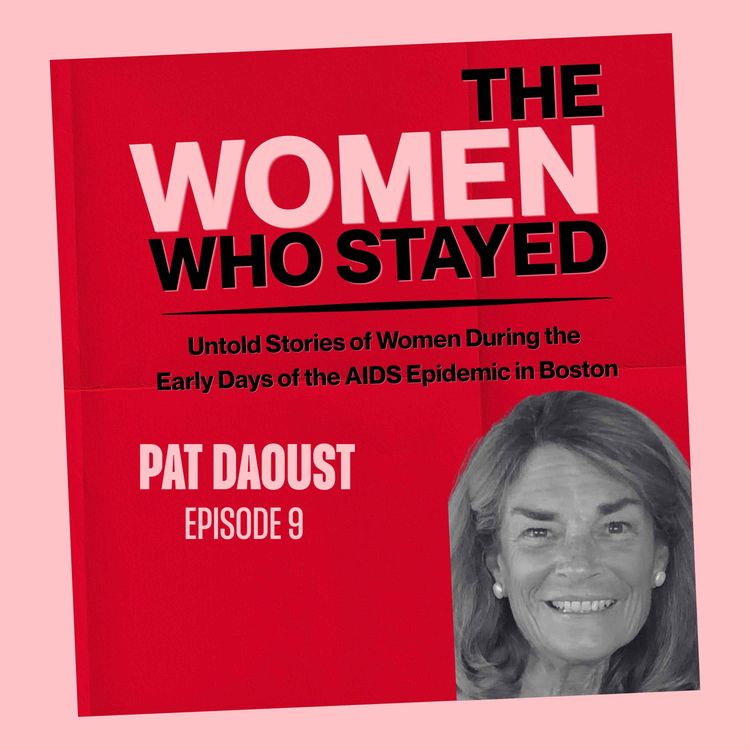
The Women Who Stayed Episode 9
Season 1, Ep. 9
•
When panic and uncertainty surrounded the HIV/AIDS epidemic, nurses like Pat Daoust chose compassion over fear.
Pat shares what it was like caring for people living with AIDS in Boston during the height of the crisis. She reflects on the relationships that shaped her life and career, and how those early experiences led her to improve healthcare and train caregivers in communities around the world.
More episodes
View all episodes
13. The Women Who Stayed Bonus Episode
19:35||Season 1, Ep. 13Welcome to a special bonus episode of the Women Who Stayed. In episode 12, the final episode of this series, Leah Camhi shared her story about the early days of the Boston Living Center, a place near and dear to my heart. After we finished our interview Leah asked if she could ask some questions. This was our conversation.
12. The Women Who Stayed Episode 12
34:30||Season 1, Ep. 12During the 1990s, for people living with HIV and AIDS, finding community was essential. The Boston Living Center became that place, and Leah Camhi was its first Executive Director. She helped transform a dark, neglected space in the Boston YWCA into a welcoming community where people living with HIV could find support, connection, and, most importantly, dignity.During Leah’s tenure, the Boston Living Center moved to Stanhope Street and continued to grow as the needs of the community evolved. At its peak, more than 2,000 people were members, with everything from meals and art classes to massage and haircuts offered free of charge.In this episode, Leah talks about creating a place where people could feel seen, valued, and cared for.
11. The Women Who Stayed Episode 11
38:51||Season 1, Ep. 11As a college sophomore, Dawn Fukuda took a work-study job interviewing hospitalized AIDS patients. Her experience and the profound loss she witnessed set the course for her life’s work and more than 30 years working with people living with HIV and AIDS.Today, Dawn shares how those early experiences shaped her commitment to public health, her role in helping make Massachusetts a national leader in HIV care, and what the lessons of that work can teach us today.
10. The Women Who Stayed Episode 10
42:00||Season 1, Ep. 10Many remember the early AIDS epidemic as a crisis that affected only gay men. But women were living with HIV too - and too often, they were overlooked.In this episode, nurse Heidi Bright shares how that reality inspired the creation of the Healing Our Community Collaborative (HOCC), a community built for women, by women, and about women.Hear how HOCC has helped thousands of women find their voices as educators, advocates, and leaders.
8. The Women Who Stayed Episode 8
36:01||Season 1, Ep. 8Music has always been part of Donyne Cowan's life. In the 1980’s, HIV/AIDS changed everything.After losing close friends, roommates, and colleagues to the epidemic, Donyne turned grief into action—spending more than two decades supporting people living with HIV through Positive Directions and the AIDS Action Committee.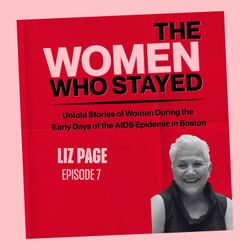
7. The Women Who Stayed Episode 7
34:51||Season 1, Ep. 7As the AIDS epidemic touched more and more lives, people looked for ways to help. Liz Page answered that call.As a volunteer-turned-staff member at AIDS Action Committee, Liz used her talents for events and fundraising to help create Artcetera and launch the first AIDS Walk Boston—bringing a community together when it was needed most.
6. The Women Who Stayed Episode 6
40:25||Season 1, Ep. 6Amihan Jennifer Matias shares her perspective on the HIV/AIDS epidemic through the lens of community, culture, and advocacy. Drawing on her work with Boston's Asian American and Pacific Islander communities, she reflects on breaking stigma, building trust, and ensuring that no one was left out of the response.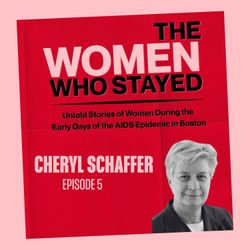
5. The Women Who Stayed Episode 5
35:00||Season 1, Ep. 5As the AIDS epidemic unfolded, the AIDS Action Committee grew from a small grassroots organization into one of the nation's leading AIDS service organizations. While Larry Kessler became the public face and visionary of the organization, Cheryl Schaffer was building it from the inside—creating the infrastructure, supporting its staff, and leading with compassion and unwavering commitment.