Share
The Weekend Intelligence from The Economist
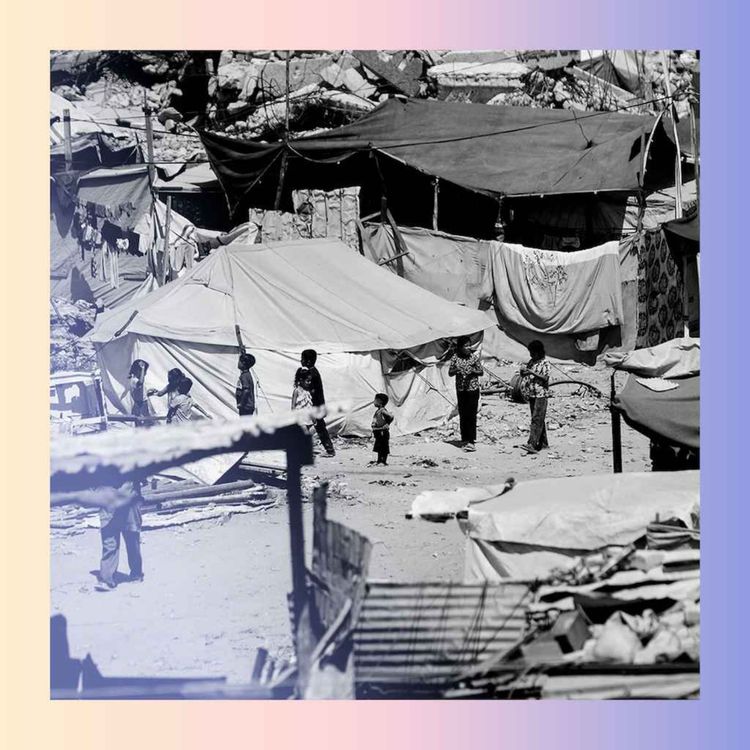
TikTok humanitarianism
As aid systems come under growing strain, a new form of giving is emerging online. Catherine Brahic follows two people in Gaza who have come to rely on crowdfunding to survive. She also meets the volunteers who have become their fundraisers, and asks what happens when humanitarian aid is shaped by algorithms not institutions.
Guests and host:
- Catherine Brahic, The Economist’s Environment Editor
- Rosie Blau, co-host of ‘The Intelligence’
- Sami Alshannat, agricultural engineer in Gaza
- Alaa Jaber, teacher in Gaza
- Natalie Naudus, audiobook narrator and donor
- Josh Leigh, digital fundraising consultant
- Olga Boichack, media scholar at the University of Sydney
Topics covered:
- Charity
- Crowdfunding
- Social media
- Gaza
- Ukraine
Click here to find out more about Sami and Alaa’s campaigns or Operation Olive Branch.
Listen to what matters most, from global politics and business to science and technology—Subscribe to Economist Podcasts+
For more information about how to access Economist Podcasts+, please visit our FAQs page or watch our video explaining how to link your account.
Music by Ahmed Muin Abu Amsha & Gaza Birds Singing, blue dot and Epidemic.
This podcast transcript is generated by third-party AI. It has not been reviewed prior to publication. We make no representations or warranties in relation to the transcript, its accuracy or its completeness, and we disclaim all liability regarding its receipt, content and use. If you have any concerns about the transcript, please email us at podcasts@economist.com.
More episodes
View all episodes
Shire folk: Episode 3 - The prophet
50:16|In our third and final episode of Shire folk, our series on the rise of Tommy Robinson, Georgia follows Tommy across the Atlantic to find out why so many powerful Americans are suddenly interested in his version of Britain, and what they stand to gain from endorsing it.Topics covered:Christian nationalismAnti-Islam sentimentMass deportationsDanny TommoListen to what matters most, from global politics and business to science and technology—subscribe to The Economist.***************Music by bluedot Sessions and Epidemic Sound.This podcast transcript is generated by third-party AI. It has not been reviewed prior to publication. We make no representations or warranties in relation to the transcript, its accuracy or its completeness, and we disclaim all liability regarding its receipt, content and use. If you have any concerns about the transcript, please email us at podcasts@economist.com.Read more about how we are using AI.
Shire folk: Episode 2 - Rebel, rebel
48:37|In our second episode of “Shire folk; the Tommy Robinson story”, Georgia Banjo revisits the late 2010s to chart how Britain’s grooming gangs scandal shaped Robinson’s rise, from Luton football hooligan to Europe correspondent for Rebel Media.Topics covered:Terror attacksGrooming gangsAlternative mediaSouthport riotsListen to what matters most, from global politics and business to science and technology—subscribe to The Economist.***************Music by bluedot Sessions and Epidemic Sound.This podcast transcript is generated by third-party AI. It has not been reviewed prior to publication. We make no representations or warranties in relation to the transcript, its accuracy or its completeness, and we disclaim all liability regarding its receipt, content and use. If you have any concerns about the transcript, please email us at podcasts@economist.com.Read more about how we are using AI.
TRAIL: Shire folk
02:07|Shire Folk is the story of how some of the most powerful people in America came to see Britain—and Islam—through the eyes of a fringe football hooligan.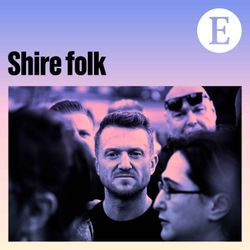
Shire folk: Episode 1 - Tommy's Town
49:13|For 15 years, the British media dismissed Tommy Robinson as a far-right extremist. We kept him off our televisions, and out of our newspapers. Today his rallies attract tens of thousands of followers and he has the ear of the world’s richest man.Shire Folk is the story of how some of the most powerful people in America came to see Britain—and Islam—through the eyes of a fringe football hooligan.Topics covered:Radical IslamGangsEnglish Defence LeagueListen to what matters most, from global politics and business to science and technology—subscribe to The Economist.This podcast transcript is generated by third-party AI. It has not been reviewed prior to publication. We make no representations or warranties in relation to the transcript, its accuracy or its completeness, and we disclaim all liability regarding its receipt, content and use. If you have any concerns about the transcript, please email us at podcasts@economist.com.Read more about how we are using AI.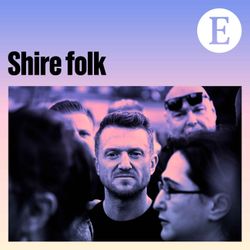
TRAILER: Shire folk
02:08|Shire Folk is the story of how some of the most powerful people in America came to see Britain—and Islam—through the eyes of a fringe football hooligan.
Radio Kudirat
43:28|In the 1990s, as Nigeria was under a brutal military dictatorship, Radio Kudirat emerged as a glimmer of hope. The clandestine project united journalists, activists and engineers, who risked their lives to give Nigerians a voice even when a $5 million bounty was put out on their heads. Over 30 years later, Africa correspondent Ore Ogunbiyi re-unites some of the people who brought Radio Kudirat to life.Topics covered:NigeriaDemocracyAuthoritarianism PropagandaRadio KudiratListen to what matters most, from global politics and business to science and technology—Subscribe to Economist Podcasts+For more information about how to access Economist Podcasts+, please visit our FAQs page or watch our video explaining how to link your account.Music by bluedot Sessions and Epidemic Sound.This podcast transcript is generated by third-party AI. It has not been reviewed prior to publication. We make no representations or warranties in relation to the transcript, its accuracy or its completeness, and we disclaim all liability regarding its receipt, content and use. If you have any concerns about the transcript, please email us at podcasts@economist.com.Read more about how we are using AI.
Laugh, think, move
43:05|FOR 35 years the Ig Nobel prizes—given for “research that makes people laugh, then think”—have been awarded at a madcap ceremony in Cambridge, Massachusetts. The “laugh” part highlights the sillier side of science; the “think” part reveals the same creative inquiry that drives the more dour-seeming side. Jason Palmer, co-host of “The Intelligence”, speaks to the prizes’ founder and past winners about the grave reasons the ceremony is moving this year to Zurich. Topics covered:Ig Nobel prizes Nobel prizesscientific inquiryAmerican science policyGuests:Marc Abrahams, founder, Ig Nobel prizesMarie Dacke, professor of sensory biology, Lund UniversitySir Andre Geim, professor of physics, University of ManchesterDavid Kaiser, professor of physics and professor of the history of science, MITLuca Luiselli, president, Institute for Development, Ecology, Conservation and Co-operationLinks to other episodes:The Weekend Intelligence: Science under siegeThe Weekend Intelligence: The War on Animal ResearchListen to what matters most, from global politics and business to science and technology—Subscribe to Economist Podcasts+For more information about how to access Economist Podcasts+, please visit our FAQs page or watch our video explaining how to link your account.***************This podcast transcript is generated by third-party AI. It has not been reviewed prior to publication. We make no representations or warranties in relation to the transcript, its accuracy or its completeness, and we disclaim all liability regarding its receipt, content and use. If you have any concerns about the transcript, please email us at podcasts@economist.com.Read more about how we are using AI.
Grave friends
38:14|Around 30% of Japan’s population is now over 65 and record numbers of people are dying. The weight of those deaths is falling on fewer shoulders, as births decline and the younger generation shrinks. On The Weekend Intelligence our East Asia reporter, Moeka Iida reports on kodokushi or "lonely deaths” and meets people finding ways to make the end of life less solitary. Topics covered:Aging society Lonely death Death cleaningEnd-of-life planning “Grave friends”Listen to what matters most, from global politics and business to science and technology—Subscribe to Economist Podcasts+For more information about how to access Economist Podcasts+, please visit our FAQs page or watch our video explaining how to link your account.This podcast transcript is generated by third-party AI. It has not been reviewed prior to publication. We make no representations or warranties in relation to the transcript, its accuracy or its completeness, and we disclaim all liability regarding its receipt, content and use. If you have any concerns about the transcript, please email us at podcasts@economist.com.Read more about how we are using AI.