
Latest episode
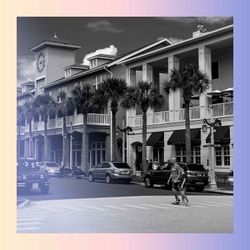
The town that Disney built
44:36|Can a nostalgic throwback also be a bold urban planning experiment? The Disney Corporation thought so. In 1996 they built the town of Celebration, Florida as a model neighborhood blending the traditional charm of old-town life with radical urban design. On its 30th anniversary, Leo Mirani visits “the town that Disney built” to ask whether the experiment worked.Topics covered:DisneyCelebration, FloridaNew urbanismSuburbiaLinks to articles:Celebration in 2016EpcotListen to what matters most, from global politics and business to science and technology—Subscribe to Economist Podcasts+For more information about how to access Economist Podcasts+, please visit our FAQs page or watch our video explaining how to link your account.Music by bluedot Sessions and Epidemic Sound.This podcast transcript is generated by third-party AI. It has not been reviewed prior to publication. We make no representations or warranties in relation to the transcript, its accuracy or its completeness, and we disclaim all liability regarding its receipt, content and use. If you have any concerns about the transcript, please email us at podcasts@economist.com.Read more about how we are using AI.
More episodes
View all episodes
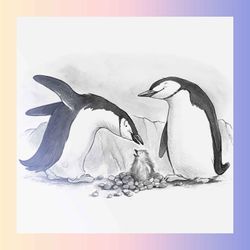
And Tango Makes Three
47:05|This is the story of one of the most challenged books in America, and the feathered-freedom fighters caught up in America’s culture wars.*This episode was first published in December 2023Listen to what matters most, from global politics and business to science and technology—Subscribe to Economist Podcasts+For more information about how to access Economist Podcasts+, please visit our FAQs page or watch our video explaining how to link your account.Music by bluedot Sessions and Epidemic Sound. AND TANGO MAKES THREE Copyright © 2005 by Justin Richardson and Peter Parnell. Audio excerpts courtesy of Simon & Schuster Audio, a Division of Simon & Schuster, Inc. read by Neil Patrick Harris from the audiobook by Justin Richardson and Peter Parnell.This podcast transcript is generated by third-party AI. It has not been reviewed prior to publication. We make no representations or warranties in relation to the transcript, its accuracy or its completeness, and we disclaim all liability regarding its receipt, content and use. If you have any concerns about the transcript, please email us at podcasts@economist.com.Read more about how we are using AI.
Memory lane
37:04|Now every fact is a click away, the role of memory has changed. On The Weekend Intelligence, Rosie Blau profiles an eight-times world memory champion, a woman suffering from early-onset dementia and Artificial Intelligence to find out what matters: the information itself, or the journey we take to retrieve it?Listen to what matters most, from global politics and business to science and technology—Subscribe to Economist Podcasts+For more information about how to access Economist Podcasts+, please visit our FAQs page or watch our video explaining how to link your account.Music by bluedot Sessions and Epidemic Sound.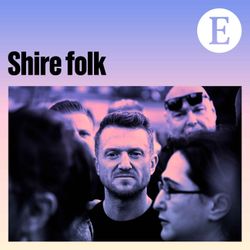
Shire folk: Episode 3 - The prophet
50:16|In our third and final episode of Shire folk, our series on the rise of Tommy Robinson, Georgia follows Tommy across the Atlantic to find out why so many powerful Americans are suddenly interested in his version of Britain, and what they stand to gain from endorsing it.Topics covered:Christian nationalismAnti-Islam sentimentMass deportationsDanny TommoListen to what matters most, from global politics and business to science and technology—subscribe to The Economist.***************Music by bluedot Sessions and Epidemic Sound.This podcast transcript is generated by third-party AI. It has not been reviewed prior to publication. We make no representations or warranties in relation to the transcript, its accuracy or its completeness, and we disclaim all liability regarding its receipt, content and use. If you have any concerns about the transcript, please email us at podcasts@economist.com.Read more about how we are using AI.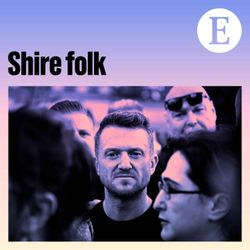
Shire folk: Episode 2 - Rebel, rebel
48:37|In our second episode of “Shire folk; the Tommy Robinson story”, Georgia Banjo revisits the late 2010s to chart how Britain’s grooming gangs scandal shaped Robinson’s rise, from Luton football hooligan to Europe correspondent for Rebel Media.Topics covered:Terror attacksGrooming gangsAlternative mediaSouthport riotsListen to what matters most, from global politics and business to science and technology—subscribe to The Economist.***************Music by bluedot Sessions and Epidemic Sound.This podcast transcript is generated by third-party AI. It has not been reviewed prior to publication. We make no representations or warranties in relation to the transcript, its accuracy or its completeness, and we disclaim all liability regarding its receipt, content and use. If you have any concerns about the transcript, please email us at podcasts@economist.com.Read more about how we are using AI.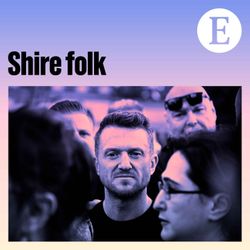
TRAIL: Shire folk
02:07|Shire Folk is the story of how some of the most powerful people in America came to see Britain—and Islam—through the eyes of a fringe football hooligan.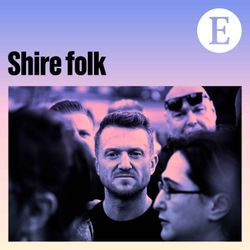
Shire folk: Episode 1 - Tommy's Town
49:13|For 15 years, the British media dismissed Tommy Robinson as a far-right extremist. We kept him off our televisions, and out of our newspapers. Today his rallies attract tens of thousands of followers and he has the ear of the world’s richest man.Shire Folk is the story of how some of the most powerful people in America came to see Britain—and Islam—through the eyes of a fringe football hooligan.Topics covered:Radical IslamGangsEnglish Defence LeagueListen to what matters most, from global politics and business to science and technology—subscribe to The Economist.This podcast transcript is generated by third-party AI. It has not been reviewed prior to publication. We make no representations or warranties in relation to the transcript, its accuracy or its completeness, and we disclaim all liability regarding its receipt, content and use. If you have any concerns about the transcript, please email us at podcasts@economist.com.Read more about how we are using AI.