Share
The Unmistakable Creative Podcast
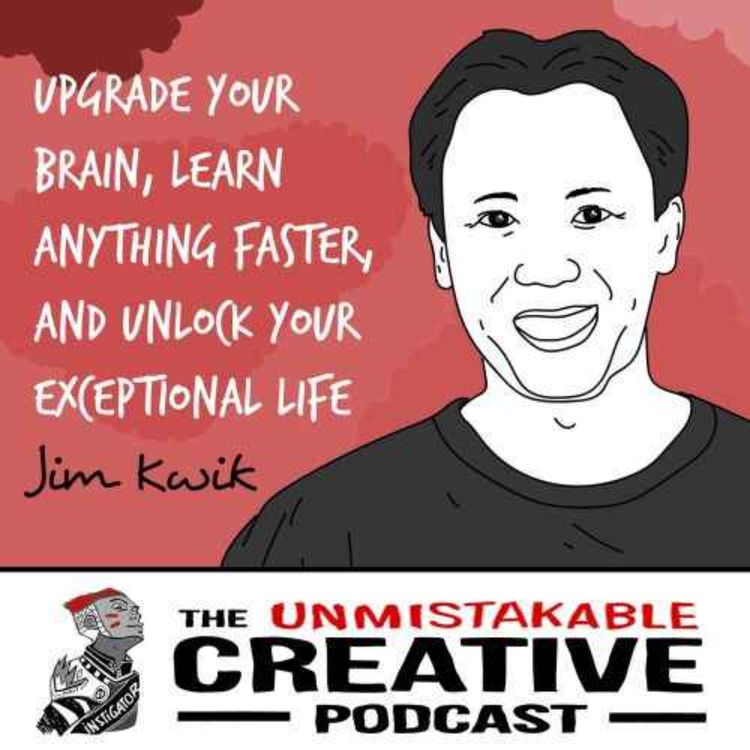
Life of Purpose: Jim Kwik | Upgrade Your Brain, Learn Anything Faster, and Unlock Your Exceptional Life
Join us for our Life of Purpose series this month as we revisit some of our most impactful episodes. Dive deep into expert insights and practical strategies on health, performance, and community, helping you achieve personal and professional fulfillment.
In this episode of Unmistakable Creative, we are joined by the renowned brain and memory expert Jim Kwik. Prepare to have your mind blown as Kwik shares powerful strategies to upgrade your brain, accelerate your learning, and unleash your full cognitive potential.
Kwik, a world-renowned memory coach and author, delves into the science of brain optimization and learning techniques. He reveals how to improve your memory, focus, and productivity, empowering you to absorb and retain information faster than ever before. Kwik's insights are not just about memorization; they encompass a holistic approach to brain health and mental performance.
Through captivating stories and practical tips, Kwik demonstrates that anyone can unlock their brain's true potential. He provides actionable steps to overcome learning obstacles and cultivate a growth mindset. This episode is a must-listen for students, professionals, and lifelong learners looking to enhance their cognitive abilities and reach new levels of success.
Incogni Personal Information: Removal Service
Use code UNMISTAKABLE at the link here to get an exclusive 60% off an annual Incogni plan: https://incogni.com/unmistakable
More episodes
View all episodes

Holly Shaw: Discovering Your Creative DNA and the Magic of Performance
48:30|Holly Shaw, performer and coach, discusses how she discovered her creative DNA through a lifelong relationship with performance—from childhood dancing at jazz concerts to conquering stage fright with an acting coach. She explores how creatives can uncover their unique wiring, treat intuition as a compass rather than a map, and why physical embodiment is the missing piece in the creative conversation.Bret Lockett: Why Tom Brady Outperforms Athletes With More Natural Talent
01:01:00|Former NFL player Bret Lockett breaks down the mindset gap between athletes who flame out and those who build sustainable careers, using Tom Bradys systematic approach as the benchmark. The conversation covers the financial traps that bankrupt 80% of NFL players, the cognitive vs physical divide in professional sports, and why most athletes lack the business literacy to translate athletic success into post-career wealth.Andrew Thorp King: Why Safety Is an Illusion and Failure Is the Point
47:38|Andrew Thorp King, author of Failure Rules, shares how losing everything multiple times taught him that safety is an illusion and failure is the true teacher. He discusses the spiritual nature of money, the portfolio pursuits mindset, and why building multiple things creates resilience against life inevitable breakdowns.Bent Flyvbjerg: Why Big Projects Fail and How to Build Like Pixar
56:47|Mega-project expert Bent Flyvbjerg breaks down why 99.5% of large projects fail on time and budget, drawing on 25 years of data. He reveals the planning principles that Frank Gehry and Pixar use to deliver world-class results—think slow, act fast, and iterate relentlessly.Alan Stein Jr: What Kobe Bryant and Kevin Durant Taught Me About Sustained Performance
01:04:14|Performance coach Alan Stein Jr shares lessons from training NBA legends like Kobe Bryant and Kevin Durant. He discusses the fundamentals that separate elite performers, why he does not let his kids win at games, the danger of measuring success by outcomes vs process, and why the unseen hours of practice matter more than highlights.The 3-Minute Rule: How to Pitch Any Idea and Get What You Want
55:32|Brant Pinvidic, Hollywood producer and author of The 3 Minute Rule, shares how he accidentally discovered his pitch methodology after being asked to help investment bankers stop putting people to sleep. He breaks down the WHAC method (What is it, How does it work, Are you sure, Can you do it), explains the critical difference between informative and engaging content, and demonstrates his framework live by helping refine the Unmistakable Creative podcast pitch. Brant discusses why most pitches fail in the first 3 minutes, how to capture attention through statements rather than questions, and why simplicity beats complexity when communicating ideas.Annie Murphy Paul: Why Your Best Thinking Happens Outside Your Head
47:04|Science journalist Annie Murphy Paul explains her theory of the Extended Mind - how we think better when we use our bodies, environments, and relationships rather than keeping everything in our heads. The conversation covers gesture and memory, why big screens beat laptops for creative work, the neuroscience of exercise, and how physical spaces shape intelligent thinking.Allison Schrager: The Economics of Risk, Uncertainty, and Making Better Decisions
44:45|Economist Allison Schrager, author of An Economist Walks into a Brothel, discusses the psychology of risk tolerance through her framework of financial economics. She explores how our high school social choices reveal risk preferences, the difference between calculated risks and reckless ones, and why taking more risks often leads to becoming better at evaluating them. The conversation covers risk in creative careers, the math of making risky art, and how to organize your thinking around uncertainty to make better life decisions.The Science of Deliberate Practice with Anders Ericsson
48:10|Anders Ericsson, the pioneering researcher behind deliberate practice, explains the essential components of purposeful learning and skill development. He discusses how teachers help identify performance gaps, why measuring progress against clear benchmarks is crucial, and the difference between mindless repetition and intentional practice designed to push beyond your current best.