Share
The Unconventional Soldier
"Letting The guest Tell The Story"
Latest episode
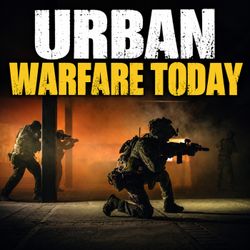
130. Why Militaries Can't "Bypass and Avoid" Urban Warfare
01:47:49||Season 7, Ep. 130CONTENTThe guest today is Stuart Lyle, the Urban Operations Lead at the UK’s Defence Science and Technology Laboratory, or Dstl, part of the Ministry of Defence.For more than 12 years, Stuart has studied how modern armies fight in cities, leading work on everything from urban explosive ordnance disposal and wargaming to adversary doctrine and lessons from recent conflicts. His particular focus is on how data and emerging technology can help us better understand, and fight, the increasingly complex urban battle.Stuart is also the designer behind the British Army’s Urban Phalanx platoon and Block Buster brigade concepts, ideas that are helping shape the Army’s thinking about the future of warfare. He also teaches urban operations across the UK Armed Forces and to international partners, including at the Defence Academy.I am also joined by regular contributor Neale Smiles a former soldier working in the defence industry.On this pod we discuss why modern militaries must engage in urban warfare. He identifies critical drivers for urban combat, including political significance, topographical necessity, and the natural survivability buildings offer to defenders. The discussion highlights how emerging technologies, such as thermobaric weapons and uncrewed systems, are fundamentally altering tactical approaches to high-intensity street fighting. Stuart also critiques current training limitations, arguing that simulation and garrison-based exercises are essential to prepare soldiers for the cognitive load of a digitised battlefield. Ultimately, he emphasises that as global populations shift toward mega-cities and slums, the ability to operate in complex built environments remains a universal military requirement. Stuart's book choice on Desert Islands Dits is "Concrete Hell - Urban Warfare From Stalingrad To Iraq" by Lous A DiMarco. Neales choice is"African Days Hollywood Nights" by Michael Peirce.WHERE TO GET OUR DESERT ISLAND DITS BOOK CHOICESMost of our book recommendations can be bought via the Unconventional Soldier Bookshop. 10% of each purchase supports the pod and helps independent book stores on line sales. "BUY ME A COFFEE"If you want to support the podcast you can buy me a coffee here.SOCIAL MEDIAInstagram @the_unconventional_soldier_pod.Facebook @lateo82. Twitter @TheUCS473.Download these and other platforms via Link Tree.Email us: unconventionalsoldier@gmail.com. This episode brought to you in association with ISARR a veteran owned company.
More episodes
View all episodes
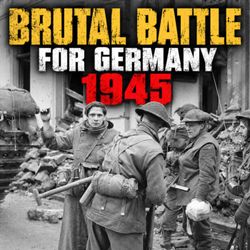
129. Voices Of Victory: The Brutal Battle For Germany 1945
01:42:44||Season 7, Ep. 129CONTENTThe guest today is Geraint Jones best selling author, screen writer, podcast host and ghost writer. He is also former British infantryman who served in Afghanistan and Iraq. The discussion focuses on his book, Voices of Victory, which compiles eyewitness accounts of British soldiers fighting through Germany during the final months of World War II. Gez emphasizes the importance of oral history and preserving the raw, personal experiences of frontline troops to prevent them from becoming mere data points in strategic records. He highlights the extreme psychological and physical toll of the campaign, noting how replacements often faced intense combat with minimal training. The conversation also explores the lasting impact of combat on veterans, drawing parallels between the trauma experienced by soldiers in WW2 and today's soldiers. The human cost of victory and the necessity of remembering individual stories to understand the true nature of war also features.Gez's book choice on Desert Islands Dits is "Shogun" by James Clavell. My choice is Gez's Book "Voices of Victory - Powerful eye witness accounts of the battle to take Germany, Feb 1945 to VE Day ".Gez's podcast Veteran State of Mind is here - https://podcasts.apple.com/us/podcast/veteran-state-of-mind-network/id1450720132His web site is here - https://www.geraintjonesmedia.com/WHERE TO GET OUR DESERT ISLAND DITS BOOK CHOICESMost of our book recommendations can be bought via the Unconventional Soldier Bookshop. 10% of each purchase supports the pod and helps independent book stores on line sales. "BUY ME A COFFEE"If you want to support the podcast you can buy me a coffee here.SOCIAL MEDIAInstagram @the_unconventional_soldier_pod.Facebook @lateo82. Twitter @TheUCS473.Download these and other platforms via Link Tree.Email us: unconventionalsoldier@gmail.com. This episode brought to you in association with ISARR a veteran owned company.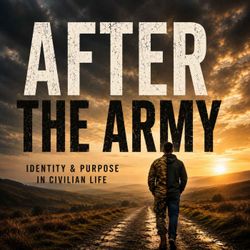
128. After The Army: Identity & Purpose In Civilian Life
01:01:04||Season 7, Ep. 128CONTENTThe guest today is Gemma Gardner, a British Army veteran who moved into performance psychology. After experiencing mental health issues following her medical discharge, she developed the Orus framework, which focuses on the five pillars of awareness, understanding, regulation, identity, and stability. The discussion highlights the psychological difficulties soldiers face when their military identity is stripped away, often leading to a loss of purpose and confidence in civilian life. Gemma emphasizes the importance of proactive transition planning to help veterans navigate life after service and advocates for better education on the cultural differences between military and civilian workplaces. We also discuss how veterans can redefine themselves and find new outlets for their service-oriented values.Gemma's book choice on Desert Islands Dits is "Papa Papa Blues - A Memoir Of 80s To 90s Policing And Combat Sports" by CJ Brett. My choice is "Meditations" by Marcus Aurelius.WHERE TO GET OUR DESERT ISLAND DITS BOOK CHOICESMost of our book recommendations can be bought via the Unconventional Soldier Bookshop. 10% of each purchase supports the pod and helps independent book stores on line sales. "BUY ME A COFFEE"If you want to support the podcast you can buy me a coffee here.SOCIAL MEDIAInstagram @the_unconventional_soldier_pod.Facebook @lateo82. Twitter @TheUCS473.Download these and other platforms via Link Tree.Email us: unconventionalsoldier@gmail.com. This episode brought to you in association with ISARR a veteran owned company.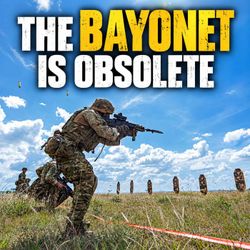
127. The Bayonet Is Obsolete
09:29||Season 7, Ep. 127CONTENTMy guests for this podcast are Neale Smiles and Stuart Lyle. Stuart is the Urban Operations Lead at the UK’s Defence Science and Technology Laboratory, or Dstl, part of the Ministry of Defence. Neale is a former soldier working in the defence industry. For generations, the bayonet has been one of the most enduring symbols of the infantry soldier. But does it still have a meaningful place on the modern battlefield? In this episode, we examine the declining practical value of the bayonet in contemporary infantry combat.Modern rifles, suppressors, body armour and other weapon attachments increasingly make the fixed bayonet cumbersome and of questionable effectiveness, particularly in close-quarter fighting. We explore whether armies should move beyond tradition and instead place greater emphasis on practical hand-to-hand combat skills and purpose-designed fighting knives. We also consider the bayonet’s enduring psychological and cultural importance, from aggression and fighting spirit to its place in infantry identity and training. The bayonet may remain a powerful symbol but has its time as a practical weapon finally passed?Stuart's article on this subject can be found on the think Defence web page here: https://www.thinkdefence.co.uk/2026/09/the-bayonet-is-obsolete-the-case-for-change-in-extremely-close-quarters-combat/"BUY ME A COFFEE"If you want to support the podcast you can buy me a coffee here.SOCIAL MEDIAInstagram @the_unconventional_soldier_pod.Facebook @lateo82. Twitter @TheUCS473.Download these and other platforms via Link Tree.Email us: unconventionalsoldier@gmail.com. This episode brought to you in association with ISARR a veteran owned company.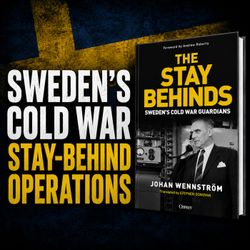
126. Sweden's Cold War Stay-Behind Operations
01:08:45||Season 6, Ep. 126CONTENTThe guest today is Dr Johan Wennstrom an intelligence historian and writer on statecraft, from the Cold War underground to today’s crises. He is the author of “The Stay Behinds: Sweden’s Cold War Guardians” a national bestseller in Sweden recently translated into English and also writes on Substack as “Our Man In Stockholm” (https://johanwennstrom.substack.com/). On this episode we discuss the secretive history of Sweden’s "stay-behind" network established in 1949. This clandestine organization was composed primarily of civilians, such as farmers and factory workers, trained to act as a resistance movement in the event of a Soviet occupation. Operating through a strictly compartmentalized cell structure, members were prepared to conduct activities as intelligence gathering and establishing escape rat lines while under direct Swedish command. The discussion highlights that despite Sweden’s official non-aligned status, the government maintained secret ties with Western intelligence to ensure national survival. Johan provides an overview of Sweden’s "Total Defense" doctrine at the time, illustrating the strategic preparations made to prepare for a Soviet Invasion during the Cold War.Johan's book choice on Desert Islands Dits is "Tinker, Tailor, Soldier, Spy" by John Le Carre. My choice is his book “The Stay Behinds: Sweden’s Cold War Guardians”. We also discuss "A Private Spy - The Letters Of John Le Carre" edited by Tim Cornwell.WHERE TO GET OUR DESERT ISLAND DITS BOOK CHOICESMost of our book recommendations can be bought via the Unconventional Soldier Bookshop. 10% of each purchase supports the pod and helps independent book stores on line sales. "BUY ME A COFFEE"If you want to support the podcast you can buy me a coffee here.SOCIAL MEDIAInstagram @the_unconventional_soldier_pod.Facebook @lateo82. Twitter @TheUCS473.Download these and other platforms via Link Tree.Email us: unconventionalsoldier@gmail.com. This episode brought to you in association with ISARR a veteran owned company.
125. The Brutal Reality Of A Private Military Contractor's War In Syria
01:00:55||Season 6, Ep. 125CONTENTListener information - On this episode we discuss the realities of life in a war zone and suicide. My guest is Graham Paul Roberts, a former Welsh Guardsman and private military contractor who served in numerous global conflict zones in the military and as a PMC. He describes his journey from a premature birth and childhood bullying to training Syrian forces during the civil war. We discuss the psychological toll of war, including his struggle with complex PTSD and the hallucinations that haunted him upon returning home. Through his memoir, Echoes in Silence, he reflects on a pivotal realisation regarding the actions of the forces he trained and his subsequent path toward recovery.Today, Graham has found a new sense of purpose as a teacher in North Wales, where he uses his experiences to foster resilience and confidence in students with additional learning needs. He emphasizes the importance of seeking mental health support, crediting his recovery to professional intervention and the unwavering support of his family.Graham's book choice on Desert Islands Dits is "B20" by Andy McNab. My choice is Graham's Book "Echoes in The Silence - A True Story Of War, Trauma & Resilience".WHERE TO GET OUR DESERT ISLAND DITS BOOK CHOICESMost of our book recommendations can be bought via the Unconventional Soldier Bookshop. 10% of each purchase supports the pod and helps independent book stores on line sales. "BUY ME A COFFEE"If you want to support the podcast you can buy me a coffee here.SOCIAL MEDIAInstagram @the_unconventional_soldier_pod.Facebook @lateo82. Twitter @TheUCS473.Download these and other platforms via Link Tree.Email us: unconventionalsoldier@gmail.com. This episode brought to you in association with ISARR a veteran owned company.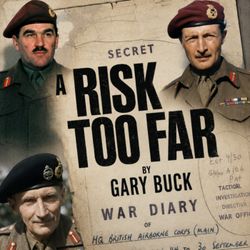
124. Operation Market Garden: The Psychological Failures Behind Montgomery’s Biggest Gamble
01:29:41||Season 6, Ep. 124CONTENTThe guest today is Dr. Gary Buck, a psychologist and military historian, who uses psychological frameworks to analyze the planning failures of Operation Market Garden. Gary applies the OODA loop and Myers-Briggs personality types to examine why high-level commanders like Montgomery, Browning, and Urquhart made critical errors during the 1944 mission. He suggests that extreme stress and organisational pressure caused leaders to abandon their typical caution for risky, uncharacteristic gambles. The discussion highlights how cognitive biases and personal ambitions led to an overly optimistic plan that relied on luck and ignored stiffening German resistance. Ultimately, the discussion provides a psychological autopsy of how human decision-making processes can derail complex military operations.Gary's book choice on Desert Islands Dits is "Hogfather" by Terry Pratchett. My choice is Gary's Book "A risk too far - A psychological autopsy of the planning for Arnhem".WHERE TO GET OUR DESERT ISLAND DITS BOOK CHOICESMost of our book recommendations can be bought via the Unconventional Soldier Bookshop. 10% of each purchase supports the pod and helps independent book stores on line sales. "BUY ME A COFFEE"If you want to support the podcast you can buy me a coffee here.SOCIAL MEDIAInstagram @the_unconventional_soldier_pod.Facebook @lateo82. Twitter @TheUCS473.Download these and other platforms via Link Tree.Email us: unconventionalsoldier@gmail.com. This episode brought to you in association with ISARR a veteran owned company.