Share

The Slow Newscast
Unjust: How the Court of Appeal failed an innocent man
Season 1, Ep. 394
•
Ceri Thomas revisits the appalling case of Peter Sullivan, jailed for 38 years for a murder he did not commit and offered no apology when finally released. Why does the court work so slowly? Why is it allowed to mark its own homework, and why is it so resistant to reform?
Reporter: Ceri Thomas
Producer: Katie Gunning
Artwork: Lucy Stevenson
Sound design: Dominic Delargy
Editor: Matt Russell
Subscribe to The Observer today: https://observer.co.uk/subscribe
And get access to:
Our podcasts before anyone else
A daily edition, curated by our editors 7 days a week
Puzzles from the inventors of the cryptic crossword
Recipes for every occasion
Free tickets to join Observer events in our newsroom or online
Subscribe today for just £1 for your first month.
More episodes
View all episodes
456. Spiral
42:31||Season 1, Ep. 456When The Observer’s Technology Editor, Patricia Clarke began investigating a new phenomenon initially dubbed ‘AI psychosis’, she found lives upended by long, intimate conversations with chatbots. But as she followed the evidence from a psychiatric ward in Bristol to the safety teams in Silicon Valley, a far darker story emerged. Guided by AI industry whistleblowers, grieving families and hundreds of pages of chatbot transcripts, Spiral exposes how big tech is running an unprecedented experiment on the human mind.This is episode one of Spiral, a six-part series from Tortoise Investigates and The Observer, produced in partnership with the Pulitzer Center’s AI Accountability Network.Reported by Patricia ClarkeProduced by Katie GunningSound design by Hannah VarrallDevelopment production by Jess Swinburne and Owen ThomasArtwork by Jon Hill and Michelle ThompsonNarrative editor is Gary MarshallExecutive producers are Jasper Corbett and Basia CummingsSpiral is a 4 part original series from Tortoise Investigates and The Observer.To binge listen to all episodes today, ad-free, subscribe to The Observer.Or subscribe to Observer+ on Apple Podcasts or Spotify to listen to all our podcasts, including this one, without any ads.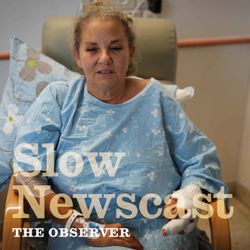
455. The 30-Year veteran photographer attacked by settlers
26:35||Season 1, Ep. 455Last week, a group of West Bank settlers attacked Palestinian farmers and veteran Washington Post photographer, Heidi Levine, who was there to cover the annual olive harvest. The assault left Levine in hospital with broken bones, but she is not the first foreigner to be caught in the middle of increasingly violent attacks by Israeli settlers on Palestinians in the West Bank.Basia Cummings speaks to the Observer's Ruth Michaelson who is in Tel Aviv covering the upcoming elections, about what happened and whether it'll impact the outcome of the vote.Producer: Ada BarumeExec: Matt Russell
454. Christ is King: the far right and God
35:38||Season 1, Ep. 454In September 2025, religious leaders in the UK got a shock: protests at Tommy Robinson’s Unite the Kingdom rally were carrying crosses, and waving signs with Christian slogans. On stage, pastors led the crowd in song and prayer. One of those pastors is Rikki Doolan, who says he converted Tommy Robinson while he was in prison. This is the story of how the far-right found God. Reporter: Kart MathiesonReporter/producer: Poppy BullardSound design: Dominic DelargyArtwork: Lucy StevensonEditor: Jasper Corbett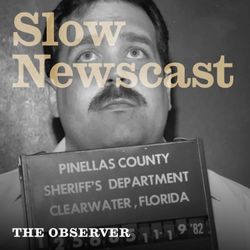
453. How an innocent man was put on death row
27:16||Season 1, Ep. 453For decades, Paul Skalnik made a living telling police and prosecutors that other prisoners had confessed to crimes. The former police turned con artist and jailhouse informant helped send a man called Jim Dailey to death row for the murder of a teenage girl.Basia Cummings speaks to investigative journalist and author Pamela Colloff who spent years uncovering his deceptions, and his story exposes a criminal justice system prioritising winning convictions over the truth.Producer: Amalie SortlandExec: Matt Russell
452. Bones and all: the trade in human remains
31:37||Season 1, Ep. 452Britain’s cultural institutions are wrestling with what to do with the human remains in their collections. But as they reckon with the ethical ramifications the sale of body parts remains largely unregulated. Who are the people selling? And why is it easier than ever to buy human remains?Reporter: Evan MoffittProducer: Ada BaruméSound design: Dominic DelargyArtwork: Blythe Walker SibthorpExec producer: Matt RussellEditor: Jasper Corbett
448. The Fixer: The life of Len McCluskey | Ep 2
27:28||Season 1, Ep. 448The former Unite boss says the police investigation into alleged corruption during his tenure will clear his name after years of accusations. But whether it can erase this dark episode in British trade unionism is another matter. So will the reputation of someone who was one of the UK's most influential power brokers stand the test of time?
447. The Fixer: The life of Len McCluskey | Ep 1
24:00||Season 1, Ep. 447The former Unite boss says the police investigation into alleged corruption during his tenure will clear his name after years of accusations. But whether it can erase this dark episode in British trade unionism is another matter. So will the reputation of someone who was one of the UK's most influential power brokers stand the test of time?
446. The rivalry that spawned the weight-loss jab race
33:13||Season 1, Ep. 446James Tapper, The Observer's Science editor and a weight-loss jab user, tells the story of his journey using the weight-loss drugs. A journey that along with lost kilograms, led him to the godfather of these drugs: a man who discovered the hormone that led to the development of GLP-1s and who reveals his concerns about their widespread use.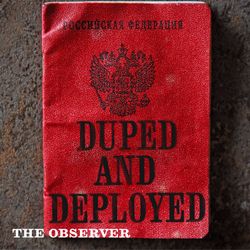
445. Duped and deployed: the Kenyans fighting for Russia
43:26||Season 1, Ep. 445Kenyan men are leaving their country for work – and ending up on the frontlines of Russia’s war in Ukraine. This is the story of the recruiters, the promises and the poverty that keeps the pipeline moving.