Share
Topic Lens - Headlines explained
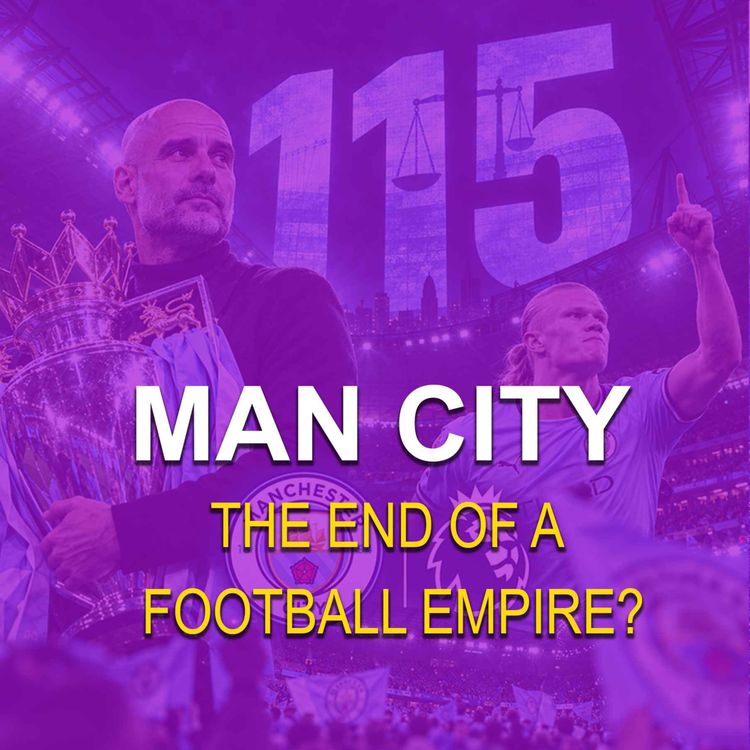
Manchester City - The End of a Football Empire?
From third-tier heartbreak at Wembley in 1999 to unprecedented Premier League dominance and Champions League glory, Manchester City’s modern rise is one of the most remarkable transformations in sports history. But behind the tactical brilliance of Pep Guardiola and eight league titles lies the most explosive legal and financial battle in football history: the Premier League's 115 charges.
In this episode of The Topic Lens, we put Manchester City under the microscope to dissect the history, context, and potential fallout of the trial of the century.
In this deep-dive episode, we cover:
- From "Typical City" to Global Powerhouse: How the 2008 Abu Dhabi takeover by Sheikh Mansour reshaped the footballing landscape.
- Anatomy of the 115 Charges: Breaking down allegations of inaccurate financial reporting, disguised sponsorship deals, hidden managerial payments (including Roberto Mancini’s consultancy contract), and non-cooperation.
- Fact vs. Speculation: What the evidence actually shows, how the Football Leaks investigation started it all, and why CAS’s 2020 ruling differs from the Premier League’s current case.
- The Newcastle Paradox: Why timing is everything—comparing City’s early financial freedom with the strict PSR and SCR hurdles facing Newcastle United today.
- Precedents & Consequences: What penalties could City face? We analyze point deductions, title stripping, and potential relegation scenarios alongside historical precedents like Juventus (Calciopoli), Melbourne Storm, Everton, and Chelsea.
- The Civil Lawsuits Domino: How Burnley’s £35 million compensation ruling against Everton could open the floodgates for rival Premier League clubs like Liverpool and Manchester United to claim massive damages.
Is this the moment the empire crumbles, or will City clear their name? Tune in for a thorough, balanced, and sharp discussion on football’s most defining controversy.
This episode features AI-generated dialogue (NotebookLM), based on extensive research across multiple sources.
It is meant to provide structured context — not replace primary sources or expert analysis.
More episodes
View all episodes

Belgium - Seen From The US
01:08:09|Welcome back to The Topic Lens—the podcast where we analyze global stories across the Atlantic to give you the context you need to truly understand the world.Last week, we looked at the U.S. state of Connecticut through a European lens. Today, we turn the tables, put on our American glasses, and take a deep dive into Belgium—a country whose capital, Brussels, is often used as a shorthand for European centralization, yet barely manages to govern itself.How did a nation roughly the size of Maryland with the population of Ohio end up holding the keys to the European Union, NATO, and global regulatory standards?In this episode, hosts break down:The Maryland-to-Ohio Scale: What it looks like to condense 11.8 million people into a compact European crossroads.Why Brussels Runs Europe: How a small, bilingual nation became the least controversial compromise for hosting the European Commission, the European Council, and NATO headquarters.The Story Behind the Belgian Flag: Why the vertical tricolor of black, yellow, and red replaced the original horizontal design in 1831, drawing its colors from the Duchy of Brabant.Flanders vs. Wallonia: Understanding the linguistic divide between the Dutch-speaking north and French-speaking south, separate political party systems, and how Belgium functioned normally during a world-record 541 days without a elected federal government.Deep Transatlantic Connections:How former President Herbert Hoover became a national hero in Belgium through World War I relief efforts.How uranium from the Belgian Congo fueled America's Manhattan Project.How Belgian inventor Adolphe Sax created the saxophone, reshaping American jazz.Why American icons like Budweiser are owned by a company headquartered in Leuven, Belgium.
Connecticut - Seen From Europe
52:37|Think Connecticut is just a sleepy New York suburb with white picket fences and prep schools? Think again.In this episode of The Topic Lens Podcast, we turn our European magnifying glass toward the US state of Connecticut. Following our deep dive into Belarus through an American lens, we are doing the exact opposite: analyzing a US state through European eyes. USA is a massive country where the differences between states can be as vast as those between sovereign European nations.At roughly the geographical size of Northern Ireland (or half of Sicily) but packed with nearly 3.7 million residents, Connecticut is a compact, high-density powerhouse with four centuries of layered American history. Behind its quiet New England exterior lies a fascinating web of extreme socio-economic divides, deep European roots, and world-shaping industrial power.🔥 What we cover in this episode:The 169 Tiny Kingdoms: Why Connecticut has no functional county governments and is instead governed by 169 fiercely independent "towns" with hyper-local control over schools, zoning, and taxes.Before the English Came: How Dutch traders built Fort Huys de Goede Hoop in Hartford back in 1633 before English Puritans took over—and how Dutch tech giant ASML brought that connection full circle 400 years later.The Industrial Powerhouse: From Samuel Colt’s revolvers and precision clockmaking to Pratt & Whitney jet engines, Sikorsky helicopters, and Electric Boat’s nuclear submarines in Groton.A Tale of Two Connecticuts: The stark socio-economic contrast between the ultra-wealthy hedge fund enclave of Greenwich on the "Gold Coast" and struggling historical industrial hubs like Bridgeport, Hartford, and New Haven.Icons & Intellect: The gothic walls of Yale University, the Hartford neighborhood where Mark Twain and Harriet Beecher Stowe lived next door to each other, and why UConn Huskies basketball serves as the unofficial "national team" for a state without major pro-sports franchises.Historical Surprises: Witch trials decades before Salem, and how two Connecticut delegates created the Connecticut Compromise of 1787 that saved the US Constitution.Whether you are from Europe, the US, or anywhere else in the world, Connecticut has far more surprises in store than you might think!🔔 Subscribe & Follow: Enjoyed the episode? Don't forget to rate us 5 stars on Apple Podcasts and Spotify, leave a review, and share the show with a friend!👀 Coming Up Next Week: Stay tuned as we cross back over the Atlantic next week for our breakdown of Belgium!
Belarus - Seen From The US
51:06|When you see headlines about Belarus, the story often starts and ends with one man: Aleksandr Lukashenko, often labeled "Europe’s last dictator". But what lies beneath the geopolitical headlines of a landlocked nation positioned right on the frontlines between NATO and Russia?In this episode of The Topic Lens, we decode Belarus for an international and American audience by separating the authoritarian state apparatus from the 9 million citizens living within its borders. To put it in context: picture a country roughly the geographic size of Kansas, with the population density of New Jersey or Virginia.We dive deep into the country's rich, complex identity—from its grand medieval roots in the Grand Duchy of Lithuania to the profound collective traumas of World War II and the Chernobyl nuclear disaster. We also explore the ongoing "war of symbols", explaining why carrying the historic white-red-white protest flag can get you arrested in Minsk today, while the official state flag echoes Soviet nostalgia.💡 What You’ll Discover in This Episode:The State vs. The People: Why reducing 9 million Belarusians to official government policy overlooks widespread internal discontent and exile movements.Surprising American Connections: How American Revolutionary War hero Tadeusz Kościuszko traces his roots to Belarus, and why Lee Harvey Oswald lived in Minsk before 1963.Tech, Gaming & Global Culture: The Belarusian origins behind world-famous tech tools and hits like World of Tanks, Flo, EPAM, and the post-punk band Molchat Doma.The Battle of Symbols: The history behind the official Soviet-style red-and-green flag versus the forbidden white-red-white flag of independence.War & Resistance: How Belarus was used as a launchpad in the war against Ukraine, and how ordinary citizens engaged in quiet sabotage and resistance.Sports & Culture Icons: From tennis sensation Aryna Sabalenka to Nobel laureate Svetlana Alexievich.
Colorado - Seen From Europe
54:45||Season 2026When most Europeans think of Colorado, they picture endless Rocky Mountain peaks, world-class ski resorts, craft breweries, and legal cannabis. But behind the postcard lies one of America’s most fascinating, complex, and deeply interconnected states.In this episode of The Topic Lens, we continue our journey across the United States through a European lens. Covering a territory double the size of Greece or England—yet with a population similar to Norway or Denmark—Colorado is a state shaped by gold rushes, aerospace giants, Austrian ski pioneers, and complex historical clashes.Join us as we explore how European immigrants built its mines and ski slopes, how Denver became a hub for global sports and Formula 1, and why Colorado’s history holds both inspiring milestones and dark, untold chapters.What We Cover in This Episode:Geography & Demographics: Why Colorado is actually five distinct regions in one, and why almost 6 million residents live along a narrow corridor at the foot of the mountains.The Deep Hispanic Heritage: Exploring San Luis (founded in 1851), Colorado’s oldest town, where Spanish land grants and communal water rights predate American statehood.The European Ski Revolution: How WWII veterans from the 10th Mountain Division and Austrian legends like Friedl Pfeifer (Aspen) and Pepi Gramshammer (Vail) transformed Colorado into an alpine powerhouse.From Gold Mines to Satellites & Wind Energy: How Colorado evolved from 19th-century gold rushes to becoming the #1 U.S. hub for private aerospace per capita, hosting British giant BAE Systems and Danish wind energy leader Vestas.Surprising European Connections:Why Denver’s Kroenke family connects the NBA’s Nuggets and NHL’s Avalanche directly to London’s Arsenal FC.How Englewood, Colorado, controls global Formula 1 through Liberty Media.The story of "Little London" in Colorado Springs.Icons & Pop Culture: World Cup alpine legend Mikaela Shiffrin, boxing legend Jack Dempsey ("The Manassa Mauler"), Tim Allen, John Denver, South Park, and U2’s legendary Red Rocks concert.Beyond the Postcard (The Darker History):The 1893 landmark victory for women's suffrage.The tragedy of the Sand Creek Massacre (1864) and the Ludlow Coal Miners’ Strike (1914).The 1920s era when the Ku Klux Klan controlled Denver’s state government.
Brexit - Ten Years of Turmoil
51:38|It is June 23, 2026—exactly ten years since the British public sent shockwaves across the globe by voting to formally divorce the European Union. But as Prime Minister Keir Starmer announces his sudden resignation this week, one thing is abundantly clear: the Brexit story is far from over.Welcome to a new episode of The Topic Lens Podcast, where we look beyond the headlines to uncover the hidden mechanisms shaping our society, economy, and geopolitics.In this comprehensive anniversary special, we dive deep into the unfinished reckoning of Brexit. Was it really just about leaving the EU, or was it the ultimate symptom of a nation divided? We explore the structural cracks that led to the historic vote—from the deep cultural divide between the rootless "Anywheres" and the locally grounded "Somewheres," to the devastating, decades-long impact of deindustrialization.In this episode, we unpack:The Roots of the Rebellion: How decades of Euroskepticism, tabloid narratives, and a growing disconnect between the political elite and the working class paved the way for an unprecedented anti-establishment vote.The Economic Reality: Ten years later, what is the actual cost? We analyze the bureaucratic logistical nightmares of modern trade, the paradox of rising non-EU immigration, and the "death by a thousand cuts" burdening British businesses.The Architects & The Casualties: The political gambles of David Cameron, the opportunism of Boris Johnson, the strategy of Dominic Cummings, and the enduring influence of Nigel Farage. We also explore how this single issue has led to a staggering seven Prime Ministers in just ten years.The 2026 Crisis: Why Keir Starmer's fall and the explosive rise of Reform UK prove that the political earthquake of 2016 is still violently reshaping the British political landscape today.Join us as we analyze why Brexit wasn't merely the UK's departure from Europe, but a fundamental rupture of its own political order. We deliver the thorough analysis you need—no cheap points, just deep insights into a geopolitical experiment that is still unfolding today.Listen, subscribe, and let us help you see the bigger picture.
Lionel Messi - The GOAT Debate: Messi, Maradona, and the Quest for Immortality
21:12|It’s the summer of 2026, the World Cup has taken over North America, and 38-year-old Lionel Messi has just rewritten history once again by breaking Miroslav Klose's all-time World Cup scoring record.In this episode, we dive deep into the legacy of football's ultimate sovereign. How did a quiet boy from Rosario finally step out of the god-like shadow of Diego Maradona? We explore the profound cultural shift in Argentina, moving from the rebellious "street-fighter" archetype of 1986 to Messi’s modern revolution—culminating in the iconic "Qué mirás, bobo?" moment that proved he never lost his edge.But the story doesn't end there. We also examine the dramatic twilight of the sport's greatest duopoly: Lionel Messi vs. Cristiano Ronaldo. While Messi gracefully adapts his game into a "walking" deep-lying playmaker under Lionel Scaloni's master system, Ronaldo faces a tragic, almost Shakespearean battle against time and aging.Finally, we tackle the illusion of sports history: Would Messi be considered any less of a genius if Gonzalo Montiel had missed that crucial penalty in the 2022 final against France?Join us as we dissect the fine margins that define legacies, the tactical brilliance that changed football forever, and how the greatest legends meet the end of their eras.
80. The Petrodollar - Fueling the US Hegemony
01:05:01||Season 2026, Ep. 80Welcome back to The Topic Lens! After a month of analyzing the cultural and geopolitical spectacle of the FIFA World Cup, we are shifting our focus to a different kind of global arena. Today, we are looking exclusively at the invisible financial architecture that dictates modern global power: The Petrodollar.While we spend years in school learning how to earn a living, we are rarely taught about the macroeconomic systems that silently shape our world. In this episode, we peel back the curtain on the petrodollar system—the global practice of pricing and trading crude oil exclusively in US dollars.Born out of the ashes of the Bretton Woods system in the 1970s, the petrodollar wasn't created by a magical law, but through a strategic understanding between the United States and Saudi Arabia. In exchange for US military protection, Saudi Arabia—and subsequently the rest of OPEC—agreed to sell their oil only for dollars, and to reinvest their surplus profits back into US financial markets. This brilliant mechanism of "petrodollar recycling" created a massive, unyielding global demand for the US dollar.We promise to keep this complex topic engaging and accessible, proving you don't need a finance degree to understand the hidden forces of global geopolitics.In this deep-dive episode, we explore:The "Exorbitant Privilege": How the global need for dollars allows the US to run massive trade deficits and borrow money at artificially low rates, saving the country billions every year.The Domestic Cost: We explain the "Triffin Dilemma" and how maintaining a permanently strong global reserve currency contributed to the deindustrialization of America's own manufacturing sector and the creation of the "Rust Belt".Weaponizing the Dollar: How the US has used the SWIFT payment system and financial sanctions as tools of modern warfare, affecting nations like Russia, Iran, and Venezuela.The Multipolar Challenge: With the BRICS nations increasingly trading in local currencies, and the recent 2026 Iran conflict disrupting the Strait of Hormuz to demand Yuan for oil transit, is the petrodollar losing its grip?.The Hidden Shields: Why the petrodollar is much harder to kill than internet rumors suggest, thanks to the massive offshore "Eurodollar" debt market and the surprising rise of digital, dollar-backed stablecoins.Whether you're listening from the US, the UK, Germany, or France, this system impacts your economy, your inflation rates, and your foreign policy. You will never look at a barrel of oil—or the geopolitical stage—the same way again.Note to our listeners: The petrodollar and global monetary policy are massive topics. This episode serves as your foundational introduction to the system.Subscribe to The Topic Lens so you never miss an episode, and if you enjoyed this deep dive behind the headlines, please leave us a rating and review!
79. FIAT: Debt - The Bedrock of Finance
18:52||Season 2026, Ep. 79Debt is one of the most misunderstood forces in the modern economy.Most people think of debt as something negative—a burden to avoid, a sign of financial trouble, or a problem that belongs to governments and borrowers. But debt is far more than that. In fact, debt sits at the very foundation of modern finance, economic growth, and the monetary system itself.In this episode of The Topic Lens Podcast, we explore how debt became the fuel that powers the global economy. We examine where debt comes from, how it enables investment, innovation, home ownership, business expansion, and economic development—and why modern economies would look radically different without it.But debt is also a double-edged sword.As debt levels rise, so do the risks. We explore the challenges created by highly leveraged societies, the growing debt burdens carried by households, corporations, and governments, and why excessive debt can make economies more fragile over time.We also take a closer look at the distributional consequences of debt. Who benefits most from a debt-driven financial system? Who bears the costs when debt expands faster than incomes? And how does debt influence inequality, wealth accumulation, and economic opportunity?Topics include:• The role of debt in modern economies• How debt is created and sustained• Why debt is essential for growth and investment• The relationship between debt and money creation• Public debt versus private debt• The benefits and dangers of leverage• Debt, inflation, and economic stability• The unequal distribution of gains and losses in a debt-based systemDebt is often portrayed as either a necessary tool or a dangerous trap. The reality is more complex.This episode explores debt not as a moral issue, but as one of the most powerful—and consequential—economic inventions in human history.Because to understand modern finance, you first have to understand debt.