Share
Topic Lens - Headlines explained
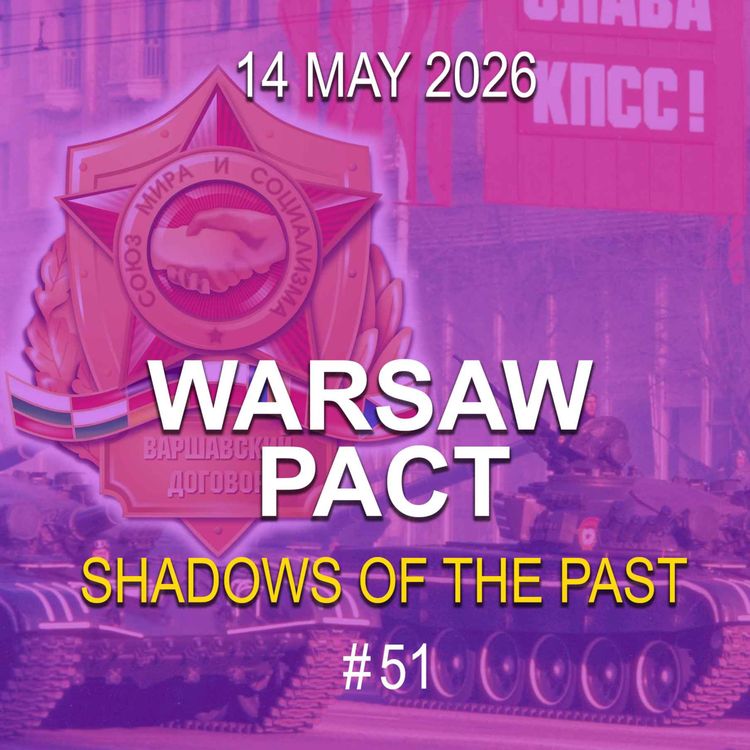
The Warsaw Pact
Today is May 14th. Exactly on this day in 1955, the Warsaw Pact was signed in the Polish capital. On paper, it was officially called the "Treaty of Friendship, Cooperation, and Mutual Assistance". In reality, it was an empire in disguise.
In this historical deep-dive, we explore the military alliance that became notorious not for defending against external enemies, but for invading its own members. From the bloody suppression of the Hungarian Revolution in 1956 to the crushing of the Prague Spring in 1968, we unpack how the Warsaw Pact functioned as a Soviet instrument of control, held together by fear and the brutal logic of the Brezhnev Doctrine.
But this is not just a history lesson. The ghost of the Warsaw Pact still haunts Europe's modern geopolitical landscape. We examine how the trauma of this forced alliance shapes the uncompromising stance of Eastern European nations like Poland and the Baltic states today. They are NATO's fiercest defenders because they know firsthand the devastating cost of false security guarantees and what it means to be trapped in a superpower's sphere of interest.
Finally, we hold the Warsaw Pact up as a mirror to modern-day NATO. While the Warsaw Pact collapsed from within when the threat of Soviet force vanished under Mikhail Gorbachev, NATO faces a fundamentally different kind of challenge. We discuss the dangers of transactional politics, the shifting strategic focus of the United States, and why any military alliance can only survive as long as its members truly believe in the credibility of its core promises.
Tune in to The Topic Lens Podcast for an unvarnished exploration of power, coercion, and the fragile nature of global alliances.
This episode features AI-generated dialogue (NotebookLM), based on extensive research across multiple sources.
It is meant to provide structured context — not replace primary sources or expert analysis.
More episodes
View all episodes
66. FIFA World Cup 1998 - France
38:51||Season 2026, Ep. 66In the summer of 1998, France didn't just host a football tournament; it staged a spectacular collision of sports, politics, and cultural identity. This episode dives deep into the 1998 FIFA World Cup, a watershed moment that marked the end of the old football world and the birth of the hyper-commercialized, global spectacle we know today.We explore the triumph and the subsequent unraveling of the "Black-Blanc-Beur" myth, analyzing how the French national team became a fragile symbol of post-colonial integration. We uncover the dark side of the modern celebrity athlete through the enduring mystery of Ronaldo's collapse before the final, a moment symbolizing the aggressive corporate takeover of the sport by corporate giants.From the intense geopolitical diplomacy of the USA vs. Iran match and Croatia's emotional post-war bronze, to Nelson Mandela's use of South Africa's debut to unite a post-apartheid nation, we break down why this tournament was the ultimate mirror for global society. We also delve into the revolutionary Clairefontaine academy—the industrial talent factory that engineered Europe's ensuing decades of footballing dominance.Finally, we look ahead to the expanded 2026 World Cup in North America, contrasting the romantic nation-building dreams of France 98 with the massive commercial scale and polarized cultural climate of the future.Join us for an analytical journey beyond the pitch, exploring the myths, the politics, and the unforgettable human drama of the World Cup that changed everything.
65. FIFA World Cup 1994 - USA
36:40||Season 2026, Ep. 65From 1994 to 2026: The Tournament That Changed EverythingThis summer, the world's biggest football circus returns to North American soil, 32 years after its last visit. To understand the magnitude of the 2026 World Cup, we must rewind to a tournament that redefined the sport forever.In this episode of The Topic Lens Podcast, we take an unvarnished deep dive into the 1994 World Cup in the USA. We look beyond the scores and use the tournament as a lens to understand the economy, geopolitics, and the profound lessons the sport learned. The year is 1994, the Cold War is over, and a confident USA opens its doors to a sport it barely knows. How did a country without a professional football league set an all-time attendance record of over 3.5 million spectators that still stands today?We cover the unforgettable moments and the deep human tragedies that remain etched in our collective memory:Heroism and the psychology of the penalty spot: The unbearable pressure and the iconic image of a devastated Roberto Baggio missing the decisive penalty after 120 goalless minutes in the final against Brazil.Football's darkest chapter: The story of Colombia's Andrés Escobar, whose fatal own goal against the USA led to his brutal murder in a Medellín parking lot just days later.An icon in free fall: Diego Maradona's shocking doping scandal and exit in disgrace—the end of an era.We also discuss how 1994 marked the beginning of FIFA's modern, hyper-commercialized era. The tournament led to the birth of Major League Soccer and transformed the global football economy. Did you know that the 1994 matches were broadcast on US television completely without commercial breaks during play, while FIFA itself will allow commercial interruptions during matches in 2026?.(And by the way: England—who reached the semi-finals in 1990—managed to not even qualify for this historic tournament after being defeated by Norway in the qualifiers).This is the episode for you if you want to understand the big picture before the referee blows the whistle for 2026.🎧 Listen now, and subscribe to The Topic Lens Podcast for more deep dives into the history that shapes our present.
64. FIFA World Cup 1990 - Italy
39:33||Season 2026, Ep. 64Step back into the spectacular and turbulent summer of 1990. The Berlin Wall has fallen, the Cold War is ending, and the world is on the brink of massive geopolitical shifts. Against this historic backdrop, the 1990 FIFA World Cup in Italy became a tournament where football, culture, and a changing global map collided.Italia '90 is a fascinating paradox. On the pitch, it was notorious for defensive cynicism, a record-low goal average of 2.21 per game, and extreme caution that ultimately forced FIFA to change the rules of the sport. But off the pitch, it was pure magic. This is the World Cup that gave us Luciano Pavarotti’s spine-tingling "Nessun Dorma," elevating football to high art and forever linking the sport with the passion of opera. It gave us the unforgettable tears of Paul "Gazza" Gascoigne—a moment of vulnerability that humanized the English game and paved the way for the modern Premier League era.Join us as we explore the most unforgettable stories of this iconic tournament:The African Breakthrough: How 38-year-old Roger Milla danced at the corner flag, charmed the world, and put African football on the global stage.The Ultimate Cinderella Story: The unbelievable rise of Salvatore "Totò" Schillaci, the relatively unknown Sicilian who shocked the world by winning both the Golden Boot and Golden Ball, before sadly passing away in 2024.A City Divided: How Diego Maradona strategically used regional identity to divide his beloved city of Naples during the explosive semi-final between Italy and Argentina.The Lost Generation: We bid a melancholic farewell to the incredibly talented national team of Yugoslavia, as well as West Germany and the Soviet Union, right before these nations vanished from the geopolitical map.Italia '90 wasn't just a football tournament—it was the beautiful, gritty dawn of the modern game, taking place in Serie A, the absolute epicenter of world football at the time. Tune in to discover why a World Cup played with fear and caution left a legendary legacy of pure romance.
63. FIFA World Cup 1986 - Mexico
53:42||Season 2026, Ep. 63In 1986, the footballing world descended upon Mexico for a tournament that would forever change the sport. While history remembers it as the month Diego Maradona cemented his legacy in the eternal GOAT debate with his infamous "Hand of God" and the beautiful "Goal of the Century," the 13th World Cup was about so much more than one man's genius.Welcome to another episode of The Topic Lens Podcast, where we look beyond the pitch to explore the profound economic, historical, and geopolitical shockwaves of the 1986 World Cup. We uncover the story of the host that never was—Colombia, a nation forced to withdraw from hosting duties due to a crippling debt crisis and FIFA's expanding commercial demands. We also examine Mexico's incredible resilience, stepping in to host the tournament just months after a devastating 8.1 magnitude earthquake that brought the nation's capital to its knees.We also explore the fascinating and highly relevant story of the Soviet Union squad. Often remembered as a unified communist powerhouse, we reveal how this scientifically trained "machine" of a team was actually driven by a heavily Ukrainian core from Dynamo Kyiv. Led by the legendary Ukrainian manager Valeriy Lobanovskyi, the team's makeup presents a poignant and tragic historical contrast given the current bloody conflict between Russia and Ukraine. Furthermore, the episode dives into the intense geopolitical tension of the Argentina-England quarterfinal, played in the bitter shadow of the Falklands War.Plus, we touch upon Canada's historic first-ever World Cup appearance, the tactical civil war in Argentina between pragmatist Carlos Bilardo and romanticist César Luis Menotti, and how the aggressive push for global TV rights forced players to perform in scorching midday heat just to satisfy European prime time television.Join us as we explore how Mexico '86 became the ultimate bridge between the romantic post-war era of football and the modern, highly commercialized global spectacle we know today.
62. FIFA World Cup 1982 - Spain
36:34||Season 2026, Ep. 62Welcome to another historical journey on The Topic Lens Podcast. This time, we travel back to the summer of 1982—a tournament that redefined the FIFA World Cup and captured a world in the midst of profound political and cultural transition.Hosted in a newly democratic Spain still recovering from a recent military coup attempt, the 1982 World Cup unfolded under the heavy shadow of geopolitics, including the Falklands War. Yet, on the pitch, it delivered some of the most enduring myths, heartbreaking tragedies, and bizarre controversies in sports history.In this episode, we explore the intersection of football, history, economics, and pop culture, diving deep into:The Beautiful Losers: Discover why Brazil’s 1982 squad—led by the smoking, philosophy-reading doctor Sócrates and the brilliant Falcão—is widely considered the greatest team to never win a World Cup.The Ultimate Redemption: Follow the unbelievable journey of Italy and Paolo Rossi. Returning from a two-year ban due to the Totonero match-fixing scandal, Rossi and manager Enzo Bearzot used a total media blackout (silenzio stampa) to block out the noise. Against all odds, Rossi became the tournament's top scorer, culminating in Marco Tardelli’s iconic, emotional scream.Controversies and Dark Arts: We dissect the infamous "Disgrace of Gijón", Harald Schumacher’s unpunished, brutal foul on Patrick Battiston, and the turbulent, foul-ridden debut of a 21-year-old Diego Maradona.When Power Stopped the Game: Hear the absurd but true story of a Kuwaiti Sheikh who physically marched onto the pitch to successfully force a referee to annul a French goal.The Global Shift: How FIFA's expansion to 24 teams permanently changed the game, highlighted by Algeria's shock victory over West Germany and Cameroon's undefeated, yet heartbreaking, exit.This isn't just a story about who lifted the trophy. It’s the story of how 1982 paved the way for the Serie A golden age, the modernization of global television broadcasts, and the harsh lesson that playing the most beautiful football doesn't always make you a world champion.Join us for an unfiltered look at Spain 1982—the tournament where football truly grew up.
61. Marilyn Monroe - The Icon, the Myth, and the Human
42:45||Season 2026, Ep. 61She was the most famous woman in the world, yet perhaps the most misunderstood. We all know the platinum blonde hair, the billowing white dress, and the tragic end at just 36 years old. But who was the woman behind the billion-dollar brand?In this episode, we dive deep into the life, legacy, and enduring mystery of Marilyn Monroe. We peel back the layers of Hollywood's ultimate sex symbol to reveal Norma Jeane Baker—a brilliant, vulnerable, and ambitious woman who fought the studio system, mastered comedic acting, and became the very blueprint for modern celebrity culture. From her traumatic childhood in foster homes to her strategic creation of the "Marilyn" persona, we explore the paradox of a woman who was both a victim of her time and a pioneering architect of her own image.In this episode, we cover:The Metamorphosis & The Genius: How Norma Jeane built the Marilyn persona as a survival strategy, and why her "dumb blonde" roles were actually masterful, subversive satires that parodied the society that objectified her.The Hollywood Trailblazer: Her groundbreaking rebellion against the 20th Century Fox studio system. Discover how she founded Marilyn Monroe Productions to demand creative control, better roles, and fair pay in an era when women had little power.The Hidden Pain: The devastating physical struggles of severe endometriosis, her heartbreaking miscarriages, and the psychological toll of her marriages to baseball legend Joe DiMaggio and intellectual playwright Arthur Miller.Power, Paranoia & The Kennedys: We separate fact from fiction regarding her relationships with JFK and Robert Kennedy, alleged Mafia ties, FBI surveillance fueled by McCarthyism and her conversion to Judaism, and the chaotic, heavily debated night of her death.The Ultimate "Rorschach Test": Why Marilyn remains a cultural mirror—often compared to Princess Diana—and how her tragic death in her "prime" froze her as an eternal myth that every new generation continues to reinterpret.Was she a tragic victim of a patriarchal Hollywood machine, or a shrewd manipulator of the media?Join us as we explore why, more than 60 years after her death, the world is still not done interpreting Marilyn Monroe.
60. FIFA World Cup 1978 - Argentina
49:44||Season 2026, Ep. 60In 1978, the world's greatest sporting event was hijacked by one of its most brutal regimes. Just a mile away from the roaring crowds and falling confetti at the Estadio Monumental, political prisoners were being tortured at the notorious ESMA center. In a chilling contrast, guards even let the prisoners hear the cheers of the crowds as Argentina marched toward its first World Cup victory.This episode dives deep into the moral complexities, sports washing, and unforgettable footballing moments of the 1978 World Cup in Argentina. We explore how General Videla’s military junta used the tournament as a propaganda machine to mask the horrors of the "Dirty War" and the thousands of desaparecidos (the disappeared). We unpack the paradox of César Luis Menotti, the chain-smoking, left-wing intellectual who coached the national team to glory despite his political disdain for the regime. We also celebrate the heroics of Mario Kempes, the powerful striker who became an immortal national icon.Beyond the pitch, we uncover the defining, and often underreported, stories of the tournament:The highly controversial 6-0 victory over Peru and the enduring rumors of geopolitical match-fixing and grain deals.The real reason behind Johan Cruyff’s absence, driven by a traumatic kidnapping attempt in Barcelona rather than a political boycott.The courageous, silent protests of the Mothers of the Plaza de Mayo, who marched outside the presidential palace with their white headscarves while the world's cameras were focused on the football.The lasting legacy of Osvaldo Ardiles and Ricardo Villa, who moved to Tottenham Hotspur right after the tournament, planting the first seeds for the internationalization that would eventually shape the modern Premier League.Join us for a gripping tale of triumph and terror, where football’s greatest festival was played out in the dark shadow of a dictatorship.
59. Bitcoin - Digital Gold
49:10||Season 2026, Ep. 59Today is May 22nd – officially known as "Bitcoin Pizza Day". Back in 2010, a programmer named Laszlo Hanyecz made history by purchasing two Papa John's pizzas for 10,000 Bitcoin. While it's easy to laugh today at what is now considered the most expensive meal ever bought—worth around a billion dollars at Bitcoin's peak—this absurd transaction proved something revolutionary: a decentralized digital code could hold real-world value.But what exactly are we witnessing with Bitcoin's explosive growth since that fateful day? Is it simply the world's largest Ponzi scheme driven by the "greater fool" theory? Or does it represent a fundamental financial paradigm shift, designed to shield your hard-earned savings from being quietly eaten away by inflation?In this episode, we strip away the hype and the technical jargon. You won't be overwhelmed by complex terms like SHA256, hash-rates, or Proof of Work. Instead, we deliver a serious, unbiased, and documentary-style breakdown of what Bitcoin truly is. We explore the structural flaws of the traditional fiat and banking system—often described as a "melting ice cube"—and how Bitcoin's absolute, hard-coded scarcity of 21 million coins offers a radical alternative.We discuss human psychology, the illusion of value, and why people living under authoritarian regimes or hyperinflation view Bitcoin not as a speculative gamble, but as a financial lifeboat.Whether you are a complete skeptic or someone looking to finally grasp the basics of this decentralized revolution, this episode is made for you.(Disclaimer: This podcast is for educational and informational purposes only and does not constitute financial advice.)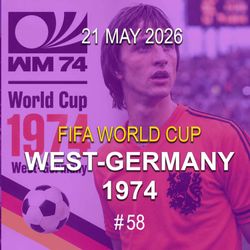
FIFA World Cup 1974 - West-Germany
47:20||Season 2026Welcome to a new episode of The Topic Lens Podcast. This time, we travel to the 1974 World Cup in West Germany—the tournament where football woke up from its romantic dream and became a modern, highly organized global industry,.Hosted in a nation still deeply scarred by the terrorism of the 1972 Munich Olympics, the 1974 tournament was played under massive, unprecedented security, complete with barbed wire and snipers,. But the drama went far beyond the pitch. We explore how this World Cup mirrored the turbulent geopolitics of the 1970s, taking place alongside the Watergate scandal and the global oil crisis,.In this episode, we dive into the dark intersections of sports and dictatorships: from the terrifying reality of Zaire's players facing death threats from dictator Mobutu Sese Seko,, to the gripping story of Chile's Carlos Caszely, who received the World Cup's first-ever red card after openly defying Augusto Pinochet's bloody regime,. We also unpack the deeply symbolic Cold War clash between East and West Germany, culminating in Jürgen Sparwasser's legendary goal,.On the field, 1974 delivered the ultimate battle of philosophies. We break down the tactical revolution of the Netherlands' "Total Football", led by the brilliant, intellectual rebel Johan Cruyff,. They faced off against the ultimate machine of efficiency: host nation West Germany, guided by the elegant libero Franz Beckenbauer and the incredibly clinical Gerd Müller,. We discuss the great paradox of the 1974 final—how the Dutch lost the trophy, but ultimately won the future of the sport,.Finally, we uncover the birth of the modern sports business. 1974 was the year João Havelange took over FIFA, transforming it from a European colonial project into a massive global commercial empire,,. Add in Cruyff’s famous two-stripe kit rebellion against Adidas,, and you have the exact blueprint for the hyper-commercialized game we know today.Join us as we explore the year football lost its innocence and changed the world forever.