
Latest episode
From Rival to Director: The Jason Wilcox Story
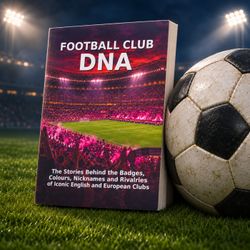
20:08|📖 Check out our book Football Club DNA!Want to understand the history, soul, and identity behind Europe’s most iconic football clubs? The book Football Club DNA covers 60 European clubs—30 from England and 30 from the rest of Europe—providing a comprehensive guide to their origins, crests, colors, nicknames, and classic rivalries. It’s the perfect gift and an essential reference book for any football fan. By supporting the book, you also help Topic Lens and Grass & Glory produce more podcasts and content!Link: https://books2read.com/u/b59AV6Episode Title: The Architect in the Storm: Can Jason Wilcox Fix Manchester United?Description:Is Jason Wilcox the mastermind behind a long-term rebuild at Manchester United, or is he simply the face of a structural crisis far beyond his control?In this episode of Grass & Glory (the football podcast from Topic Lens), we turn the spotlight on Manchester United’s Director of Football, Jason Wilcox. As TV cameras repeatedly capture Wilcox sitting in the hot seat alongside CEO Omar Berrada at Old Trafford — following a dramatic 4–4 draw against Aston Villa that leaves United hovering in 18th place before the international break — the pressure on the executive room has reached a boiling point.Many football fans know his title, but few know the full journey of the man tasked with reshaping Old Trafford. In this episode, we break down Wilcox’s career:The Player: How he helped deny Manchester United the 1994/95 Premier League title with Blackburn Rovers, and his time at fierce rivals Leeds United during their European Champions League run.The Architect: His decade-long success as Academy Director at Manchester City, where he helped oversee the development of talents like Phil Foden and Cole Palmer.The Executive: His rapid rise from Technical Director to Director of Football at Old Trafford following Dan Ashworth’s departure.We dig deep into the critical questions surrounding his tenure:The Transfer Strategy: Why United spent big strengthening the midfield while leaving critical gaps at left-back and striker unaddressed.The Managerial Carousel: The clash of philosophies that led to Ruben Amorim’s exit and the ongoing gamble on Michael Carrick.The System: How much blame lies with Wilcox versus the broader governance of the INEOS and Glazer regime.📖 RECOMMENDED READING: Football Club DNAWant to understand the iconic clubs behind the matches you watch every week? Check out our new book: Football Club DNA — an essential handbook covering 60 top European clubs (30 from England and 30 across Continental Europe). The book dives deep into each club’s origins, crests, colors, nicknames, and bitter rivalries. It makes a perfect gift or reference guide for any true football fan! Supporting the book directly helps Topic Lens and Grass & Glory produce more deep-dive content.
More episodes
View all episodes
Two Cities, One Soul: The Birth and Rise of PSG
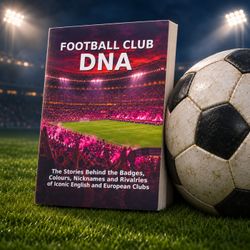
39:21|📖 Check out our book Football Club DNA!Want to understand the history, soul, and identity behind Europe’s most iconic football clubs? The book Football Club DNA covers 60 European clubs—30 from England and 30 from the rest of Europe—providing a comprehensive guide to their origins, crests, colors, nicknames, and classic rivalries. It’s the perfect gift and an essential reference book for any football fan. By supporting the book, you also help Topic Lens and Grass & Glory produce more podcasts and content!Link: https://books2read.com/u/b59AV6🎙️ Grass & Glory | Episode: The Synthetic Rise of Paris Saint-GermainIn this episode of Grass & Glory, the football podcast by Topic Lens, we dive deep into the fascinating and complex history of Paris Saint-Germain—tracing its transformation from a manufactured capital city project to a European superpower.How did PSG go from being founded in 1970 through a merger between Paris FC and Stade Saint-Germain to dramatically splitting just two years later? We take a closer look at how fashion designer Daniel Hechter created the iconic kit in 1973, and recount the emotional moment club president Francis Borelli kissed the turf at Parc des Princes after winning their first major trophy in 1982.We take you through the Canal+ era of the 1990s and the Cup Winners' Cup triumph in 1996, the intense Le Classique rivalry against Olympique de Marseille, and the passionate supporter culture at Parc des Princes. Then, we explore how ownership under Qatar Sports Investments (QSI) reshaped the club, why the "Galácticos" era with Neymar, Messi, and Mbappé struggled to deliver in Europe, and how Luis Enrique forged a unified collective that achieved glory with consecutive Champions League titles in 2025 and 2026. Finally, we examine the newly reignited cross-town derby against neighbors Paris FC.Subscribe and follow Grass & Glory for weekly deep dives into football's greatest stories!
Why Do We Change the Clocks? Daylight Saving Time Explained
24:31|At The Topic Lens, we explain the background behind the headlines. But headlines are made of words, and words have backgrounds too. It’s officially “daylight saving time”, not “savings”, because the idea is that you are saving daylight. And when you set your clock, “o’clock” is simply short for “of the clock”.📖 If you enjoy understanding why things are the way they are, our book Why Is It Called That? does the same for 350 everyday words. A gift for yourself, or for anyone who loves asking “why?” → https://books2read.com/u/mKa8V9———From the words to the clocks themselves: why do we change the time twice a year?Benjamin Franklin often gets the credit, but his famous 1784 letter was a joke. The real story runs through a New Zealand insect collector, a British builder, and the First World War, when Germany became the first country to turn the clocks. In this episode, we explore why daylight saving time began, why Europe and the US change their clocks on different dates, and why the EU’s plan to abolish the clock change has stalled.In this episode, you’ll learn: • The Bizarre Origins: How a bug collector wanting extra evening light and a British builder on horseback shaped modern timekeeping.• Wartime Emergency: Why Germany first introduced daylight saving time in 1916 to conserve coal—and how the rest of the world followed suit. • Clock Chaos & Bureaucracy: The 35-mile US bus route where passengers had to change their watches 7 times, and why overnight trains still stop and wait for an hour when the clocks fall back. • Regional Mismatches: Why Europe and North America switch their clocks on different weekends, creating weeks of transatlantic scheduling confusion every year. • The Political Gridlock: Why the European Parliament voted to end seasonal clock shifts in 2019, yet millions of us are still setting our clocks today.Listen in to get the full story behind the headline—and discover why putting an end to the clock change is far more complicated than simply picking a time.———🎧 Enjoying The Topic Lens? Hit follow/subscribe, leave us a rating or review, and share this episode with anyone currently grumbling about losing an hour of sleep!
Beyond the Headlines: Why France is Burning (and What It Means for 2027)
17:50|At The Topic Lens, we explain the background behind the headlines. But headlines are made of words, and words have backgrounds too. A protest is an expression of dissent. A riot is a term for violent public disorder. The words are not interchangeable—but when a demonstration turns violent, who decides when one becomes the other?In France, that distinction shapes how people understand the events: as a fight over injustice, a breakdown of public order, or sometimes both at once. In this episode of The Topic Lens, we look beyond the headlines to explore what happened, who took part, and why the words used to describe it matter.📖 If you enjoy understanding why things are the way they are, our book Why Is It Called That? does the same for 350 everyday words. A gift for yourself, or for anyone who loves asking “why?” → https://books2read.com/u/mKa8V9———It is October 20, 2026, and France is experiencing its most severe wave of social unrest in years. What began on September 21 as a localized high school blockade over missing teachers in Créteil has rapidly escalated into a nationwide movement against soaring living costs, record fuel prices, and institutional distrust. Following the massive October 17 demonstrations, shocking images of a historic town hall in Limoges in flames, city hall in Marseille stormed, and widespread looting in Paris have dominated news feeds around the world.In this episode of The Topic Lens, we look beyond the dramatic headlines to unpack the real mechanisms driving the chaos across French cities.In this episode, we explore:The Spark: How a localized student protest in the Paris suburbs over overcrowded classrooms and lack of teachers ignited a countrywide movement.The Economic Pressure Cooker: How diesel prices reaching €2.41 per liter, inflation, and a national debt hitting 119% of GDP brought students, trade unions, and former Yellow Vests together.Three Parallel Stories: Why it is critical to separate peaceful social protesters from organized radical political violence (black bloc) and opportunistic suburban looting.The 2027 Political Chessboard: How curfews, budget battles, and street clashes could reshape the upcoming 2027 presidential election between Marine Le Pen, Jean-Luc Mélenchon, and Emmanuel Macron’s government.The Power of the Media: How viral video clips and sensationalist framing shape public perception both in France and across Europe.
The Cold War: The World It Built and the World We Live In
01:21:45|At The Topic Lens, we explain the background behind the headlines. But headlines are made of words, and words have backgrounds too. The term “cold war” was used by George Orwell in 1945, then popularized in 1947 by American financier Bernard Baruch and journalist Walter Lippmann.📖 If you enjoy understanding why things are the way they are, our book Why Is It Called That? does the same for 350 everyday words. A gift for yourself, or for anyone who loves asking “why?” → https://books2read.com/u/mKa8V9———From the name to the conflict itself: how did two former allies end up in a 45-year standoff?In this episode, we explore the Cold War from the ruins of 1945 to the fall of the Soviet Union in 1991: the Iron Curtain, the nuclear arms race, proxy wars from Korea to Afghanistan, and the moments when the world came closest to catastrophe. We also look at why its legacy still shapes the headlines today.---------In this episode: • 00:00 – From Orwell to Baruch: The origin of the term "Cold War" • 04:00 – What was the Cold War? Framing 1945–1991 • 09:00 – The Security Dilemma: Why former allies became rivals • 17:00 – The Iron Curtain Hardens: Berlin, NATO, and the division of Europe • 25:00 – Why it stayed "cold": Nuclear deterrence and changing balances • 31:00 – Going Global: Korea, Cuba, Vietnam, and local agendas • 37:00 – How it ended: Gorbachev, popular movements, and 1989–1991 • 42:00 – Why it matters now: Modern alliances and nuclear risks today--------Connect & Support: 📖 Get our book: Explore the surprising origins of 350 everyday words in Why Is It Called That?: https://books2read.com/u/mKa8V9 🔔 Subscribe: Follow The Topic Lens on Spotify, Apple Podcasts, or wherever you listen so you never miss an episode. ⭐ Support the show: If you found this explanation helpful, please leave us a rating and review — it helps others find the podcast!
Bosnia and Herzegovina - Seen From The US
01:04:49|At The Topic Lens, we explain the background behind the headlines. But headlines are made of words, and words have backgrounds too. Bosnia is named after the river Bosna, while Herzegovina comes from “herceg”, a local form of the German word Herzog, meaning duke. In 1448, a regional nobleman took the title Duke of Saint Sava, and his lands became the “duke’s land”.📖 If you enjoy understanding why things are the way they are, our book Why Is It Called That? does the same for 350 everyday words. A gift for yourself, or for anyone who loves asking “why?” → https://books2read.com/u/mKa8V9———From the name to the country itself: what does Bosnia and Herzegovina look like through American eyes?Welcome back to The Topic Lens, our transatlantic podcast series where we examine American states through a European lens and explore European nation-states through American eyes.Following last week’s dive into Belgium as the arena of European power in Brussels, we set our sights on the Balkans — navigating one of the most politically charged and deeply complex narratives in modern Europe: Bosnia and Herzegovina.In this episode, we step behind the headlines to understand the true context of this resilient nation. We address the heavy truths of the 1990s war and the Srebrenica genocide — one of the darkest stains on modern European history, where international diplomacy fell devastatingly short.However, Bosnia and Herzegovina cannot and should not be reduced solely to "the war" or simplistic myths of ancient ethnic hatreds. We explore the profound human challenge of nation-building after a civil war — a conflict that, unlike war with an external enemy, tears down internal social trust between neighbors who must ultimately find a way to live together in peace.In this episode, we discuss:The Legacy of the 1990s & Srebrenica: A candid look at the genocide, the dark spots in European history, and the shortcomings of the international community.The Anatomy of Civil War: Why healing from an internal conflict requires a generational effort to rebuild societal bonds stone by stone.Beyond the Conflict Clichés: Uncovering the rich history, geography, and vibrant cultural identity of Bosnia and Herzegovina that often gets overlooked.The Transatlantic Thread: How American diplomacy shaped the Dayton Peace Agreement in Ohio, and the deep connections to the Bosnian diaspora in U.S. cities like St. Louis, Missouri.The Future of Rebuilding: How a nation recovers from trauma and constructs a functional future across generations.About The Topic Lens: The Topic Lens aims to foster deeper global understanding by analyzing the context behind major news headlines. Through our transatlantic framework, we bridge cultural and political perspectives across the Atlantic.
Rivals: Liverpool FC vs Manchester City
50:39|Today is October 11, 2026, and all eyes in world football are locked on Anfield. Just weeks after an independent Premier League commission found Manchester City guilty of severe financial breaches and "sham" sponsorship contracts between 2009 and 2018, City step onto the pitch against the rival that defined their modern era: Liverpool FC.In this deep-dive episode, we unpack the multi-layered football rivalries of North West England:• The Financial Shadow over Anfield: How the September 2026 ruling on £900M+ in artificially inflated contracts reframes the razor-thin title battles between Jürgen Klopp and Pep Guardiola—including the heartbreaking 98 vs. 97 point season. • The Ultimate North West Derby: Why Liverpool FC vs. Manchester United FC remains the organic, deeply-rooted "true" rivalry—born from the 1894 Manchester Ship Canal, decades of shared dominance, and an epic 20–20 league title duel. • The Everton Paradox: Why Everton and Manchester City historically maintained an unwritten "enemy of my enemy" alliance against Anfield. • Pure Emotion vs. Paper Legitimacy: Can we honor the genuine tears, Agüero’s 93:20 miracle, and Klopp’s heavy-metal football while acknowledging a compromised financial foundation?