Share
The Salmon People
The Tunnel of Poop
The Salmon People podcast tells the story of a 40-year fight for wild salmon. It began with a fishing outfitter seeing smolts – young fish – covered in sea lice as he took tourists out to fish. He took his concerns to biologist Alex Morton. She was interested because the whales she was studying had stopped returning to the B.C. coast in the spring. She wondered if the sea lice were killing the smolts preventing them from going out to the ocean and returning as adult fish – fish the whales loved to eat?
One person has a question, a second person decides to try and answer it. And the years rolled by as Alex Morton worked with other scientists, environmentalists, nature guardians and First Nations to convince government that an industry controlled by multi-national companies based in Norway was contributing to the decline of the wild salmon.
Now with a 2029 deadline for all ocean-based fish farms to close, the industry is still lobbying to stay. They say they have a new design of farm that provides a better separation from the wild salmon and protect their fish from sea lice.
Scientist Stan Proboszcz of Watershed Watch says one of the companies, Cermaq is testing the new configuration. He says the fish are grown in a big plastic bag, which still sits in the water.
“They have kind of switched their branding of that technology to closed containment. The reason for that rebranding in this federal transition that is the one thing that would be allowed is closed containment,” Proboszcz said.
“And if this is closed containment and this is the solution, I'm going to suggest that it's a terrible solution. It doesn’t work. It does not work at all,”
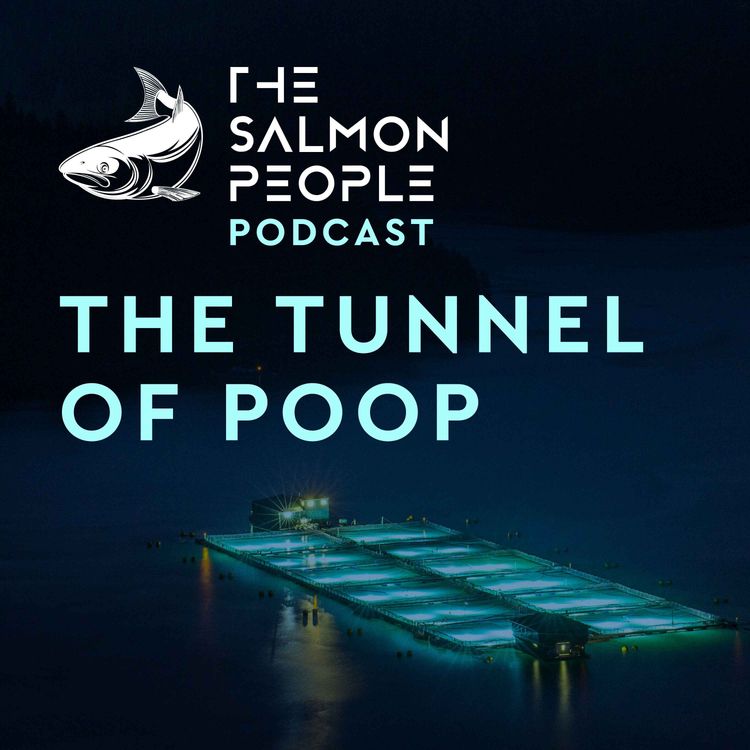
Dan Lewis of Clayoquot Action keeps watch on the fish farms on the west side of the island and says the new design doesn’t fix a major problem – enormous amounts of fish feces released from the farms into the ocean. He says a video recorded by biologists from Fisheries and Oceans Canada, that was released after an ATIP request, showed a shocking amount of feces below the fish farm.
“And they found a trench and they followed it and it appeared to be full of feces from the farm. And I'm sure that's not how it's supposed to function.” Lewis said.
More episodes
View all episodes

The Salmon People Trailer
02:07||Season 1
1. The Unlikely Detective
36:22||Season 1, Ep. 1Chris Bennett runs Blackfish Lodge, 300 kilometres north of Vancouver where Canada’s West Coast crumbles into the Pacific Ocean. His guests are from all over the world. They come to see B.C.’s wildlife, but especially the salmon. Chris was out with a group of tourists when he looked into the water alongside his boat and noticed young salmon — called smolts — acting strangely. He drove down the coast with a few smolts in a bucket to show to Alexandra Morton, a neighbour who studied orcas. It was the first clue in a mystery of disappearing salmon, and Alex, an unlikely detective, stepped up.We are crowdfunding to cover the cost of this podcast. If you'd like to contribute, as little as five dollars per month can help support this work: https://www.nationalobserver.com/donate/podcasts.
2. The Gold Rush
35:59||Season 1, Ep. 2If you take a boat along the coast of northern British Columbia, you’ll see towering deciduous trees and snow-capped peaks, small islands, big islands and scattered throughout it all … fish farms. Dozens of them. Alexandra Morton remembers their arrival — remembers the Gold Rush when anyone who wanted a fish farm license got one. And she remembers how the government tricked coastal people into pointing out the best wild salmon habitat.We are crowdfunding to cover the cost of this podcast. If you'd like to contribute, as little as five dollars per month can help support this work: https://www.nationalobserver.com/donate/podcasts.
3. Camp Sea Lice
27:06||Season 1, Ep. 3When Alex left the orcas behind to study sea lice, she knew she couldn’t be everywhere, so she started to gather an army of sea lice helpers — citizen scientists from all over northern Vancouver Island willing to collect smolts and count sea lice for her research. Jody Erickson and Farlyn Campbell started as teenagers and were devastated to see baby fish with dozens of sea lice eating through their bodies.We are crowdfunding to cover the cost of this podcast. If you'd like to contribute, as little as five dollars per month can help support this work: https://www.nationalobserver.com/donate/podcasts.
4. The Game-changer
32:01||Season 1, Ep. 4The salmon had been returning to the Fraser River for hundreds of years. In 2009, they didn’t. Or barely did. Nine million sockeye salmon were missing. Stephen Harper, prime minister at the time, was not a man known for promoting science, but the catastrophic loss forced him to call an inquiry. For the first time, there would be money, time and people testifying under oath about events leading to the disappearance of the wild salmon.We are crowdfunding to cover the cost of this podcast. If you'd like to contribute, as little as five dollars per month can help support this work: https://www.nationalobserver.com/donate/podcasts.
5. Hiding the Scientist
43:49||Season 1, Ep. 5As her day to testify at the Cohen Commission arrived, Alex Morton was full of adrenaline. She could tell people what she had been seeing with the salmon for the past two decades. And she would reveal what she had found in the 500,000 pages of government documents submitted to the inquiry. Documents that had only been released to inquiry witnesses, and would go back under lock and key the moment the inquiry was over. It should have been a perfect Hollywood moment — like key scenes from Erin Brockovich, Dark Waters or even The Verdict. And when Alex made key documents public, they revealed how the health of wild salmon had been ignored by Fisheries and Oceans for decades.We are crowdfunding to cover the cost of this podcast. If you'd like to contribute, as little as five dollars per month can help support this work: https://www.nationalobserver.com/donate/podcasts.
6. Skull and Crossbones
39:42||Season 1, Ep. 6The Sea Shepherd Conservation Society offers to send a research ship to B.C. to help Alex Morton with her studies. At first, she rejects the offer as too provocative. Sea Shepherd is a contentious environmental organization. But Alex needs to get close to the salmon farms, so she changes her mind. Alex planned to visit all the fish farms off the east coast of Vancouver Island and collect water samples to test for diseases coming out of the farms. And then she got the idea to ask some First Nations people to join her. That was a game-changer.We are crowdfunding to cover the cost of this podcast. If you'd like to contribute, as little as five dollars per month can help support this work: https://www.nationalobserver.com/donate/podcasts.
7. The Occupation
39:19||Season 1, Ep. 7Alex and Hereditary Chief George Quocksister Jr. used GoPro cameras and divers to record what was happening underneath the fish farms. When the footage was shown to First Nations communities, there was shock and sadness, then anger. Fish with holes in their bodies, chunks missing from their faces, barely moving and close to death. A group of young First Nations people felt the pull to defend the wild salmon and they occupied one fish farm, then two, then three. They stayed 270 days before Marine Harvest got an injunction to force them to leave.We are crowdfunding to cover the cost of this podcast. If you'd like to contribute, as little as five dollars per month can help support this work: https://www.nationalobserver.com/donate/podcasts.
8. Intimidation
43:50||Season 1, Ep. 8The Sea Shepherd research vessel got a rude welcome when it arrived in Victoria, B.C., for its third year of working with Alex Morton. What had been a quick, routine customs event took a menacing turn. Its captain was questioned for six hours, then ordered to stay on board through the weekend until Canada Border Services could hold a hearing. And Alex and the Sea Shepherd were followed by boats with blacked-out windows carrying people with long lens cameras. First Nations made a historic agreement with the B.C. government that gave them the power to say no to fish farms.We are crowdfunding to cover the cost of this podcast. If you'd like to contribute, as little as five dollars per month can help support this work: https://www.nationalobserver.com/donate/podcasts.