Share

The Resolution Room
Where conversation becomes transformation
Latest episode

3. Creating a Portrait of a Learner
29:58||Season 0, Ep. 3In this special crossover episode with Co-host Dr. Nicole Alioto of the Measure Up podcast, we conducted on the spot interviews with education leaders at the 2026 AASS NCE. This conversation explores the innovative educational practices at Lake Forest Schools, focusing on their unique approach to creating a 'Portrait of a Learner' that emphasizes community engagement, real skills for life, and strategic planning. The discussion is lead by Matthew L. Montgomery, Ph.D., Renee Fitzsimmons, Ed.D., and Erin Boothe Lenart and highlights the importance of listening to stakeholders, the integration of academic excellence with practical skills, and the vision for the future of education in a rapidly changing world.Key TakeawaysLake Forest Schools emphasize a 'Portrait of a Learner' over a 'Portrait of a Graduate'.Community engagement is crucial in shaping educational strategies.Real skills for real life are essential for student preparedness.Strategic planning involves input from various stakeholders.The journey of educational reform has been ongoing for five years.Listening sessions were key to understanding community needs.Academic excellence remains a priority alongside new initiatives.Feedback loops are vital for continuous improvement.The future of education must adapt to changing societal needs.Building a culture of accountability is essential for success.Please note: This episode was recorded live in the field during on-site interviews. As a result, there may be a few brief moments where the audio is less clear or partially inaudible. These moments do not affect the overall value of the conversation, but we appreciate your understanding if they slightly impact the listening experience.
More episodes
View all episodes

2. Start with self-trust
15:15||Season 0, Ep. 2In this special crossover episode with Co-host Dr. Nicole Alioto of the Measure Up podcast, we conducted on the spot interviews with education leaders at the 2026 AASS NCE. In this interview, Dr. Jennifer Schwanke discusses the importance of trust in educational leadership, how to build and rebuild trust, and the impact on student success. She shares insights from her new book 'Trusted' and offers practical advice for current and aspiring school leaders.Key TakeawaysThe challenges of measuring and building trust in schoolsTrust pillars: what students, teachers, and parents need from leadersTrust killers: micromanagement and inconsistent decisionsThe domino effect: how trust impacts student achievement and school cultureStrategies for restoring trust after public scandalsInternal vs. external trust: balancing self-trust and community trustThe trust-building process for new school leadersThe importance of transparency versus trustworthinessPractical advice for aspiring leaders entering the fieldDifferences and similarities in building trust across education and other sectorsAbout Dr. Jennifer SchwankeDr. Schwanke is the author of five ASCD books, including the most recent, "Trusted: Trust Pillars, Trust Killers, and the Secret to Successful Schools" and "The Principal's Guide to Conflict Management." She has written many articles for educators about literacy, equity, and leadership. She holds a doctorate from The Ohio State University, where she also serves as an instructor in Educational Leadership. She consults with districts to develop training and PD for school administrators.
1. Embracing AI in Education: A New Era
24:55||Season 0, Ep. 1In this special crossover episode with Co-host Dr. Nicole Alioto of the Measure Up podcast, we conducted on the spot interviews with education leaders at the 2026 AASS NCE. In this interview, Christian Jackson discusses the integration of AI in education, addressing common misconceptions about technology in schools, particularly in smaller districts. He shares his personal journey and motivations for advocating educational technology, emphasizing the importance of practical application and overcoming resistance from decision-makers. The discussion highlights the need for educators to embrace lifelong learning and adapt to the evolving educational landscape.Key TakeawaysYou don't need your district to be a practitioner.Lifelong learning is essential in education.Avoid over-complicating technology integration.Focus on practical applications of AI tools.Resistance to technology can be overcome with the right approach.Educational technology should enhance learning, not replace it.Understanding pain points is crucial for effective tech integration.Serendipitous moments can lead to significant opportunities.Engaging conversations can simplify complex topics.The educational system must adapt to prepare students for the future.About Christian Jackson Christian is a speaker and Gen Z activist focusing is on addressing inefficiencies in the verticals that interest me most: education and media. As a self-proclaimed media-junkie turned simple-solving thinker, I bring known tech applications to new spaces, making life easier for clientele. Driven by my faith and the belief in collective action, I always strive to ensure my work reflect a commitment to social impact. I've been humbled to receive acknowledgment from the UN for efforts in SDG Impact.Website: christianjackson.me25. What we carry forward
07:47||Season 2, Ep. 25In this reflective episode, Dr. Nashay Lowe revisits the key themes of Season Two, emphasizing the importance of slowing down to notice shifts and complexities rather than rushing to conclusions. The conversation highlights the value of patience, intentionality, and community in the process of growth and transformation. Dr. Lowe encourages listeners to carry forward the lessons learned and to embrace the journey of self-discovery and relational trust.Key TakeawaysThis episode isn't an ending; it's a pause.Reflection is where learning actually settles.This season required a different kind of attention.We talked about systems instead of shortcuts.Trust takes time; repair takes patience.You don't have to resolve everything at once.What matters is your willingness to pause.True transformation lives in how you listen and respond.You don't have to rush the work that requires patience.Let the season end with intention, restraint, and care.24. Pause the Pattern™
09:34||Season 2, Ep. 24In this conversation, Dr. Nashay Lowe explores the concept of conflict as a patterned experience that often feels repetitive and familiar. She introduces the idea of 'pausing the pattern' as a transformative practice that allows individuals to interrupt automatic responses and regain choice in conflict situations. By understanding the multi-level nature of patterns and the discomfort of pausing, listeners are encouraged to reflect on their own conflict dynamics and consider new possibilities for resolution.Key TakeawaysConflict feels repetitive and predictable.Patterns in conflict are often reenacted unconsciously.The pause is about restoring choice, not just calming down.Patterns operate at multiple levels: internal, relational, and systemic.Awareness alone doesn't create transformation; interruption is necessary.Pausing can feel uncomfortable but is essential for insight.Rushing often keeps patterns intact; slowing down is key.The pause creates space for meaningful dialogue and intentional change.Once you learn to pause, you notice patterns earlier.Clarity in conflict comes from pausing, not urgency.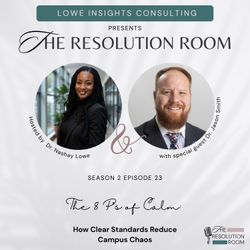
23. The 8 P’s of Calm: How Clear Standards Reduce Campus Chaos
59:37||Season 2, Ep. 23In this conversation, Dr. Jason Smith, the department chair for Human Performance and Sports Science at Tennessee State University, shares his insights on leadership, education, and career development. He introduces the concept of the 'Eight P's' of leadership, which include policy, procedure, professionalism, productivity, passion, purpose, pride, and positivity. Dr. Smith emphasizes the importance of teaching professionalism and soft skills to students, guiding them through career transitions, and fostering an inclusive environment in academia. He discusses the realities of the job market and the significance of mentorship and networking in helping students navigate their career paths. The conversation concludes with reflections on conflict resolution and the application of the Eight P's beyond academia.Key TakeawaysTeaching professionalism and soft skills is crucial for student success.Career development should start early in students' academic journeys.Networking and internships are key to career transitions.Understanding job market realities helps students set realistic expectations.Diversity and inclusion are essential in academic environments.Positive engagement can significantly impact student motivation.Conflict resolution requires open communication and accountability.Mentorship plays a vital role in guiding students' career paths.The Eight P's can be applied in various aspects of life beyond academia.About Dr. Jason SmithDr. Jason Smith's story is deeply rooted in Nashville, TN. Growing up in a diverse, multicultural environment gave him a unique perspective and the ability to connect with people from all walks of life. For twelve years, he had the privilege of serving as a coach and Athletic Director within the Metropolitan Nashville Public School System. That time was foundational, not just for his career, but for him as a person. Building lasting relationships with my student-athletes taught him the true meaning of empathy and strength, and it cemented my core belief in servant leadership. His goal has always been to light a fire in people, not under them. His passion is empowering future teachers, coaches, and mentors to find their own paths to success.Contact: https://www.linkedin.com/in/dr-jason-smith-7b6b8290/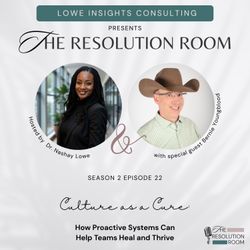
22. Culture as a Cure: How Proactive Systems Can Help Teams Heal and Thrive
50:31||Season 2, Ep. 22In this conversation, Bernie Youngblood discusses the evolving landscape of corporate culture, emphasizing the importance of wellness as a foundational element rather than a mere perk. He explores the impact of COVID-19 on work dynamics, the necessity of integrating kindness and empathy into leadership, and the role of AI in innovation. Youngblood also highlights the significance of emotional intelligence and trust within teams, advocating for a cultural transformation that prioritizes human connection and long-term commitment over short-term metrics.Key TakeawaysWellness should be seen as infrastructure, not a perk.COVID-19 has changed the perception of the traditional work model.AI's success relies on the human element for creativity and innovation.Creating a culture of kindness is essential for employee retention.Fortune 500 companies can learn from smaller organizations and startups.Building trust within teams requires moving past hierarchy and titles.Emotional intelligence is crucial for effective leadership.Cultural transformation takes time and consistency.Metrics should reflect real human impact, not just numbers.Leaders should actively show appreciation to their teams. About Bernie YoungbloodThis episode’s guest is Bernie Youngblood, CEO of ThinkPartners and host of the "Unboxing the Office Podcast," where he explores the intersections of culture, connection, and creativity inside the modern workplace. Bernie’s a lifelong entrepreneur with a passion for helping leaders see beyond the spreadsheets—into the human systems that make organizations thrive. Through ThinkPartners, he works with companies and creators who believe business can be both purposeful and profitable. His approach blends strategy, storytelling, and heart, all rooted in one belief: clarity and empathy aren’t soft skills—they’re leadership essentials.Contact: https://linktr.ee/bernieyoungblood