Beyond the Noise - the PRWeek podcast
All Episodes

181. Swearing, pocket dialling, wet trousers… ‘Am I the PR a***hole?’ podcast
31:20||Ep. 181PRWeek looks at more of your comms confessions in the latest episode of the ‘Am I the PR A***hole?’ (AITPRA) podcast.In each episode of AITPRA, PRWeek will read out your anonymous confessions and our judges – Lynn Advisory founder Shayoni Lynn and Hoffman Agency UK co-MD Richard Fogg – will decide whether an ethical line has been crossed.Confessions can be submitted via this link. All the confessions are totally anonymous – PRWeek has no way of identifying the confessor.Download the podcast via Apple, Spotify, or listen on your favourite platform.This week’s confessions include:Swearing about a journalist when the journalist could hear.Swearing at a Eurostar employee after missing a train to a press conference – then blaming journalists for the event starting late.Not standing up to shake a client’s hand because the confessor was not wearing trousers.The episode is hosted by PRWeek UK editor John Harrington.
180. PR’s ‘depressing’ recruitment market – PRWeek podcast
41:20||Ep. 180How do you recruit comms and PR professionals in the AI age? PRWeek’s latest podcast takes a look.On this week’s Beyond the Noise podcast, Don Ferguson, managing director of creative comms agency Hope&Glory (pictured above, left), and Laura Oliphant, founder of comms consultancy Stand (above, right), share their insights on the recruitment market. Beyond the Noise looks at some of the biggest communications and PR issues. Download the podcast via Apple, Spotify, or listen on your favourite platform.In the episode, Ferguson and Oliphant discuss the specialisms and current roles they have been recruiting for. The pair share their overall view of the current recruitment market in comms. In addition, the comms chiefs consider candidate applications and explain how AI technology is impacting the hiring process. They also comment on the rise in AI-created CVs and cover letters, as well as offer advice to candidates on how to approach a job interview in PR. Separately, the best way to proactively reach potential employees is also discussed on this week’s episode.
179. The Romans: how to ‘get big without getting boring’
33:12||Ep. 179The Romans’ chief executive, Joe Mackay-Sinclair, discusses the past, present and future of the fast-growing agency on PRWeek’s latest podcast episode.Mackay-Sinclair joins PRWeek UK editor John Harrington as this week’s guest on Beyond the Noise.Beyond the Noise looks at some of the biggest communications and PR issues. Download the podcast via Apple, Spotify, or listen on your favourite platform. As PRWeek previously reported, Mackay-Sinclair discusses potential new overseas markets for The Romans, which currently has offices in London, New York, Dubai, Amsterdam and Berlin. He also reveals his ‘big bets’ for growth at the firm, which is backed by the global ad agency Mother.Other topics covered include:How business is “more hard-fought than it’s ever been”How client expectations are shifting (and how they aren’t)Recruitment as the agency’s biggest challengeWhat he wants from new hiresThe importance of the corporate offerHow agencies would be “crazy” not to have a dedicated sports offeringThe Romans’ approach to AI and GEOPR firms he admiresHow agencies could get better at articulating what they doRunning an (arguably) ‘Marmite’ agencyRunning an agency as a “social introvert”The importance of face-to-face connectionsInvesting in start-up agenciesBeing the “energy bunny” for The RomansHis personal ambitions.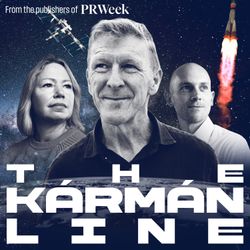
Tim Peake: "Put a human and our best robot with AI on Mars today... and a human will still do more."
28:59|What is the true balance between human spaceflight and robotic exploration when it comes to science, inspiration, and decision-making capabilities? How is space transitioning from a niche frontier to an everyday commercial workplace? What role do regulatory frameworks, such as the United Nations, the Artemis Accords, and the Astra Carta, play in keeping orbit and the lunar surface safe and sustainable? And how can the UK Government act as an "anchor customer" to bridge the commercial "valley of death" for domestic space startups?Join Alice and Jonners in this special episode recorded in Chichester Marina with British astronaut Tim Peake as he shares insights on space adaptation syndrome, commercial space stations, lunar research bases, global space traffic management, and the future of human exploration to Mars.Contributors:Alice Bunn, President of UKspaceDr Alice Bunn OBE FIMechE FRAeS CEng | LinkedInUKspace: Overview | LinkedInJonathan Davies, The Karman LineJonathan Davies | LinkedInThe Karman Line | LinkedInTim Peake, AstronautTim Peake | LinkedInKey topics covered:Human spaceflight vs. robotic explorationSpace Adaptation Syndrome (nausea & gravity adjustment)Normalising space as a commercial workplaceTransition from space stations to commercial Low Earth Orbit (LEO)Artemis programme & sustainable lunar research basesAstronaut selection mindsets, psychological profiles, and stress testingInternational space cooperation & soft power (ISS legacy)Governance, leaseholds, and regulatory frameworks on the MoonThe Astra Carta & space sustainabilityHuman exploration of MarsGovernment as “anchor customers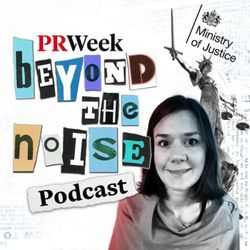
178. How to pitch to clients: Ministry of Justice
39:19||Ep. 178What do clients really want, and not want, from agencies? That’s the focus of the latest PRWeek podcast, featuring Emily Vickers, strategic comms lead at the Ministry of Justice.Beyond the Noise looks at some of the biggest communications and PR issues. Download the podcast via Apple, Spotify, or listen on your favourite platform.Speaking to PRWeek deputy editor Siobhan Holt, Vickers offers some dos and don’ts of client/agency partnerships and discusses the role of procurement.She chats about the skills she values the most from agency execs and offers advice on working with public sector organisations.Elsewhere, the comms professional discusses regional communications and shares top tips for professionals considering a role in government or public sector comms.
177. ‘I lied about a car crash after a client bailed on a press briefing - am I the PR a***hole?’
32:39||Ep. 177PRWeek looks at more of your comms confessions in the latest episode of the ‘Am I the PR A***hole?’ (AITPRA) podcast. In each episode of AITPRA, PRWeek will read out your anonymous confessions and our judges – Lynn Advisory founder Shayoni Lynn and Hoffman Agency UK co-MD Richard Fogg – will decide whether an ethical line has been crossed.Confessions can be submitted via this link.Download the podcast via Apple, Spotify, or listen in the browser above or on your favourite platform.This week’s confessions include:Inventing a story about a car crash to cover for a client pulling out of a media briefing.Resigning an account after the client behaved appallingly - but without the authority to do so.Messing with colleagues in a team bonding session of ‘guess who from the baby photo'.The episode is hosted by PRWeek UK editor John Harrington.
176. VCCP Roar bosses: how to manage a PR agency merger
33:48||Ep. 176How do you merge PR and communications agencies? PRWeek’s latest podcast takes a look.On this week’s Beyond the Noise podcast, VCCP Roar chief executive Stephanie Brimacombe (pictured above, left) and VCCP founding partner and group chairman Charles Vallance (above, right) share their strategies on merging PR agencies.Beyond the Noise looks at some of the biggest communications and PR issues. Download the podcast via Apple, Spotify, or listen on your favourite platform.Nine months after the launch of VCCP Roar, the product of the merger of sister PR agencies Good Relations, Harvard and Teamspirit, the duo sit down with PRWeek reporter Elizabeth Wiredu to discuss the process. Together, Brimacombe and Vallance explain how they united three specialised agencies spanning consumer, corporate, tech and financial PR services. They discuss the reasons behind the merger, what the biggest challenges were in the process and how they overcame them, and how to maintain agency culture at VCCP Roar. They also chat about the agency’s recent Starbucks account win. Elsewhere in the episode, legendary adman Vallance discusses the rivalry between the advertising and PR sectors and argues that the PR sector is in a strong position in the current market compared to other disciplines, such as advertising.
175. TUI and The Remarkables: ‘Don’t overcomplicate GEO’
33:41||Ep. 175TUI’s comms boss, and the chief of the agency handling the travel firm’s GEO, are the guests on this week’s Beyond the Noise podcast.Amy Dowling, head of communications at TUI; and Kerry Parkin, founder and CEO of The Remarkables, discuss the latest on GEO and how it continues to disrupt the comms world.It comes as brands continue to appoint PR agencies for AI discovery briefs; Nationwide and Dishoom have done so in recent weeks. One of the first announcements of this kind came in July, when travel brand TUI enlisted The Remarkables to help boost its AI visibility.Beyond the Noise looks at some of the biggest communications and PR issues. Download the podcast via Apple, Spotify, or listen on your favourite platform.Dowling discusses why TUI partnered with The Remarkables, and what pitfalls other agencies may be falling into when offering GEO services to brands.Meanwhile, Parkin gives tips for businesses looking to implement a GEO strategy, explaining why she believes PR should take full ownership of the discipline.The pair share their view that it is not necessary to “buy into the technicalities” of AI in order to increase your visibility, warning PR teams to “try not to get bamboozled”.
174. Ents PR is ‘moving away from coverage’
41:10||Ep. 174Beyond the Noise looks at some of the biggest communications and PR issues. Download the podcast via Apple, Spotify, or listen in the browser above or on your favourite platform.This week we hear how entertainment PR is evolving, with mainstream press coverage no longer being the top priority in many cases.Gaby Jerrard, who runs entertainment and comedy specialist firm Gaby Jerrard PR, recounts working on campaigns for satirical political candidate Count Binface and controversial figure Amanda Knox within the span of a few weeks.Meanwhile, Lawrence Francis discusses the impact of streaming on the work of Premier, which handles global PR and brand partnerships for some of the biggest film, TV and entertainment franchises in the world.Our guests discuss how to reach fandoms in unconventional ways, particularly on social media – where niches such as ‘BookTok’ are now flourishing.Elsewhere, the pair speak on ‘cancel culture’, and how public figures can best avoid ‘culture war’ narratives while promoting their work.
loading...