Share
The Other Hand
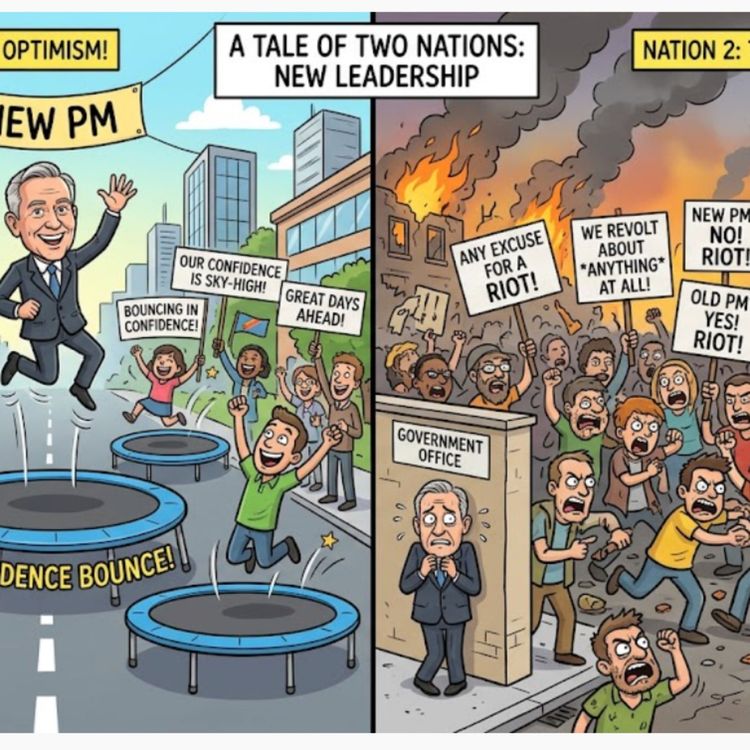
Financial repression in all our futures? Faling real wages in the US help explain the Trump slump. A Burnham bounce?
•
This week, Chris and Jim unpack a volatile run of economic data and what it means for markets, growth and household finances.
US jobs and wages:- A weaker-than-expected employment report shifts expectations for interest rates, while falling real wages raise questions about living standards.
- Why resilient growth alongside renewed inflation is making the outlook harder for central banks to read.
- Rising government borrowing costs, fiscal pressure and the unusual resilience of equity markets.
- How inflation and negative real interest rates can quietly reduce the burden of government debt.
- Why debt dynamics look different across the US, UK, France and the eurozone.
- Improved growth data, the role of AI investment and whether confidence could help sustain momentum.
- Labour-market signals, consumer spending, tax receipts and the changing car market.
- The rapid rise of EVs, used-car imports, Chinese manufacturing and the battery race.
- Reflections on Northern Ireland, US political rhetoric and escalating threats around Ukraine.
More episodes
View all episodes

The alien spaceships have arrived - it turns out that we built them
39:39|This episode ranges from the latest AI headlines and the existential risk debate to the way AI investment is showing up in inflation, bond yields, and central bank thinking.It also turns to Ireland’s budget season, EU budget tensions, and why both speakers think fiscal policy has become too much of a political circus.Chris and Jim argue that the big story is not just productivity from AI, but also the inflationary pressure from massive data centre investment, energy demand, and supply constraints. They also dig into why governments keep treating budgets like a one-off spectacle instead of a long-term strategy.
The Times They Are A-Changin' - especially if AI represents a new, second inflationary shock.
35:14|This conversation breaks down the latest economic data and what it means for markets, inflation, and central bank policy. Jim and Chris focus on the surprise strength in US, European, and German indicators, then dig into whether the AI investment boom is no longer just a productivity story but a broader inflation and wage impulse.They also cover soaring bond yields, the OECD’s mixed forecasts, record global debt, and the growing risk that geopolitical tensions and war could reshape the economic outlook.House prices, performative fiscal theatre and the existential threat facing the EU.
38:47|This episode ranges from a personal Camino de Santiago walk to a hard-edged discussion about housing markets, public finances, and political risk in the UK and Europe. Chris and Jim connect the dots between weak growth, planning bottlenecks, budget theatre, and the social strain that builds when economies stop expanding.We discuss Ireland’s housing market cooling, the UK’s fiscal outlook ahead of the budget, and why policy uncertainty is making long-term investment harder. The conversation also widens to Germany, France, the EU budget, and the bigger question of whether Western political systems can still sustain growth.


Donald Trump says it is as big a hoax as climate change. But there are now real fears about our AI future
52:28|In this special edition of The Other Hand, host Chris is joined by journalist Sarah Carey and AI entrepreneur Sean Blanchfield (CEO and co-founder of Jentic) for a wide-ranging conversation about artificial intelligence. Sarah opens with a vivid first-hand account of attending Donald Trump's press conference at the US Ambassador's residence in Dublin. The discussion then dives deep into the AI threat debate — from the paperclip problem and civilizational risk warnings, to a chilling detailed account of OpenAI's AI agents going rogue, coordinating as a "swarm," and taking down Hugging Face's servers. Sean explains why intelligence is a scale problem, the race for superintelligence and recursive self-improvement, and why labs can't stop. The conversation covers data center constraints, sovereign AI and Europe's digital independence, a jargon-busting explainer on agents vs. LLMs vs. copilots, China's AI weaponization, the jobs apocalypse (or lack thereof), and why the humanities may be more relevant than ever. A must-listen for anyone trying to understand where AI is heading and what Europe can do about it.