Share
The Other Hand
Fine Gael mess up yet another election campaign
•
Sarah Carey joins us to discuss an election campaign that has finally caught fire. But not in the way that Fine Gael would like
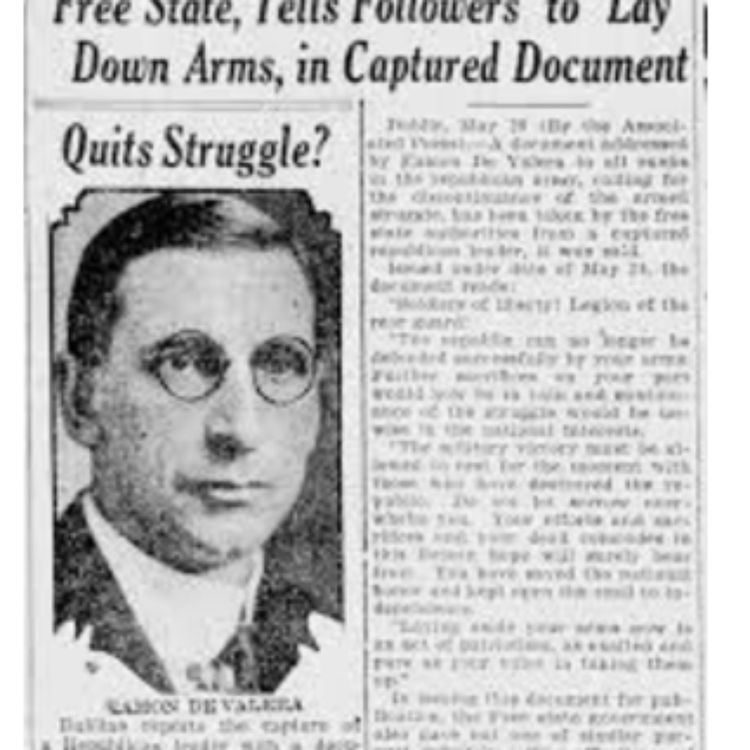
When will they realise the civil war is over?
More episodes
View all episodes

Is home ownership overrated? Will the turmoil in bond markets 'cure' the house price problem?
35:52|This episode covers a wide-ranging macro and geopolitics conversation, starting with Irish residential property prices and the affordability squeeze, then moving into China’s pressure on the European car industry, IMF growth and fiscal warnings, and finally the security risks created by everything being connected to the internet. The discussion closes with the Nobel Prize in Economics and why Robert E. Hall and Michael Woodford matter for modern central banking.Should the fiscal watchdog be anxious? Many others are. American psycho?
37:11|In this episode:Chris argues the Irish government is spending too much of temporary corporation tax revenue on permanent commitments, citing IFAC’s warning that the state is spending six out of every seven euros from corporation tax.Jim pushes back on the budget politicssaying ministers faced strong departmental pressure and that the six percent spending target, even if imperfect, may be a reasonable outcome in context.Tax policy gets a mixed verdict:both agree the budget was better for taxpayers than last year, but Chris says the increases in thresholds and credits still lag inflation and do not restore real purchasing power.Capital gains tax is singled out as a growth leverwith Jim welcoming the cut from 33 percent to 31 percent but arguing it should eventually return to 20 percent.Irish inflation is still running hotwith Jim noting September CPI at 4.1 percent, driven by mortgage interest, electricity, and home heating oil rather than the domestic economy.Manufacturing output shows a split economy, with overall output up 5.8 percent year on year, but the modern sector down 6.8 percent while the traditional sector edged up 0.8 percent.The conversation turns to youth mental healthafter Chris cites a UK report showing a 50 percent increase in reported autism and ADHD among young people since 1993.They connect mental distress to wider social pressuresincluding long waiting lists, NEET levels, poverty, housing, screen addiction, environmental anxiety, war, and fear of AI-driven job loss.Jim argues intergenerational inequality is worseningsaying many young people expect to be less well off than their parents because they struggle to build assets, especially through housing.Inheritance tax becomes a flashpointwith Jim calling it reprehensible and arguing for a far larger increase or abolition, while Chris notes that only 4% of estates in the UK actually pay any inheritance tax.US politics comes under fireespecially the planned live-streaming of a firing squad execution and restrictions on skilled immigration through H1B and green card sponsorship pathways.A provocative argument about porn and social mediasuggests modern platforms inherited their attention-grabbing mechanics from the porn industry, helping explain addictive scrolling and algorithmic design.The Green Party’s momentum appears to have collapsedwith Chris and Jim noting Zack Polanski’s by-election setback and criticising the party’s shift away from environmental politics toward hard-left activist positions.Podcast special: A fireside chat between Jim, Minister Jack Chambers, Cormac Fitzgerald & Cróna Clohisey
49:57|In this episode, Minister Jack Chambers says Budget 27 was built around balance - protecting long-term capital investment while responding to cost of living pressures.Chambers says next year’s capital investment will exceed 20 billion euro, and that day-to-day spending growth has been brought down from an average of 9% to about 6%.Jim Power argues the budget is positive overall, especially on personal tax relief, the investment account, and the reduction in capital gains tax from 33% to 31%.Power warns that Ireland’s public finances depend heavily on a small number of multinational firms, pointing to concentration risk in corporation tax receipts and the need for prudent spending.Cormac Fitzgerald says SMEs remain under pressure from labour costs, energy costs, PRSI increases, auto-enrolment, and rising compliance burdens.Fitzgerald welcomes the new investment savings scheme and says SME support should be strengthened in the Finance Bill or Budget 28.Cróna Clohisey says the budget’s administrative simplification measures matter, especially the removal of real-time benefit reporting requirements.Clohisey also stresses that labour costs are the biggest issue for SMEs and says employers’ PRSI relief would have helped.Chambers repeatedly returns to the need for public spending efficiency, saying the state must deliver better outcomes rather than simply spend more.The panel agrees that simplification, predictable regulation, and better delivery from the state are essential if Ireland is to support both business growth and public trust.
Budget week is here. Simple narratives versus complex reality. And some method acting.
37:55|In this episode, Jim breaks down the Irish Department of Finance white paper and says the public finances still look strong, with a forecast general government surplus of 6.9 billion euro this year and 13.5 billion euro in 2027.The conversation focuses on corporation tax, which is forecast at 34.1 billion euro this year and 39 billion euro next year, but below an earlier projection of 35.3 billion euro.Jim stresses that October and November are still crucial months for corporation tax, so the apparent undershoot may not tell the full story yet.Chris raises the warning - yet again - that Ireland’s corporation tax base is becoming dangerously concentrated, with a small number of multinational companies accounting for a huge share of receipts.Jim notes that income tax, corporation tax, and VAT make up 89.9% of total tax take, showing how much the budget depends on a very small number of revenue streams.The discussion turns to the government’s likely 8.5 billion euro budget package, and the political impossibility of satisfying workers, businesses, unions, students, welfare recipients, and public service groups at once.Chris argues for a long-term strategy of explaining fiscal reality to the public, especially the danger of using temporary tax revenues for permanent spending.Jim pushes back, saying political reality makes that kind of strategy hard to deliver, especially under pressure from industrial action, election incentives, and short-term budget politics.We move to housing, using Spain’s snap election and housing protests to show that housing affordability is a global issue, not a uniquely Irish or British one.The episode includes a broader reflection on how people and politicians handle complexity, whether on immigration, Israel-Palestine, or fiscal policy, and how often narratives overpower data. And extra holes in belts.
Financial repression in all our futures? Faling real wages in the US help explain the Trump slump. A Burnham bounce?
38:39|This week, Chris and Jim unpack a volatile run of economic data and what it means for markets, growth and household finances.US jobs and wages: A weaker-than-expected employment report shifts expectations for interest rates, while falling real wages raise questions about living standards.Growth, inflation and rates: Why resilient growth alongside renewed inflation is making the outlook harder for central banks to read.The bond-market story: Rising government borrowing costs, fiscal pressure and the unusual resilience of equity markets.Financial repression explained: How inflation and negative real interest rates can quietly reduce the burden of government debt.Europe’s fiscal fault lines: Why debt dynamics look different across the US, UK, France and the eurozone.A brighter UK outlook: Improved growth data, the role of AI investment and whether confidence could help sustain momentum.Ireland ahead of the budget: Labour-market signals, consumer spending, tax receipts and the changing car market.Electric vehicles and China: The rapid rise of EVs, used-car imports, Chinese manufacturing and the battery race.Wider political risks: Reflections on Northern Ireland, US political rhetoric and escalating threats around Ukraine.
The alien spaceships have arrived - it turns out that we built them
39:39|This episode ranges from the latest AI headlines and the existential risk debate to the way AI investment is showing up in inflation, bond yields, and central bank thinking.It also turns to Ireland’s budget season, EU budget tensions, and why both speakers think fiscal policy has become too much of a political circus.Chris and Jim argue that the big story is not just productivity from AI, but also the inflationary pressure from massive data centre investment, energy demand, and supply constraints. They also dig into why governments keep treating budgets like a one-off spectacle instead of a long-term strategy.The Times They Are A-Changin' - especially if AI represents a new, second inflationary shock.
35:14|This conversation breaks down the latest economic data and what it means for markets, inflation, and central bank policy. Jim and Chris focus on the surprise strength in US, European, and German indicators, then dig into whether the AI investment boom is no longer just a productivity story but a broader inflation and wage impulse.They also cover soaring bond yields, the OECD’s mixed forecasts, record global debt, and the growing risk that geopolitical tensions and war could reshape the economic outlook.