Share
The New Society | culture from the New Statesman
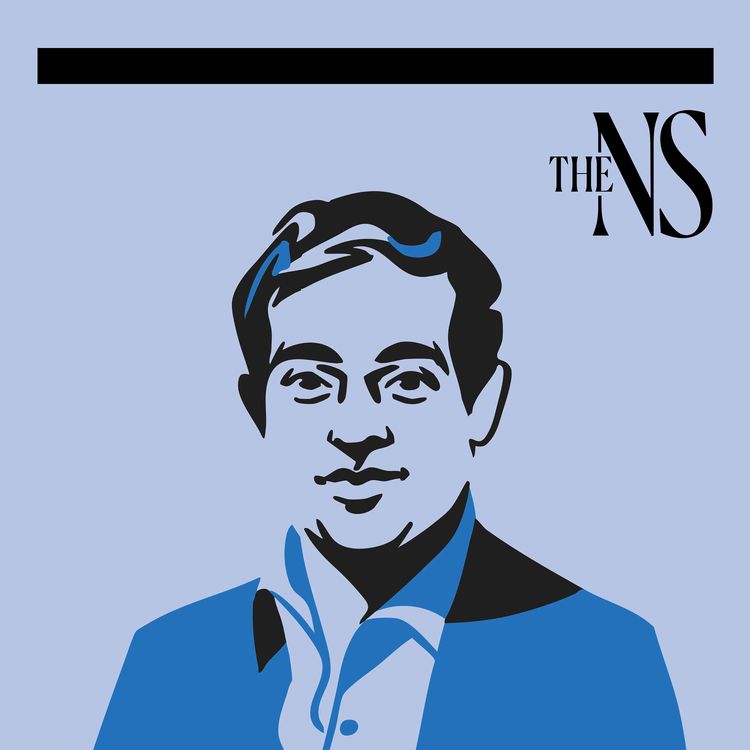
What do mushrooms have to do with consciousness? with Michael Pollan
•
Michael Pollan, a writer best known for his work on the effect of psychedelics, has taken a journey into the inner mind.
For much of modern history, we’ve understood the mind in comparison to our most advanced machines. Once it was clockwork, then looms, now computers. Each metaphor promises clarity - the ability to be mapped and modelled - but each, in its own way, falls short.
Drawing on philosophy, literature and his own experiments with altered states, in Michael Pollan takes aim at this habit of thinking.
More episodes
View all episodes
Katherine Rundell: In today's world, wonder is political
51:07|"We live in a world that deserves unicorns," says Katherine Rundell.If you haven't come across Rundell's work yet, you will soon. She's written over a dozen books, including an award-winning biography of John Donne and the children's fantasy series Impossible Creatures - a copy of which every Year 6 child in the country will receive this Christmas. Disney has just signed a seven-figure deal for the screen adaptation.. Rundell is being touted as the next JK Rowling.When she's not writing Rundell works on Renaissance literature as a fellow of Oxford University.Two themes recur throughout her work: fantasy and animals. And as you might guess from her feelings about unicorns, the two are rarely far apart.On this episode she joins Tanjil Rashid, following the publication of her new essay collection Napolean's Orangutang to talk about what humans should learn from animals, the connection between religion and fantasy, and - in her words - why wonder is political.
James Marriott: what happens when we stop reading?
37:54|A third of British adults who used to read for pleasure don't anymore.And according to the OECD, literacy itself, not just the habit of it, is declining or stagnating across most of the developed world.In a new book, The New Dark Ages, James Marriott argues that we're living through a great unwinding: a retreat from the written word and the kind of rational, analytical mind that print culture built over five centuries, back towards something closer to the pre-literate world: one dominated not by books, but by images, screens, and short-form video.In this episode, Tanjil Rashid is joined by James Marriott to ask: are we really heading back into the dark?
Salman Rushdie: "I feel a line of connection with 9/11"
31:56|Terror has sought Salman Rushdie out time and time again for the past 40 years, ever since the controversial publication of his novel The Satanic Verses and the furious response to it from much of the Muslim world.He believed that his life of extreme measures and isolation was a closed chapter in 1998, after Iran stepped back from the fatwa issued by Ayatollah Khomeini. But four summers ago, in a quiet lake town in New York, death came knocking again. Rushdie was about to give a public lecture when a man ran on stage and attacked him with a knife.He first revisited this attempt on his life in his 2024 book Knife. Now, with his wife, the poet and visual artist Rachel Eliza Griffiths, and director Alex Gibney, Rushdie has retold this life-changing moment through film. He spoke with Tanjil Rashid on the eve of the 25th anniversary of 9/11, with which he feels a “line of connection” - between the attack on himself and the attack on his adopted home in New York, and reflected on what it means to live in this age of terror.
RF Kuang is back with her most personal story yet
55:00|Historical fantasy, campus satire, industry exposé; five books in, and no one's quite worked out what a "RF Kuang novel" is supposed to look like. That's rather the point.This September she publishes her sixth: Taipei Story, a semi-autobiographical account of a summer spent learning Mandarin in Taiwan - her most personal book yet.She joins Tanjil Rashid in this episode of the podcast.
Simon Sebag Montefiore on Israel, Gaza and a Middle East in crisis
54:49|From the fall of the Ottoman Empire to the current escalation of the war between Israel, Palestine and their neighbouring countries, the Middle East has been besieged by almost constant conflict.Is it history? Politics? Resources? Or religion driving these tensions?Tanjil Rashid is joined by historian and author Simon Sebag Montefiore, whose new book The Cauldron tells the story of the making of the modern Middle East.
This is how Ukrainian artists are fighting back
32:33|Charlotte Higgins has spent most of her career interviewing and critiquing artists, authors and poets as the Guardian's chief culture writer. It was unlikely that her work would ever take her to a warzone. But following Russia's full-scale invasion of Ukraine, she found herself drawn to this country under siege. She wanted to ask, what happens to art under war? And could Ukrainian culture not just survive, but flourish?
Why we must unite working class communities across racial divides
42:21|In the summer of 2024, riots tore through British towns, and since then old questions have continued to resurface about who belongs in the country. Taj Ali has spent years digging into a history that’s rarely told in full: the long tradition of South Asian political activism in Britain. His debut book, Come What May, We’re Here to Stay, traces that tradition and asks what it means for Britain now. Taj Ali joins Tanjil Rashid.
Britain is losing its libraries and its cultural memory
35:45|Every year, more libraries across Britain close their doors. As councils have their funding slashed, these are often the first spaces to go. What do we lose when we stop reading and collecting? What is a library to a community, beyond its books? Tanjil Rashid is joined by the University of Oxford's Bodley's Librarian, Richard Ovenden.
Why is sex political?
54:56|To hear more conversations like this search "The Exchange" wherever you get your podcasts.When Amia Srinivasan published The Right to Sex: Feminism in the Twenty-First Century in 2021, it sparked widespread debate about the politics of desire, consent, and sexual justice.In this episode of The Exchange, the Oxford academic joins Tanjil Rashid to discuss how philosophy can illuminate some of the most contentious questions in contemporary culture: from incels and pornography to whether our desires are shaped by society.Find more from Amia Srinivasan here