Share
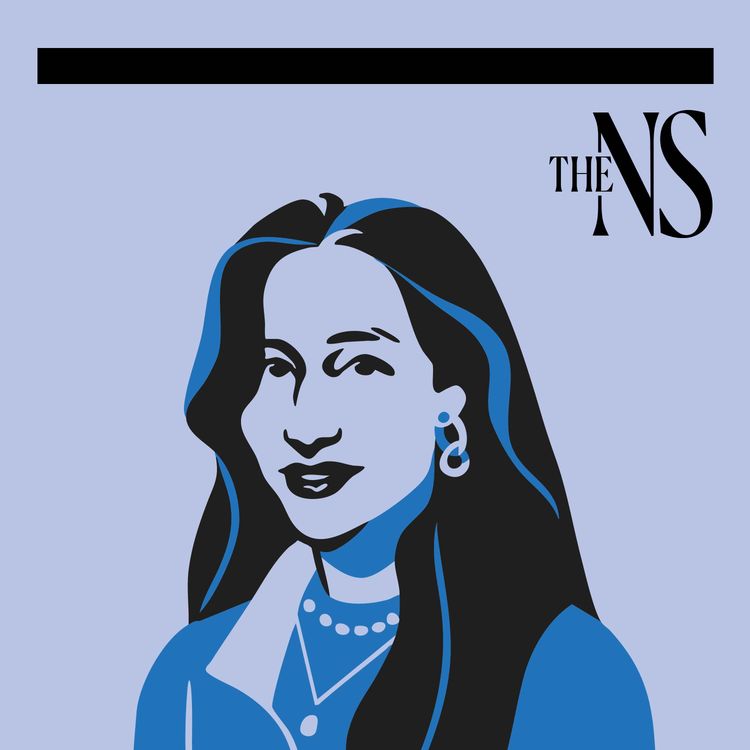
The New Society | culture from the New Statesman
People around the world are falling in love with AI
•
Over 100 million people around the world have downloaded AI companion apps. Friends, therapists, lovers ... mediums - for some, their closest connection in this life is a chatbot.
How did we get here?
Catharine Hughes is joined by James Muldoon, sociologist and author of Love Machines: How Artificial Intelligence is Transforming Our Relationships.
More episodes
View all episodes
RF Kuang is back with her most personal story yet
55:00|Historical fantasy, campus satire, industry exposé; five books in, and no one's quite worked out what a "RF Kuang novel" is supposed to look like. That's rather the point.This September she publishes her sixth: Taipei Story, a semi-autobiographical account of a summer spent learning Mandarin in Taiwan - her most personal book yet.She joins Tanjil Rashid in this episode of the podcast.
Simon Sebag Montefiore on Israel, Gaza and a Middle East in crisis
54:49|From the fall of the Ottoman Empire to the current escalation of the war between Israel, Palestine and their neighbouring countries, the Middle East has been besieged by almost constant conflict.Is it history? Politics? Resources? Or religion driving these tensions?Tanjil Rashid is joined by historian and author Simon Sebag Montefiore, whose new book The Cauldron tells the story of the making of the modern Middle East.
This is how Ukrainian artists are fighting back
32:33|Charlotte Higgins has spent most of her career interviewing and critiquing artists, authors and poets as the Guardian's chief culture writer. It was unlikely that her work would ever take her to a warzone. But following Russia's full-scale invasion of Ukraine, she found herself drawn to this country under siege. She wanted to ask, what happens to art under war? And could Ukrainian culture not just survive, but flourish?
Why we must unite working class communities across racial divides
42:21|In the summer of 2024, riots tore through British towns, and since then old questions have continued to resurface about who belongs in the country. Taj Ali has spent years digging into a history that’s rarely told in full: the long tradition of South Asian political activism in Britain. His debut book, Come What May, We’re Here to Stay, traces that tradition and asks what it means for Britain now. Taj Ali joins Tanjil Rashid.
Britain is losing its libraries and its cultural memory
35:45|Every year, more libraries across Britain close their doors. As councils have their funding slashed, these are often the first spaces to go. What do we lose when we stop reading and collecting? What is a library to a community, beyond its books? Tanjil Rashid is joined by the University of Oxford's Bodley's Librarian, Richard Ovenden.
Why is sex political?
54:56|To hear more conversations like this search "The Exchange" wherever you get your podcasts.When Amia Srinivasan published The Right to Sex: Feminism in the Twenty-First Century in 2021, it sparked widespread debate about the politics of desire, consent, and sexual justice.In this episode of The Exchange, the Oxford academic joins Tanjil Rashid to discuss how philosophy can illuminate some of the most contentious questions in contemporary culture: from incels and pornography to whether our desires are shaped by society.Find more from Amia Srinivasan here
Can we separate great art from bad artists?
32:20|Throughout history, art, and artists, have caused moral outrage.For a long time we had the liberal notion that we could separate great art from bad artists, but we do seem to live in a time of heightened moralisation around works of art and their creators. Why is that?Tanjil Rashid is joined by Daisy Dixon, who has written the book Depraved: The Story of Dangerous Art.
Odyssey mania is upon us
01:05:25|Christopher Nolan’s film adaptation of Homer’s epic poem is one of the most anticipated films in recent cinema history.But what is it about this story, first told maybe 3000 years ago, that so fascinates us?Who really wrote it and why does it represent, with Homer’s other great work The Iliad, the foundation of western literature?Tanjil Rashid is joined by The Odyssey’s latest translator, classical scholar and literary critic Daniel Mendelsohn
Was the American revolution really American?
35:57|Hot dogs, fireworks, old glory, it’s the 4th July. This year marks the 250th anniversary of the USA’s Declaration of Independence. What led up to these crucial events in 1776? Was the revolution truly American? And what does this anniversary represent today? Tanjil Rashid is joined by Sarah Pearsall, historian and author of Freedom Round the Globe: How the World Made the American Revolution.