Latest episode
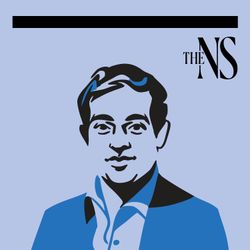
Carlo Rovelli: Can we know how it feels to be someone else?
51:21|Carlo Rovelli is a physicist. But he’s also so much more than that. Perennially on lists of the world’s top thinkers, Rovelli likes to think and think hard, about the big questions, where physics meets philosophy and art and literature. Can we ever truly know what it feels like to be someone, or something, else? Is the mind separate from the body? What even is life? Where could it possibly come from? Where could the universe come from?These are the questions Rovelli has a stab at answering in his new book On the Equality of All Things: Physics and Philosophy. In particular he draws on quantum mechanics and ancient Eastern thought to argue that the world is not made of separate categories but is one interconnected web of relations, where things are defined by how they interact with everything else. Tanjil Rashid is joined by Carlo Rovelli.
More episodes
View all episodes
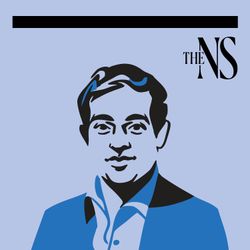
Steven Pinker: Common knowledge can start revolutions
51:33|You know what you know, and I know what I know, but only when we know what the other knows do we have common knowledge.That’s the crux of cognitive psychologist Steven Pinker’s latest work, focusing on the shift from private to public knowledge, and how this can suddenly change behaviours or even start revolutions.Steven Pinker joins Tanjil Rashid to discuss.
How to write when everything’s in flux
40:11|Every story, they say, needs a beginning, a middle and an end; every story needs a setting. What if that isn’t true? Can you write when everything is in flux, when you are unmoored from places, and when the time is out of joint?Tanjil Rashid is joined by Amit Chaudhuri, a singer, composer, poet, critic and novelist, to discuss how a story is less important – and less interesting – than the movement of life.
Katherine Rundell: In today's world, wonder is political
51:07|"We live in a world that deserves unicorns," says Katherine Rundell.If you haven't come across Rundell's work yet, you will soon. She's written over a dozen books, including an award-winning biography of John Donne and the children's fantasy series Impossible Creatures - a copy of which every Year 6 child in the country will receive this Christmas. Disney has just signed a seven-figure deal for the screen adaptation.. Rundell is being touted as the next JK Rowling.When she's not writing Rundell works on Renaissance literature as a fellow of Oxford University.Two themes recur throughout her work: fantasy and animals. And as you might guess from her feelings about unicorns, the two are rarely far apart.On this episode she joins Tanjil Rashid, following the publication of her new essay collection Napolean's Orangutang to talk about what humans should learn from animals, the connection between religion and fantasy, and - in her words - why wonder is political.
James Marriott: what happens when we stop reading?
37:54|A third of British adults who used to read for pleasure don't anymore.And according to the OECD, literacy itself, not just the habit of it, is declining or stagnating across most of the developed world.In a new book, The New Dark Ages, James Marriott argues that we're living through a great unwinding: a retreat from the written word and the kind of rational, analytical mind that print culture built over five centuries, back towards something closer to the pre-literate world: one dominated not by books, but by images, screens, and short-form video.In this episode, Tanjil Rashid is joined by James Marriott to ask: are we really heading back into the dark?
Salman Rushdie: "I feel a line of connection with 9/11"
31:56|Terror has sought Salman Rushdie out time and time again for the past 40 years, ever since the controversial publication of his novel The Satanic Verses and the furious response to it from much of the Muslim world.He believed that his life of extreme measures and isolation was a closed chapter in 1998, after Iran stepped back from the fatwa issued by Ayatollah Khomeini. But four summers ago, in a quiet lake town in New York, death came knocking again. Rushdie was about to give a public lecture when a man ran on stage and attacked him with a knife.He first revisited this attempt on his life in his 2024 book Knife. Now, with his wife, the poet and visual artist Rachel Eliza Griffiths, and director Alex Gibney, Rushdie has retold this life-changing moment through film. He spoke with Tanjil Rashid on the eve of the 25th anniversary of 9/11, with which he feels a “line of connection” - between the attack on himself and the attack on his adopted home in New York, and reflected on what it means to live in this age of terror.
RF Kuang is back with her most personal story yet
55:00|Historical fantasy, campus satire, industry exposé; five books in, and no one's quite worked out what a "RF Kuang novel" is supposed to look like. That's rather the point.This September she publishes her sixth: Taipei Story, a semi-autobiographical account of a summer spent learning Mandarin in Taiwan - her most personal book yet.She joins Tanjil Rashid in this episode of the podcast.