Share
The New Arab Voice
Bonus: The Gendered Impact of Covid-19: Cases from Lebanon, Syria and Palestine
Covid-19 has exacerbated many structural problems in the MENA region, throwing already fragile states, embattled economies, and restive societies into deeper turmoil. Reflecting the deeply rooted inequality in the region, the impact of the pandemic has not been uniform across the region, hitting vulnerable segments, including women and refugees, disproportionately harder.
Gender-based marginalization and structural, economic, and physical violence endemic to many parts of the MENA region have been compounded by the invisible viral pandemic. The often strict lockdown measures it has triggered means many women are left trapped with abusers without recourse to shelter or assistance, while many others, despite already being responsible for most thankless unpaid labour as parents or carers in free-falling economies, are now struggling to cope with the added weight of the novel coronavirus.
The recorded live discussion focused on the specific ways in which Covid-19 has disproportionately affected women in the Levant subregion of MENA, and what some feminist groups have been doing to improve women’s resilience since the start of the pandemic.
------------------------------------------------------------------------------------------
Speakers:
Lina Abou-Habib is an expert in mainstreaming gender in development policies and practices and in building capacities for gender mainstreaming in regional and international agencies as well as public institutions. She is currently a Senior Policy Fellow at the Issam Fares Institute for Public Policy and International Affairs (American University of Beirut). She also serves as the Chair of the Collective for Research and Training of Development-Action and is a Strategic MENA Advisor for the Global Fund for Women. She is a member of the editorial board of the Gender and Development journal published by Oxfam and Routledge. She holds an M.A. in Public Health from American University in Beirut.
Maria Al Abdeh is a feminist researcher and Executive Director of Women Now For Development (WND). Maria has a PhD in Microbiology. She joined Women Now for Development in November 2013 and since then she accompanied the growth of the organization to become the largest network of women empowerment centers inside Syria and the neighboring countries and participated in many campaigns and conferences to reach out the voices of the most vulnerable women to the media, activists and decision makers, and focuses on women and conflict and women rights in the MENA region. In March 2016 Maria received the Award of Feminine Success in France, and together with WND received in May 2016 the Award of ‘Delivering Lasting Change’ for commitment to Justice and Dignity from CARE international.
Soheir Asaad is a political and feminist Palestinian activist, and an organizer in the "Tal'at Movement" – a Palestinian political feminist movement. Launched in September 2019 under the slogan “There is no free homeland without free women”, Tal’at seeks to build Palestinian, de-fragmented feminist solidarity and activism across the whole of historic Palestine and the diaspora community. Asaad is also a human rights advocate and has a Masters degree in Law (LL.M.) with Honors from the Center for Civil & Human Rights at the University of Notre Dame (US), with a focus on international human rights law.
Moderator:
Danya Hajjaji is a journalist at The New Arab. She previously served as Patti Birch Fellow for Middle East Research at the Committee to Protect Journalists. Danya earned her MS in Journalism from Columbia University and her BA in Media and Communications from the University of Sussex.
Follow us on Facebook, Twitter, and Instagram for more
More episodes
View all episodes
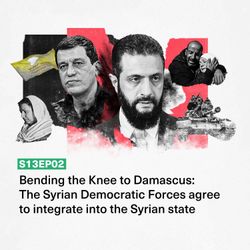
2. Bending the Knee to Damascus: The Syrian Democratic Forces agree to integrate into the Syrian state
41:01||Season 13, Ep. 2A little over a year from the start of the new government in Syria, violence returned to Aleppo. In January, the Kurdish-led Syrian Democratic Forces (SDF) and the forces of the interim Syrian government clashed in the Aleppo areas of Sheikh Maqsoud and Ashrafiyah.The SDF came off worse and were forced to retreat back to the northeast; and such was the scale of the defeat, they were forced into signing a deal that will see the SDF integrated into the Syrian army.For almost a year, the SDF has been resisting such a deal. This week, we look at the fighting in Aleppo, the deal that has been signed, and why, the status of the SDF and Syria's Kurds, and what these event mean for the Syria that President al-Sharaa is building.We're joined by Dr. Rahaf Aldoughli (@r_aldoughli), senior editor at Cogent Social Sciences and fellow at the Arab Reform Initiative (@ArabReform_ARI), and also, Joseph Daher (@JosephDaher19), a Syrian academic and specialist on the political economy of the Middle East.This podcast is written and produced by Hugo Goodridge (@hugogoodridge).Theme music by Omar al-Fil with additional music from Audio Network.To get in touch with the producers, follow then tweet us at @TNAPodcasts or email podcast@newarab.com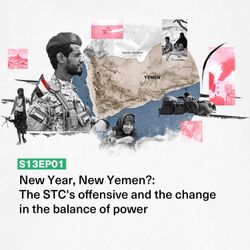
1. New Year, New Yemen?: The STC's offensive and the change in the balance of power
43:01||Season 13, Ep. 1As 2025 was coming to a close, the Southern Transitional Council (STC) in Yemen decided they had one last roll of the dice to make. At the start of December, the STC launched a military operation to seize the eastern governorates of Yemen. They quickly swept across the region, with arms supplied by the UAE. It was a great success, until the Yemeni government, backed by Saudi Arabia, fought back. This week on The New Arab Voice podcast, we look at the STC's offensive in the east of Yemen, the fight back by the Yemeni government, and the impact that these operations have had on the balance of power in Yemen.On this episode, we're joined by Yasmeen al-Eryani, the Executive Director for Knowledge Production at the Sana’a Center for Strategic Studies (@SanaaCenter), and Baraa Shiban (@BShtwtr), researcher and political analyst on Yemen and the Gulf, and an Associate Fellow with the Royal United Services Institute in London (@RUSI_org). Also, Mohamed al-Sahimi. Head of the STC UK office.This podcast is written and produced by Hugo Goodridge (@hugogoodridge).Theme music by Omar al-Fil with additional music from Audio Network.To get in touch with the producers, follow then tweet us at @TNAPodcasts or email podcast@newarab.com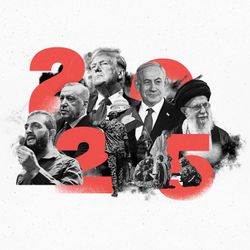
14. 2025 in Review
01:22:14||Season 12, Ep. 14The year is drawing to a close, which means its time for The New Arab Voice's annual review of year. To guide us through the tangled mess of the past 12 months, we're joined by The New Arab's Managing Editor Karim Traboulsi (@Kareemios), and journalist Oliver Mizzi (@OllyMizzi99).In this episode, we look back on the 12 days of war that shook Iran and Israel, the continued efforts of President Erdogan to hold on to power, the state building project of the new Sharaa government in Damascus, the brutal war in Sudan, and the stuttering ceasefire efforts in Gaza. We also look ahead to what 2026 might bring, and what us at The New Arab will be keeping an eye on. This podcast is written and produced by Hugo Goodridge (@hugogoodridge).Theme music by Omar al-Fil with additional music from Audio Network.To get in touch with the producers, follow then tweet us at @TNAPodcasts or email podcast@newarab.com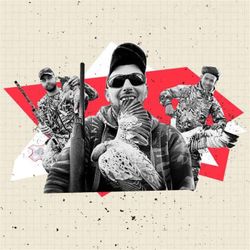
13. The Poachers Trail: Part 2
39:01||Season 12, Ep. 13This is part 2 of a special investigation. You can find part 1 in your feeds now.For 15 months, The New Arab, in cooperation with Bridges Investigations, explored the shadowy world of Maltese bird hunters.We uncovered how Maltese hunters, frustrated by local laws, were travelling to Egypt to slaughter migratory birds in vast numbers. Their hunting activities have been described as an environmental disaster, and a threat to the thousands of migratory birds who rely on Egyptian wetlands.We went undercover in Fayoum. Followed the smuggling routes from Egypt’s lakes to Maltese homes. And saw how Europe’s conservation efforts collapse when its citizens pull the trigger abroad.This is more than a story of poaching. It’s about wasted conservation money, destroyed ecosystems, and a system that rewards hunters while silencing conservationists. The Poachers Trail was a investigation by The New Arab and Bridges Investigations (@BRIDGES4I), with the support of the Journalism Fund Europe (@journalismfund). It was written and hosted by Mahmoud Elsobky (@ElsobkyMahmoud_), with additional help from Wael El-Sayegh.Andrea Glioti is The New Arab’s Investigation editor. This podcast was produced by Hugo Goodridge. To get in touch with the producers, follow then tweet us at @TNAPodcasts or email podcast@newarab.com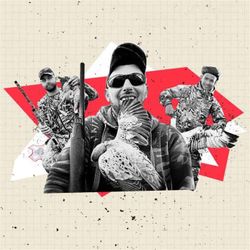
12. The Poachers Trail: Part 1
29:32||Season 12, Ep. 12For 15 months, The New Arab, in cooperation with Bridges Investigations, explored the shadowy world of Maltese bird hunters.We uncovered how Maltese hunters, frustrated by local laws, were travelling to Egypt to slaughter migratory birds in vast numbers. Their hunting activities have been described as an environmental disaster, and a threat to the thousands of migratory birds who rely on Egyptian wetlands.We went undercover in Fayoum. Followed the smuggling routes from Egypt’s lakes to Maltese homes. And saw how Europe’s conservation efforts collapse when its citizens pull the trigger abroad.This is more than a story of poaching. It’s about wasted conservation money, destroyed ecosystems, and a system that rewards hunters while silencing conservationists. The Poachers Trail was a investigation by The New Arab and Bridges Investigations (@BRIDGES4I), with the support of the Journalism Fund Europe (@journalismfund). It was written and hosted by Mahmoud Elsobky (@ElsobkyMahmoud_), with additional help from Wael El-Sayegh.Andrea Glioti is The New Arab’s Investigation editor. This podcast was produced by Hugo Goodridge. To get in touch with the producers, follow then tweet us at @TNAPodcasts or email podcast@newarab.com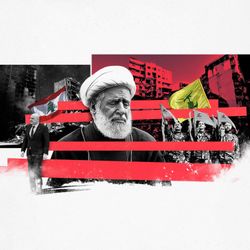
11. Hezbollah's Existential Crisis: Lebanon's effort to disarm the resistance and the future of the Party of God
29:46||Season 12, Ep. 11It has been annus horribilis for Hezbollah.They were struck by a deadly pager attack, Israel launched a devastating air and ground campaign against the group, and their long-time leader was killed in an Israeli airstrike. The war left Hezbollah battered and broken, and now, the Lebanese government is moving in to clear up the arms, which is taking place under the shadow of continued Israeli airstrikes.At the start of September, the Lebanese army presented its plan to disarm Hezbollah once and for all to the cabinet. While welcomed by much of the cabinet, Hezbollah rejected the notion.This week on The New Arab Voice we examine the state of Hezbollah today. How are the Lebanese state disarming the group? And what is the future of the self-styled resistance movement in Lebanon?We're joined by David Wood, Senior Analyst for Lebanon at International Crisis Group (@CrisisGroup); and Paul Salem, senior fellow at the Middle East Institute (@MiddleEastInst).This podcast is written and produced by Hugo Goodridge (@hugogoodridge).Theme music by Omar al-Fil with additional music from Audio Network.To get in touch with the producers, follow then tweet us at @TNAPodcasts or email podcast@newarab.com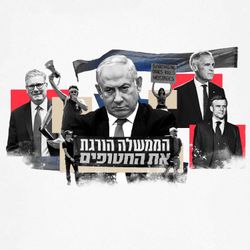
10. Recognising Problems in Israel: Western recognition of Palestine and trouble at the Foreign Ministry
34:35||Season 12, Ep. 10This week on The New Arab Voice podcast, we look at the recent decision by Western nations to recognise the State of Palestine. It came as a surprise to many, although it remains to be seen what it actual means for Palestinians. Either way, it angered Israel. And as Western states were announcing to recognise a Palestinian state, Israel was planning a major new offensive in Gaza, and Israeli citizens were on the streets protesting against the Netanyahu government. This week, what’s Israel doing in Gaza, and why are some Israeli citizens protesting the move? What does the recognition of a state of Palestine mean for Israel? And is Israeli foreign diplomacy failing?We speak with Paul Scham, the former Professor of Israeli Studies at the University of Maryland; also, Nimrod Goren, President and Founder of Mitvim – The Israeli Institute for Regional Foreign Policies.This podcast is written and produced by Hugo Goodridge (@hugogoodridge).Theme music by Omar al-Fil with additional music from Audio Network.To get in touch with the producers, follow then tweet us at @TNAPodcasts or email podcast@newarab.com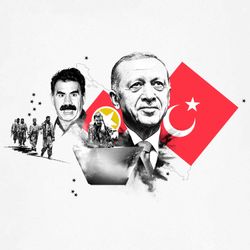
9. Erdogan Considers the Kurdish Question: The PKK ceasefire and the Kurdish future in Turkey
36:53||Season 12, Ep. 9This week on The New Arab Voice, we look at the recent ceasefire agreement between the PKK and the Turkish state. The Kurdistan’s Worker’s Party (PKK) and the Turkish state have been in a state of conflict since 1984. The conflict has killed over 35,000 people and achieved little, for either side. But now, a ceasefire has been announced. In a symbolic ceremony, PKK fighters burnt their arms in Sulaimaniyah, Iraq; and more recently, a commission was started at the Turkish Parliament to discuss the Turkish parliament. Is this the opportunity for Kurds to secure their rights in Turkey? Why is the Turkish state agreeing to a ceasefire now? Is President Erdogan using the ceasefire talks to increase his grip on power?Joining us to examine the Kurdish position, we speak with Dr. Salim Çevik (@salimcevikk), a visiting fellow at the Centre for Applied Turkey Studies (@CATS_Network) at the German Institute for International and Security Affairs (@SWPBerlin).And to guide us through Turkish thinking, we speak with Henri Barkey (@hbarkey), adjunct senior fellow for Middle East studies at the Council on Foreign Relations (@CFR_org) and the Bernard L. and Bertha F. Cohen chair in international relations at Lehigh University (Emeritus) (@LehighU). This podcast is written and produced by Hugo Goodridge (@hugogoodridge).Theme music by Omar al-Fil with additional music from Audio Network.To get in touch with the producers, follow then tweet us at @TNAPodcasts or email podcast@newarab.com
8. Sudan's Raging and Overlooked Tragedy: The warring generals, the illegal gold, and a population trapped
34:16||Season 12, Ep. 8This week on The New Arab Voice podcast we look at the state of the war in Sudan.It’s been declared the worst humanitarian crisis in the world, with hunger, disease and displacement rife. Yet the fighting surges on with reports of atrocities in the Kordofan region that left hundreds of civilians dead last weekend, the UN reported.The two rival militaries, the Sudanese army and the Rapid Support Forces, are showing no sign of slowing down - and they have a few external forces to thank.So why is the UAE accused of involvement in the war? Who else is fighting for a piece of Sudan’s mineral rich pie? And might the crisis be next on the list for the “peacemaking” Trump administration in Washington?To discuss all this and more, we speak to Hamid Khafallah (@HamidMurtada) Sudanese Researcher and Policy Analyst at the University of Manchester (@OfficialUoM), Hala Alkarib (@Halayalkarib) Sudanese activist and Regional Director of Strategic Initiative for Women in the Horn of Africa, and Khalid Omer Yousif (@KHOYousif) Vice Chairman of Sudanese Congress Party and former minister of cabinet affairs in the transitional government.