Share
The New Arab Voice
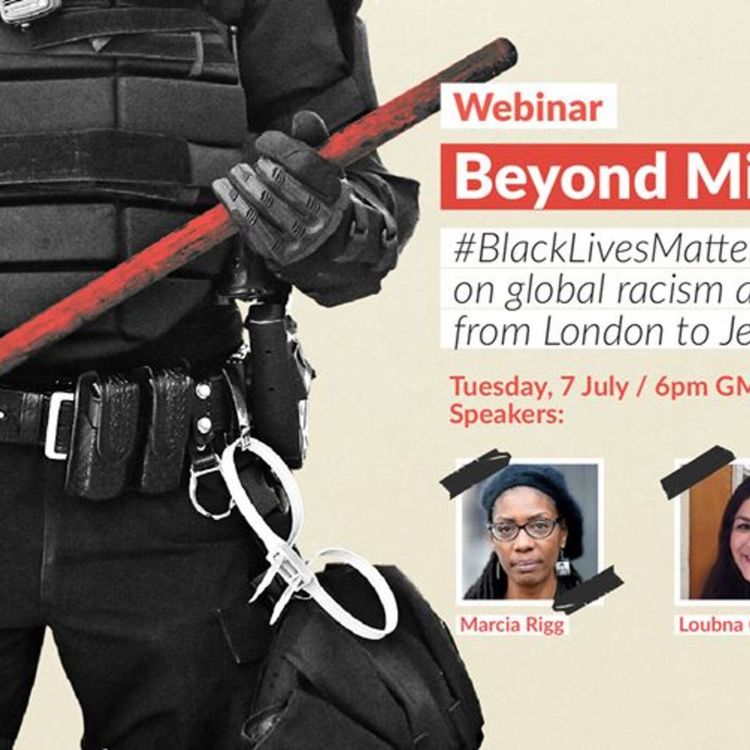
Bonus: Beyond Minneapolis, #BlackLivesMatter shines a light on global racism and police brutality
Listen to the recorded live discussion on how the #BlackLivesMatter movement is shining a light on global racism and police brutality beyond American cities, from London to Jerusalem
The murder of George Floyd, an unarmed African-American man, by police in Minneapolis, USA propelled the Black Lives Matter movement to global headlines. Mass protests in the US have since forced an urgent reckoning about systemic racism and police brutality.
Beyond the US, many are interrogating the same issues in their own countries. In the UK, growing demonstrations are demanding an end to systemic racism and police violence against Black people, who are more than twice as likely to die in police custody than other groups.
On Tuesday, 7 July 2020, our speakers discussed the connections between state repression and institutional racism beyond the US and think through the possibilities for international solidarity.
For video version, check our YouTube channel https://youtu.be/tETcVYLrBdE
Speakers:
Marcia Rigg is an activist and public speaker. She is the sister of Sean Rigg, who died in police custody in 2008 following prolonged restraint by Brixton police officers in London. She is a member of the United Families and Friends Campaign (UFFC), a coalition of those affected by deaths in police, prison and psychiatric custody in the UK.
Loubna Qutami is an Assistant Professor in the Department of Asian American Studies at the University of California, Los Angeles (UCLA). Qutami is also the former Executive Director of the Arab Cultural and Community Center (ACCC) in San Francisco and a founder and the former international general coordinator of the Palestinian Youth Movement (PYM).
Moderator:
Malia Bouattia is an activist, a former president of the National Union of Students, and co-founder of the Students not Suspects/Educators not Informants Network.
Follow us on Facebook/Alaraby.en, Twitter/@The_NewArab, and Instagram/TheNewArab for more or visit our website newarab.co.uk
(The statements, analysis, opinions and conclusions in this Webinar, and any related written materials are those of the guest speakers and do not necessarily represent those of The New Arab. The information and materials contained in the Webinar may contain inaccuracies or errors and we expressly exclude liability for any such inaccuracies or errors to the fullest extent permitted by law)
More episodes
View all episodes
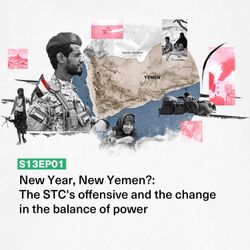
1. New Year, New Yemen?: The STC's offensive and the change in the balance of power
43:01||Season 13, Ep. 1As 2025 was coming to a close, the Southern Transitional Council (STC) in Yemen decided they had one last roll of the dice to make. At the start of December, the STC launched a military operation to seize the eastern governorates of Yemen. They quickly swept across the region, with arms supplied by the UAE. It was a great success, until the Yemeni government, backed by Saudi Arabia, fought back. This week on The New Arab Voice podcast, we look at the STC's offensive in the east of Yemen, the fight back by the Yemeni government, and the impact that these operations have had on the balance of power in Yemen.On this episode, we're joined by Yasmeen al-Eryani, the Executive Director for Knowledge Production at the Sana’a Center for Strategic Studies (@SanaaCenter), and Baraa Shiban (@BShtwtr), researcher and political analyst on Yemen and the Gulf, and an Associate Fellow with the Royal United Services Institute in London (@RUSI_org). Also, Mohamed al-Sahimi. Head of the STC UK office.This podcast is written and produced by Hugo Goodridge (@hugogoodridge).Theme music by Omar al-Fil with additional music from Audio Network.To get in touch with the producers, follow then tweet us at @TNAPodcasts or email podcast@newarab.com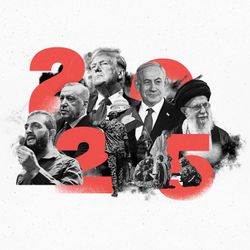
14. 2025 in Review
01:22:14||Season 12, Ep. 14The year is drawing to a close, which means its time for The New Arab Voice's annual review of year. To guide us through the tangled mess of the past 12 months, we're joined by The New Arab's Managing Editor Karim Traboulsi (@Kareemios), and journalist Oliver Mizzi (@OllyMizzi99).In this episode, we look back on the 12 days of war that shook Iran and Israel, the continued efforts of President Erdogan to hold on to power, the state building project of the new Sharaa government in Damascus, the brutal war in Sudan, and the stuttering ceasefire efforts in Gaza. We also look ahead to what 2026 might bring, and what us at The New Arab will be keeping an eye on. This podcast is written and produced by Hugo Goodridge (@hugogoodridge).Theme music by Omar al-Fil with additional music from Audio Network.To get in touch with the producers, follow then tweet us at @TNAPodcasts or email podcast@newarab.com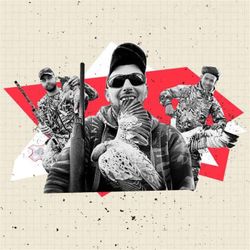
13. The Poachers Trail: Part 2
39:01||Season 12, Ep. 13This is part 2 of a special investigation. You can find part 1 in your feeds now.For 15 months, The New Arab, in cooperation with Bridges Investigations, explored the shadowy world of Maltese bird hunters.We uncovered how Maltese hunters, frustrated by local laws, were travelling to Egypt to slaughter migratory birds in vast numbers. Their hunting activities have been described as an environmental disaster, and a threat to the thousands of migratory birds who rely on Egyptian wetlands.We went undercover in Fayoum. Followed the smuggling routes from Egypt’s lakes to Maltese homes. And saw how Europe’s conservation efforts collapse when its citizens pull the trigger abroad.This is more than a story of poaching. It’s about wasted conservation money, destroyed ecosystems, and a system that rewards hunters while silencing conservationists. The Poachers Trail was a investigation by The New Arab and Bridges Investigations (@BRIDGES4I), with the support of the Journalism Fund Europe (@journalismfund). It was written and hosted by Mahmoud Elsobky (@ElsobkyMahmoud_), with additional help from Wael El-Sayegh.Andrea Glioti is The New Arab’s Investigation editor. This podcast was produced by Hugo Goodridge. To get in touch with the producers, follow then tweet us at @TNAPodcasts or email podcast@newarab.com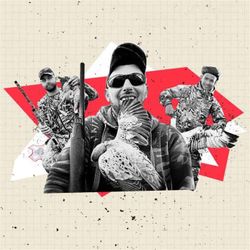
12. The Poachers Trail: Part 1
29:32||Season 12, Ep. 12For 15 months, The New Arab, in cooperation with Bridges Investigations, explored the shadowy world of Maltese bird hunters.We uncovered how Maltese hunters, frustrated by local laws, were travelling to Egypt to slaughter migratory birds in vast numbers. Their hunting activities have been described as an environmental disaster, and a threat to the thousands of migratory birds who rely on Egyptian wetlands.We went undercover in Fayoum. Followed the smuggling routes from Egypt’s lakes to Maltese homes. And saw how Europe’s conservation efforts collapse when its citizens pull the trigger abroad.This is more than a story of poaching. It’s about wasted conservation money, destroyed ecosystems, and a system that rewards hunters while silencing conservationists. The Poachers Trail was a investigation by The New Arab and Bridges Investigations (@BRIDGES4I), with the support of the Journalism Fund Europe (@journalismfund). It was written and hosted by Mahmoud Elsobky (@ElsobkyMahmoud_), with additional help from Wael El-Sayegh.Andrea Glioti is The New Arab’s Investigation editor. This podcast was produced by Hugo Goodridge. To get in touch with the producers, follow then tweet us at @TNAPodcasts or email podcast@newarab.com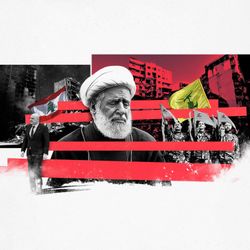
11. Hezbollah's Existential Crisis: Lebanon's effort to disarm the resistance and the future of the Party of God
29:46||Season 12, Ep. 11It has been annus horribilis for Hezbollah.They were struck by a deadly pager attack, Israel launched a devastating air and ground campaign against the group, and their long-time leader was killed in an Israeli airstrike. The war left Hezbollah battered and broken, and now, the Lebanese government is moving in to clear up the arms, which is taking place under the shadow of continued Israeli airstrikes.At the start of September, the Lebanese army presented its plan to disarm Hezbollah once and for all to the cabinet. While welcomed by much of the cabinet, Hezbollah rejected the notion.This week on The New Arab Voice we examine the state of Hezbollah today. How are the Lebanese state disarming the group? And what is the future of the self-styled resistance movement in Lebanon?We're joined by David Wood, Senior Analyst for Lebanon at International Crisis Group (@CrisisGroup); and Paul Salem, senior fellow at the Middle East Institute (@MiddleEastInst).This podcast is written and produced by Hugo Goodridge (@hugogoodridge).Theme music by Omar al-Fil with additional music from Audio Network.To get in touch with the producers, follow then tweet us at @TNAPodcasts or email podcast@newarab.com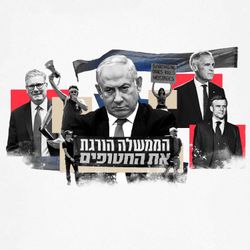
10. Recognising Problems in Israel: Western recognition of Palestine and trouble at the Foreign Ministry
34:35||Season 12, Ep. 10This week on The New Arab Voice podcast, we look at the recent decision by Western nations to recognise the State of Palestine. It came as a surprise to many, although it remains to be seen what it actual means for Palestinians. Either way, it angered Israel. And as Western states were announcing to recognise a Palestinian state, Israel was planning a major new offensive in Gaza, and Israeli citizens were on the streets protesting against the Netanyahu government. This week, what’s Israel doing in Gaza, and why are some Israeli citizens protesting the move? What does the recognition of a state of Palestine mean for Israel? And is Israeli foreign diplomacy failing?We speak with Paul Scham, the former Professor of Israeli Studies at the University of Maryland; also, Nimrod Goren, President and Founder of Mitvim – The Israeli Institute for Regional Foreign Policies.This podcast is written and produced by Hugo Goodridge (@hugogoodridge).Theme music by Omar al-Fil with additional music from Audio Network.To get in touch with the producers, follow then tweet us at @TNAPodcasts or email podcast@newarab.com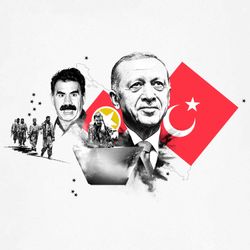
9. Erdogan Considers the Kurdish Question: The PKK ceasefire and the Kurdish future in Turkey
36:53||Season 12, Ep. 9This week on The New Arab Voice, we look at the recent ceasefire agreement between the PKK and the Turkish state. The Kurdistan’s Worker’s Party (PKK) and the Turkish state have been in a state of conflict since 1984. The conflict has killed over 35,000 people and achieved little, for either side. But now, a ceasefire has been announced. In a symbolic ceremony, PKK fighters burnt their arms in Sulaimaniyah, Iraq; and more recently, a commission was started at the Turkish Parliament to discuss the Turkish parliament. Is this the opportunity for Kurds to secure their rights in Turkey? Why is the Turkish state agreeing to a ceasefire now? Is President Erdogan using the ceasefire talks to increase his grip on power?Joining us to examine the Kurdish position, we speak with Dr. Salim Çevik (@salimcevikk), a visiting fellow at the Centre for Applied Turkey Studies (@CATS_Network) at the German Institute for International and Security Affairs (@SWPBerlin).And to guide us through Turkish thinking, we speak with Henri Barkey (@hbarkey), adjunct senior fellow for Middle East studies at the Council on Foreign Relations (@CFR_org) and the Bernard L. and Bertha F. Cohen chair in international relations at Lehigh University (Emeritus) (@LehighU). This podcast is written and produced by Hugo Goodridge (@hugogoodridge).Theme music by Omar al-Fil with additional music from Audio Network.To get in touch with the producers, follow then tweet us at @TNAPodcasts or email podcast@newarab.com
8. Sudan's Raging and Overlooked Tragedy: The warring generals, the illegal gold, and a population trapped
34:16||Season 12, Ep. 8This week on The New Arab Voice podcast we look at the state of the war in Sudan.It’s been declared the worst humanitarian crisis in the world, with hunger, disease and displacement rife. Yet the fighting surges on with reports of atrocities in the Kordofan region that left hundreds of civilians dead last weekend, the UN reported.The two rival militaries, the Sudanese army and the Rapid Support Forces, are showing no sign of slowing down - and they have a few external forces to thank.So why is the UAE accused of involvement in the war? Who else is fighting for a piece of Sudan’s mineral rich pie? And might the crisis be next on the list for the “peacemaking” Trump administration in Washington?To discuss all this and more, we speak to Hamid Khafallah (@HamidMurtada) Sudanese Researcher and Policy Analyst at the University of Manchester (@OfficialUoM), Hala Alkarib (@Halayalkarib) Sudanese activist and Regional Director of Strategic Initiative for Women in the Horn of Africa, and Khalid Omer Yousif (@KHOYousif) Vice Chairman of Sudanese Congress Party and former minister of cabinet affairs in the transitional government.7. Going Nuclear : 12 days of fire between Iran and Israel
34:20||Season 12, Ep. 7This week, we look at the recent Israeli surprise attack, and the Iranian response that rained down on Israeli cities. The war started on 13 June with surprise attack launched by Israel, attacking high profile military and nuclear figures, as well as nuclear and military sites across the country. Iran responded with a wave of drones and missiles, some of which got through. We've seen outbreaks of violence between the two countries before, but this round was far more costly for each nation. Why did Israel decide to launch a surprise attack? How were Iran able to inflict damage to Israel? Who was targeted by Israel and what impact do the killings have? What's the state of the Iranian nuclear deal? And can a new deal be reached?Joining us to untangle the Israeli decision making is Mairav Zonszein (@MairavZ), Senior Israel analyst for the International Crisis Group (@CrisisGroup). And to understand the Iranian position, we speak with Alex Vatanka (@AlexVatanka), Senior Fellow at the Middle East Institute (@MiddleEastInst), with a particular focus on Iran. This podcast is written and produced by Hugo Goodridge (@hugogoodridge).Theme music by Omar al-Fil with additional music from Audio Network.To get in touch with the producers, follow then tweet us at @TNAPodcasts or email podcast@newarab.com