
Latest episode

Mahoning Valley Media: WFMJ, The Vindicator, and Local News landscape
24:13|The Mahoning Valley media landscape is defined by a deep history of local ownership and a commitment to reporting that dates back over a century. At the center of this history is the Maag family, who founded and operated some of the most influential news outlets in Youngstown, Ohio. Their legacy began with The Vindicator, a newspaper established in 1869 that became famous for its fearless coverage of local corruption, the mafia, and the Ku Klux Klan. This reputation for investigative journalism was cemented in the late 1980s when the paper’s reporting contributed to the criminal convictions of nearly 70 politicians and business figures.While the newspaper underwent a major transition in 2019 when it was sold to Ogden Newspapers and became an edition of the Tribune Chronicle, the Maag family continues to operate WFMJ-TV. This station, an NBC and CW affiliate, remains one of the very few locally owned and operated television stations in the United States. WFMJ-TV has maintained a dominant position in the local ratings for years, particularly with its morning and evening news programs. Many viewers in the Mahoning Valley view it as the primary source for unbiased, local news because of its independence from large national media conglomerates.The station’s connection to the community is reinforced through its dedicated programming and public service. WFMJ Insight, for example, serves as a platform that goes beyond daily headlines to focus on local heroes, business updates, and feel-good stories that strengthen the social fabric of the valley. By highlighting local events like parades, festivals, and charity drives, the station fosters a sense of unity. Their staff members are also active participants in the community, with meteorologists and anchors frequently visiting schools and attending career fairs to mentor students interested in broadcasting.WFMJ’s commitment to education is further seen in its robust internship programs, which provide paid opportunities for students from Youngstown State University, Kent State, and Akron University. These initiatives help develop the next generation of multimedia journalists and producers, ensuring that local storytelling remains a vital part of the region’s future.The radio history of the valley is also intertwined with these institutions. WNIO, known today as 1390 The Gambler, was originally founded in 1939 as WFMJ radio by William F. Maag Jr. The call letters were taken from his initials. Over the decades, the station evolved from a music and talk format to its current status as a sports-focused affiliate for major networks and local university athletics. Although the radio station is now owned by iHeartMedia, its origins remain a key part of the Youngstown media heritage.Despite the changes in ownership and the evolution of digital media, the Mahoning Valley continues to support a variety of news sources. While some residents prefer the digital accessibility of outlets like WKBN or WYTV, many maintain a deep loyalty to WFMJ and the archival legacy of The Vindicator. These outlets do more than just report the weather or sports; they provide a historical record and a daily guide for the people of Northeast Ohio and Western Pennsylvania. In an era of rapid media consolidation, the presence of a locally owned station like WFMJ remains a point of pride for many in Youngstown, symbolizing a direct and personal connection between the newsroom and the neighborhoods it serves.
More episodes
View all episodes
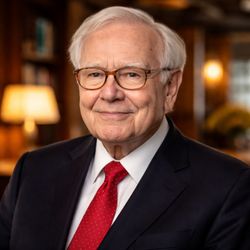
The Elephant Hunt: Warren Buffett’s Final Days at Berkshire CEO
23:31|Welcome to the show. This episode looks at the final months of Warren Buffett’s legendary tenure as CEO of Berkshire Hathaway, a period defined not by dramatic acquisitions, but by restraint, patience, and an unprecedented buildup of cash.Even as he prepared to step back from day-to-day leadership, Buffett remained eager to pursue what he famously calls an “elephant-sized” acquisition—a deal large enough to meaningfully move Berkshire’s bottom line. Yet despite the company’s immense scale and reputation, no opportunity met his standard of quality at a fair price. As a result, Berkshire’s cash reserves swelled to a record-breaking level of more than 381 billion dollars.To accumulate this liquidity, the conglomerate made decisive moves, including significant reductions in long-standing holdings such as Apple and Bank of America. Rather than replacing those positions with equally large investments, Berkshire opted for smaller, highly selective purchases, signaling caution rather than retreat. The result was a striking paradox: a company with extraordinary buying power operating in a market Buffett viewed as too expensive and insufficiently attractive.This moment underscores Buffett’s disciplined philosophy. For him, doing nothing is preferable to doing the wrong thing at the wrong price. Cash, while essential as a margin of safety, is not the end goal—it is simply a temporary holding place when great businesses are unavailable at sensible valuations.As leadership transitions to Greg Abel, the challenge becomes clear. He inherits not only one of the most powerful balance sheets in corporate history, but also rising pressure from shareholders eager to see that capital put to work. Deploying such a vast sum without compromising Berkshire’s principles will test the next era of leadership.Despite the quiet frustration of missed opportunities, Buffett’s confidence in Berkshire’s long-term future never wavered. He repeatedly emphasized that patience is an asset, discipline is a competitive advantage, and that cash—while comforting—is ultimately a poor substitute for owning truly great businesses.Thank you for listening. This episode captures a rare moment in corporate history, where the world’s most famous investor chose restraint over action, reminding us that sometimes the hardest decision in investing is waiting.
The Fall of Saks Fifth Avenue: Luxury in Bankruptcy
30:32|Welcome to the show. This episode examines the sudden financial collapse of luxury retail conglomerate Saks Global, which has entered Chapter 11 bankruptcy after months of mounting instability and strategic missteps.The crisis traces back to a poorly executed merger with Neiman Marcus that was intended to generate efficiencies and cost savings but ultimately did the opposite. Instead of strengthening the business, the deal added complexity and debt, culminating in a missed 100-million-dollar interest payment that signaled deeper structural problems. What was meant to be a transformative consolidation quickly became a catalyst for financial distress.As liquidity tightened, the effects rippled through the business. Saks Global struggled to maintain inventory levels, leaving stores understocked and unable to meet customer expectations. Vendor relationships deteriorated rapidly as suppliers halted shipments in response to delayed payments, further weakening the retailer’s ability to operate normally and damaging trust within the luxury supply chain.In an effort to stabilize operations, the company secured 1.75 billion dollars in new financing, allowing stores to remain open for now. However, this lifeline comes amid leadership changes and growing uncertainty about the brand’s future. Consumer confidence has begun to erode, particularly among luxury shoppers who expect consistency, exclusivity, and reliability—qualities that are difficult to maintain during bankruptcy proceedings.Analysts point to long-term strategic errors as the root cause of the collapse, arguing that leadership focused too heavily on complex deal-making while neglecting the fundamentals of retail execution. Instead of investing in inventory discipline, customer experience, and supplier relationships, the company became entangled in financial engineering that left it vulnerable when conditions worsened.Thank you for listening. Saks Global’s situation serves as a cautionary tale about the risks of prioritizing corporate strategy over operational health. Whether the company can recover will depend on a sweeping restructuring and its ability to rebuild credibility with vendors, employees, and luxury consumers who have many alternatives in a highly competitive market.
JPMorgan Analyst Ratings and Strategic Market Revisions (2026)
40:05|Welcome to the show. This episode offers a focused overview of the current financial landscape, drawing on recent reports that highlight shifting strategies in brokerage services, banking, and market analysis.The discussion begins with an introduction to EBC Financial Group, a regulated financial entity that provides liquidity solutions and CFD trading services primarily for professional and institutional clients. Its positioning reflects the continued demand for flexible trading infrastructure and risk-managed access to global markets, particularly in an environment marked by volatility and rapid capital movement.The episode then turns to recent analyst activity from JPMorgan, as reported by Investing.com. These updates reveal a mixed outlook across several sectors. Medline received a more optimistic assessment, suggesting confidence in its fundamentals and growth potential. In contrast, companies such as OneMain and SLM Corp were met with more cautious, downgraded views, largely due to concerns surrounding consumer credit exposure, inflationary pressure, and repayment risk in a higher-rate environment.Another key development explored is JPMorgan Chase’s planned takeover of the Apple Card portfolio from Goldman Sachs. This move signals a strategic expansion by JPMorgan into consumer-facing financial products tied closely to major technology platforms. The shift also reflects broader changes in how large banks are reassessing partnerships, risk profiles, and long-term profitability within the consumer credit space.Across all of these stories, common themes emerge: the growing importance of risk management, the strain inflation places on borrowers, and the need for adaptability in a rapidly evolving global financial system. Institutions and investors alike are being forced to balance opportunity with caution as market conditions remain uncertain.Thank you for listening. This episode underscores how interconnected financial decisions—from analyst ratings to major banking acquisitions—shape the broader investment environment. If you found this overview useful, consider following the podcast, leaving a review, and sharing it with others interested in finance, markets, and economic trends.
Global Economic Landscape and Wealth Forecasts 2026
38:27|Welcome to the show. This episode offers a forward-looking overview of the global economic and financial landscape heading into 2026, drawing on insights and data from Visual Capitalist that highlight major shifts in wealth, markets, and investment priorities.A central focus of the discussion is the accelerating concentration of global wealth. The reports spotlight the world’s richest individuals, with particular attention on Elon Musk, who is projected to become the first person in history to surpass a net worth of 700 billion dollars. This milestone underscores the extraordinary scale of value creation in technology-driven industries and raises broader questions about inequality, influence, and the power of corporate ecosystems.Beyond individual fortunes, the episode examines long-term asset performance in the post-pandemic era. Gold emerges as one of the strongest-performing assets, benefiting from inflation concerns, geopolitical uncertainty, and its role as a traditional store of value. In contrast, sovereign bonds are shown to have struggled, challenged by rising interest rates and shifting investor expectations around safety and yield.The analysis also explores geopolitical and monetary developments shaping the global economy. One notable example is Bulgaria’s transition to the euro, reflecting ongoing currency realignments within Europe and their implications for trade, stability, and regional integration. These shifts highlight how monetary policy and political decisions continue to reshape financial systems at a national and global level.Throughout the episode, data-driven rankings provide insight into key sectors such as technology, energy, and demographics. These comparisons reveal where growth is accelerating, where capital is flowing, and how structural changes—like energy transitions and population trends—are influencing long-term economic prospects.Thank you for listening. Taken together, these reports paint a picture of a rapidly evolving global landscape, defined by unprecedented wealth accumulation at the top, changing asset dynamics, and shifting geopolitical and investment priorities. As 2026 approaches, understanding these trends will be essential for anyone looking to navigate the future of the global economy.
The New Route to $10,000 Monthly: Consume, Apply, Educate
27:29|In this podcast, we explore a modern approach to building a $10,000-per-month income by leveraging high-income skills and digital scalability. The episode outlines a three-step process: first, consuming specialized knowledge from experts; second, applying that knowledge through real-world practice; and finally, teaching others to generate recurring revenue. By moving beyond trading time for money, listeners learn how to create automated systems and online communities that provide both financial security and personal freedom. While traditional careers offer stability, this “new route” uses digital platforms to bypass salary caps and gatekeepers. Ultimately, the episode shows how success comes from evolving from a service provider into a business owner who shares their unique experiences with a global audience, unlocking both income and independence.
The Wealth Architect: Seven Pitfalls to Financial Freedom
37:43|In this podcast, we explore practical strategies for achieving financial freedom by focusing on building high-income skills and acquiring equity rather than relying solely on a steady paycheck. Listeners learn why avoiding a lifestyle fueled by debt and instead investing in appreciating assets is essential for long-term wealth. The episode emphasizes the value of collaboration with talented individuals and seeking expert guidance to prevent cognitive overload, while maintaining humility and a commitment to lifelong learning to keep ego in check. Taking radical self-responsibility instead of blaming external circumstances allows individuals to take control of their own destiny, and consistently pushing beyond comfort zones unlocks the infinite possibilities that come with the pursuit of success. This episode offers actionable insights for listeners who want to build lasting financial independence and personal growth.