Share
The Mike Method
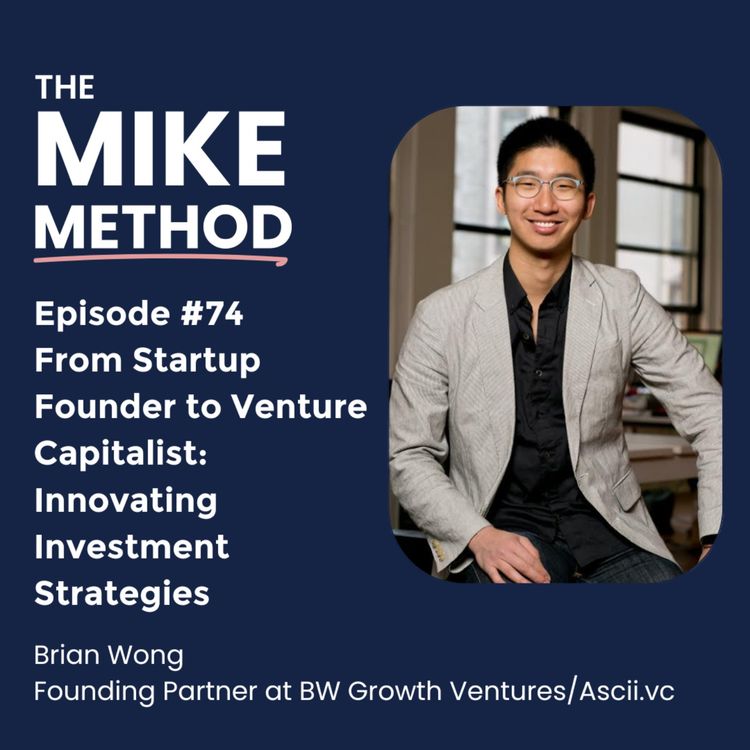
EP74 From Startup Founder to Venture Capitalist: Innovating Investment Strategies with Brian Wong
Most founders want two things: to raise their next round and to exit. Few will say it out loud, but Brian Wong will.
In this episode of The Mike Method, Mike Desjardins sits down with Brian Wong, a prodigy who graduated from UBC’s Sauder School of Business at 18, raised more than $40 million in venture capital, and builtKkiip, one of the world’s largest mobile advertising platforms, before selling it in 2019. Now based in New York City, Brian leads Ascii Ventures, a next generation fund redefining what it means to be truly founder friendly.
Together, they explore what makes great founders fundable, how humility and curiosity strengthen leadership, and why the future of venture capital is being shaped by people who have lived the startup experience themselves.
Brian also shares how Ascii's founder focused model aligns incentives, creates a flywheel for liquidity, and helps early stage companies build culture, confidence, and sustainable growth. The conversation touches on the evolving landscape of crypto and stablecoins, how mainstream adoption is already underway, and why this shift matters for leaders and investors alike.
If you have ever wondered how top founders think or how investors identify the qualities that predict success, this episode offers both insight and inspiration.
Episode Resources:
Brian Wong: LinkedIn
ViRTUS: Website / Instagram / LinkedIn
Sign up for our Newsletter: Sign Up
More episodes
View all episodes
EP 127 How Great Leaders Shape Culture: Trust, Belonging, and Shared Purpose
23:44|What makes a workplace culture where people feel connected, supported, and motivated to contribute?Organizational culture develops through everyday interactions, leadership decisions, and the ways people support one another. From how we build relationships to whose contributions are encouraged, these experiences influence how teams work together.In this special compilation episode of The Mike Method, host Mike Desjardins brings together insights from six conversations exploring the human side of leadership.Kristi Herold discusses the role of play, friendship, and connection in workplace culture. Katherine Robinette explores how intentional conversations can strengthen relationships, particularly in virtual environments. Judy Carter shares why vulnerability and personal storytelling can create meaningful connections, while Robert Kirsch discusses the importance of making space for different communication styles and contributions.Cybele Negris explores the difference between mentorship and sponsorship, and how leaders can actively create opportunities for others. Finally, Lynne Twist reflects on the power of committing to something beyond individual achievement and how shared purpose can influence the way we lead.Together, these conversations offer practical perspectives on creating cultures where people feel valued, connected, and encouraged to contribute.In this episode, you'll explore:Why connection and friendship matter in workplace cultureHow intentional conversations can strengthen relationshipsThe role of vulnerability in building trustWhy leaders need to make space for different voicesHow sponsorship creates opportunities for othersThe difference between setting goals and living with a deeper commitmentWhether you're leading a team, building an organization, or considering how you contribute to the culture around you, this episode offers ideas for creating more meaningful ways of working together.Episode ResourcesEP115 Why Play Belongs at Work with Kristi HeroldEP114 Remote Work Isn’t the Problem with Katherine RobinetteEP116 How to Use Humour and Storytelling with Judy CarterEP120 How Great Teams Learn to Lead Themselves with Robert KirschEP117 The Mentorship Advantage with Cybele NegrisEP121 The Power of Enough with Lynne TwistViRTUS Leadership Development
EP126 Why Your Best Managers Can’t Stop Doing Everyone Else’s Work
03:46|Some of the most capable leaders struggle with a common challenge: they're still doing too much of the work themselves.In this short solo episode of The Mike Method, Mike Desjardins explores why the skills that make someone successful as an individual contributor don't always translate into effective leadership.When leaders consistently provide answers, solve problems, and take over tasks, they may unintentionally create teams that depend on them for decisions and direction.Mike unpacks the "doer habit," why shifting away from it involves more than delegation, and how leaders can build greater capability and ownership within their teams.He shares practical coaching questions that encourage independent thinking, explains the value of developmental delegation, and challenges leaders to consider whether they're creating a team that can succeed without their constant involvement.In this episode:Why capable managers often struggle to stop doing everything themselvesHow leaders can unintentionally create dependencyThe difference between assigning tasks and developing capabilityThree coaching questions that encourage independent problem-solvingWhat it means to transition from doer to multiplierResources:Connect with ViRTUS Connect with Mike
EP125 How to Use AI Without Losing Your Critical Thinking with Jason Knapp
50:19|What if having more problems actually meant your organization was succeeding? And as AI becomes part of our everyday work, how do we make sure we're using it to strengthen our thinking rather than replace it?In this episode of The Mike Method, Mike Desjardins welcomes Jason Knapp, a technology and product leader, entrepreneur, and self-described problem-solving junkie, for a conversation about leadership, innovation, and the evolving relationship between humans and artificial intelligence.Throughout his career, Jason has helped develop technologies used by millions of people, co-invented real-time bidding with his team, led large-scale advertising platforms, and co-founded a company acquired by News Corp for approximately $140 million. Today, he works with organizations to connect customer needs, business objectives, and technology to solve meaningful challenges.Together, Mike and Jason explore why recurring problems often point to larger organizational issues, how leaders can help their teams develop problem-solving capabilities, and why defining success matters just as much as identifying what's wrong.They also examine the growing role of AI in our work, including the distinction between using AI to augment human thinking and allowing it to direct our decisions. Jason shares practical approaches to maintaining critical thinking, taking responsibility for AI-assisted work, and building reusable AI skills that draw on our own knowledge and expertise.In this episode, you'll learn:Why new problems can signal organizational growth and progress.How to recognize recurring challenges that require systemic solutions.Why effective leaders create opportunities for their teams to solve problems.How to use AI while remaining actively engaged in the thinking and decision-making process.Why accountability matters when producing AI-assisted work.How reusable AI skills and knowledge files can support more consistent, personalized results.A thought-provoking conversation for leaders navigating change, exploring AI, and working to build more capable, collaborative teams.Episode Resources:Who Not How by Dan Sullivan and Dr. Benjamin Hardy: whonothow.comElectronic Frontier Foundation (EFF): eff.orgChatGPT: chatgpt.comClaude AI: claude.aiViRTUS Leadership Development: virtusinc.comJason Knapp: WebsiteThe Mike Method, EP55: AI Strategy That Starts with People with Kian Gohar: Listen to the episode
EP124 The Hidden Cost of Burnout on Leadership with Michelle Taschereau
52:16|What happens when the demands of leadership exceed our brain's capacity to keep up?In this episode of The Mike Method, Mike welcomes Michelle Taschereau, Founder of Atlas Brain Health, for a conversation about burnout, brain health, and the importance of protecting our cognitive capacity.With more than two decades of experience supporting brain injury survivors, caregivers, healthcare professionals, and individuals navigating brain health challenges, Michelle brings a unique perspective to the relationship between cognitive well-being and everyday performance. She is a Certified Brain Injury Specialist Trainer, life and wellness coach, and cognitive trainer whose career has included roles in community support, case management, cognitive training, and supportive living programs.Together, Mike and Michelle explore why burnout has become such a widespread challenge, how constant notifications and task switching affect our ability to focus, and why adding another productivity tool may not be the solution.They discuss practical ways to structure the workday around cognitive capacity, including creating routines that reduce decision fatigue, establishing healthier communication boundaries, and building opportunities for recovery between meetings.Michelle also introduces a powerful principle: subtract before you add. Rather than introducing more habits, commitments, and wellness practices into an already demanding schedule, consider what you can remove to create more capacity.The conversation also explores an important leadership responsibility: recognizing how our emotional state and nervous system can influence the people we work with.Mike shares his own experiences with back-to-back meetings, managing notifications, journaling, and learning to protect his energy for both his team and his family.In this episode, you'll learn:Why burnout affects more than productivity and what it means for leadership effectivenessHow constant notifications and task switching contribute to cognitive overloadWhy routines and structure can help conserve mental energyHow to apply the principle of subtraction before additionPractical ways to create meaningful recovery throughout the workdayHow breathing techniques, meditation, and journaling can support cognitive well-beingWhy leaders need to be intentional about the energy they bring to their teamsHow to establish healthier boundaries between work and personal lifeWhether you're leading an organization, managing a team, or simply trying to create a more sustainable way of working, this conversation offers practical ideas for protecting your cognitive capacity while supporting the people who depend on you.Resources Mentioned in This EpisodeConnect & Learn MoreAtlas Brain Health | Learn more about Michelle Tasserot's work in brain health and cognitive wellness.ViRTUS | Leadership development, executive coaching, and organizational effectiveness.Journaling & ReflectionDay One Journal | Digital journaling app with customizable templates and prompts.The Five Minute Journal | A structured approach to daily gratitude and reflection.The Bullet Journal | A flexible system for organizing thoughts, priorities, and daily tasks.The Artist's Way by Julia Cameron | A creative development program that includes a daily journaling practice.The Five Minute Journal (Tim Ferriss) | A structured journal for daily gratitude, reflection, and intention setting.Modern Wisdom | Resources from Chris Williamson focused on personal growth, reflection, and self-improvement.The Diary of a CEO | Resources from Steven Bartlett exploring personal development, mindset, and reflection.Meditation & MindfulnessCalm | Guided meditation, relaxation, and sleep resources.Headspace | Guided meditation and mindfulness practices.Insight Timer | Guided meditations, breathing exercises, and mindfulness resources.Muse | Brain-sensing technology designed to support meditation practices.
EP123 The Surprising Truth About SEO, AI, and Building Trust with Maria-Katarina Johannesson
42:43|What if the most effective way to build your brand's digital authority has less to do with algorithms and more to do with relationships?As AI changes how people search for information, discover businesses, and make purchasing decisions, organizations are navigating an increasingly complex digital environment. But while the technology continues to evolve, the fundamentals of building trust remain remarkably consistent.In this episode of The Mike Method, Mike Desjardins welcomes Maria-Katarina Johannesson, also known as Links and Maria, to explore the relationship between SEO, backlinks, digital PR, and human connection.With more than a decade of experience building relationships across sales and digital marketing, Maria-Katarina brings a refreshingly human perspective to a technical industry.Together, they unpack what backlinks actually are, why relevance matters more than volume, and how businesses can strengthen their authority by focusing on meaningful partnerships, compelling stories, and genuinely useful content.They also explore the growing problem of AI-generated outreach, why automation without intention can damage trust, and how organizations can approach digital visibility as part of a broader business strategy.In this conversation, you'll learn:What backlinks are and why they matter for SEO and AI search.Why building digital authority starts with understanding what you want your organization to be known for.How strategic partnerships and meaningful content can strengthen brand credibility.Why AI-generated outreach often creates more activity without building better relationships.How podcasts, digital PR, and storytelling contribute to a brand's broader online presence.Why the best backlinks may come when you stop focusing on backlinks altogether.At the heart of this conversation is a reminder that applies well beyond marketing: meaningful results come from understanding your audience, investing in relationships, and creating something genuinely valuable.Because in an increasingly automated world, human connection still matters.Episode Reosurces:Maria-Katarina Johannesson | Links and Maria – Learn more about Maria-Katarina's human-first approach to link building and digital PR.Google's SEO Starter Guide – An introduction to search engine optimization and creating useful, relevant content.Google's Link Best Practices – Guidance on links, relevance, and how search engines interpret them.AI Features and Your Website – Google's guidance on how AI is changing search and what website owners should know.
EP122 Why Leadership Development Doesn't Stick (And What Actually Works)
02:48|Organizations invest significant time and money in leadership development. Workshops generate enthusiasm, participants leave with new ideas, and feedback is overwhelmingly positive. But a few weeks later, how much has actually changed?In this short solo episode of The Mike Method, Mike Desjardins explores why leadership training doesn't always translate into lasting behavioural change and what organizations can do to make development more effective.Mike explains why knowing something and consistently applying it are two very different things. Real leadership development requires opportunities to practise, reflect, receive feedback, and build new habits over time. And just as importantly, the systems and expectations surrounding leaders need to support those new behaviours.From coaching and peer learning to manager involvement and real-world application, Mike shares why what happens between development sessions may matter more than the sessions themselves.The episode challenges organizations to reconsider how they measure successful leadership development. Rather than focusing solely on what leaders will learn, the more valuable question is what they'll actually be doing differently six months from now.Because the goal isn't more content. It's lasting behaviour change.Episode Resources:ViRTUS: Website / LinkedIn
EP121 The Power of Enough: Rethinking Leadership and Success with Lynne Twist
47:13|What if meaningful leadership isn't about achieving more, but about recognizing what we already have and committing ourselves to something greater?In this episode of The Mike Method, Mike Desjardins is joined by Lynne Twist, bestselling author of The Soul of Money and Living a Committed Life, co-founder of the Pachamama Alliance, and founder of the Soul of Money Institute. Drawing on decades of work addressing hunger, poverty, environmental protection, and social change, Lynne challenges conventional thinking about leadership, success, and what it means to have enough.Mike and Lynne explore the difference between setting goals and making commitments that shape who we become. Through stories of her experiences with Buckminster Fuller, Mother Teresa, and women leading change in communities across Africa, Lynne shares why leadership isn't defined by a title or position, but by our commitment to making a meaningful difference.They also discuss what Indigenous communities in the Amazon have taught Lynne about collective leadership and co-equal partnerships, including the origins of the Pachamama Alliance and its work alongside Indigenous peoples to protect the rainforest.At the heart of their conversation is Lynne's concept of radical, profound sufficiency. She explains how the belief that there isn't enough can shape our decisions, relationships, and institutions, and why continually pursuing more doesn't necessarily create fulfillment. Instead, recognizing and appreciating what we already have can make room for gratitude, generosity, and a different approach to leadership.It's a thought-provoking conversation about commitment, community, and the opportunity to contribute to systems that support people and the planet.Resources & Further ReadingPachamama AllianceSoul of Money InstituteThe Soul of Money by Lynne TwistLiving a Committed Life by Lynne TwistConfessions of an Economic Hit Man by John Perkins
EP120 How Great Teams Learn to Lead Themselves with Robert Kirsch
44:12|What changes when a leader stops trying to have all the answers and creates more room for the team to contribute?In this episode of The Mike Method, Mike Desjardins is joined by Robert Kirsch, a people-first leader with more than 25 years of experience across executive leadership, operations, coaching and sport. Rob's career has included helping scale lululemon before and after its IPO, serving as President and COO of Houston Landscapes, leading supply chain and operations at Native Shoes, and now working with leaders and organizations at ViRTUS.Mike and Rob explore what separates a group of talented individuals from a team that can truly work together. Rob shares why some of the strongest teams operate more like a jazz band than an orchestra, with people able to adapt, contribute in different ways and step forward when circumstances change.They also discuss why showing up matters even when you're not at your best, how leaders can create greater ownership by talking less, and why silence can be one of the most useful tools available to a leader.The conversation explores the role of emotional intelligence and adaptability in leadership, including the importance of combining data with lived experience rather than relying entirely on either one. Mike and Rob also discuss how our job titles can limit the way we think about our contribution and why asking others what they rely on us for can reveal strengths we may not recognize in ourselves.They finish with a powerful analogy about the counterbalance inside a skyscraper and what it can teach us about staying grounded and adaptable when circumstances around us change.In this episode:What separates a group from a teamWhy showing up can matter more than performing at your bestHow leaders can create greater ownership within a teamWhy adaptability matters when things don't go according to planThe value of silence and listening in leadershipHow to make more room for quieter voicesWhy your contribution extends beyond your job titleHow data and lived experience can inform better decisionsThe role of emotional intelligence in leadershipHow to build an internal counterbalance when circumstances changeResources mentioned:Connect with RobertBurke’s Law by Brian Burke and Stephen BruntMultipliers by Liz WisemanEssentialism by Greg McKeownQuiet by Susan CainCliftonStrengths / StrengthsFinder 2.0EQ-i 2.0 Emotional Intelligence AssessmentWorking with Emotional Intelligence by Daniel GolemanSearch Inside Yourself by Chade-Meng TanGood to Great by Jim Collins
EP119 How to Build Charismatic Presence with Eleni Kelakos
48:53|What if charisma isn’t something you’re born with, but something you already have?In this episode of The Mike Method, Mike Desjardins is joined by Eleni Kelakos, also known as the Speaker Whisperer. A professional actress, award-winning singer-songwriter, author, and communication coach, Eleni has spent more than two decades helping leaders become more powerful, authentic communicators.Eleni believes we’re all born with what she calls a “charisma pilot light.” But as we become more concerned with fitting in, impressing others, or getting things right, we can begin to monitor ourselves so closely that our natural presence starts to dim.Mike and Eleni explore what happens when leaders feel pressure to perform a version of themselves, why authenticity plays such an important role in building trust, and how to adapt to the people around you without hiding behind a mask.They also unpack the role of vulnerability in leadership, including how personal stories can create connection without becoming oversharing, and why some of the most effective leadership stories are the ones where things didn’t go according to plan.Eleni then shares the five principles behind her approach to charismatic presence: Know Thyself, Be Thyself, Prepare Thyself, Commit Thyself, and Turn Thyself On So You Can Turn Others On.You’ll also learn why preparation can create more freedom in high-stakes moments, how to stay present when you don’t have a script, and Eleni’s simple FBI practice using your feet, breath, and intention to help you ground yourself before an important meeting, presentation, or conversation.Eleni Kelakos is the author of three award-winning books, including Charismatic Presence: Five Principles for Magnetic Presentations.In this episode:• Why charisma may be something we uncover rather than acquire• How self-consciousness can interfere with authentic presence• The difference between adapting to others and performing for them• Why authenticity and trust are closely connected• How leaders can share personal stories without oversharing• Eleni’s five principles of charismatic presence• Why preparation creates greater freedom in the moment• How to respond when you don’t have a prepared answer• The connection between energy, presence, and communication• A simple feet, breath, and intention practice for high-stakes momentsResources mentioned:Eleni Kelakos: Website / LinkedInCharismatic Presence: Five Principles for Magnetic Presentations by Eleni KelakosYour Body Language May Shape Who You Are | Amy Cuddy | TED