Share
The Mike Method
EP121 The Power of Enough: Rethinking Leadership and Success with Lynne Twist
What if meaningful leadership isn't about achieving more, but about recognizing what we already have and committing ourselves to something greater?
In this episode of The Mike Method, Mike Desjardins is joined by Lynne Twist, bestselling author of The Soul of Money and Living a Committed Life, co-founder of the Pachamama Alliance, and founder of the Soul of Money Institute. Drawing on decades of work addressing hunger, poverty, environmental protection, and social change, Lynne challenges conventional thinking about leadership, success, and what it means to have enough.
Mike and Lynne explore the difference between setting goals and making commitments that shape who we become. Through stories of her experiences with Buckminster Fuller, Mother Teresa, and women leading change in communities across Africa, Lynne shares why leadership isn't defined by a title or position, but by our commitment to making a meaningful difference.
They also discuss what Indigenous communities in the Amazon have taught Lynne about collective leadership and co-equal partnerships, including the origins of the Pachamama Alliance and its work alongside Indigenous peoples to protect the rainforest.
At the heart of their conversation is Lynne's concept of radical, profound sufficiency. She explains how the belief that there isn't enough can shape our decisions, relationships, and institutions, and why continually pursuing more doesn't necessarily create fulfillment. Instead, recognizing and appreciating what we already have can make room for gratitude, generosity, and a different approach to leadership.
It's a thought-provoking conversation about commitment, community, and the opportunity to contribute to systems that support people and the planet.
Resources & Further Reading
More episodes
View all episodes
EP125 How to Use AI Without Losing Your Critical Thinking with Jason Knapp
50:19|What if having more problems actually meant your organization was succeeding? And as AI becomes part of our everyday work, how do we make sure we're using it to strengthen our thinking rather than replace it?In this episode of The Mike Method, Mike Desjardins welcomes Jason Knapp, a technology and product leader, entrepreneur, and self-described problem-solving junkie, for a conversation about leadership, innovation, and the evolving relationship between humans and artificial intelligence.Throughout his career, Jason has helped develop technologies used by millions of people, co-invented real-time bidding with his team, led large-scale advertising platforms, and co-founded a company acquired by News Corp for approximately $140 million. Today, he works with organizations to connect customer needs, business objectives, and technology to solve meaningful challenges.Together, Mike and Jason explore why recurring problems often point to larger organizational issues, how leaders can help their teams develop problem-solving capabilities, and why defining success matters just as much as identifying what's wrong.They also examine the growing role of AI in our work, including the distinction between using AI to augment human thinking and allowing it to direct our decisions. Jason shares practical approaches to maintaining critical thinking, taking responsibility for AI-assisted work, and building reusable AI skills that draw on our own knowledge and expertise.In this episode, you'll learn:Why new problems can signal organizational growth and progress.How to recognize recurring challenges that require systemic solutions.Why effective leaders create opportunities for their teams to solve problems.How to use AI while remaining actively engaged in the thinking and decision-making process.Why accountability matters when producing AI-assisted work.How reusable AI skills and knowledge files can support more consistent, personalized results.A thought-provoking conversation for leaders navigating change, exploring AI, and working to build more capable, collaborative teams.Episode Resources:Who Not How by Dan Sullivan and Dr. Benjamin Hardy: whonothow.comElectronic Frontier Foundation (EFF): eff.orgChatGPT: chatgpt.comClaude AI: claude.aiViRTUS Leadership Development: virtusinc.comJason Knapp: WebsiteThe Mike Method, EP55: AI Strategy That Starts with People with Kian Gohar: Listen to the episode
EP124 The Hidden Cost of Burnout on Leadership with Michelle Taschereau
52:16|What happens when the demands of leadership exceed our brain's capacity to keep up?In this episode of The Mike Method, Mike welcomes Michelle Taschereau, Founder of Atlas Brain Health, for a conversation about burnout, brain health, and the importance of protecting our cognitive capacity.With more than two decades of experience supporting brain injury survivors, caregivers, healthcare professionals, and individuals navigating brain health challenges, Michelle brings a unique perspective to the relationship between cognitive well-being and everyday performance. She is a Certified Brain Injury Specialist Trainer, life and wellness coach, and cognitive trainer whose career has included roles in community support, case management, cognitive training, and supportive living programs.Together, Mike and Michelle explore why burnout has become such a widespread challenge, how constant notifications and task switching affect our ability to focus, and why adding another productivity tool may not be the solution.They discuss practical ways to structure the workday around cognitive capacity, including creating routines that reduce decision fatigue, establishing healthier communication boundaries, and building opportunities for recovery between meetings.Michelle also introduces a powerful principle: subtract before you add. Rather than introducing more habits, commitments, and wellness practices into an already demanding schedule, consider what you can remove to create more capacity.The conversation also explores an important leadership responsibility: recognizing how our emotional state and nervous system can influence the people we work with.Mike shares his own experiences with back-to-back meetings, managing notifications, journaling, and learning to protect his energy for both his team and his family.In this episode, you'll learn:Why burnout affects more than productivity and what it means for leadership effectivenessHow constant notifications and task switching contribute to cognitive overloadWhy routines and structure can help conserve mental energyHow to apply the principle of subtraction before additionPractical ways to create meaningful recovery throughout the workdayHow breathing techniques, meditation, and journaling can support cognitive well-beingWhy leaders need to be intentional about the energy they bring to their teamsHow to establish healthier boundaries between work and personal lifeWhether you're leading an organization, managing a team, or simply trying to create a more sustainable way of working, this conversation offers practical ideas for protecting your cognitive capacity while supporting the people who depend on you.Resources Mentioned in This EpisodeConnect & Learn MoreAtlas Brain Health | Learn more about Michelle Tasserot's work in brain health and cognitive wellness.ViRTUS | Leadership development, executive coaching, and organizational effectiveness.Journaling & ReflectionDay One Journal | Digital journaling app with customizable templates and prompts.The Five Minute Journal | A structured approach to daily gratitude and reflection.The Bullet Journal | A flexible system for organizing thoughts, priorities, and daily tasks.The Artist's Way by Julia Cameron | A creative development program that includes a daily journaling practice.The Five Minute Journal (Tim Ferriss) | A structured journal for daily gratitude, reflection, and intention setting.Modern Wisdom | Resources from Chris Williamson focused on personal growth, reflection, and self-improvement.The Diary of a CEO | Resources from Steven Bartlett exploring personal development, mindset, and reflection.Meditation & MindfulnessCalm | Guided meditation, relaxation, and sleep resources.Headspace | Guided meditation and mindfulness practices.Insight Timer | Guided meditations, breathing exercises, and mindfulness resources.Muse | Brain-sensing technology designed to support meditation practices.
EP123 The Surprising Truth About SEO, AI, and Building Trust with Maria-Katarina Johannesson
42:43|What if the most effective way to build your brand's digital authority has less to do with algorithms and more to do with relationships?As AI changes how people search for information, discover businesses, and make purchasing decisions, organizations are navigating an increasingly complex digital environment. But while the technology continues to evolve, the fundamentals of building trust remain remarkably consistent.In this episode of The Mike Method, Mike Desjardins welcomes Maria-Katarina Johannesson, also known as Links and Maria, to explore the relationship between SEO, backlinks, digital PR, and human connection.With more than a decade of experience building relationships across sales and digital marketing, Maria-Katarina brings a refreshingly human perspective to a technical industry.Together, they unpack what backlinks actually are, why relevance matters more than volume, and how businesses can strengthen their authority by focusing on meaningful partnerships, compelling stories, and genuinely useful content.They also explore the growing problem of AI-generated outreach, why automation without intention can damage trust, and how organizations can approach digital visibility as part of a broader business strategy.In this conversation, you'll learn:What backlinks are and why they matter for SEO and AI search.Why building digital authority starts with understanding what you want your organization to be known for.How strategic partnerships and meaningful content can strengthen brand credibility.Why AI-generated outreach often creates more activity without building better relationships.How podcasts, digital PR, and storytelling contribute to a brand's broader online presence.Why the best backlinks may come when you stop focusing on backlinks altogether.At the heart of this conversation is a reminder that applies well beyond marketing: meaningful results come from understanding your audience, investing in relationships, and creating something genuinely valuable.Because in an increasingly automated world, human connection still matters.Episode Reosurces:Maria-Katarina Johannesson | Links and Maria – Learn more about Maria-Katarina's human-first approach to link building and digital PR.Google's SEO Starter Guide – An introduction to search engine optimization and creating useful, relevant content.Google's Link Best Practices – Guidance on links, relevance, and how search engines interpret them.AI Features and Your Website – Google's guidance on how AI is changing search and what website owners should know.
EP122 Why Leadership Development Doesn't Stick (And What Actually Works)
02:48|Organizations invest significant time and money in leadership development. Workshops generate enthusiasm, participants leave with new ideas, and feedback is overwhelmingly positive. But a few weeks later, how much has actually changed?In this short solo episode of The Mike Method, Mike Desjardins explores why leadership training doesn't always translate into lasting behavioural change and what organizations can do to make development more effective.Mike explains why knowing something and consistently applying it are two very different things. Real leadership development requires opportunities to practise, reflect, receive feedback, and build new habits over time. And just as importantly, the systems and expectations surrounding leaders need to support those new behaviours.From coaching and peer learning to manager involvement and real-world application, Mike shares why what happens between development sessions may matter more than the sessions themselves.The episode challenges organizations to reconsider how they measure successful leadership development. Rather than focusing solely on what leaders will learn, the more valuable question is what they'll actually be doing differently six months from now.Because the goal isn't more content. It's lasting behaviour change.Episode Resources:ViRTUS: Website / LinkedIn
EP120 How Great Teams Learn to Lead Themselves with Robert Kirsch
44:12|What changes when a leader stops trying to have all the answers and creates more room for the team to contribute?In this episode of The Mike Method, Mike Desjardins is joined by Robert Kirsch, a people-first leader with more than 25 years of experience across executive leadership, operations, coaching and sport. Rob's career has included helping scale lululemon before and after its IPO, serving as President and COO of Houston Landscapes, leading supply chain and operations at Native Shoes, and now working with leaders and organizations at ViRTUS.Mike and Rob explore what separates a group of talented individuals from a team that can truly work together. Rob shares why some of the strongest teams operate more like a jazz band than an orchestra, with people able to adapt, contribute in different ways and step forward when circumstances change.They also discuss why showing up matters even when you're not at your best, how leaders can create greater ownership by talking less, and why silence can be one of the most useful tools available to a leader.The conversation explores the role of emotional intelligence and adaptability in leadership, including the importance of combining data with lived experience rather than relying entirely on either one. Mike and Rob also discuss how our job titles can limit the way we think about our contribution and why asking others what they rely on us for can reveal strengths we may not recognize in ourselves.They finish with a powerful analogy about the counterbalance inside a skyscraper and what it can teach us about staying grounded and adaptable when circumstances around us change.In this episode:What separates a group from a teamWhy showing up can matter more than performing at your bestHow leaders can create greater ownership within a teamWhy adaptability matters when things don't go according to planThe value of silence and listening in leadershipHow to make more room for quieter voicesWhy your contribution extends beyond your job titleHow data and lived experience can inform better decisionsThe role of emotional intelligence in leadershipHow to build an internal counterbalance when circumstances changeResources mentioned:Connect with RobertBurke’s Law by Brian Burke and Stephen BruntMultipliers by Liz WisemanEssentialism by Greg McKeownQuiet by Susan CainCliftonStrengths / StrengthsFinder 2.0EQ-i 2.0 Emotional Intelligence AssessmentWorking with Emotional Intelligence by Daniel GolemanSearch Inside Yourself by Chade-Meng TanGood to Great by Jim Collins
EP119 How to Build Charismatic Presence with Eleni Kelakos
48:53|What if charisma isn’t something you’re born with, but something you already have?In this episode of The Mike Method, Mike Desjardins is joined by Eleni Kelakos, also known as the Speaker Whisperer. A professional actress, award-winning singer-songwriter, author, and communication coach, Eleni has spent more than two decades helping leaders become more powerful, authentic communicators.Eleni believes we’re all born with what she calls a “charisma pilot light.” But as we become more concerned with fitting in, impressing others, or getting things right, we can begin to monitor ourselves so closely that our natural presence starts to dim.Mike and Eleni explore what happens when leaders feel pressure to perform a version of themselves, why authenticity plays such an important role in building trust, and how to adapt to the people around you without hiding behind a mask.They also unpack the role of vulnerability in leadership, including how personal stories can create connection without becoming oversharing, and why some of the most effective leadership stories are the ones where things didn’t go according to plan.Eleni then shares the five principles behind her approach to charismatic presence: Know Thyself, Be Thyself, Prepare Thyself, Commit Thyself, and Turn Thyself On So You Can Turn Others On.You’ll also learn why preparation can create more freedom in high-stakes moments, how to stay present when you don’t have a script, and Eleni’s simple FBI practice using your feet, breath, and intention to help you ground yourself before an important meeting, presentation, or conversation.Eleni Kelakos is the author of three award-winning books, including Charismatic Presence: Five Principles for Magnetic Presentations.In this episode:• Why charisma may be something we uncover rather than acquire• How self-consciousness can interfere with authentic presence• The difference between adapting to others and performing for them• Why authenticity and trust are closely connected• How leaders can share personal stories without oversharing• Eleni’s five principles of charismatic presence• Why preparation creates greater freedom in the moment• How to respond when you don’t have a prepared answer• The connection between energy, presence, and communication• A simple feet, breath, and intention practice for high-stakes momentsResources mentioned:Eleni Kelakos: Website / LinkedInCharismatic Presence: Five Principles for Magnetic Presentations by Eleni KelakosYour Body Language May Shape Who You Are | Amy Cuddy | TED
EP118 How to Make Better Decisions with Sherif Farghal
50:52|How do you know when to trust your gut and when a decision deserves a more structured approach?In this episode of The Mike Method, Mike Desjardins talks with Sherif Farghal, President and CEO of Pyramid Consulting International and founder of Alllovance, about what actually goes into making better decisions.Sherif’s fascination with decision making began after an earthquake in Cairo damaged priceless historic buildings and left decision makers facing an almost impossible question: with limited resources, what should be saved first?That question eventually shaped his doctoral research and a methodology designed to bring greater structure, shared understanding, and evidence into complex decisions.Mike and Sherif explore why even seemingly objective measures are influenced by context, how biases like anchoring, confirmation bias, optimism bias, and sunk cost can shape our choices, and why relying on gut instinct can become risky when the stakes are high.Sherif also breaks down a practical five-step decision-making process:Define what creates value.Determine what deserves attention right now.Establish meaningful metrics and KPIs.Evaluate your options against those measures.Select the combination that creates the greatest strategic value within your constraints.They also dig into one of the biggest challenges facing leadership teams: alignment. When priorities compete and resources are limited, a structured process can help teams move beyond individual opinions and understand not only what matters, but how much it matters relative to everything else.Sherif brings more than 20 years of management consulting experience across utilities, construction, manufacturing, communications, and healthcare. His doctoral research at the University of Michigan became the foundation for Elovance and his work helping organizations strengthen strategic planning, capital allocation, and decision making.If you lead a team or organization where priorities compete for limited time, attention, and resources, this conversation offers a practical framework for making those choices with greater clarity.In this episode:Why objectivity can be understood as “shared subjectivity”The difference between fast, intuitive and slow, structured decision makingHow bias influences organizational decisionsWhy the loudest voice in the room can distort prioritiesHow to define and quantify strategic valueSherif’s five-step framework for better decisionsWhy relative priorities matter more than simply rating everythingHow pairwise comparison can reveal alignment and disagreement within a teamWhy organizations benefit from a consistent decision-making processEpisode Resources:Sherif Farghal: LinkedIn Allovance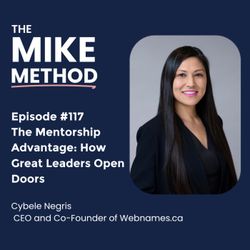
117. EP117 The Mentorship Advantage: How Great Leaders Open Doors with Cybele Negris
49:21||Ep. 117The best mentoring relationships are not one-way. They create value, learning, and opportunity for both people.In this episode of The Mike Method, Mike Desjardins is joined by Cybele Negris, CEO and co-founder of Webnames.ca, Canada’s original .CA registrar. An accomplished technology entrepreneur and corporate director, Cybele has spent decades experiencing mentorship from both sides, learning from leaders who helped shape her career while mentoring and sponsoring others along the way.Mike and Cybele explore what makes a mentoring relationship work, including why the mentee should take ownership of the relationship, come prepared, and be clear about what they hope to gain. They also discuss why being asked to mentor someone can be an honour rather than a burden, and how much mentors can learn from the people they support.The conversation expands beyond traditional one-to-one mentorship into peer mentorship and sponsorship. Mike and Cybele share how trusted peer groups can create space for conversations that may be difficult to have elsewhere, and why you do not need to join a formal organization to start building your own advisory group.They also explore the important difference between mentoring and sponsoring. A mentor can offer guidance, perspective, and support. A sponsor goes further by making introductions, creating access, and talking about someone when they are not in the room.Finally, Cybele shares how this mindset shapes her leadership at Webnames.ca, where supporting someone’s career does not necessarily mean expecting their entire career to happen within the company. That approach has helped create remarkable loyalty, with 20% of Webnames.ca employees who have left eventually choosing to return.This conversation is a reminder that leadership is not only about helping people succeed in the role they have today. It is also about investing in who they are becoming and, when you can, opening a door that helps them get there.Episode Resources:Connect with Cybele on LinkedInWebnames.ca