Share
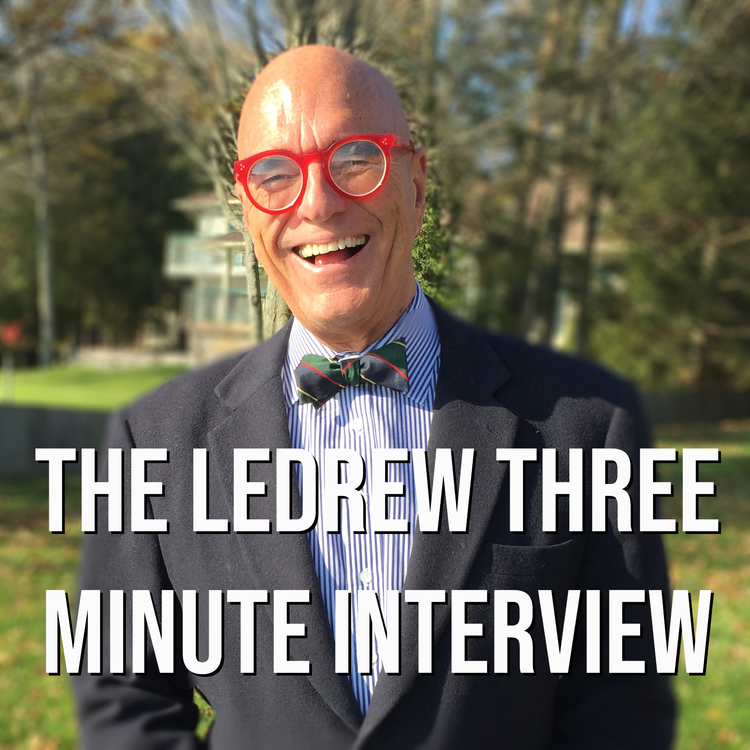
The LeDrew Three Minute Interview
LeDrew Rant - How Many Carney Boasts Need A Second Look?
In this Friday rant, Stephen LeDrew argues that Canadians need to apply much greater scrutiny to Prime Minister Mark Carney — not because of partisan politics, but because major claims and government decisions deserve to be tested against the details.
LeDrew begins with Carney’s history in international finance. Carney led the UN-backed Net-Zero Banking Alliance in 2021. American, Canadian and European banks subsequently withdrew, citing expensive bad policy. The Alliance ceased operating in 2025.
The rant then turns to Diana Fox Carney’s appointment as Canada’s Ocean Envoy and Chair of the 2027 Our Ocean Conference. The government says the position is volunteer and unpaid. Separately, Ottawa has committed $82 million over five years to the OceanEye initiative and the Global Ocean Observing System for monitoring equipment, research and ocean data.
LeDrew also revisits the Gordie Howe International Bridge agreement. Carney said toll sharing with the United States would not begin until Canada’s bridge debt had been repaid, while the subsequently released agreement told a different story-payments equal to 50 per cent of net bridge and crossing-related revenues for the first 15 fiscal years. The discrepancy prompted opposition demands for parliamentary scrutiny.
And on Carney’s finances, official ethics disclosures show that he entered office with a range of investments — including interests connected to Brookfield and other companies — which were subsequently placed into a “blind trust”-as though he could forget that he was Chairman of Brookfield!
LeDrew’s larger argument: Canadians should demand Parliament, independent media and elected MPs scrutinize the Prime Minister’s statements rather than simply accepting political messaging at face value.
Topics Covered:
- Carney’s record in global climate finance
- The collapse of the Net-Zero Banking Alliance
- Diana Fox Carney’s Ocean Envoy appointment
- What the $82-million OceanEye investment actually funds
- The Gordie Howe Bridge revenue agreement
- Carney’s statements versus the released bridge agreement
- Carney’s financial disclosures and blind trust
- Parliamentary scrutiny
- The power of the PMO
- Why independent media matters
More episodes
View all episodes
Canada Votes — Then Hands Over The Keys For Four Years
03:32|Mark Milke, President of the Aristotle Foundation, joins Stephen LeDrew to ask whether Canadians are really disengaged from politics — or whether the political system gives them too few opportunities to participate.Milke argues that ordinary Canadians cannot be expected to become experts on every issue when they are busy working, raising families and living their lives. The deeper problem, he says, is that citizens generally get one meaningful opportunity to influence government every few years.The conversation turns to Switzerland, where voters regularly participate in referendums on major public-policy questions, and to the United States, where competing branches of government can provide additional checks on power.Milke argues that Canada’s system concentrates too much authority in party leaders and the Prime Minister’s Office, particularly under majority governments.His proposed solution: citizen-initiated referendums, recall mechanisms and more opportunities for Canadians to inject themselves directly into the political process.Topics Covered:Why Canadians disengage from politicsVoting once every few yearsPower concentrated in the PMOWhy MPs rarely challenge party leadersCitizen-initiated referendumsSwitzerland’s direct-democracy modelRecall legislationChecks and balances in the United StatesMajority governments and accountabilityGiving citizens more direct political powerAre We Picking A Fight With Trump For Nothing?
03:46|Writer David Polansky, author of the Strange Frequencies Substack, joins Stephen LeDrew to discuss Canada’s rapidly evolving relationship with the European Union — and whether anyone actually knows what the proposed arrangement would mean.European Commission President Ursula von der Leyen has floated the idea of Canada becoming an EU “associate member,” even though no established status by that name currently exists. Prime Minister Mark Carney has instead spoken about pursuing a new and “unique alliance” with Europe rather than full EU membership.Polansky argues that the ambiguity makes the initiative feel more like political messaging than a fully developed policy. He and LeDrew ask whether closer ties with Europe are partly intended to demonstrate independence from Donald Trump and the United States — or whether there is a substantive economic and strategic objective behind them.The EU will always buy Canada’s Natural Gas, even without the “unique alliance”.The conversation also turns to Canadian nationalism, Parliament, Carney’s European diplomacy and the unusual imbalance in the Canada-U.S. dispute: Canadians are intensely focused on it, while Polansky argues many ordinary Americans are barely paying attention.Topics Covered:What EU “associate membership” actually meansCarney’s proposed European alliancePolicy versus political theatreWhether Trump is driving the strategyCanada’s identity and relationship with EuropeWhy Parliament should debate the issueCarney’s European diplomacyCanada-U.S. political tensionsWhy Americans may view the dispute differently*- What Canada actually gains from closer EU tiesCanada’s EU “Membership” Plan — What Are We Actually Joining?
03:52|Harrison Faulkner, contributor to Juno News and founder of Ensign Media, joins Stephen LeDrew to discuss Canada’s rapidly deepening relationship with the European Union — and what an unprecedented proposal for Canada to become an EU “associate member” might actually mean.European Commission President Ursula von der Leyen has floated Canada becoming the EU’s first associate member, although no such formal status currently exists. Prime Minister Mark Carney has welcomed a deeper relationship while describing Canada’s goal as a new and “unique alliance,” rather than full EU membership.Faulkner questions what Canada would gain beyond existing trade arrangements and whether the proposal is partly about demonstrating greater independence from the United States during the ongoing dispute with President Donald Trump.The conversation also turns to CETA, energy and critical minerals, the possibility of a Norway-style relationship with Europe, and whether a major change in Canada’s international relationships deserves a full debate in Parliament.Topics Covered:Canada’s proposed EU “associate membership”What “associate member” actually meansCarney’s push for a deeper European allianceWhether Trump is driving Canada toward EuropeCanada’s existing CETA trade relationshipEnergy and critical-mineral exportsA possible Norway-style arrangementEU bureaucracy and regulatory obligationsParliament’s role in major foreign-policy decisionsWhy Faulkner wants more public debateDanielle Smith: 120 Days Or Get Out Of The Way
03:45|Alberta Premier Danielle Smith joins Stephen LeDrew to discuss one of Canada’s biggest economic problems: the extraordinary amount of time it can take to get major projects approved and built.Smith points to a transmission project that took 17 years to complete and argues that no serious investor can be expected to wait that long before earning a return.Alberta is now testing a different approach.Smith says the province has adopted a 120-day approval target for major projects once environmental requirements, Indigenous consultation and other prerequisites are complete. The goal is simple: give investors certainty and get construction moving.The conversation also turns to pipelines, Alberta’s investment strategy and a surprising area of agreement between Smith and the federal Liberal government.Smith gives Prime Minister Mark Carney credit for working directly with provinces on their individual priorities and says that if Ottawa, Alberta and British Columbia can cooperate on a major energy project, it could mark a return to the kind of federalism Canada once relied on to actually get things built.Topics CoveredCanada’s painfully slow project approvalsWhy investors lose confidenceAlberta’s 120-day approval targetRegulation versus investmentThe cost of waiting years to buildPipelines and energy projectsAlberta’s major investment pipelineWorking with OttawaSmith’s praise for CarneyWhether cooperative federalism is returningPeter Shurman: Why Canada Is Losing Its Smartest Young People
03:17|Former broadcaster and MPP Peter Shurman joins Stephen LeDrew to discuss Canada’s brain drain and why so many talented young entrepreneurs and innovators are choosing the United States over building businesses at home.Shurman argues that Canada still produces exceptionally talented graduates and promising new ideas, but lacks the venture capital, speed, and business environment needed to turn those ideas into successful Canadian companies.The conversation looks at lengthy government approval processes, limited access to risk capital and why ambitious young Canadians see the United States as a much more conducive place to finance and launch a company.LeDrew and Shurman also discuss what Canada could do differently — including faster approvals, stronger private investment and creating an environment where entrepreneurs can take risks without waiting years for government decisions.Topics covered in this episode:Canada’s growing brain drainWhy young innovators move to the U.S.The shortage of venture capitalCanada’s history of successful tech companiesGovernment approval delaysRisk-taking and startup investmentKeeping Canadian talent at homeAttracting private capitalFaster decisions for new projectsRebuilding Canada’s innovation economyCanada’s Premiers Are Taking The Fight To America
03:45|John Capobianco of FleishmanHillard joins Stephen LeDrew to ask whether Donald Trump and the Canada-U.S. trade dispute are changing the traditional relationship between the Prime Minister and Canada’s Premiers.Normally, Ottawa speaks for Canada internationally while Premiers concentrate on their provinces. But Doug Ford, Wab Kinew, David Eby, Tim Houston and others have increasingly taken their own messages directly to Americans.Capobianco argues that rather than undermining Mark Carney, this could actually strengthen Canada’s negotiating position. Carney can remain the chief negotiator while Premiers voice the anger and frustration Canadians feel — creating something resembling a national good-cop, bad-cop strategy.The conversation also looks at whether Premiers should spend even more time appearing on American television and building direct relationships with governors and state officials.Is this just a response to Trump — or the beginning of a different kind of Canadian federalism?Topics Covered:Premiers stepping onto the international stageWhether they strengthen or undermine CarneyDoug Ford’s confrontational approachA Canadian good-cop, bad-cop strategyProvincial anger over U.S. tradeTaking Canada’s case directly to AmericansPremiers appearing on U.S. televisionBuilding relationships with U.S. statesFederal-provincial cooperationWhether Trump is changing Canadian governmentHave Canada’s Elites Lost Touch With Reality?
04:03|Mark Milke, President of the Aristotle Foundation, joins Stephen LeDrew to discuss a growing frustration in Canada: the feeling that institutions making major decisions are increasingly disconnected from the people who live with the consequences.Milke argues that businesspeople and politicians face obvious reality checks — businesses fail, politicians lose elections — while people working within universities, courts and government institutions can sometimes advance without facing the same direct consequences for their ideas or decisions.The conversation turns to Canada’s democratic system and whether citizens have enough influence between elections. Milke points to Switzerland and parts of the United States, where citizens can initiate referendums and put specific policies directly to a vote.He argues that Canada should consider similar reforms, pointing to the 1992 Charlottetown Accord referendum as an example of Canadians becoming deeply engaged when given a direct say on an important national question.Is voting every few years enough — or do Canadians need a more direct way to hold institutions accountable?Topics Covered:The decline of common senseInstitutions disconnected from everyday consequencesUniversities and public policyCourts and judicial decision-makingWhy Canadians feel powerlessElections as the main democratic checkCitizen-led referendumsSwitzerland and U.S. ballot initiativesThe Charlottetown Accord referendumGiving Canadians a more direct voiceDanielle Smith Says 30% Want Out — And That Matters
03:41|Alberta Premier Danielle Smith joins Stephen LeDrew to discuss one of the biggest political questions hanging over the province: could Alberta actually separate from Canada?Smith says roughly 30% of Albertans currently support leaving Canada — a number she says is far too high for comfort. She argues that separatist sentiment grew after another Liberal federal victory and reflects years of frustration with Ottawa.But Smith also says relations with the federal government have begun to change.She points to a new agreement with Ottawa, progress on a proposed West Coast oil pipeline and greater provincial control over project approvals as signs that the federal government is finally responding to Alberta’s concerns.LeDrew asks whether the threat of separation itself has strengthened Smith’s negotiating hand.The conversation also turns to pipeline routes, British Columbia, Alberta’s past experience with Keystone XL and why accessing international markets is critical to reducing Alberta’s dependence on the United States.Topics Covered:Alberta separation supportWhy separatist sentiment remains highCitizen-initiated referendumsAlberta’s relationship with OttawaWhether separatism strengthens Smith’s handThe proposed West Coast pipelineWorking with British ColumbiaAlberta’s Keystone XL lossesReducing dependence on the U.S.Accessing Asian energy markets