Share
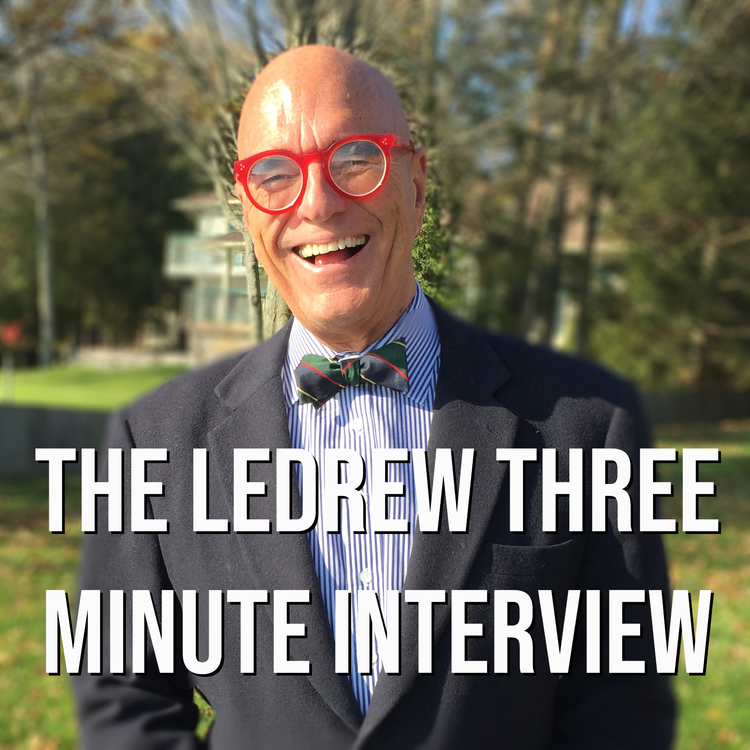
The LeDrew Three Minute Interview
Alexander Brown: Doug Ford and the Ontario Conservatives Need To Do Better
Alexander Brown of Without Diminishment joins Stephen LeDrew to discuss Project Ontario, Doug Ford, conservative politics, and whether Ontario’s Progressive Conservative Government is living up to conservative principles.
In this episode, Brown explains why Project Ontario is bringing together conservative groups, communicators, and organizations to push for better from the Ford government. While he credits Doug Ford for standing up for Canada on tariffs and supporting major projects like pipelines, Brown argues that Ontario conservatives still need to answer serious questions about government spending, education, crime, diploma mills, and cultural issues.
LeDrew and Brown also discuss Sir John A. Macdonald, Canadian history, conservative criticism, and why holding your own side accountable can make a government stronger — not weaker.
This is a conversation about Ontario politics, conservative values, government spending, and whether Doug Ford’s government needs to reconnect with its base.
Topics covered in this episode:
- Project Ontario and conservative organizing
- Doug Ford’s record in government
- Ontario government spending
- Pipelines and national unity
- Education reform and diploma mills
- Crime and public safety
- Sir John A. Macdonald and Canadian history
- Conservative principles versus party politics
- Why governments need criticism
- Keeping the conservative base engaged
More episodes
View all episodes
Has Canada Lost Its Moral Compass?
03:42|Kate Marland, deputy editor at Without Diminishment, joins Stephen LeDrew to discuss morality, leadership, community, and whether society has lost the ability to tell right from wrong.In this episode, Marland argues that modern culture has become detached from reality, tradition, history, and objective truth. She says that when people are encouraged to define morality only for themselves, it becomes harder for society to defend shared standards of right and wrong.LeDrew and Marland also discuss political leadership, law and order, the decline of institutions, market-driven thinking, family, community, and why money alone cannot provide meaning or happiness.This is a conversation about moral clarity, responsibility, and rebuilding a society rooted in something deeper than self-interest.Topics covered in this episode:The decline of moral clarityLeadership and moral courageTruth, reality and traditionThe limits of “leave me alone” politicsLaw and order in societyThe role of institutionsMoney, happiness and meaningCommunity over self-optimizationConservative politics and valuesRebuilding shared standardsThe Residential School Debate Gets Even More Controversial
03:59|Jerry Amernic, author of Sleepwoking, joins Stephen LeDrew to discuss the controversy surrounding residential schools, the Kamloops announcement and calls to criminalize residential school “denialism.”Amernic argues that Canadians must be allowed to question historical claims and examine the evidence without fear of criminal punishment. He and LeDrew acknowledge that residential schools existed, that children died from illness and that incidents of abuse occurred, while challenging claims about undiscovered mass graves and deliberate killing fields.They also discuss the federal funding provided to investigate possible burial sites, questions about financial accountability and why many educated Canadians remain uncertain about what is fact, allegation or political messaging.This is a provocative conversation about history, evidence, free expression and whether Canadians are still permitted to challenge the country’s dominant political narratives.Topics covered in this episode:Calls to criminalize residential school denialismThe evidence surrounding the Kamloops announcementResidential schools and historical contextAbuse, disease and deaths at the schoolsFederal funding for burial-site investigationsFinancial transparency and accountabilityWhy Canadians remain confused about the evidencePolitical messaging versus established factsFree speech and historical debateJerry Amernic’s book SleepwokingYou can buy Sleepwoking here - https://www.amazon.ca/dp/1775239942Government-Run Grocery Stores? Canada Has Lost The Plot
03:42|Peter Shurman joins Stephen LeDrew to discuss why Canadians increasingly expect government to solve every problem — and why both men believe government should be doing far less.Shurman argues for a more minimalist approach: government should focus on core responsibilities like defence, immigration, transportation, health and education, while leaving businesses and individuals free to build, invest and create.LeDrew and Shurman also discuss how Canada was built by entrepreneurs and small businesses, the expansion of government programs, taxpayer-funded media and proposals for municipally- operated grocery stores.Their message is simple: government should handle the things only government can do — and stay out of everything else.Topics covered in this episode:What government should actually be responsible forThe case for smaller governmentImmigration and national prioritiesHealth, education and provincial responsibilityHow entrepreneurs built CanadaGovernment replacing private initiativeTaxpayer-funded programs and mediaMunicipal governments entering retailWhy bureaucracy keeps expandingLetting business do what government cannot📌 Subscribe to Peter Shurman’s Substack here: https://substack.com/@shurmanatorLeDrew Rant - Canadians Have Failed An Entire Generation
03:21|In this LeDrew rant, Stephen LeDrew asks how Canada allowed a generation of young people to leave school without mastering basic skills like handwriting, spelling, reading and writing.LeDrew argues that schools, education experts, unions and governments abandoned fundamentals in favour of digital learning — while many parents had no idea what their children were no longer being taught.But his bigger target is Canadians themselves. From education and municipal spending to deteriorating infrastructure, questionable priorities and political leadership, LeDrew says too many Canadians have stopped challenging “experts” and have stopped demanding accountability from their elected officials.His message is simple: Canada’s problems will not fix themselves. Canadians need to pay attention, ask harder questions and start demanding better.Topics covered in this episode:The decline of handwriting and basic literacyWhat schools stopped teachingParents being left in the darkHolding education experts accountableCanadians’ reluctance to challenge authorityPotholes versus municipal prioritiesWasteful spending and political distractionsTrudeau’s post-national vision of CanadaFailing the next generationWhy Canadians need to push backNutrien’s U.S. Move Is A Warning For Canada
03:56|John Turley-Ewart, contributing columnist with The Globe and Mail, joins Stephen LeDrew to discuss Nutrien’s decision to invest roughly $1 billion in export infrastructure at Longview, Washington, rather than expanding through the Port of Vancouver.Nutrien is a major Canadian potash producer, but Turley-Ewart explains that railway bottlenecks, labour disruptions and concerns about reliability made Washington State the more practical choice for its exports. The company can now move more of its product to international markets while reducing its dependence on a single Canadian port.LeDrew and Turley-Ewart also discuss warnings Nutrien reportedly gave Carney Ministers, the government’s lack of urgency, and what this decision says about Canada’s ability to attract investment, build infrastructure and move its own resources to market.It is a smart decision for Nutrien — but a troubling story for Canada.Topics covered in this episode:Nutrien’s billion-dollar U.S. investmentWhy Longview beat the Port of VancouverRailway and shipping bottlenecksLabour disruptions at Canadian portsOttawa’s response to Nutrien’s warningThe cost of unreliable infrastructurePotash exports and Canadian tradeLosing investment and jobs to the U.S.The risks of relying on American portsWhat Carney must fixIs Mark Carney Too Arrogant To Be Transparent?
03:34|Brian Lilley, columnist with the Toronto Sun, joins Stephen LeDrew to discuss Mark Carney’s secretive approach to government, including international agreements,the China Agreement, the Gordie Howe deal, and why Canadians are still giving the Prime Minister the benefit of the doubt. In this episode, Lilley argues that all politicians prefer secrecy, but that Carney has taken it further by keeping major agreements and government decisions away from public scrutiny. LeDrew and Lilley also discuss Carney’s confidence, arrogance, judgment, and whether his popularity with Canadians is beginning to fade. They also look at Pierre Poilievre’s struggles, Conservative infighting, Donald Trump’s role in Canadian politics, and why Carney continues to benefit from the “elbows up” effect. This is a sharp conversation about secrecy, transparency, political judgment, and whether Canadians will eventually turn on Mark Carney’s government. Topics covered in this episode:Carney’s secretive approach to governmentChina agreements and unanswered questionsThe Gordie Howe bridge deal controversyTransparency versus political controlCarney’s confidence, arrogance and judgmentWhy Canadians still trust CarneyThe long political honeymoonPoilievre and Conservative infightingTrump as Carney’s political shieldWhen voters may turn on the governmentLeDrew Rant - Not Even Chaplains Can Utter “God” In The Canadian Armed Forces Now
03:15|In this LeDrew rant, Stephen LeDrew takes aim at what he calls the latest “Carney Caper” — a Canadian Armed Forces directive that forbids the use of the word “God,” including during services led by military chaplains. LeDrew argues that this is another example of government creep and a broader unwillingness to defend Canada’s own history, traditions and institutions. He contrasts the treatment of Christian language with the accommodation of other religious and cultural practices, asking why Canadian leaders seem so afraid that someone might be offended. He also revisits proposed federal workplace language rules, the decline of once-traditional institutions and similar controversies overseas involving national flags and cultural identity. This is a rant about free expression, religion, national confidence and whether Canada has become too frightened to stand up for its own traditions. Topics covered in this episode:The latest “Carney Capers”Government creep in private workplacesReligious language in the Armed ForcesThe role of military chaplainsAccommodation and double standardsCanada’s declining national confidenceThe fear of causing offenceProtecting cultural traditionsNational flags and public identityWhat it means to embrace CanadaIs Pierre Poilievre Too Divisive To Win?
03:36|Former Conservative MP Michelle Ferreri joins Stephen LeDrew for a spirited debate about Pierre Poilievre, Mark Carney and the future of the Conservative Party. In this free Three-Minute preview, LeDrew asks whether Poilievre’s blunt political style is dividing Conservatives and making it harder for the party to present itself as a government-in-waiting. Ferreri pushes back, arguing that voters should care more about substance and results than tone. The conversation continues well beyond three minutes, covering Carney’s record, Conservative messaging, media bias, government accountability and why Canadians still aren’t embracing the Conservatives as the clear alternative. Become a member to watch the full interview. Topics covered in this preview:Whether Poilievre is too divisiveTone versus political substanceTension within the Conservative PartyWhy Carney still appeals to votersThe challenge of winning moderate CanadiansWhy independent political media matters