Share
The Laura Dowling Experience
Bitesize Moment: "Reject the Diet Mentality." — Sinéad Crowe on making peace with food
In this bitesize moment pulled from the Laura Dowling Experience back catalogue, psychiatric nurse and intuitive eating counsellor Sinéad Crowe explains what intuitive eating really is — a way of caring for yourself, not another set of rules.
She shares why letting go of the diet mentality comes first, and how making peace with food can quiet years of guilt and reconnect you with your body's own signals.
🔑Key Points
• What intuitive eating actually means (a self-care framework, not a diet)
• Why "rejecting the diet mentality" is the starting point
• How making peace with food can ease guilt around eating
• Reconnecting with the body's own signals
💛 If anything here resonates, you're not alone. In Ireland, Bodywhys, the Eating Disorders Association of Ireland (bodywhys.ie), offers support and information.
🎧 Listen to the full episode here.
Thanks for listening! You can watch the full episode on YouTube here. Don’t forget to follow The Laura Dowling Experience podcast on Instagram @lauradowlingexperience for updates and more information. You can also follow our host, Laura Dowling, @fabulouspharmacist for more insights and tips. If you enjoyed this episode, please subscribe and leave a review—it really helps us out! Stay tuned for more great conversations.
More episodes
View all episodes
183. Agony Aunt Confessions, PMDD and Life Off the Timeline with Vicki Notaro #183
54:12||Ep. 183Vicki Notaro is back! Her new novel, Anywhere but Here, follows three friends all hovering around 40 and living completely different lives. As Vicki puts it, you can be 40 and you can be a granny, or trying to conceive, or single, or divorced. She and Laura talk about the pressure women feel to have everything sorted by a certain age, and why marriage or a mortgage was never meant to be a finish line.Vicki also gives an honest update on her women's health journey: years of very painful periods, a suspected endometriosis that turned out to be ovarian cysts, a PMDD diagnosis and cyclical depression alongside lifelong anxiety, a coil, surgery, a recurrence, and the oral progesterone that cleared her brain fog within two days.From there the conversation turns to what young people lost when magazines disappeared. Vicki spent four years at Kiss from the age of 22, acting as a "big sis" to teenage readers, and she makes a warm case for edited, expert-checked advice over the "wild wild west of TikTok" — before Laura hands her a pile of anonymous listener confessions to answer.🔑 Key PointsWomen the same age are living completely different lives"You can be 40 and you can be a granny" — Vicki's novel follows three friends around 40 at entirely different stages, something she sees as new in Irish life.Milestones are a beginning, not a finish lineVicki talks about the pressure to have the house, the relationship and possibly a baby sorted by a certain age, and why she has never seen those moments as the end of the story.Writing about being child-free by choice once brought hate mailShe first wrote about not wanting children at 22, when it was still taboo, and was told again and again that she just hadn't met the right man.Years of pain, and a diagnosis that came laterSuspected endometriosis turned out to be ovarian cysts, and a PMDD diagnosis explained the low, cyclical days sitting on top of lifelong anxiety.Hormones can lift brain fog within daysAfter a cyst returned, her consultant added oral progesterone alongside the coil she already had, and Vicki describes her brain fog clearing within two days.Magazines did a job nothing has replaced.At Kiss, Vicki answered readers' questions about periods, spots and first kisses as their "big sis" — advice that was edited, curated and expert-checked.Confessions, answered without judgementLaura hands Vicki anonymous confessions from the Love Your Vulva live show — desire, hygiene, being left out for not having children, Botox and breast reduction — and the answers stay kind throughout.📚 ResourcesAnywhere but HereVicki Notaro's fourth novel, published by PenguinEndometriosisthe condition first suspected behind Vicki's years of period painPeriod problems and PMDDHSE guidance on severe premenstrual symptomsLove Your Vulva LiveLaura's live show, where the anonymous confessions were gathered⏱️ Timestamps00:00 — Vicki takes over as host for the summer06:23 — Anywhere but Here: three women, three different lives at 4009:29 — The pressure to have it all sorted by a certain age10:34 — Writing about being child-free at 2213:30 — Kiss magazine and being everyone's "big sis"21:51 — Writer's block in her mother-in-law's spare room24:50 — Painful periods, suspected endometriosis and ovarian cysts25:50 — A PMDD diagnosis and cyclical depression26:39 — Oral progesterone and brain fog lifting in two days28:27 — Listener confessions, answered honestly35:40 — Botox honesty, and why Laura stopped
Bitesize Moment: "You're Not a Tree." — Brian Keane on getting unstuck and changing your life
09:13|In this bitesize moment pulled from the Laura Dowling Experience back catalogue, fitness coach, author and speaker Brian Keane tells the story of hating his first career as a teacher — and the line from his mum that changed everything.He's honest that reinvention isn't instant (he went broke twice before it worked) and lands on a reframe anyone can use: it's not being stuck that traps you, it's the feeling of being stuck.🔑Key Points• The day Brian knew his first career was the wrong fit• His mum's question: "what would you do for free?"• Why it's the feeling of being stuck, not the situation, that holds you back• How reinvention can take time, including failing along the way🎧 Listen to the full episode here.
182. How to Get Unstuck in Any Area of Your Life with Mark Fennell #182
01:01:28||Ep. 182What do you do when you feel stuck - in a job you hate, a relationship that has gone flat, or a version of yourself you no longer recognise? Life and business coach Mark Fennell joins Laura for a warm, practical conversation about how people actually get moving again - starting not with a grand plan, but with a single next step.A qualified electrician who began as a youth volunteer worker, Mark shares how coaching became his life's work, and why identity - how you see yourself - sits underneath almost everything. He speaks with real tenderness about the loss he and his wife carried when they were told they couldn't have children, and how they slowly built a genuinely contented life by asking one question: what can we still do that brings us in that direction?From the medical student who became a millionaire painter-decorator to the young carer who believed he would never laugh again, Mark's stories keep returning to the same truths: make the decision, take the action, and be careful what you define yourself as. Along the way, he and Laura take a more realistic look at manifestation, the fluff in the wellness world, and why, in relationships especially, action communicates far more than words.🔑 Key PointsYou don't have to figure out your whole life — just the next stepWhen a young medical student admitted he only knew what he didn't want, Mark's question — when were you last fully content? — led him to painting, and eventually to running a hugely successful painting and decorating business.Identity is the most important vision boardHow you see yourself matters more than any board on the wall — even a Fortune 500 CFO Mark worked with was gripped by imposter syndrome until she saw that her experience, not her credentials, had earned her the role.Contentment can be rebuilt after lossWhen Mark and his wife were told they couldn't have children, they refused to let it ruin their lives — and by taking small steps towards contentment, without putting a time on it, they reached a place with no void.Take manifestation with a pinch of saltWhat you focus on shapes what you notice, but thinking without action is dead — and the most important thing to manifest isn't the bigger house or the best job, it's a content life.Burnout ends where honesty beginsMark collapsed in the gym and was rushed to hospital with a suspected heart attack — what followed was health anxiety, and a recovery built on balance, movement and refusing to say "I am an anxious person".Action communicates far more than wordsA couple Mark worked with rediscovered each other not through big emotional talks but through a date night — a reminder that relationships, like gardens, need tending before you decide they're done.Be careful what you define yourself asMark learned from his granny, who refused to see herself as a cancer victim, that the labels we accept shape how we live — and, as he reminds young people, nobody is confident all of the time.📚 ResourcesBreakthrough — Mark Fennell's book on moving from stuck to unstoppable, published by GillMark's practical guide to getting unstuck.Mark Fennell — coaching, courses and speakingAlso on Instagram and TikTok.⏱️ Timestamps00:00 — Introduction02:36 — From electrician and youth worker to coach05:47 — Identity: the most important vision board07:32 — Fertility loss and choosing contentment10:00 — The med student who became a painter-decorator13:07 — Manifestation with a pinch of salt16:46 — How the book Breakthrough came about19:15 — Is contentment actually realistic?20:35 — The fluff in the wellness world23:29 — The young carer who thought he'd never laugh again30:13 — Burnout, the gym collapse and health anxiety39:27 — The date-night story57:32 — Advice for young people and the meaning of life
Bitesize Moment: "It's a Slow Erosion." — Nikki Dwyer on reclaiming yourself after control
07:23|In this bitesize moment pulled from the Laura Dowling Experience back catalogue, former lawyer turned businesswoman Nikki Dwyer explains why coercive, narcissistic abuse rarely looks the way people expect — it's a slow erosion of confidence through criticism, gaslighting and isolation.She speaks candidly about how losing nearly everything became the moment she could stop drifting and consciously choose who she wanted to be. It's honest, raw and ultimately hopeful.🔑Key Points• Why abusive relationships rarely look the way people expect from the outside• How criticism, gaslighting and isolation slowly wear down confidence• Why being capable or strong doesn't make you immune• Turning the loss of everything into a chance to choose who you want to be💛 If anything here feels close to home, it's not your fault. In Ireland, Women's Aid (womensaid.ie) offers free, confidential support.🎧 Listen to the full episode here.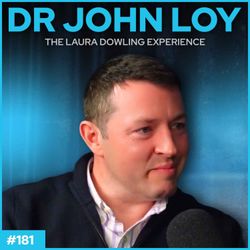
181. A Bariatric Surgeon Explains Weight-Loss Surgery with Dr John Loy #181
38:25||Ep. 181This week Laura sits down with Dr John Loy, one of the busiest weight-loss surgeons working between Ireland and the UK. He grew up behind the bar of a family pub in County Down, which he says was the best training in medicine he ever had, before a chance meeting in New York changed how he thinks about the whole job.It's a warm, funny and genuinely eye-opening conversation about obesity as a disease rather than a choice, and about the person on the other side of the desk. John explains why more than half of his patients cry at their first appointment, why he never asks how much weight they've lost, and why the goals that matter are seeing your own child's First Communion from behind the camera — not the number on the scales.He also gives one of the clearest explanations you'll hear of how weight-loss surgery actually works - the gastric balloon, the sleeve and the bypass - why a bypass is like "a free GLP-1 injection every day for life", and why, despite the rise of the weight-loss injections, demand for surgery is climbing rather than falling.🔑 Key PointsObesity is a disease, not a choiceJohn argues it should be treated in stages, like cancer, and that denying people care on a BMI cut-off is simply wrong.A gastric bypass is like "a free GLP-1 injection for life"The surgery isn't just about a smaller stomach; it changes the gut hormones that tell your brain you're full.The weight-loss injections haven't ended surgery — the oppositeMany patients try the injections first, stall or can't afford them, and find a sleeve pays for itself within a few years.Three procedures, three different jobsThe swallowable balloon, the sleeve and the bypass each suit a different stage — John explains who each one is for.Blood sugar settles before the weight comes offDiabetes can resolve within days of surgery, long before any weight is lost — proof of how closely the gut and brain talk.The best consultation starts with "why are you here?"Rather than judging, John asks patients their story — and finds the roots often reach right back to childhood.Non-scale victories are what matterHe never asks how much weight a patient has lost; he asks whether they can finally take their kids to Disney World.A childhood in the pub was the best training he ever hadLearning to talk to people across a bar counter, he says, taught him more about medicine than any exam.📚 ResourcesAuraliaDr John Loy's clinic in Dublin, offering gastric sleeve, bypass and balloon procedures⏱️ Timestamps00:00 — Introduction00:50 — The cruise-ship patient who thought it was his last trip04:23 — Why half his patients cry at the first appointment05:20 — Obesity: the last acceptable prejudice06:52 — From a County Tyrone pub to the operating theatre09:29 — The gut-brain link: why blood sugar settles first10:20 — Sleeve, bypass and "a free GLP-1 for life"10:48 — Are the injections ending surgery? The opposite13:47 — The balloon, the sleeve and the bypass explained19:42 — New York and the philosophy of surgery22:52 — Non-scale victories and the surgical-cat tattoo34:34 — Ikigai, travel and the meaning of life
Bitesize Moment: "I Thought I Was Just a Bad Friend." — Keith Walsh on a late ADHD diagnosis
08:23|In this bitesize moment pulled from the Laura Dowling Experience back catalogue, broadcaster and mental health advocate Keith Walsh shares what it was like to be diagnosed with ADHD in his late forties — and how going through his son's assessment led to his own.He's honest and funny about what undiagnosed ADHD looked like day to day, the small systems he built to cope, and why a diagnosis can feel like relief rather than a label.🔑Key Points• How going through his son's assessment led to his own diagnosis• The everyday reality of undiagnosed adult ADHD• Why a diagnosis can feel like relief rather than a label• The small systems that helped him cope🎧 Listen to the full episode here.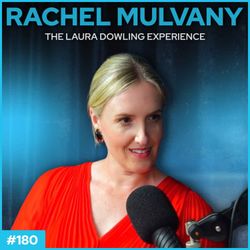
180. National Sisters Day | Sisters, Slagging and One Live Revelation #180
36:14||Ep. 180Ahead of National Sisters Day on Sunday 2 August, Laura hands the mic to the one guest who has known her longest - her younger sister Rachel, making her podcast debut. What follows is less an interview than a lifetime of shared history: the smear tests they were both booked in for that morning, Laura's abandoned marathon training, the running mishap Rachel has never been allowed to live down, and the commentary only a sister can give.Then, halfway through, Laura mentions something she assumed Rachel already knew - that their dad wasn't there when she was born. He was at home with the other two. Rachel had no idea. What happens next is the reason this one is worth listening to: Laura calls their mother into the studio, live, to confirm it.From there it's the full archive — the crooked teeth and the orthodontist bill that nearly cost their parents the house, the green gabardine Laura convinced her was school uniform, growing up around a mother working night shifts as a midwife, and the football trials Rachel was told she'd have been sent to if she'd been a boy. Underneath the slagging is the thing sisters rarely say out loud, and by the end they both say it.If you have a sister, this is one to send her before Sunday.🔑Key PointsSome family history only surfaces by accidentRachel had never been told her father missed her birth — it came out mid-conversation, not through any big reveal.Ask the person who was actually thereRather than leave it hanging, Laura brought their mother into the room to confirm the story first-hand.Sisters keep the receiptsYears on, the teeth, the gabardine and the running stories are all still admissible evidence.Childhood teasing lands differently in hindsightThe stories that were mortifying at the time are the ones they now tell most fondly.Growing up in an older sister's shadow shapes youHand-me-downs, comparisons and a very particular sense of humour come with the territory.Girls were quietly steered away from sportRachel was told that if she'd been a boy she'd have been sent for trials — a throwaway line that stayed with her.A parent's shift work sets the tone of a houseTheir mother working nights as a midwife shaped how the siblings behaved, argued and looked after each other.Slagging can be its own love languageAs they put it themselves, it was mostly slagging — sprinkled with a lot of love.📚ResourcesCervicalCheckIreland's free cervical screening programmeADHD IrelandSupport and information on adult ADHD⏱️Timestamps01:00 Why this one — National Sisters Day, and Rachel's debut02:10 Both booked in for smear tests on the same morning04:05 Laura's abandoned marathon training — and Rachel's running mishap11:23 "Dad wasn't even there for your birth" — Rachel finds out12:02 Laura calls their mother into the studio to confirm it15:14 A female version of Rod Stewart: the crooked-teeth years16:49 The gabardine that wasn't school uniform19:45 Mark's first day at school — and Laura stepping in24:40 "If you'd been a boy, you'd have been sent to trials"27:00 What having a sister teaches you about conflict34:13 Slagging, sprinkled with a lot of love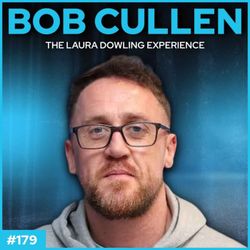
179. Where Violence Comes From with Bob Cullen #179
01:24:27||Ep. 179Bob Cullen isn't a doctor or a traditional academic — he's a man who spent his early life around violence and addiction, spent years in prison, and has spent the time since trying to understand where that violence actually comes from. Now finishing a master's and preparing to start a PhD, he leads the Success Stories Programme, running workshops with men — including in prisons and on probation — about patriarchy, masculinity and the beliefs that quietly shape how boys become men.In this conversation, Bob and Laura trace violence back to its roots: the way boys are taught that emotion is weakness, how shame and poverty drive harm, and why Bob believes we can't reduce violence against women without understanding masculinity itself. He's honest about the misogyny he still hears from men when no women are around, and clear that shaming men or simply telling them to "talk more" misses how the harm is learned in the first place.The episode also turns inward. Bob speaks openly about the drugs, the self-harm and the years he couldn't look at himself in the mirror, and about the education, meditation and steady relationships that slowly turned things around. It closes on regret, accountability and self-forgiveness — and why, after all the work he's done, he still chooses to hold on to some of the guilt he carries.Please note: this episode discusses violence, prison, abuse, misogyny and suicide, and may be difficult to listen to. Support links are included below.🔑 Key PointsViolence has roots we rarely look atBob argues we'll never reduce violence against women by focusing on it alone — it has to be traced back to patriarchy and how masculinity is formed.Boys learn early that emotion is weaknessFrom "boys don't cry" to the fear of being called weak by friends, boys are taught to suppress feeling and to prove they'll use violence if needed.Shame is one of the biggest drivers of violenceDrawing on James Gilligan's work, Bob links most harm to shame, poverty and exposure to violence, and notes people are usually victims before they become perpetrators.Misogyny didn't start with social mediaHe traces how men talk about women when none are around back through history, rather than blaming figures like Andrew Tate alone."Just get men talking" isn't enoughBob explains why shaming men or telling them to open up misses how the harm is learned, and why his work is built on accountability and community instead.Change came through education and connectionGetting clean in prison, meditation, journaling and a teacher named Andrea opened a path into study, feminism and the Success Stories work he now leads.Accountability over easy self-forgivenessBob speaks honestly about the guilt he still carries, and why he chooses to hold it: not to punish himself, but as a reminder of who he doesn't want to become.📚 ResourcesViolence: Our Deadly Epidemic and Its Causes — James GilliganOn shame, poverty and the roots of violence.The Will to Change — bell hooksOn men, masculinity and love.The Patriarchs — Angela SainiHow patriarchy took hold.Success Stories ProgrammeThe anti-patriarchy, anti-violence programme Bob runs with men.Samaritans IrelandFree 24/7 on 116 123.PietaFree 24/7 crisis support on 1800 247 247.⏱️ Timestamps00:00 — Introduction and the Success Stories Program03:52 — Patriarchy, domination and masculinity06:34 — Why focusing only on violence against women falls short09:56 — "Boys don't cry" and the fear of weakness12:45 — Shame, poverty and the roots of violence13:40 — Misogyny's long history, from Pandora to Descartes27:40 — Why "men just need to talk" isn't enough32:56 — Victims before perpetrators41:30 — Accountability, integrity and community50:00 — Drugs, self-harm and going to prison63:00 — The teacher who changed everything79:23 — Regret, accountability and self-forgiveness