Share
The Laura Dowling Experience
Bitesize Moment: "It Comes From a Place of Love." — Dr Anne Doherty on a kinder way to see people
In this bitesize moment pulled from the Laura Dowling Experience back catalogue, consultant anaesthetist Dr Anne Doherty offers two simple, evergreen pieces of wisdom from the close of her conversation with Laura.
Nothing is as permanent as you think — the good times and the bad both pass — and almost every hard choice people make, even the ones you disagree with, comes from a place of love.
🔑Key Points
• Why the good times and the bad times both pass
• The freedom in not needing an answer for everything right now
• How love sits underneath even the choices we disagree with
• A gentler, more compassionate way to see people
🎧 Listen to the full episode here.
Thanks for listening! You can watch the full episode on YouTube here. Don’t forget to follow The Laura Dowling Experience podcast on Instagram @lauradowlingexperience for updates and more information. You can also follow our host, Laura Dowling, @fabulouspharmacist for more insights and tips. If you enjoyed this episode, please subscribe and leave a review—it really helps us out! Stay tuned for more great conversations.
More episodes
View all episodes
Bitesize Moment: "It Makes My Heart Happy." — Prof Robert Kelly on Real Work-Life Balance
06:40|In this bitesize moment pulled from the Laura Dowling Experience back catalogue, Prof Robert Kelly admits he lost his own balance after a TED Talk and book launch, then shares the pillars-of-life exercise and a patient's story that helped him refocus on family and friends.What happens when a cardiologist looks at his own heart health and realises the answer isn't his diet, it's his diary?🔑Key Points• A busy run of a TED Talk, a book launch and Christmas left him with no space in his day for three months• Taking one full week off showed him just how stretched he had become• He learned a pillars-of-life exercise from another doctor's podcast: financial health, family, friends, own health and work• Looking at his own pillars, he realised work was crowding out everything else, especially his own health🎧 Listen to the full episode here.
Bitesize Moment: "Self Care Is Now Care of Self." — Siobhan Murray on Beating Burnout
16:03|In this bitesize moment pulled from the Laura Dowling Experience back catalogue, Siobhan Murray, psychotherapist and burnout strategist explains why she has banned the phrase self care, and shares the small daily habits, walks, box breathing and a mindfulness trick called the purple alien, that she uses instead to avoid burnout.What if self care isn't a retreat or a spa day at all, but something you can do in the two minutes it takes to boil the kettle?🔑Key Points• Siobhan bans the phrase self care and replaces it with care of self, something practised daily, not as an occasional treat• A one-off pilates class, a retreat or getting your nails done is maintenance, not care of self• She does four ten-minute walks every day without fail, even in the rain, simply to change her physical state• She practises box breathing, in for four, hold for four, out for four, hold for four, while making a cup of tea🎧 Listen to the full episode here.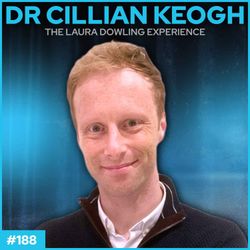
188. Most People Don't Need Surgery for Haemorrhoids with Dr Cillian Keogh #188
38:15||Ep. 188Laura is joined by Dr Cillian Keogh, a GP and co-founder of Dublin City Clinic, for a frank and surprisingly funny conversation about haemorrhoids — what they actually are, who gets them, and why almost nobody wants to say the word out loud.Cillian explains that haemorrhoids are anal cushions that swell under increased pelvic pressure, and goes through who is most at risk: pregnancy, obesity, chronic coughs, straining, long hours sitting and heavy lifting in the gym. He also describes a newer group he sees far more of now, people staying on the toilet much longer than they need to because their phone is in their hand.From there, he walks the treatment ladder. Creams like Anusol and Preparation H settle a flare-up but, in his words, only paper over it. At the far end sits the haemorrhoidectomy, a hospital operation with weeks of recovery — the thing he says, with his GP hat on, you want to avoid. In between is the electrotherapy his clinic offers, where a small current constricts the blood vessel feeding the haemorrhoid so it shrinks, with no real downtime.Underneath it all is why the episode matters. Haemorrhoids are, as Cillian puts it, the last taboo of healthcare, and people live with them for years rather than mention them. He also makes the case, carefully, that bleeding is worth having looked at rather than assumed.🔑 Key PointsHaemorrhoids are not a growth, they are cushions under pressureCillian describes them as anal cushions that become engorged and swollen when pelvic pressure rises, which is where the bleeding comes from.Almost everything that causes them works the same wayPregnancy, obesity, chronic coughs, straining, long hours driving and heavy lifting in the gym all raise pelvic pressure.Phones on the toilet are a genuinely new risk factorCillian sees a group he did not see ten years ago, people sitting far longer than they need to because they are still reading the headlines or scrolling.They can sit there silently for yearsInternal haemorrhoids often go unnoticed until a flare-up, while thrombosed ones stay permanently outside, lose their blood flow and come close to a medical emergency.Creams and suppositories only paper over the problemAnusol, Preparation H and the prescription versions settle a flare-up without treating the cause, and once you have had them the threshold for getting them again drops.The operation is the thing worth avoidingA haemorrhoidectomy means a general anaesthetic, a hospital stay and weeks lying on your front, which is exactly why Cillian would rather catch it earlier.Electrotherapy sits in the gap between creams and surgeryA small electric current constricts the blood vessel feeding the haemorrhoid so the tissue shrinks over a few weeks, and you go back to work the same day.The real barrier is embarrassment, not treatmentCillian calls it the last taboo of healthcare, because people cannot imagine raising it without being met with an eye roll.📚 ResourcesDublin City ClinicDr Cillian Keogh's clinic in Dublin 2, where the electrotherapy is carried outeXroidThe non-surgical electrotherapy treatment discussed throughout the episodeBowelScreenIreland's national bowel screening programme⏱️ Timestamps04:19 — What a haemorrhoid actually is04:58 — Who is most at risk05:12 — The newest risk group: phones on the toilet08:33 — Anusol, Preparation H and the limits of creams09:19 — Where electrotherapy sits on the treatment ladder10:05 — The haemorrhoidectomy, and why you want to avoid it11:40 — “The last taboo of healthcare”17:54 — What applying an electric current actually does24:06 — Bleeding, bowel cancer and when to get checked29:01 — The privilege of being let into people's lives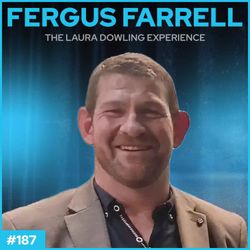
187. From Moving One Toe to 6 Million Steps with Fergus Farrell #187
36:03||Ep. 187In this episode, former Connacht rugby player Fergus Farrell tells Laura what happened after he lifted a metal bench in his own yard in October 2018 — and severed his spinal cord by ninety per cent.He was paralysed from the ribcage down and told he had a five per cent chance of walking again, on the condition he moved within seventy-two hours. He didn’t move. Instead he lay in a bed for twenty-one days and built a picture in his head: a circuit board for his brain, a light switch for his big right toe, and a wire he had to run between them. At half two in the morning on day twenty-one, the toe flickered. When the doctor came round, he watched it move three times before he’d call it anything other than a spasm.Fergus is candid about what recovery costs — pain around the clock, no balance, no feeling from his feet to his waist, and the hidden disability nobody sees in a big man walking down the street. He talks about the businesses he lost, the family who carried it, the guilt of being one who got back on his feet, and why he now calls the accident the best thing that happened to him.In August he set out from Brooklyn Bridge to walk 4,500 kilometres to Santa Monica Pier for Spinal Injuries Ireland — six million steps, and each one as important as the next.🔑 Key PointsThe injury came from lifting, not impactHe carried a 60–80kg bench about fifteen metres, dropped it, took a breath and lifted it again. The second lift ruptured a disc into his spinal column and severed the cord by 90%.The five per cent came with a conditionA 5% chance of walking again if he moved within 72 hours. He didn’t. The toe moved on day twenty-one.Visualisation was a tool he already hadHe’d used it to win selection and to build his business. In hospital he made it concrete: a circuit board as his brain, a switch as his toe, and the work of wiring them together.The doctor called it a spasm — twiceDr Cullen made him move it three times before saying “that’s most unexpected, Fergus.”Not every disability is visibleHe walks, so people assume he’s fine. Zero balance, no feeling from his feet to his waist, constant pain on 3,000mg of gabapentin a day.The people around an injury carry it tooHis then-wife finished the house, worked and raised three young children. “The person that’s left behind injured affects so many different people.”He never visualised himself walkingHe started with the smallest thing he could actually see: one toe, with the blanket off. Setting the finish line at walking would only have set him up to fail.The walk is the same method at scaleBrooklyn Bridge to Santa Monica Pier, 4,500km, six million steps, 75 days as a target rather than a deadline.📚 ResourcesFergus WalksFergus’s walk across America for Spinal Injuries IrelandSpinal Injuries IrelandThe only Irish organisation dedicated solely to supporting people living with a spinal cord injury and their familiesChristopher & Dana Reeve FoundationSupporting the American leg of the walkNational Rehabilitation Hospital, Dún LaoghaireWhere Fergus did his spinal rehabilitationFergus Farrell on InstagramFollowing the walk day by day⏱️ Timestamps00:00 — Intro02:10 — Lifting a metal bench in his own yard05:35 — The disability nobody can see06:44 — Pain 24/7, and refusing it attention08:46 — A five per cent chance, and the seventy-two hours10:00 — The circuit board, the switch and the wire12:04 — Day twenty-one, half two in the morning13:11 — Dr Cullen: “these could be involuntary spasms”17:50 — The guilt of getting back on his feet19:42 — What it did to his family21:53 — Losing the businesses25:09 — Walking across America30:56 — “Every day is a new day to improve”32:42 — Advice for young people, and the meaning of life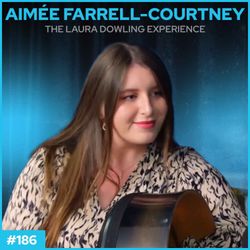
186. World Bodhrán Champion on Music, Belonging and Motherhood with Aimée Farrell-Courtney #186
01:04:15||Ep. 186Aimée Farrell-Courtney was six years old when she saw three girls playing the bodhrán in her school yard, the sun behind them and the sound going round the walls. She went home and announced she wanted to learn. Her mother's reply - "Oh my God, smelly pub" - is the first clue that this instrument arrived with a reputation attached, and with assumptions about who gets to hold one.She learned anyway, was helping to teach by the age of twelve, and in 2010 won the World Bodhrán Championship. What she has spent the years since doing is quieter and, in its way, harder: asking why so many women take up the drum and so few are ever seen playing it.She and Laura go from goat skin and tuning systems to the survey Aimée ran into women's experiences of trad sessions - the player left standing at the bar while everyone else is asked what they're drinking.She talks about being told she only got a Royal Albert Hall booking because she could wear a dress, about designing a drum that fits the body holding it, and about the two communities she has built for people who want music without the judgement.🔑 Key PointsShe was six, and three girls in a schoolyard decided itAimée watched them rehearsing with the sun behind them and thought they looked like superwomen - with no idea yet that the bodhrán was a male-dominated instrument."My youngest student is four, my eldest student is 94"The bodhrán is unusually easy to start, which Aimée sees as its gift and also the reason some people dismiss it without ever learning it properly.A survey put evidence behind what women already knewWorking with a UK researcher, Aimée surveyed bodhrán players worldwide and found most women reported poor experiences bringing their drum to sessions."You only got that because you could wear a dress"After a 2014 gig at the Royal Albert Hall, a peer told her the booking had nothing to do with how she played.Male players are described by technique, women by appearanceRead how the two are written about online, Aimée says, and the difference is immediate.The instrument was never designed around the body playing itSmaller drums with deeper frames chase a sound, not a posture, so Aimée has been designing a bodhrán that works with the body rather than against it.Music can be used, not only performedTrained as a sound therapist, she works with frame drum, gong and singing bowls — and says three minutes of a slow, steady rhythm is enough to settle yourself at home.Trad Drum and Drummy Mummy exist to take the judgement out of itTrad Drum grew out of lockdown check-ins with her students; Drummy Mummy, launching shortly, is a drumming space for mothers — no children, no competition, nobody marking you.📚 ResourcesAimée Farrell-CourtneyBodhrán lessons, workshops and Traddrum Productions.FairPléCampaigning for gender balance in Irish traditional and folk music.Rhythm2RecoveryThe Australian drumming programme for social and emotional development Aimée is certified in.Basic Income for the ArtsThe Irish scheme behind the conversation about supporting artists.⏱️ Timestamps02:30 — Three girls in a schoolyard03:24 — "Oh my God, smelly pub"08:02 — "It's just a frame drum, essentially"10:32 — Designing a drum that fits the body15:23 — Winning the world championship in 201017:32 — The survey into women and the bodhrán18:50 — "My youngest student is four, my eldest is 94"24:39 — "You only got that because you could wear a dress"27:04 — Sound therapy, and what entrainment does41:08 — Trad Drum, and the new Drummy Mummy51:00 — The woman nobody spoke to at the session01:01:44 — Trust yourself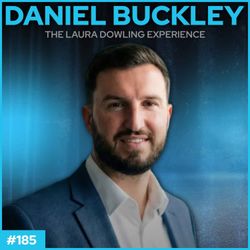
185. ADHD, Marriage & Growth with Daniel Buckley #185
46:12||Ep. 185Daniel Buckley was thirty-two before he had a name for what was going on in his head. For as long as he could remember he had been restless, discontented, unable to sit still or hold his focus on anything that didn’t grip him - and he had simply assumed that was him. That was the way he was, and the way life was.His wife Simone saw it long before he did. For more than a decade she told him something wasn’t right, that he couldn’t rest, that he had no structure. He wasn’t ready to hear it. The day before she died, after years of illness, she went through his symptoms one by one and asked him to get help for his ADHD.Daniel tells Laura what happened next - the newspaper article that felt like a tap on the shoulder, the Irish clinics that never rang him back, the trip to England to be assessed at all. He is open about drinking to escape thoughts he had no other way of managing, about the day he stopped, and about the ordinary moment months later when he heard his son laughing outside an open window and realised he had never felt peace before. It’s also the story of what he built out of it: a service designed, in his words, to get people to a clinician in weeks rather than years.🔑 Key PointsHe spent thirty-two years assuming that was just who he wasRestless, discontented, unable to focus — Daniel had no framework for any of it until he was assessed at thirty-two.Simone saw it more than a decade before he accepted itHe only heard it the day before she died, when she went through his symptoms and asked him to get help.Undiagnosed ADHD and alcohol are closely linkedDaniel describes drinking to escape feelings he couldn’t regulate. He stopped in August 2022, so he could be the father his son deserved.There was no route to a diagnosis in IrelandPublic waiting lists ran to years, and not one of the private clinics he rang or emailed came back to him. He was assessed in England instead.He chose therapy and coaching over medicationHaving stopped drinking, he worked weekly on emotional regulation, learning to recognise emotions he’d never had names for.Peace arrived as an ordinary momentMonths after his diagnosis he heard his son laughing with friends through an open window and felt, for the first time, that he was all right.A diagnosis is a turning point, not an end pointThe piece of paper changes nothing on its own. What matters is the understanding and the support that come after it.He built the service he couldn’t findADHD Now offers access to a clinician within seven days and has grown to over a hundred clinicians across ADHD and autism care.📚 ResourcesADHD NowDaniel’s online ADHD assessment and support serviceAutismCareThe autism and AuDHD assessment service built alongside itADHD IrelandThe national charity, with support groups and informationSamaritans IrelandFree, confidential support, any time, on 116 123⏱️ Timestamps02:54 — Diagnosed at thirty-two, and the bottlenecks he hit03:38 — “That’s the way I am, that’s the way life is”04:24 — Illness, Joey’s arrival, and Simone going on dialysis07:33 — Drinking to escape, and the day he stopped09:38 — A decade of Simone telling him something was wrong10:05 — The day before she died: “please get help for your ADHD”11:45 — The newspaper article that felt like a tap on the shoulder12:23 — No one called back, so he went to England16:55 — “A diagnosis is not the end point. That’s the turning point.”19:35 — Hearing his son laugh, and feeling peace for the first time21:12 — The stranger outside the hospital who became his business partner40:00 — Advice for young people, and what he thinks life means
Bitesize Moment: "Laughter in the Darkest Room." — Dympna Little on carrying grief with humour
11:04|In this bitesize moment pulled from the Laura Dowling Experience back catalogue, comedian and content creator Dympna Little shares how humour helped her family carry her mother's terminal illness and final days.She describes laughing together even in the palliative care room, the moment her mother noticed and said "it's lovely," and the voice message her mother recorded that became her legacy. Tender, warm and bittersweet.🔑Key Points• How humour can hold a family together through the hardest time• Why laughter and grief are not opposites• The moment her mother noticed them laughing and said "it's lovely"• The voice message her mother left, and what legacy can look like💛 If you're grieving, be gentle with yourself. There's no right way to do it.🎧 Listen to the full episode here.
184. How Non-Speakers Are Finally Being Heard with Anna Lechleiter #184
56:45||Ep. 184Anna Lechleiter works with people who have never been able to speak, and who have spent their lives being treated as though they had nothing to say. She is a Spelling to Communicate practitioner, and her job is to give non-speakers a way to tell the world what has been going on in their heads all along.She explains why speech is a motor problem rather than a thinking one: the words are there, but the brain cannot reliably drive the body that produces them. That distinction changes how non-speaking people are assessed, educated and spoken to, because almost every standard autism assessment measures motor control and reports the result as intelligence.Anna talks Laura through what happens in a session, from stencil boards to a keyboard, and tells the story that changed her mind completely: a young man called Caoimh, a letter board, and a freezing afternoon when he spelled out that he hoped it would snow. The last stretch belongs to the spellers themselves, as Anna reads the words of Max, Caoimh and Megha in their own language.🔑 Key PointsNon-speaking is a motor problem, not a thinking oneThe words are there. The difficulty is the brain reliably getting the body to produce them, which Anna describes as a brain-body disconnect rather than an absence of understanding.Spelling to Communicate moves communication out of the fine motorSpeech, writing, texting and sign language all depend on fine motor control, so S2C uses the gross motor instead: a pointing motion towards letters on a board.Assessments measure motor control and report it as intelligenceBecause the tests need reliable motor responses, people who cannot produce them are recorded as profoundly intellectually disabled, and that label follows them for life.Most non-speakers can already readText is everywhere, on signs, subtitles and packaging, and spellers have usually absorbed far more than anyone assumed. That is why sessions start with age-appropriate material rather than the basics.Progress is built like any other motor skillNew neural pathways are created and then myelinated through repetition, so lessons change every session and words are never spelled twice, keeping the focus on the motor rather than the answer.The spellers make the argument better than anyoneMax, Caoimh and Megha describe apraxia, sensory overwhelm and their own ambitions. Keith's line, that his mind works perfectly but the messages get mixed up on the way to his body, sums up the conversation.📚 ResourcesPALZ (Play and Language Zone) — Anna's hub in Naas, Co. KildareSpelling to Communicate at PALZ — how the method is taught in IrelandI-ASC — the International Association for Spelling as CommunicationElizabeth Vosseller — the speech-language pathologist who developed S2CAsIAm — Ireland's national autism charity, information and support line⏱️ Timestamps00:00 — Max's message to the world02:18 — The colleague's brother who suddenly had a voice03:05 — What Spelling to Communicate actually is07:24 — How assessments measure motor and report intelligence09:37 — How many non-speakers there are in Ireland10:10 — Inside a first session at the hub17:21 — Neuroplasticity and building a brand-new motor skill24:50 — Stencils, letter boards and moving to a keyboard36:23 — Anna's ABA background, and why she moved away from it44:01 — Keith, the letter board and "I hope it snows"48:55 — Max, Keith and Megha, in their own words53:54 — Art, an exhibition and the meaning of life