Share
The Laura Dowling Experience
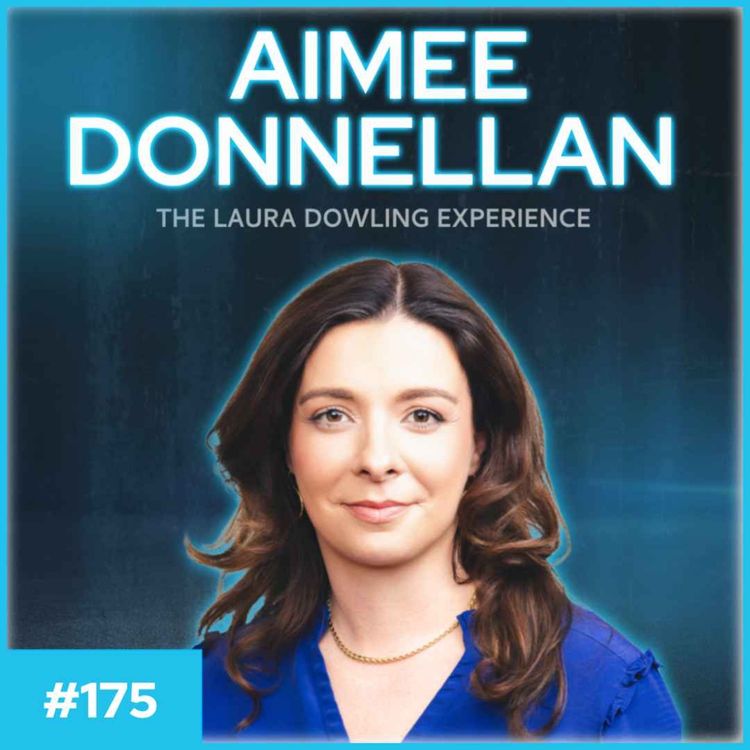
A Generational Story Behind Women & Dieting with Aimee Donnellan #175
Aimee Donnellan joins Laura to talk about her new book Off the Scales: The Inside Story of Ozempic and the Race to Cure Obesity, and the much bigger story sitting underneath it - how generations of women learned to live with food.
Through interviews with women across the world, Aimee found the same pattern repeating. A trip to a dietitian around the age of seven. A mother quietly carrying her own dieting story, passing it on through Weight Watchers, rice cakes and "don't think cute clothes mean you can come off your diet." For some, GLP-1 medications like Wegovy and Mounjaro have quietened the food noise for the first time in their lives. For others, the more confronting realisation is how differently the world treats them when they shrink.
Aimee also explores how the men in her book relate to their bodies very differently, the rising scale of childhood obesity and the shame attached to it, and why the food industry has barely adjusted to a world where appetite itself is shifting. She and Laura reflect on body positivity, menopause and the pressure women carry at every stage of life, before closing on something simpler - why she thinks the meaning of life comes down to picking up the phone.
1. Dieting often starts in childhood — Many of the women Aimee spoke to were first sent to a dietitian around age seven, framing food as something to manage rather than enjoy.
2. Mothers carry the story forward — Weight Watchers, calorie counting and "good" and "bad" foods pass quietly from mother to daughter across generations.
3. Food noise can dominate a life — Constant thoughts about food and shame-based self-talk shape how many women move through the world.
4. GLP-1 drugs change more than weight — When the food noise quietens, work, relationships, shopping and how others treat you can all shift.
5. Men and women relate to weight differently — Men often seek treatment for health reasons, while women carry decades of body criticism and comparison.
6. These drugs are not a quick fix — Muscle loss, side effects, cost and the reality of injecting long-term are rarely talked about honestly.
7. Childhood obesity is rising — Shame and clinics that don't fit larger bodies stop many families seeking help early.
8. The food industry has barely adjusted — Cheap, ultra-processed food still fills shelves, and meaningful change runs into cost and lobbying.
Off the Scales: The Inside Story of Ozempic and the Race to Cure Obesity — Aimee Donnellan
01:00 — Welcome and the focus of the book
03:00 — Why the dieting story starts at age seven
04:30 — Rice cakes, Hershey's sauce and a mother's diet
06:00 — Sarah's first Wegovy injection
07:00 — Losing 70 pounds and a life that changes overnight
12:00 — Menopause, microdosing and Ozempic on the black market
14:00 — Body positivity, celebrity bodies and the shift back
22:00 — Plateaus, muscle loss and life-long drugs
28:00 — A Mars executive on a pharma board
36:00 — How men relate to their bodies differently
41:00 — Childhood obesity, shame and small clinic rooms
44:00 — Food deserts and the cost of real change
56:00 — Picking up the phone and choosing connection
Thanks for listening! You can watch the full episode on YouTube here. Don’t forget to follow The Laura Dowling Experience podcast on Instagram @lauradowlingexperience for updates and more information. You can also follow our host, Laura Dowling, @fabulouspharmacist for more insights and tips. If you enjoyed this episode, please subscribe and leave a review—it really helps us out! Stay tuned for more great conversations.
More episodes
View all episodes
179. Where Violence Comes From with Bob Cullen #179
01:24:27||Ep. 179Bob Cullen isn't a doctor or a traditional academic — he's a man who spent his early life around violence and addiction, spent years in prison, and has spent the time since trying to understand where that violence actually comes from. Now finishing a master's and preparing to start a PhD, he leads the Success Stories Programme, running workshops with men — including in prisons and on probation — about patriarchy, masculinity and the beliefs that quietly shape how boys become men.In this conversation, Bob and Laura trace violence back to its roots: the way boys are taught that emotion is weakness, how shame and poverty drive harm, and why Bob believes we can't reduce violence against women without understanding masculinity itself. He's honest about the misogyny he still hears from men when no women are around, and clear that shaming men or simply telling them to "talk more" misses how the harm is learned in the first place.The episode also turns inward. Bob speaks openly about the drugs, the self-harm and the years he couldn't look at himself in the mirror, and about the education, meditation and steady relationships that slowly turned things around. It closes on regret, accountability and self-forgiveness — and why, after all the work he's done, he still chooses to hold on to some of the guilt he carries.Please note: this episode discusses violence, prison, abuse, misogyny and suicide, and may be difficult to listen to. Support links are included below.🔑 Key PointsViolence has roots we rarely look atBob argues we'll never reduce violence against women by focusing on it alone — it has to be traced back to patriarchy and how masculinity is formed.Boys learn early that emotion is weaknessFrom "boys don't cry" to the fear of being called weak by friends, boys are taught to suppress feeling and to prove they'll use violence if needed.Shame is one of the biggest drivers of violenceDrawing on James Gilligan's work, Bob links most harm to shame, poverty and exposure to violence, and notes people are usually victims before they become perpetrators.Misogyny didn't start with social mediaHe traces how men talk about women when none are around back through history, rather than blaming figures like Andrew Tate alone."Just get men talking" isn't enoughBob explains why shaming men or telling them to open up misses how the harm is learned, and why his work is built on accountability and community instead.Change came through education and connectionGetting clean in prison, meditation, journaling and a teacher named Andrea opened a path into study, feminism and the Success Stories work he now leads.Accountability over easy self-forgivenessBob speaks honestly about the guilt he still carries, and why he chooses to hold it: not to punish himself, but as a reminder of who he doesn't want to become.📚 ResourcesViolence: Our Deadly Epidemic and Its Causes — James GilliganOn shame, poverty and the roots of violence.The Will to Change — bell hooksOn men, masculinity and love.The Patriarchs — Angela SainiHow patriarchy took hold.Success Stories ProgrammeThe anti-patriarchy, anti-violence programme Bob runs with men.Samaritans IrelandFree 24/7 on 116 123.PietaFree 24/7 crisis support on 1800 247 247.⏱️ Timestamps00:00 — Introduction and the Success Stories Program03:52 — Patriarchy, domination and masculinity06:34 — Why focusing only on violence against women falls short09:56 — "Boys don't cry" and the fear of weakness12:45 — Shame, poverty and the roots of violence13:40 — Misogyny's long history, from Pandora to Descartes27:40 — Why "men just need to talk" isn't enough32:56 — Victims before perpetrators41:30 — Accountability, integrity and community50:00 — Drugs, self-harm and going to prison63:00 — The teacher who changed everything79:23 — Regret, accountability and self-forgiveness
Bitesize Moment: "We've Demonised Average." — Dr Coleman Noctor on why we're all so anxious
10:09|In this bitesize moment pulled from the Laura Dowling Experience back catalogue, child and adolescent psychotherapist Dr Coleman Noctor explains why so many of us feel anxious and "behind," even when life is objectively fine.He shows how the gap between expectation and reality fuels anxiety, why chasing "exceptional" leaves us discontent, and how aiming for his "four to seven zone" can bring us back to balance.🔑Key Points• Why anxiety often lives in the gap between expectation and reality• How "demonising average" sets most of us up to feel like we're failing• Why happiness is a passing moment, not a permanent state• The "four to seven zone" as a practical way to aim for balance🎧 Listen to the full episode here.
178. Nobody Tells You How Hard Motherhood Is with Becca Maberly #178
44:36||Ep. 178Becca Maberly did everything "right." An A-grade student with an obstetrician father, she got to the hospital, had her baby with no pain relief, and was home for lunch - certain she was going to be brilliant at motherhood. Then the postnatal period arrived, and she went, in her words, straight to the bottom of the class.In this honest, funny and disarming conversation, Becca and Laura pull apart the gap between what we're told motherhood will feel like and what it can actually be. Becca talks about feeling like an unnatural mother, the loneliness of the long hours in between, and the maternal rage that surges from nought to a hundred over spilled milk. She shares the day she asked her GP for help and was sent to a psychiatric unit, only to be handed a leaflet and told to count to ten.She also names something few people hear about: D-MER, or dysphoric milk ejection reflex - the wave of crushing sadness that hit her at every let-down, which she only understood years later. The conversation moves on through renegotiating a relationship after a baby, a ruptured ectopic pregnancy that nearly went unnoticed, and why Becca now believes the meaning of life is simply finding your own balance. It's a reminder that if you're not loving every moment, you're not failing - and you're far from alone.🔑 Key PointsFrom A-grade student to the bottom of the classBecca sailed through pregnancy and birth, then found the postnatal period the hardest thing she'd ever done — and the mismatch between expectation and reality floored her."Enjoy every moment" can do real harmBeing told to treasure a stage you are quietly struggling through can leave mothers feeling ashamed and isolated rather than supported.Not bonding straight away is more common than we admitBecca loved her son but didn't feel the instant, overwhelming rush she'd been promised — and says a baby can feel like a stranger for a long time.D-MER is real and rarely talked aboutDysphoric milk ejection reflex brought a homesick, crushing sadness at every let-down; naming it, years later, changed how she understood it.Maternal rage often comes from feeling unsupportedThe nought-to-a-hundred surge over something tiny is frequently about exhaustion, unmet expectations and carrying too much alone.Asking for help doesn't always get the right responseWhen Becca told her GP she was angry and shouting, she was sent to a psychiatric unit and handed a CBT leaflet — a reminder of how far perinatal support still has to go.Talking openly is its own kind of therapyRanting honestly online led Becca to realise she wasn't the only one — and connecting with other women became the support she couldn't find elsewhere.Honesty is the most useful thing we can offer new parentsNot to frighten anyone, but to sit somewhere between "you'll be great" and "this could be the hardest thing you ever do" — the truth is usually in between.📚 ResourcesA Mother PlaceBecca's platform for honest, unfiltered motherhoodPostnatal Depression (HSE)HSE information and supportTalk Therapy (HSE)Talk therapy and counselling options⏱️ Timestamps00:00 — Intro01:51 — From A-grade student to the bottom of the class04:00 — Calling BS on "enjoy every moment"04:52 — The feeding nobody warns you about09:31 — Loneliness and the hours in between11:58 — The GP, a psychiatric unit and a CBT leaflet15:13 — D-MER: the sadness that comes with let-down19:19 — Maternal rage and the spilled-milk surge22:16 — When your baby feels like a stranger24:02 — Renegotiating the relationship after a baby37:11 — Her book, and a ruptured ectopic pregnancy42:28 — The meaning of life is balance
Bitesize Moment: "Entertained, Not Educated." — Jennifer Rock on spotting advice you can trust
05:46|In this bitesize moment pulled from the Laura Dowling Experience back catalogue, skin expert and Skin Nerd founder Jennifer Rock explains why so much health and skincare advice online is built to entertain rather than educate — and how to tell the difference.She makes a straight-talking case for checking qualifications, standards and the source behind any advice before you act on it, so the next viral "must buy" doesn't catch you out.🔑Key Points• Why qualifications and standards matter in skincare and health• How social media is designed to entertain, not educate• Why you should always check the source of your advice• A simple filter for viral trends and "must buy" claims🎧 Listen to the full episode here.
177. Darragh Connolly | Penis Pumps, Prostate Health and Sex After Surgery #177
01:05:27||Ep. 177Laura sits down with community pharmacist Darragh Connolly, who has built a men's health service — Men's Health Downunder — around something most clinics rush past: helping men get their sexual function back after prostate surgery. It's a candid, frequently very funny conversation about a subject usually wrapped in silence and shame.Darragh explains the male anatomy in plain (and memorable) terms, why nightly "micro-erections" keep the penis healthy, and what actually changes after a prostatectomy. He walks through how a penis pump works, what constriction rings are for, and why this isn't only for men who've had cancer surgery — smoking, diabetes, spinal injury, certain medicines and simply getting older can all play a part.Running through all of it is a hopeful message: a prostate diagnosis or surgery is not the end of sex, intimacy is far more than penetration, and men well into their 80s can still enjoy a full sex life. Darragh also makes the case for meeting men's sexual health at the pharmacy counter, not only the consultant's clinic.🔑 Key PointsSexual health is health — and still tabooThere's deep shame and silence around men's genitals and sexual function, and Darragh's whole approach is to demystify it, often with humour, so men actually seek help.Micro-erections keep the penis healthyMen have around five micro-erections a night that bring blood, oxygen and nutrients to the tissue; without them it's "use it or lose it", and the penis can shrink and lose function.Erectile dysfunction has many causes, not just prostate surgeryAgeing, smoking, diabetes, lower-back trauma, spinal injury and some medications can all affect erectile function.How a penis pump actually worksUsed for five to ten minutes a day, it draws blood into the penis like training a muscle, improving vascular and nerve health over time.Constriction rings let men maintain an erection for sexPaired with the pump, a constriction ring traps blood to hold an erection for penetrative sex — but should never be left on more than six to eight minutes.A prostate diagnosis is not the end of sexWith the right tools, men who hadn't had an erection in months or years can have penetrative sex again — and intimacy is always more than penetration.Know the warning signs of prostate troubleDribbling, a weak stream, going more often (especially at night) and "stage fright" can point to an enlarged prostate; Movember is a good place to learn the signs.📚 ResourcesMen's Health Downunder Darragh Connolly's Irish men's health service and the surgical-grade penis pumps discussedMovemberthe men's health charity Darragh recommends for prostate cancer, testicular cancer and male suicide awareness⏱️ Timestamps00:00 — Welcome and sponsor01:36 — Why a pharmacist is talking about men's health03:24 — How Darragh got into men's health04:32 — What a prostatectomy actually involves07:28 — Male anatomy explained simply13:48 — Micro-erections and "use it or lose it"20:55 — How a penis pump works24:31 — Constriction rings and maintaining an erection38:33 — The prostate and its warning signs52:44 — How Viagra and Cialis were discovered57:00 — Low-dose Cialis, the pump and the post-surgery "void"1:01:24 — Couples, intimacy and a hopeful note
Bitesize Moment: "This Isn't Your Fault." — Dr Mick Crotty on the biology of weight
12:11|In this bitesize moment pulled from the Laura Dowling Experience back catalogue, GP Dr Mick Crotty explains why weight is far less within our conscious control than we are led to believe — and why so many people carry a load of self-blame they never deserved.He walks Laura through the genetics of appetite, the brain's reward response to food, and the "set point" it quietly defends, which is why weight so often returns after a diet. It's a clip that gently takes apart the "just eat less and move more" myth.🔑Key Points• Why "just eat less and move more" is an oversimplification• How genetics and the appetite system shape hunger and fullness• What the brain's "set point" is, and why weight often returns after dieting• Why this is a medical issue, not a personal failing🎧 Listen to the full episode here.
176. Heavy Bleeding, the Mirena Coil and Speaking Up with Dr Áine Dempsey #176
41:02||Ep. 176How many women quietly put up with heavy bleeding, painful periods or a difficult coil fitting, telling themselves it is just part of being a woman?In this episode, Laura sits down with obstetrician and gynaecologist Dr Áine Dempsey, who works at BlackRock Women's Health and at the Rotunda, for an honest, practical conversation about the things women are so often told to live with - and what can actually be done about them.Áine explains what a hysteroscopy really involves, why polyps and fibroids drive heavy bleeding, and when the Mirena coil is the right first step before ablation or surgery. She is candid about pain relief during coil fittings, the six-month settling period, and where the copper coil fits in.The conversation moves into perimenopause and HRT, smear tests, HPV and colposcopy, and the realities of painful sex, vaginismus and caring for women who carry past sexual trauma. She closes on labour ward life, her own two pregnancies, the magic of epidurals, and why no woman should feel she has to suffer in silence.At its core, this episode is about taking your own symptoms seriously and making your gynae health a priority.🔑 Key PointsHeavy bleeding is not something to put up withchanging a pad every hour, bleeding for more than five days, or planning your life around your period all count, and there is plenty that can help.Flooding is a symptom women rarely volunteerÁine asks directly because most women never mention soaking through their clothes or sheets.A hysteroscopy is not as frightening as it soundsa thin camera and a well-briefed team can investigate bleeding, polyps and fibroids, usually without a general anaesthetic.You deserve proper pain relief for a coil fittingfrom paracetamol and ibuprofen beforehand to numbing gel and a local cervical block.The Mirena coil takes about six months to settlebloating, tenderness or mood changes often ease, and it can be used as part of HRT.HRT is about long-term health, not just symptomsbeyond brain fog and night sweats, it supports heart and bone health.Painful sex is not normalwhether it stems from low oestrogen, endometriosis or past trauma, there are options that help.You do not have to suffer in silenceif something is affecting your quality of life, make your gynae health a priority.📚 ResourcesBlackRock Health Women's Health CentreHysteroscopy (HSE)The Mirena and copper coils (HSE)HRT and menopause treatment (HSE)Cervical screening and HPV (CervicalCheck, HSE)⏱️ Timestamps02:04 - Inside a day at BlackRock Women's Health03:23 - What a hysteroscopy actually involves06:21 - Polyps, fibroids and heavy bleeding09:02 - Heavy bleeding and flooding in perimenopause10:11 - The Mirena coil as a first-line treatment13:56 - Pain relief and what to expect from a coil fitting18:02 - The Mirena as part of HRT, and sleep20:04 - Mental health support through menopause22:35 - Smear tests, HPV and colposcopy24:35 - Painful sex and trauma-informed care29:18 - Vaginismus, physio and the pelvic floor33:34 - Her own pregnancies and epidurals37:56 - Don't suffer in silence
174. Grief, Poetry and a New Kind of Masculinity with Darragh Fleming #174
01:06:15||Ep. 174Darragh Fleming went viral last year for a poem — but this conversation is about everything that came before it. The Cork writer talks to Laura about a childhood spent lost in books, a long detour through sport and self-doubt, and the years he spent convinced he wasn't creative at all.At seventeen, Darragh lost his close friend Irby to suicide, and the grief changed him profoundly. For years afterwards he felt almost nothing — a numbness he didn't recognise as depression — while quietly performing the emotions other people expected of him. He's honest about the survivor's guilt that made him sabotage his own happiness, the panic attack that became his rock bottom, and how therapy and journaling slowly led him back to writing.From there the conversation opens out into the work Darragh is known for now: poetry that reimagines what it means to be a man. He and Laura discuss why anger is so often the only emotion men feel allowed to show, how language like "toxic masculinity" can shape the way boys see themselves, and why he believes emotionally healthier men make life safer for everyone. Warm, funny and full of hope, it's also a conversation about creativity in everyday life and Darragh's belief that the meaning of life is found in the people we share it with.🔑 Key PointsGrief can arrive as numbness, not sadnessAfter losing his friend Irby at seventeen, Darragh didn't feel constant sadness but a flatness he didn't recognise as depression for years.Survivor's guilt can quietly sabotage a lifeHe describes an unconscious sense that he wasn't allowed to be happy, which led him to undo good things whenever they started going well.Writing became a way back to feelingJournaling suggested by his therapist turned naturally into poetry, helping him name emotions he otherwise couldn't reach.Anger is often the only emotion men feel permittedDarragh argues that sadness, rejection and disappointment frequently come out as anger because men aren't given other outlets.Language shapes how boys see themselvesHearing "toxic" almost always paired with "masculinity" can lead young men to believe masculinity itself is something bad.A lighthouse, not a lifeboatRather than trying to rescue everyone, Darragh sees his public work as showing people a way through and reminding them they're not alone.Success can arrive at the right timeHe reflects on being glad his career didn't take off in his twenties, when he wouldn't have been ready to carry it.📚 ResourcesThoughts Too Big — Darragh's long-running mental health blogIf I Ever Have Boys — Darragh FlemingIf I Ever Have Girls — Darragh FlemingWaiting for the Good Guys — Darragh FlemingThe Hole — Darragh Fleming, a poem on depression and copingDangerous Men — Lucas Jones, the poem Darragh's "If I Ever Have Boys" responded toMental health support — Samaritans, freephone 116 123; Pieta, freephone 1800 247 247 or text 51444⏱️ Timestamps00:00 — "My Dad Could Beat Up Your Dad" (cold open)01:13 — Welcome and introduction05:40 — Going viral with "If I Ever Have Boys"14:53 — Why he started writing17:31 — Losing Irby at seventeen18:42 — The numbness he didn't know was depression21:45 — The panic attack, therapy and journaling33:35 — A lighthouse, not a lifeboat35:23 — Masculinity, the manosphere and raising sons42:42 — Language, mental illness and "toxic masculinity"50:30 — "A Snake Named Snake" and his dad01:01:36 — Darragh reads "My Dad Could Beat Up Your Dad"01:03:09 — Advice for young people and the meaning of life