Latest episode
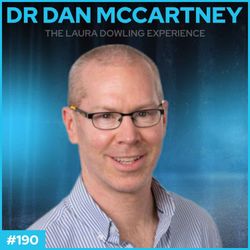
190. Half the Population Aren't Getting Enough of These Essential Nutrients with Dr Dan McCartney #190
01:09:07||Ep. 190Dr Dan McCartney, dietitian, lecturer in Human Nutrition and Dietetics and Programme Director of the Human Nutrition and Dietetics programme at TU Dublin and Trinity College Dublin, joins Laura to discuss the vitamins and minerals many of us simply aren’t getting enough of — and why that matters for our health. Drawing on Ireland’s national food intake data, Dan reveals striking levels of inadequate intake across essential nutrients including vitamin B6, folate, vitamin C, vitamin A, zinc, magnesium and selenium. At least half of the Irish population have inadequate intakes of magnesium and selenium, while more than 40% have inadequate vitamin C intakes. Laura and Dan also discuss the European Food Safety Authority (EFSA) and proposals to lower or restrict the levels of certain vitamins and minerals available through supplements. Dan questions the rationale for reducing these levels when nutrient intakes are already low, discussing proposed levels for vitamin D, as well as restrictions affecting magnesium and the importance of vitamin C. He explains why he believes a restrictive, one-size-fits-all European approach may not meet the nutritional needs of the Irish population. They also explore whether some recommended daily amounts are focused more on preventing severe deficiency than achieving optimal health, including vitamin C recommendations based around preventing scurvy and vitamin D recommendations historically centred on bone health rather than immune function. The conversation returns to Dan’s early research into vitamin D and COVID-19, before moving into nutrition and immunity, healthy ageing, dementia, pregnancy and epigenetics — and why the nutritional choices we make today can influence our health decades into the future.🔑 Key PointsHalf the population are falling short on key nutrientsDan discusses inadequate intakes of magnesium, selenium, vitamin B6, folate, vitamin C, vitamin A and zinc in Ireland.Why are nutrient intakes so low?Poor diet quality, low fruit and vegetable intake, low wholegrain consumption and highly refined diets.EFSA and proposed supplement restrictionsLaura and Dan discuss EFSA and proposed European changes affecting vitamin and mineral supplements, including vitamin D and magnesium, and why Dan is concerned about further restrictions.Are recommended intakes actually optimal?Dan questions whether some guidelines focus on preventing severe deficiency rather than supporting optimal health.Vitamin D, immunity and COVID-19Dan revisits the research that led him and Dr Declan Byrne to propose a link between vitamin D deficiency and severe COVID-19 in 2020.Nutrition across a lifetimeFrom pregnancy and epigenetics to ageing and cognitive health, Dan explains why nutrition today can affect health decades later.📚 ResourcesOptimisation of Vitamin D Status for Enhanced Immuno-protection Against Covid-19Dan and Declan Byrne, Irish Medical Journal, 2020Vitamin D Deficiency and ARDS after SARS-CoV-2 InfectionFaul et al., Irish Medical Journal, 2020Autocrine vitamin D signaling switches off pro-inflammatory programs of TH1 cellsChauss et al., Nature Immunology, 2022Nutrition, immunity and COVID-19Philip Calder, BMJ Nutrition, Prevention & Health, 2020European vitamin D supplementation trials, meta-analysisRupprecht et al., Nutrients, 2023⏱️ Timestamps00:00 — Cold open02:07 — Meet Dr Dan McCartney04:03 — Vitamin D and COVID-1906:10 — The 2020 research13:49 — Why vitamin D levels run low19:08 — Vitamin D and immunity32:00 — Ireland’s nutrient inadequacies34:02 — Poor diet quality35:09 — Zinc, magnesium and selenium37:24 — Are nutrient guidelines out of date?38:03 — Scurvy vs optimal health45:48 — EFSA and proposed supplement restrictions46:24 — Vitamin D supplement levels50:11 — Magnesium restrictions51:03 — Nutrition guidelines for Ireland54:35 — Primates and vitamin D55:51 — Ageing and dementia57:39 — Pregnancy and epigenetics1:02:43 — Why good habits compound
More episodes
View all episodes
Bitesize Moment: "It Has No Boundaries." — Dr Denis O'Driscoll on Addiction and Recovery
06:44|In this bitesize moment pulled from the Laura Dowling Experience back catalogue, Dr Denis O'Driscoll, pharmacist working in the HSE addiction services gives a straight, compassionate answer on how hard it is to come off drugs and stay off, and why staying stable on treatment counts as success too.Is staying on treatment for life a failure, or is that thinking part of the problem? Dr Denis O'Driscoll gives an honest answer.🔑Key Points• Coming off drugs and staying off is never easy, and that is worth saying out loud• Recovery is not one straight line; staying stable on treatment is a positive outcome, not something to be ashamed of• Coming off completely is wonderful when it happens, but it is very challenging, and it is not the only measure of success• Relapse is part of recovery, not a failure, and the priority afterwards is getting people back into support quickly💛 If you or someone you love needs support, the HSE Drugs and Alcohol Helpline is there on 1800 459 459.🎧 Listen to the full episode here.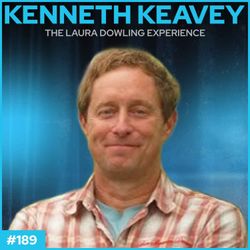
189. Ireland Has 60 Vegetable Growers Left with Kenneth Keavey #189
56:26||Ep. 189Kenneth Keavey has a PhD in chemistry and spent his early career in pharma and biotech. He now grows organic vegetables on twenty-five acres outside Galway, and he's the first to point out the irony: he was an organic chemist, and now he's an organic farmer.In this episode he takes Laura through what's actually on the food we eat, and how little of it we're told. Around 95% of conventional fruit and veg has had some treatment or another. Citrus is dipped or sprayed after harvest in waxes containing quite toxic, in some cases carcinogenic, chemicals to stop fungus growing on the skin. Most of it is legal, disclosed somewhere, and almost never read.Then comes the detail that stops the conversation. In the EU you're allowed 10mg of glyphosate per kilogram of wheat and 20mg per kilogram of oats — twice as much of a probable carcinogen in your porridge as in your toast. Kenneth and Darina Allen went to the Department of Agriculture to ask why. They were told that people eat less porridge than they do toast.It isn't all alarm. Kenneth refuses to scaremonger and is as clear about what isn't known as what is. He's also quietly hopeful: his own land is full of insects and birdsong, and he has watched how fast nature comes back when you let it.🔑 Key PointsHe was an organic chemist before he was an organic farmerHis PhD is in chemistry and his first career was in pharma and biotech, which is where the caution comes from.Around 95% of conventional fruit and veg has had some treatmentPost-harvest waxes on citrus contain toxic and in some cases carcinogenic chemicals, and some produce carries up to fifteen applications.You're allowed twice as much glyphosate in porridge as in breadThe EU limit is 10mg per kilogram of wheat and 20mg per kilogram of oats. Kenneth and Darina Allen asked the Department of Agriculture why, and were told people eat less porridge than they do toast.The safety data usually comes from the manufacturersUnlike medicines, pesticide safety data is largely supplied by the companies selling the chemicals, and permitted limits have risen since the 1990s as application increased.80% of the world's insect biomass is goneA test anyone can run from memory: a windscreen after a night drive used to be covered in insects, and now there's virtually nothing on it.Ireland has gone from 600 vegetable growers to about 60The sector has hollowed out in twenty years, we import 85% of our fresh fruit and veg, and vegetables are the one thing that hasn't risen in price — which is why a 39c bag of carrots is a problem, not a bargain.Nature comes back faster than you'd thinkHis farm is full of insects and birds, with nine native Irish honeybee hives that out-produce every other apiary his beekeeper runs.📚 ResourcesGreen Earth OrganicsKenneth's organic farm and nationwide home delivery service in Co GalwaySilent SpringRachel Carson's book on the effects of blanket pesticide use, discussed in the episodeIARC (World Health Organization)The classification of glyphosate as probably carcinogenic to humans⏱️ Timestamps01:26 — Twenty years of Green Earth Organics02:35 — From a PhD in chemistry to organic farming03:57 — Around 95% of conventional fruit and veg has had some treatment06:34 — Glyphosate, the most applied chemical in history06:59 — Twice as much allowed in your porridge as in your toast07:17 — What the Department of Agriculture said when they asked why10:39 — Silent Spring, and the year the birdsong stopped12:25 — 80% of the world's insect biomass is gone22:15 — From 600 vegetable growers to about 6050:06 — Five summers of farm work, three sheep, and the leap
Bitesize Moment: "It Makes My Heart Happy." — Prof Robert Kelly on Real Work-Life Balance
06:40|In this bitesize moment pulled from the Laura Dowling Experience back catalogue, Prof Robert Kelly admits he lost his own balance after a TED Talk and book launch, then shares the pillars-of-life exercise and a patient's story that helped him refocus on family and friends.What happens when a cardiologist looks at his own heart health and realises the answer isn't his diet, it's his diary?🔑Key Points• A busy run of a TED Talk, a book launch and Christmas left him with no space in his day for three months• Taking one full week off showed him just how stretched he had become• He learned a pillars-of-life exercise from another doctor's podcast: financial health, family, friends, own health and work• Looking at his own pillars, he realised work was crowding out everything else, especially his own health🎧 Listen to the full episode here.
Bitesize Moment: "Self Care Is Now Care of Self." — Siobhan Murray on Beating Burnout
16:03|In this bitesize moment pulled from the Laura Dowling Experience back catalogue, Siobhan Murray, psychotherapist and burnout strategist explains why she has banned the phrase self care, and shares the small daily habits, walks, box breathing and a mindfulness trick called the purple alien, that she uses instead to avoid burnout.What if self care isn't a retreat or a spa day at all, but something you can do in the two minutes it takes to boil the kettle?🔑Key Points• Siobhan bans the phrase self care and replaces it with care of self, something practised daily, not as an occasional treat• A one-off pilates class, a retreat or getting your nails done is maintenance, not care of self• She does four ten-minute walks every day without fail, even in the rain, simply to change her physical state• She practises box breathing, in for four, hold for four, out for four, hold for four, while making a cup of tea🎧 Listen to the full episode here.
188. Most People Don't Need Surgery for Haemorrhoids with Dr Cillian Keogh #188
38:15||Ep. 188Laura is joined by Dr Cillian Keogh, a GP and co-founder of Dublin City Clinic, for a frank and surprisingly funny conversation about haemorrhoids — what they actually are, who gets them, and why almost nobody wants to say the word out loud.Cillian explains that haemorrhoids are anal cushions that swell under increased pelvic pressure, and goes through who is most at risk: pregnancy, obesity, chronic coughs, straining, long hours sitting and heavy lifting in the gym. He also describes a newer group he sees far more of now, people staying on the toilet much longer than they need to because their phone is in their hand.From there, he walks the treatment ladder. Creams like Anusol and Preparation H settle a flare-up but, in his words, only paper over it. At the far end sits the haemorrhoidectomy, a hospital operation with weeks of recovery — the thing he says, with his GP hat on, you want to avoid. In between is the electrotherapy his clinic offers, where a small current constricts the blood vessel feeding the haemorrhoid so it shrinks, with no real downtime.Underneath it all is why the episode matters. Haemorrhoids are, as Cillian puts it, the last taboo of healthcare, and people live with them for years rather than mention them. He also makes the case, carefully, that bleeding is worth having looked at rather than assumed.🔑 Key PointsHaemorrhoids are not a growth, they are cushions under pressureCillian describes them as anal cushions that become engorged and swollen when pelvic pressure rises, which is where the bleeding comes from.Almost everything that causes them works the same wayPregnancy, obesity, chronic coughs, straining, long hours driving and heavy lifting in the gym all raise pelvic pressure.Phones on the toilet are a genuinely new risk factorCillian sees a group he did not see ten years ago, people sitting far longer than they need to because they are still reading the headlines or scrolling.They can sit there silently for yearsInternal haemorrhoids often go unnoticed until a flare-up, while thrombosed ones stay permanently outside, lose their blood flow and come close to a medical emergency.Creams and suppositories only paper over the problemAnusol, Preparation H and the prescription versions settle a flare-up without treating the cause, and once you have had them the threshold for getting them again drops.The operation is the thing worth avoidingA haemorrhoidectomy means a general anaesthetic, a hospital stay and weeks lying on your front, which is exactly why Cillian would rather catch it earlier.Electrotherapy sits in the gap between creams and surgeryA small electric current constricts the blood vessel feeding the haemorrhoid so the tissue shrinks over a few weeks, and you go back to work the same day.The real barrier is embarrassment, not treatmentCillian calls it the last taboo of healthcare, because people cannot imagine raising it without being met with an eye roll.📚 ResourcesDublin City ClinicDr Cillian Keogh's clinic in Dublin 2, where the electrotherapy is carried outeXroidThe non-surgical electrotherapy treatment discussed throughout the episodeBowelScreenIreland's national bowel screening programme⏱️ Timestamps04:19 — What a haemorrhoid actually is04:58 — Who is most at risk05:12 — The newest risk group: phones on the toilet08:33 — Anusol, Preparation H and the limits of creams09:19 — Where electrotherapy sits on the treatment ladder10:05 — The haemorrhoidectomy, and why you want to avoid it11:40 — “The last taboo of healthcare”17:54 — What applying an electric current actually does24:06 — Bleeding, bowel cancer and when to get checked29:01 — The privilege of being let into people's lives
187. From Moving One Toe to 6 Million Steps with Fergus Farrell #187
36:03||Ep. 187In this episode, former Connacht rugby player Fergus Farrell tells Laura what happened after he lifted a metal bench in his own yard in October 2018 — and severed his spinal cord by ninety per cent.He was paralysed from the ribcage down and told he had a five per cent chance of walking again, on the condition he moved within seventy-two hours. He didn’t move. Instead he lay in a bed for twenty-one days and built a picture in his head: a circuit board for his brain, a light switch for his big right toe, and a wire he had to run between them. At half two in the morning on day twenty-one, the toe flickered. When the doctor came round, he watched it move three times before he’d call it anything other than a spasm.Fergus is candid about what recovery costs — pain around the clock, no balance, no feeling from his feet to his waist, and the hidden disability nobody sees in a big man walking down the street. He talks about the businesses he lost, the family who carried it, the guilt of being one who got back on his feet, and why he now calls the accident the best thing that happened to him.In August he set out from Brooklyn Bridge to walk 4,500 kilometres to Santa Monica Pier for Spinal Injuries Ireland — six million steps, and each one as important as the next.🔑 Key PointsThe injury came from lifting, not impactHe carried a 60–80kg bench about fifteen metres, dropped it, took a breath and lifted it again. The second lift ruptured a disc into his spinal column and severed the cord by 90%.The five per cent came with a conditionA 5% chance of walking again if he moved within 72 hours. He didn’t. The toe moved on day twenty-one.Visualisation was a tool he already hadHe’d used it to win selection and to build his business. In hospital he made it concrete: a circuit board as his brain, a switch as his toe, and the work of wiring them together.The doctor called it a spasm — twiceDr Cullen made him move it three times before saying “that’s most unexpected, Fergus.”Not every disability is visibleHe walks, so people assume he’s fine. Zero balance, no feeling from his feet to his waist, constant pain on 3,000mg of gabapentin a day.The people around an injury carry it tooHis then-wife finished the house, worked and raised three young children. “The person that’s left behind injured affects so many different people.”He never visualised himself walkingHe started with the smallest thing he could actually see: one toe, with the blanket off. Setting the finish line at walking would only have set him up to fail.The walk is the same method at scaleBrooklyn Bridge to Santa Monica Pier, 4,500km, six million steps, 75 days as a target rather than a deadline.📚 ResourcesFergus WalksFergus’s walk across America for Spinal Injuries IrelandSpinal Injuries IrelandThe only Irish organisation dedicated solely to supporting people living with a spinal cord injury and their familiesChristopher & Dana Reeve FoundationSupporting the American leg of the walkNational Rehabilitation Hospital, Dún LaoghaireWhere Fergus did his spinal rehabilitationFergus Farrell on InstagramFollowing the walk day by day⏱️ Timestamps00:00 — Intro02:10 — Lifting a metal bench in his own yard05:35 — The disability nobody can see06:44 — Pain 24/7, and refusing it attention08:46 — A five per cent chance, and the seventy-two hours10:00 — The circuit board, the switch and the wire12:04 — Day twenty-one, half two in the morning13:11 — Dr Cullen: “these could be involuntary spasms”17:50 — The guilt of getting back on his feet19:42 — What it did to his family21:53 — Losing the businesses25:09 — Walking across America30:56 — “Every day is a new day to improve”32:42 — Advice for young people, and the meaning of life