Share
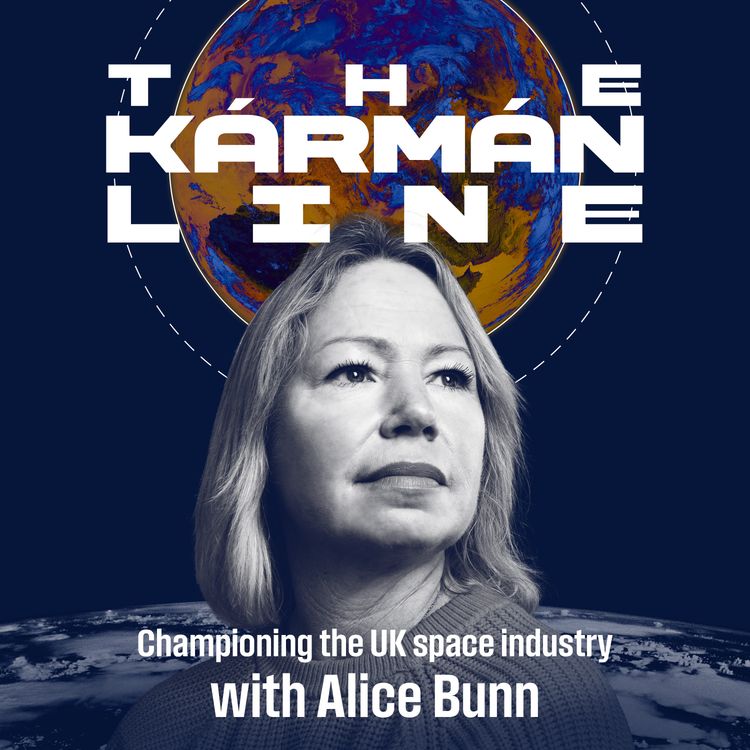
The Kármán Line
Introducing the Kármán Line
Season 1, Ep. 0
•
Introducing the Kármán Line, the only channel dedicated to the UK space industry.
Whether you're an investor, innovator, lawyer or scientist, if you want to keep up to date with this fast moving, full-of-potential sector listen to our interviews with the leading figures in the sector.
Dr Alice Bunn, former-international director of UK Space Agency and now president of UKspace, joins the show.
More to come. Subscribe here.
More episodes
View all episodes

11. The UK space economy: Government pivot, launch prospects and new alliances
40:18||Season 1, Ep. 11Did you know that the UK space industry is roughly the same size as the UK music and video games industries? And that beyond direct revenue, nearly £1 in every £5 of UK GDP is supported or enabled by satellite services? Or that, because the UK public sector budget is 0.2% of GDP compared with 0.8% for the EU, our market is more commercially driven and innovative? So how to get to the next level? Should the UK Government pivot its role from grant provider to “anchor customer”? Should the UK build more strategic, resilient partnerships, for example with the Nordic and Baltic nations, with Germany, Japan and Southeast Asia? Will the SpaceX IPO crowd new capital into competing launch vehicles that, if regulation can be stripped back, will “grease the wheels” for facilities like SaxaVord to succeed? And why, in five years or less, will regular landings on the moon become normalised and “boring”? Contributors:Alice Bunn, President of UKspace Dr Alice Bunn OBE FIMechE FRAeS CEng | LinkedInUKspace: Overview | LinkedIn Doug Liddle, Chair of UKSpaceDoug Liddle | LinkedIn Greg Sadlier, Co-founder and director of know.spaceGreg Sadlier | LinkedInknow.space | LinkedIn Key topics covered:SpaceX IPOUK space industrySovereign characteristicsGeopolitical partnershipsFive-year outlookDomain awarenessOrbital inspections and defenceAsteroid miningSaxaVord
10. Orbital Data Centres: Why reality might not match the hype
37:25||Season 1, Ep. 10What are orbital data centres (ODCs) and how do they differ from orbital edge computing? How do they solve the bottleneck of transmitting massive volumes of data from space to Earth? How believable is the central premise of the SpaceX IPO, that because space offers unlimited real estate, solar energy and natural radiative cooling it is therefore the future of Earth’s AI computing needs? Why are some experts sceptical and is there a danger that while AI demand is real, the infrastructure market could be a bubble waiting to happen? And why is developing sovereign ODC capabilities so “critical”?Join Alice and Jason Aspiotis, CEO and co-founder for a European space startup, as they talk about the “net present value” and future potential of ODCs, the lack of a “conviction to pursue something big” in Europe, and the terrifying or intriguing prospect of neuromorphic computing chips that mimic the low-power, high efficiency processing of the human brain.For more explanation, insight and expert opinions about the big issues shaping the future of space in the UK and beyond, register now for The Karman Line. https://www.thekarmanline.co.uk/Contributors:Alice Bunn, President of UKspace Dr Alice Bunn OBE FIMechE FRAeS CEng | LinkedInUKspace: Overview | LinkedInJason Aspiotis, CEO and co-founder for a European space startupJason Aspiotis | LinkedInKey topics covered:Orbital edge computingOrbital data centres (ODCs)Data bottlenecksODCs as infrastructureUK and European sovereign capabilityISAM (in-space servicing, assembly and manufacturing)Neuromorphic computing
9. Lord Heseltine: "You’re just playing in toy town”
14:49||Season 1, Ep. 9Lord Heseltine tells the story of the birth of the European Space Agency. Why post-Apollo, when the US was spending £1.2 billion a year on space, the whole of Europe was spending just £200 million. Why the birth of ESA was driven by the self-interest of three major countries. Why the US general with a $29 billion budget for the Star Wars project wanted to invest in Heriot-Watt University in Edinburgh. Why, the idea that Britain could compete alone with the technologies that were accumulated and available to the American capitalist system was “simply laughable”. Why “being European is not selling out British interests”. And why Margaret Thatcher told him: “If you want to get on and put your budget into this, you can, but you're not getting any of mine." Join Alice and Lord Heseltine as they pick apart the negotiating contrivances and the wheeling and dealing to circumnavigate “turkeys not voting for Christmas” that ultimately put European space on the map.Contributors:Alice Bunn, President of UKspace Dr Alice Bunn OBE FIMechE FRAeS CEng | LinkedInUKspace: Overview | LinkedIn Lord Heseltine, Member of the House of LordsKey topics covered:Creation of the European Space Agency (ESA)US "Star Wars" program and brain drainGeopolitical case for European R&D collaborationImpact of Brexit on science and technology
8. Space sustainability: Turning orbital debris into a national niche
28:28||Season 1, Ep. 8The idea of 14,000 satellites in low earth orbit sounds pretty scary but in context there’s over a million cars on the road in the UK alone and low earth orbit is a really big 3D space. So, should people be worried about space sustainability? Shouldn’t they just relax and remember there’s loads and loads of space out there? Or should they still be scared? What happens when satellites do cross paths? If they’re all part of the SpaceX Starlink constellation they’ll talk to each other instantaneously and get out of the way. But what if the contact is with a satellite from another country? Is it fair to say they’re on the equivalent of email or telephone? And what if they do collide? Will it be like the experiment in 2007 when the Chinese fired a missile at a defunct weather satellite? On the one hand, “great shot lads, you’ve hit something moving at 4km per second” but on the other, “you’ve probably caused a millennia worth of debris problems”.If it’s within our capabilities to move bikes and cars and trains and planes around the world in an ordered fashion, shouldn’t it be well within human capabilities to extend the use of space? Is there a role for the UK in being “the AA” of space and is the UK-New Zealand debris removal agreement a useful step down this road? Join Alice and Jonners as they talk to Phil Buckley, partner at the Public Service Consultants and a specialist in space sustainability, about the perils and pitfalls of satellite traffic jams and an opportunity that the UK “could be absolutely brilliant at”.Contributors:Alice Bunn, President of UKspace Dr Alice Bunn OBE FIMechE FRAeS CEng | LinkedInUKspace: Overview | LinkedIn Jonathan Daves, The Karman LineJonathan Daves | LinkedInPhil Buckley, Partner at the PSCPhil Buckley | LinkedInKey topics covered:Space sustainabilityThe Kessler effectSpace debrisStarlinkUK-New Zealand agreementSpace trafficThe Fengyun weather satelliteRefuellingServicing
7. Space comms: why rockets really aren’t the story
35:14||Season 1, Ep. 7Why do people in the space sector think they have a comms problem and yet the public at large think space is sexy? Should we stop evangelising about the technology that gets stuff into space rather than the core marketing message? After all, KFC is about the chicken not the trucks that deliver it.What are the leadership opportunities in the UK from launch in Scotland and what is the “environmental conscience” behind that endeavour? And how did we end up with kids in St Austell working on global lunar space missions on the back of a famous “failure”?Join Alice, Jess Ratty from Halo Global and John Harrington UK editor of PR Week, as they confront the introspection of space and figure out better ways of confounding British understatement and amazing a world of would-be investors.Contributors:Alice Bunn, President of UKspace Dr Alice Bunn OBE FIMechE FRAeS CEng | LinkedInUKspace: Overview | LinkedIn Jess Ratty, Founder and Leader, Halo GlobalJess Ratty | LinkedInJohn Harrington, UK Editor, PR WeekJohn Harrington | LinkedInPR Week UKKey topics covered:CommunicationsMarketingLeadership opportunitiesSaxa Vord launchEnvironmentSpaceport CornwallVirgin Orbit’s “Start me Up” mission
6. Space law: are existing legal frameworks fit for purpose?
37:38||Season 1, Ep. 6With a mind boggling 1.8 million satellites filed for launch before 2030 how are we going to manage the congested and contested realm of space? We know about warfare in space but how about lawfare in space? Who actually owns the moon? More pointedly, who owns the resources of the moon? How useful are the UK’s regulatory frameworks and how do you dispose of a fridge in low earth orbit?Join Alice, Jonners and international lawyer Joanne Wheeler, “the single powerhouse behind many of the space business successes”, as they mull on the legal challenges of an exponentially growing race for space.Contributors:Alice Bunn, President of UKspace Dr Alice Bunn OBE FIMechE FRAeS CEng | LinkedInUKspace: Overview | LinkedIn Jonathan Daves, The Karman LineJonathan Daves | LinkedInJoanne Wheeler, Managing Partner, Alden LegalJoanne Wheeler | LinkedInKey topics covered:International lawRegulatory frameworksMoon miningMoonrise projectSpace congestionDual use
5. Mark Garnier: The financial sector needs to invest in space now!
32:08||Season 1, Ep. 5How can Britain exploit the “astonishing opportunity” to become a global energy supplier from space? Why is space an engineering problem not a £7 billion physics problem like nuclear fusion? What did Gordon Brown do that transformed the UK film industry and why is this relevant to space? What connects the Crusades, crates of gold, coffee shops, blockchain and space?Join Alice, Jonners and Mark Garnier MP as they figure out if space investment is big, messy and complicated or actually straightforward. And they argue why the UK Government must get properly involved.Contributors:Alice Bunn, President of UKspace Dr Alice Bunn OBE FIMechE FRAeS CEng | LinkedInUKspace: Overview | LinkedIn Jonathan Daves, The Karman LineJonathan Daves | LinkedInMark Garnier, MP for Wyre ForestMark Garnier | LinkedInKey topics covered:Solar energyNuclear fusionSpace investmentSpace XUK financial sectorGovernment rolePublic awarenessParliament
4. Artemis II: Never, ever, ever talk about rockets and astronauts
33:28||Season 1, Ep. 4So, we’re flying humans around the moon and bringing them back. But why are we doing it? To build a strategic outpost? To play power games? To do science? And if it's science, isn’t the useful value of resources on the moon a bit opaque? For example, why do we need to mine helium-3 when we can produce it on earth? More problematic, if you’re investing billions of dollars in putting sensitive instruments on the moon and you’ve got good access to light and frozen water, what happens when somebody else comes along and says: “I’d quite like a bit of that as well please”? How quickly does astropolitics become geopolitics? Join Alice and her guests, Libby Jackson, Head of Space at the Science Museum and Ian Annett, Chair UKSpace Launch Committee, as they debate the value of Artemis II and celebrate the idea of being driven to push boundaries. “We’re human, what can we do?” Contributors:Alice Bunn, President of UKspace Dr Alice Bunn OBE FIMechE FRAeS CEng | LinkedInUKspace: Overview | LinkedIn Ian Annett, Chair UKSpace Launch CommitteeIan Annett | LinkedIn Libby Jackson OBE FRAeS, Head of Space, the Science MuseumLibby Jackson OBE FRAeS | LinkedInKey topics covered:Artemis IIApollo missionsMining on the moonAstropoliticsCollaboration in spaceCost of commercial launchesSecurity in spaceThe lunar economyMars missionsUnderstanding evolutionKerosene alternatives
3. Will Whitehorn: “How SpaceX is revolutionising the way we live”
28:39||Season 1, Ep. 3How do we solve population pressure and climate crisis in space? How has GPS allowed us to provide 12% more food globally? How did the UK become a global leader in small satellite manufacture after the British Government said, “there’s no future for the UK satellite industry”? How did Elon Musk turn reusable rockets from science fiction to science fact in less than 20 years? What else are “Elon and Jeff” going to allow us to do? And why is SpaceX still “the elephant in the room”? Join Alice as she talks to Will Whitehorn, chair of giant space tech investor Seraphim and former president of Virgin Galactic, as they discuss the implications of “The Elon Musk show” and its legacy, “the beginnings of a competitive space industry of scale”.Keep up to date with what is happening in the space industry. Register for free Contributors:Alice Bunn, President of UKspace Dr Alice Bunn OBE FIMechE FRAeS CEng | LinkedInUKspace: Overview | LinkedIn Will Whitehorn OBE, Seraphim Space Investment TrustWill Whitehorn OBE | LinkedInKey topics covered:UK satellite manufactureUK universitiesSpaceX valuationReuseable rocketsAgricultural managementPopulation pressureClimate crisisSolar powerData centres in spaceIndustrialising in space