Latest episode
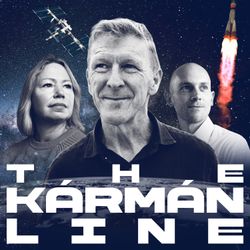
24. Tim Peake: "Put a human and our best robot with AI on Mars today... and a human will still do more."
29:31||Season 1, Ep. 24What is the true balance between human spaceflight and robotic exploration when it comes to science, inspiration, and decision-making capabilities? How is space transitioning from a niche frontier to an everyday commercial workplace? What role do regulatory frameworks, such as the United Nations, the Artemis Accords, and the Astra Carta, play in keeping orbit and the lunar surface safe and sustainable? And how can the UK Government act as an "anchor customer" to bridge the commercial "valley of death" for domestic space startups? Join Alice and Jonners in this special episode recorded in Chichester Marina with British astronaut Tim Peake as he shares insights on space adaptation syndrome, commercial space stations, lunar research bases, global space traffic management, and the future of human exploration to Mars. Contributors:Alice Bunn, President of UKspace Dr Alice Bunn OBE FIMechE FRAeS CEng | LinkedInUKspace: Overview | LinkedInJonathan Davies, The Karman LineJonathan Davies | LinkedInThe Karman Line | LinkedInTim Peake, AstronautTim Peake | LinkedInKey topics covered:Human spaceflight vs. robotic explorationSpace Adaptation Syndrome (nausea & gravity adjustment)Normalising space as a commercial workplaceTransition from space stations to commercial Low Earth Orbit (LEO)Artemis programme & sustainable lunar research basesAstronaut selection mindsets, psychological profiles, and stress testingInternational space cooperation & soft power (ISS legacy)Governance, leaseholds, and regulatory frameworks on the MoonThe Astra Carta & space sustainabilityHuman exploration of MarsGovernment as “anchor customers
More episodes
View all episodes

23. Alisha Fuller-Armah: A story so sensational it made Alice Bunn cry
30:06||Season 1, Ep. 23How can a malleable, plant-based bio-leather grown off-grid in Scotland transform under extreme heat into an RF-transparent, rock-like ceramic shield? What does Draconite mean for the economics of spacecraft re-entry and thermal protection systems? How does self-taught material science disrupt traditional "old space" gatekeeping and university lab paradigms? What are the dual-use applications of biomimetic thermal shields across space re-entry, defence satellite protection, and terrestrial wildfire mitigation?Join Alice and Jonners as they talk with the astonishing Alisha Fuller-Armah, CEO and founder of Draconite, about her journey from scaling a Caribbean wedding venue to inventing a self-vitrifying, plastic-free thermal protection material and proving it works by pointing a blow torch at her own hand!Contributors:Alice Bunn, President of UKspace Dr Alice Bunn OBE FIMechE FRAeS CEng | LinkedInUKspace: Overview | LinkedIn Jonathan Davies, The Karman LineJonathan Davies | LinkedInThe Karman Line | LinkedInAlisha Fuller-Armah, CEO & Founder, DraconiteAlisha Fuller-Armah | LinkedInKey topics covered:Draconite bio-based thermal shield technologySelf-vitrification and heat-soak insulation vs. traditional ablationRF transparency during re-entry communicationsOff-grid, low-cost cellulose fermentation & sovereign manufacturingUK Space Agency Accelerator & scaling deep techDefence applications (anti-laser satellite shrouds)Overcoming academic gatekeeping through self-taught sciencePFAS-free, traceless, and non-toxic space materialsTerrestrial wildfire and passive fire protection
22. The UK National Space Strategy: Groundbreaking Government commitment but no new money
23:37||Season 1, Ep. 22Does the Government's latest space strategy properly connect defence, civil policy and commercial space growth? How will the MOD and DSIT merge procurement approaches? What are the specific outcomes targeted across the four core focus areas: Satcoms, Space Domain Awareness, Launch, and In-Orbit Servicing, Assembly, and Manufacturing? How do freedom of action and assured access balance sovereign UK capabilities with NATO and ESA alliances? And what major regulatory, insurance, and procurement changes are coming down the line?Join Jonners and Stephanie Ayres, Head of Policy at UKspace, as they debate whether the machinery of Government is fully backing a practical blueprint for picking winners and driving national security and economic growth or delivering just another false dawn.Contributors:Jonathan Davies, The Karman LineJonathan Davies | LinkedIn The Karman Line | WebsiteStephanie Ayres, Head of Policy UKspaceStephanie Ayres | LinkedIn UKspace: Overview | LinkedInKey topics covered:New National Space Strategy overviewMOD and DSIT procurement alignmentGovernment as an "anchor customer"Four core capability pillars (Satcoms, SDA, Launch, ISAM)Sovereign ISR and Space ControlFreedom of action vs. Allied integration (NATO/ESA)Assured launch (SaxaVord & Spaceport Cornwall)"Picking winners" and targeted funding awardsRegulatory and insurance sandboxes (City of London)Enterprise Category Management and cross-departmental governance
21. Hetti Barkworth-Nanton: Turning swords into ploughshares
34:47||Season 1, Ep. 21How does Ploughshare turn Ministry of Defence owned R&D into commercial businesses serving wider society? Why has commercialising defence technology historically been "suboptimal," and how is the newly launched Technology and Growth Alliance (TAG) shifting the dial? How can classified innovations be declassified by separating the underlying core technology from its military application? What structural changes are required in UK venture capital to build "bolder, braver" scale-ups capable of navigating defence procurement and space markets?Join Alice and Jonners as they talk with Hetti Barkworth-Nanton, CEO of Ploughshare, about how to take brilliant defence innovation out of Government labs and apply it to wider commercial markets like healthcare and telecoms. Plus, navigating the rules, regulations and protection rackets. “No, you can’t go speak to the Minister”.Contributors:Alice Bunn, President of UKspace Dr Alice Bunn OBE FIMechE FRAeS CEng | LinkedInUKspace: Overview | LinkedIn Jonathan Daves, The Karman LineJonathan Daves | LinkedInThe Karman Line | LinkedInHetti Barkworth-Nanton CBE, CEO, PloughshareHetti Barkworth-Nanton | LinkedInPloughshare | LinkedInKey topics covered:Commercialising defence R&D & Ploughshare's missionThe Technology and Growth Alliance (TAG)Declassifying top-secret defence techReverse dual-useCultural shifts in academia and corporate defence primesSpace and defence tech synergyDefence procurement challengesThe Defence Investment Plan (DIP)UK venture capital gapsFunding dual-use scale-upsPurpose-driven leadership & organisational culture
20. Satellite Applications Catapult: Ruthless selection, world-class winners, and executive engineers
32:04||Season 1, Ep. 20How does the Satellite Applications Catapult evaluate and select "high-potential" space ventures? What role does commercial matchmaking, tech validation, and international growth strategy play in scaling startups into global leaders? How can the UK shift from passive R&D grants to an "Olympic-style" industrial policy that goes all-in on world-class space "winners"? What structural changes—such as rapid regulatory approvals, sovereign capital funds, and secure defence gateways—are needed to cut a path through the space growth jungle?Join Alice and Jonners as they talk with John Abbott, CEO of the Satellite Applications Catapult, about the ruthless selection strategies to unleash businesses with the highest potential for growth. And why this process is worth it, even if you pass on The Beatles.Contributors:Alice Bunn, President of UKspace Dr Alice Bunn OBE FIMechE FRAeS CEng | LinkedInUKspace: Overview | LinkedIn Jonathan Daves, The Karman LineJonathan Daves | LinkedInThe Karman Line | LinkedInJohn Abbott, CEO, Satellite Applications CatapultJohn Abbott | LinkedInSatellite Applications Catapult | LinkedInKey topics covered: Satellite ApplicationsCatapult operating model & impactEvaluating "high-potential" space businessesOpen Cosmos, Mag Drive, and UK space scale-upsThe three core Catapult missions: Beyond Earth, Autonomous & Connected Earth, Resilient EarthMatchmaking vs. ChallengeAccelerating Sovereign space capability & international trustIndustrial Strategy: "Picking winners" vs. broad SME supportCross-government alignment, capital growth, and rapid regulationThe Space and Defence Gateway at Harwell
19. Spaceport Cornwall: From Virgin Orbit to multi-use aerospace and drone hub
30:47||Season 1, Ep. 19What really happened at Spaceport Cornwall after the 2023 Virgin Orbit launch? Why, from an operational and regulatory standpoint, was the failed mission actually a success? How can spaceport infrastructure and segregated airspace be repurposed for high-volume drone testing, hypersonic flight, and returning spaceplanes? What is the true definition of "assured launch," and why is domestic launch capability crucial for national resilience? How is Cornwall evolving beyond its launch heritage into a multi-sector commercial technology ecosystem? Join Alice and Jonners as they talk to Ross Hulbert, Space Engagement Lead at Spaceport Cornwall, and discuss the realities of pioneering spaceports, mixed airspace regulation, local economic impact, and subsidising future space access. Contributors:Alice Bunn, President of UKspace Dr Alice Bunn OBE FIMechE FRAeS CEng | LinkedInUKspace: Overview | LinkedIn Jonathan Daves, The Karman LineJonathan Daves | LinkedInThe Karman Line | LinkedInRoss Hulbert, Space Engagement Lead, Spaceport Cornwall Ross Hulbert | LinkedInSpaceport Cornwall | LinkedInKey topics covered: Spaceport Cornwall evolution & operations Virgin Orbit launch legacy & technical learnings Mixed airspace & BVLOS drone testing Hypersonic testing & spaceplane recovery Assured vs sovereign launch capability Global launch bottlenecks & reliance on SpaceX Space Clusters & Cornish economic growth Subsidising space access for UK operators
18. Dual-Use & Working Together
43:14||Season 1, Ep. 18What does "dual-use" technology truly mean? What happens when academia, industry, and government join forces at an institution like NESST? What connects the London Olympics and the MoD’s Skynet satellite system? And are policy and legal hurdles holding back the full potential of dual-use tech?In this episode, Dave Moody - Director of the North-East Space Skills and Technology Centre (NESST) at Northumbria University - joins Alice Bunn and Jonners to explore the critical dual-use elements of space technology. From the First Gulf War to the London Olympics, space has, time and time again, quietly delivered essential capabilities. Is it time we start singing its praises?Contributors:Alice Bunn, President of UKspace Dr Alice Bunn OBE FIMechE FRAeS CEng | LinkedInUKspace: Overview | LinkedIn Jonathan Daves, The Karman LineJonathan Daves | LinkedInThe Karman Line | LinkedInDave Moody, Director, North East Space Skills and Technology Centre, Northumbria UniversityDave Moody | LinkedInNorthumbria University | LinkedInKey topics covered:Dual UseMilitaryLondon OlympicsSkyNetNESSTNorthumbria University