Latest episode
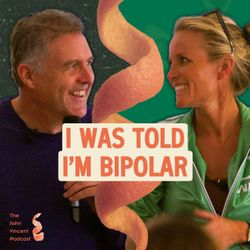
Davinia Taylor on Eating Like a Human; The Discovery That Finally Changed Her Habits Forever And Could Change Your Life Too
01:39:21|What if changing your life didn’t begin with a dramatic overhaul, but with one small decision that made you feel a little more like yourself again?Actress, bestselling author and WillPowders co-founder Davinia Taylor joins John Vincent for a deeply personal, funny and refreshingly honest conversation about food, energy, behaviour and learning how to listen to your body.Davinia shares a period in her life when she simply wasn’t treating herself particularly well. She felt tired, flat and disconnected from the energetic person she remembered being. Then something surprisingly simple happened: she tried a Bulletproof-style coffee with MCT oil and felt a shift.It wasn’t a miraculous transformation. It was the beginning of a cascade.At the heart of the conversation is a wonderfully simple question: how do we eat like human beings again?John and Davinia explore why modern life can leave us disconnected from our bodies, why food should be about more than calories, and why sometimes the most powerful changes begin with something incredibly small.In this episode:◼ How one small change became the beginning of a much bigger personal transformation◼ Why Davinia describes her first Bulletproof coffee as a moment of “hope”◼ The positive cascade from food to walking, movement, music and self-esteem◼ What Davinia means when she says we should “eat like a human”◼ Why she believes traditional, recognisable foods can offer a useful guide◼ Learning to notice which foods leave you satisfied and which make you want more◼ Why Davinia prefers intuition to obsessing over calories◼ Meat, vegetables, natural fats, sourdough, potatoes and bringing back the humble stew◼ The importance of daylight, movement and starting the morning well◼ Why sleep is one of Davinia’s biggest priorities◼ The pressure to have the perfect life - and why Davinia has stopped pretending hers is◼ Connection, self-esteem and finding joy in ordinary life◼ Why being willing to make one change can sometimes be enough to startKEY MOMENTS:0:00 Questioning what we’ve been taught about food05:26 Why Davinia began challenging modern dietary advice10:56 Growing up energetic, curious and constantly looking for stimulation23:58 When food became comfort rather than nourishment27:38 The Bulletproof coffee that unexpectedly changed something28:30 “Something shifted” – the beginning of Davinia’s positive cascade31:59 How walking, music and movement helped bring her confidence back33:51 Why Davinia still eats bread, potatoes, pastry and proper dinners45:38 Why meaningful change can start somewhere surprisingly small56:20 John asks Davinia how to “eat like a human”58:37 Meat, two veg and bringing back traditional food01:07:40 Why the way you start your morning can change the rest of your day01:13:35 Sleep, motherhood and letting go of the perfect-life facade01:21:10 Why that first dietary change gave Davinia something she had been missing: hope01:32:08 Whole foods, intuition and asking what your great-grandmother would recognise
More episodes
View all episodes
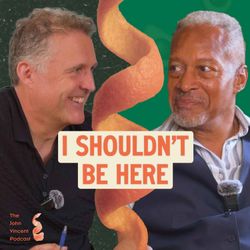
27. Tony Brown: From Rock Bottom and ECT to Bioresonance, Holistic Health and Finding Purpose
01:18:24||Season 1, Ep. 27Tony Brown joins John Vincent to share his extraordinary journey from severe depression and psychiatric hospitalisation to rebuilding his health, relationships and sense of purpose. Tony recalls being sectioned under the Mental Health Act, receiving 17 courses of electroconvulsive therapy and eventually finding his way out of hospital with help from an old school friend.After leaving hospital, Tony continued to struggle with his physical and mental health, at one stage taking 24 pills a day while dealing with arthritis, sciatica, a slipped disc and prostate problems. His search for alternatives eventually introduced him to kinesiology and bioresonance- experiences that led him towards the work he now does at Total Body Health in Wimbledon. The conversation also turns to depression, loneliness, purpose and human connection. Tony shares why meditation, exercise, friendship and asking for help became important parts of his life, while John explores the role of community, nature and face to face conversation in supporting wellbeing.In this episode you'll learn:◼ Tony’s severe depression and psychiatric hospitalisation◼ His experience of 17 courses of electroconvulsive therapy◼ Rebuilding his life after leaving psychiatric care◼ Discovering bioresonance and frequency medicine◼ Bioresonance, hyperbaric oxygen and red light therapy at Total Body Health◼ The connection between physical health, emotional wellbeing and lifestyle◼ Depression, loneliness, friendship and the importance of community◼ Finding purpose through meditation, exercise, philosophy and human connectionKey Moments:0:00 Tony Brown’s story and his darkest period02:00 Christmas Eve 2011, financial collapse03:40 Psychiatric hospitalisation and 17 courses of ECT07:11 The old school friend who helped Tony leave hospital10:08 Rebuilding his life and reconnecting with his future wife11:30 Living with chronic pain, prostate problems and 24 pills a day15:09 Tony’s first experience with bioresonance24:16 Inside Tony’s Total Body Health clinic in Wimbledon26:41 The clinic’s holistic approach to physical and emotional health39:10 Client experiences, lifestyle changes and prostate health43:48 Men’s health, loneliness and why men struggle to talk46:16 Walking, nature, friendship and community connection50:14 Supporting recovery through multiple approaches to health59:12 Depression, mental health and the importance of purpose1:08:42 Meditation, exercise and Tony’s daily practices
25. Robert Verkerk: Natural Health, GLP-1 Drugs, Big Pharma & the Future of Medicine
02:00:24||Season 1, Ep. 25What if the biggest problem with modern healthcare isn’t a lack of science, but the way science, regulation and commercial incentives are being used?Dr Robert Verkerk, scientist, ecologist and founder of the Alliance for Natural Health, joins John Vincent for a wide-ranging conversation about natural health, modern medicine, GLP-1 weight loss drugs, personalised healthcare, food as medicine and the future relationship between humans, nature and technology.Robert’s journey began with ecology and environmental science. His work investigating pesticides, agriculture and chemical exposure eventually led him to explore a much bigger question: if human health is completely dependent on the natural world, why are food, agriculture, nutrition and medicine so often treated as separate systems?The conversation explores the regulation of vitamins, supplements and natural substances, Robert’s work challenging European legislation, and his belief that healthcare needs to move beyond simply treating disease towards understanding the complex systems that create health. They discuss ivermectin and the COVID-era debate around medical evidence and informed consent, before exploring the difference between randomised controlled trials and real-world clinical evidence, why exceptional patient outcomes should be investigated rather than dismissed, and how personalised medicine could transform healthcare.The conversation then moves into bioelectricity, biophysics, the vagus nerve, energy medicine, AI, Neuralink and transhumanism, asking perhaps the biggest question of all: do we truly understand what a human being is?In this episode you'll learn:◼ How Robert Verkerk went from ecology, agriculture and pesticide research to becoming a leading advocate for natural and integrative health◼ Why Robert believes soil health, food quality, environmental health and human health cannot be separated◼ How regulation affects vitamins, supplements, botanicals and natural substances including ashwagandha◼ Robert’s perspective on GLP-1 drugs, semaglutide, intermittent fasting, muscle loss and long-term metabolic health◼ Why personalised medicine, continuous glucose monitoring, genetics and individual response could change how we approach nutrition and disease prevention◼ The difference between randomised controlled trials, clinical evidence, efficacy and real-world effectiveness◼ Why Robert believes unusual recoveries and medical outliers should be investigated more closely◼ How bioelectricity, the vagus nerve, biophysics and energy medicine could influence the future of healthcare◼ The ethical questions surrounding AI, Neuralink, transhumanism and technology becoming increasingly integrated with the human body◼ Why reconnecting with nature, movement, nutrition, intuition and personal responsibility remain central to Robert’s philosophy of healthKey Moments:0:00 Natural health, science and the systems shaping modern medicine03:30 Growing up in Africa and discovering ecology12:13 Aboriginal culture, pesticides and chemical sensitivity24:39 Stress, resilience and the health effects of adversity29:57 Supplement regulation and founding the Alliance for Natural Health39:34 Drug regulation, GLP-1 weight loss drugs and risk versus benefit46:38 GLP-1 drugs, fasting, muscle loss and long-term metabolic health51:57 Ivermectin, COVID and the debate around medical evidence55:36 From soil health to human health: why food is medicine1:03:25 AI, Neuralink, transhumanism and human enhancement1:07:56 Bioelectricity, the vagus nerve and energy medicine1:23:51 Personalised health, continuous glucose monitoring and genetics1:30:21 Intuition, happiness and learning to listen to your body1:35:23 Clinical evidence vs randomised controlled trials1:50:57 Biophysics, the future of medicine and the question: what is life?
24. Jonathan Ramalho: Ayahuasca, Psychosis and Rebuilding Your Mental Health
01:03:12||Season 1, Ep. 24What happens when a psychedelic experience intended to unlock human potential leads to psychosis, psychiatric hospitalisation and a complete loss of trust in your own mind?Jonathan Ramalho joins John Vincent to share the extraordinary story behind Beyond The Pill, his exploration of mental health, psychedelics, human potential and recovery. After years exploring human potential, mental health and psychedelics, Jonathan travelled to Guatemala for an ayahuasca retreat. What began as a blissful out of body experience developed into paranoia, frightening hallucinations and what Western medicine would later describe as drug induced psychosis.Jonathan describes being locked away by the shaman, his family arranging for his sister and her partner to rescue him, returning to London while still feeling unsafe in his mind and body, and eventually spending time in psychiatric care.The conversation explores his experience with antipsychotic medication, his refusal to define himself through a schizophrenia label, and the practices he believes helped him rebuild his life. Sleep, real food, movement, introspection, nature, hope, personal responsibility and supportive community became central to his recovery.In this episode you'll learn:◼ How Jonathan’s search for human potential led him from filmmaking and entrepreneurship into researching mental health and psychedelics◼ What happened during his ayahuasca retreat in Guatemala and how a blissful psychedelic experience developed into paranoia, disturbing hallucinations and drug induced psychosis◼ What psychosis felt like from Jonathan’s perspective and why he compares the experience to carrying an invisible psychological weight that nobody else can see◼ Jonathan’s experience of psychiatric hospitalisation, antipsychotic medication and rebuilding stability after his psychedelic experience◼ Why he prefers to view his recovery through the idea of post traumatic growth rather than allowing a psychiatric diagnosis to define his identity◼ The four foundations Jonathan now prioritises for health: sleep, nutrition, movement and mood◼ The relationship between personal responsibility, mental health, human potential and the systems people live withinKey Moments:0:00 Jonathan’s story and the search for human potential8:25 The mental health crisis and exploring psychedelics11:18 The ayahuasca retreat in Guatemala14:48 Hallucinations, fear and drug induced psychosis17:38 Being locked away and rescued by his family22:43 Returning to London and entering psychiatric care25:12 Post traumatic growth and rebuilding after psychosis28:52 Antipsychotic medication and regaining stability32:44 The four foundations for health: sleep, nutrition, movement and mood35:41 Biohacking, wearables and learning to listen to your body41:10 Nature, personal agency and the pressures of modern life53:15 Community, mental health and would Jonathan recommend ayahuasca?
23. Glenn Harrold: How to Reprogram Your Mind with Hypnosis and Manifestation
01:29:52||Season 1, Ep. 23Can you use hypnosis to change negative thought patterns, reprogram your subconscious mind and create a more positive life?Hypnotherapist Glenn Harrold joins John Vincent to explore self-hypnosis, meditation, subconscious programming, childhood trauma, manifestation, abundance, consciousness and the power of the stories we tell ourselves. Glenn shares how a difficult childhood, homelessness, drugs and an unsuccessful music career ultimately led him to clinical hypnotherapy and a career creating hypnosis and meditation recordings used by millions of people.They examine how childhood experiences can create unconscious beliefs around money, relationships and self-worth, why repetition is central to hypnosis, how to interrupt negative thought cycles, the difference between stage hypnosis and clinical hypnotherapy, and how meditation can help people access intuition and creative thinking.The conversation also explores manifestation and the law of attraction, gratitude, affirmations, the hypnagogic state between waking and sleep, healing frequencies, abundance mindset and the balance between taking action and allowing life to unfold.In this episode you'll learn:◼ How hypnosis and self-hypnosis can be used to change subconscious thought patterns◼ Why childhood experiences can create lifelong beliefs around money, confidence and self-worth◼ How Glenn Harrold used hypnotherapy to transform his own life after childhood trauma and addiction◼ How to recognise and interrupt negative thought cycles before they control your day◼ The difference between stage hypnosis, clinical hypnotherapy and self-hypnosis◼ Why repetition, affirmations and subconscious suggestion are central to Glenn's approach◼ How manifestation, goal setting and an abundance mindset can influence behaviour and opportunity◼ Why the hypnagogic state before sleep can be a powerful time for meditation and affirmationsKey Moments:0:00 Self-hypnosis, healing, consciousness and abundance2:51 396Hz frequencies, meditation and emotional release6:24 Childhood trauma, homelessness and finding a different path11:15 From stage hypnosis to clinical hypnotherapy19:29 How to break negative thought cycles22:02 Self-hypnosis for stress, decision making and intuition31:31 Childhood programming and discovering your authentic self35:36 Money beliefs, subconscious blocks and abundance40:49 Regression hypnotherapy and an agoraphobia case study48:17 Stage hypnosis explained: trance, suggestibility and expectation54:19 How to start using hypnosis and hypnotherapy58:38 The hypnagogic state, sleep and affirmations59:50 Manifestation, abundance and changing your life1:07:17 How to set goals and use manifestation techniques1:18:48 Manifestation versus action: trust, flow and letting
22. Dr Alan Desmond: What Your Doctor Isn't Telling You About Food
01:55:58||Season 1, Ep. 22What should we actually eat for a longer, healthier life? Dr Alan Desmond, gastroenterologist and author of What Your Doctor Isn't Telling You About Food, joins John Vincent to examine the evidence behind plant based diets, ultra processed food, dietary fibre, protein, heart disease, obesity, metabolic health and longevity. They explore why health span matters as much as lifespan, why the modern food environment drives chronic disease, what precision nutrition can really tell us, and how GLP 1 medications fit into the future of health. The conversation also examines the NOVA food classification, nutrition education for doctors, meat consumption, the National Food Strategy and the changes needed to create a healthier food system.In this episode you'll learn:◼ Health span versus lifespan and why living longer does not always mean living healthier◼ How the modern food environment contributes to obesity and chronic disease◼ Why nutrition science must evolve as new evidence emerges◼ Precision nutrition and whether personalised diets actually outperform healthy whole food diets◼ Why ultra processed foods now make up such a large proportion of the UK diet◼ The debate around meat, low carbohydrate diets and evidence based nutrition◼ GLP 1 medications, weight loss and the limitations of treating a food environment problem with medication◼ The National Food Strategy and the case for systemic food reformKey Moments:0:00 The global food system and the cost of poor nutrition1:40 Why nutrition science must keep evolving2:34 Plant based nutrition and the current scientific consensus3:00 Lifespan versus health span8:00 Why obesity cannot be explained by personal responsibility alone15:32 The 15 conversations everyone should have about food17:52 Precision nutrition and personalised diets20:44 Why personalised nutrition performed no better than healthy plant based food25:56 Eating at LEON and the importance of accessible healthy food28:06 Why doctors receive so little nutrition education30:00 Nutrition and medical training34:00 Diet and heart disease39:00 Fibre, protein and the foundations of healthy eating45:00 Why eating more plants matters56:00 Growing your own food and reconnecting with nature58:05 How much meat should we actually eat?1:02:00 The case for a plant predominant diet1:08:00 Blood sugar spikes and continuous glucose monitors1:12:13 What ultra processed food actually means1:14:15 The NOVA classification explained1:19:00 Why unprocessed does not automatically mean healthy1:21:45 The debate around diet drinks and artificial sweeteners1:23:34 The food choices that can improve health1:37:40 Low carbohydrate diets and the evidence1:42:17 Food, community and GLP 1 medications1:50:42 The National Food Strategy and reforming the food system1:52:54 John Vincent on the School Food Plan1:55:00 The case for changing how we eat
21. Gaz Oakley: Why Growing Your Own Food Can Change Your Life
58:22||Season 1, Ep. 21How did Gaz Oakley go from city-life burnout to a calmer, more authentic life connected to nature?Gaz Oakley, the chef, author and creator joins John Vincent for a powerful conversation about plant based food, burnout, fermentation, herbalism, homesteading, nature deficiency, social media, city life, anxiety, authentic living and the spiritual power of reconnecting with the land.From starting work in professional kitchens at 15, to burning out after years of 80 hour weeks, building a huge YouTube and Instagram audience, leaving London, growing his own food in Wales and discovering the wisdom hidden in plants, Gaz explains why modern life has disconnected so many of us from the food we eat, the seasons we live through and the natural world around us.In this episode you'll learn:◼ Why Gaz Oakley believes society is suffering from “nature deficiency”, and how growing food helped him feel grounded, present and more himself◼ How burnout in professional kitchens pushed him away from restaurant life and eventually led to YouTube, plant based cooking and millions of followers◼ Why social media followers stopped feeling like success, and how Gaz realised he had been living an inauthentic life by chasing trends online◼ How fermentation, sauerkraut, chilli hot sauce and preserving harvests can help people reduce reliance on supermarkets and reconnect with food◼ Why Gaz believes the lawn is “the greatest scam that’s ever existed”, and why balconies, gardens, windowsills, allotments and community growing spaces can all become sources of food◼ What herbs such as mullein, yarrow, southernwood and lemon balm taught Gaz about plant wisdom, folklore, natural remedies and the people who lived before us◼ Why city life can make us forget birdsong, trees, seasons, soil and community, and how people in London and other cities can still start foraging, growing and noticing nature◼ How love, fatherhood, family, community and living closer to the land have reshaped Gaz’s ideas of success, survival, happiness and what it means to provideKey Moments:0:00 Intro to The John Vincent Podcast 1:26 Fermentation, sauerkraut and preserving the harvest3:12 Gaz Oakley on YouTube, Instagram and why followers no longer define success3:53 Living an inauthentic life, chasing trends and feeling ungrounded4:36 Growing up in Cardiff, wanting to play rugby for Wales and discovering cooking6:02 Starting in professional kitchens at 156:57 Burnout, 80 hour weeks and not looking after himself10:04 Leaving restaurants, working in a builder’s yard and finding food again12:06 Going plant based, sharing recipes and launching on social media13:58 Becoming a new person through growing food15:49 Nature deficiency as a physical and spiritual problem16:02 Seasons, indigenous wisdom, weeds, folklore and feeling rooted17:42 City convenience and forgetting the natural world19:56 Mullein, lung health, tinctures and ancient plant uses22:38 Southernwood, folklore and “lads love”23:31 Yarrow, Achilles and the plant wisdom hidden in common weeds24:58 Lemon balm, stress and the calming ritual of making tea25:51 Opening your eyes to nature in the city30:35 The fisherman story and redefining success33:05 Why the countryside felt less lonely than London34:43 Social media as a servant, not a master38:38 The power of learning where your food comes from39:03 Turn your balcony, windowsill or lawn into a farm40:35 Local, seasonal, unpackaged food and avoiding plastic41:48 Why culinary herbs are also part of medicinal plant traditions42:44 Birdsong, lost wisdom and reconnecting with the natural world44:13 Foraging, scything, soil, serotonin and getting dirt under your nails46:42 Community, land, shared skills and intergenerational living48:23 Opening a farm shop in Abergavenny and rebuilding local community51:33 Plants, music, water, weeds and the healing power of nature53:59 Finding your authentic voice online56:33 Love, fatherhood and why Gaz now wants to provide presence, not just money