Share
The Italy Now Podcast
No fixed address and 11 countries, the Italian doing the Moola maths
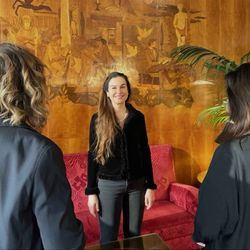
Filippo Corbelli has had no fixed address for two years, and this summer he landed in Cambridge with his fintech. The company joined a university-based startup accelerator at King's College. He relocates every few months, and he says the lifestyle he has crafted for himself is not look but is the result of working out exactly what his money lets him do.
Corbelli is head of product at Moola, a London fintech co-founded by Linda Du. The company grew out of spreadsheets that she and Corbelli, both McKinsey alumni, built to answer friends’ questions about money, and in July it won Best Fintech Solution at the UK Business Tech Awards. He has lived in 11 countries and visited more than 60.
In conversation he talks about why people treat their situation as temporary, why a high income can hide a lot of trouble, and what happens when careful Italian savers, who trust the mattone (bricks and mortar), keep everything in cash waiting for a decision they never make. He also explains why he has never really left Italy.
More episodes
View all episodes
27. Bacteria caught in hours, not days, the Italian engineer behind Unburden
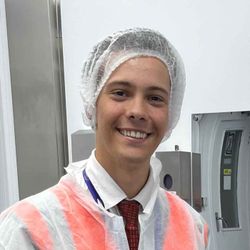
08:42||Season 1, Ep. 27At the University of Cambridge, where he trained as an engineer, Amedeo Leproni is chasing an enemy nobody can see. In food factories today, a single sample from a whole pallet goes onto a dish of nutrient broth, and then everyone waits days to see whether spots grow.Leproni’s parents are both from Turin, in Piedmont. He has founded a soup kitchen for homeless guests, worked as a ranch hand and riding guide in Argentina, Uruguay and Romania, and speaks four languages. His startup, Unburden, fresh from King’s College’s SPARK 2.0 incubator and an investor demo day, swaps cell cultures for DNA methods, especially polymerase chain reaction. He now builds it from London as a founder in residence at Entrepreneurs First.In conversation he explains what a long wait costs a manufacturer, from idle machines to pallets stuck in warehouses, and imagines quality control that becomes invisible on the production line. He also says what Italy means to him: his family and feeling like an ambassador for Italy wherever he goes.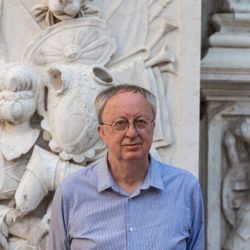
31. Lion’s mouths, canals and a Blade of Shadow, why Venice was made for crime
10:02||Season 1, Ep. 31Venice had a secret state security tribunal, informers and lion’s mouths, letterboxes for denouncing neighbours. Add the alleys, dead ends and endless canals, and the city plots half the crime story for you.David Hewson is the British novelist who co-founded Venice Noir, where he also directs its international programme. His latest Venice mystery is The Devil in Dorsoduro, starring Arnold Clover, an outsider who asks questions no Venetian would, with a dachshund called Bruno.In conversation he explains how one bookshop talk in 2023 became four days of free panels, opening on Thursday, November 12, 2026. He unveils the prize, the Lama d’Ombra (the Blade of Shadow), and says why a noir festival invites classicists and a pathologist. He also says where he wants Venice Noir to be in five years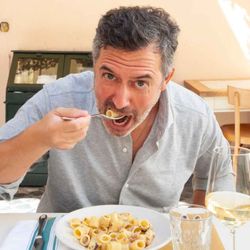
30. Cappuccino, clams and cheese, how to break Italy’s unwritten table rules
09:45||Season 1, Ep. 30In a Roman restaurant the first lesson comes before the menu, as kitchens close mid-afternoon and reopen at night.Edwin Garrubbo is a Rome-based Italian American food writer and culinary tour leader and a former lawyer. Three-quarters of him is Sicilian. His third book, the Garrubbo Handbook, is pocket sized and covers all 20 regions, following Sunday Pasta (2014) and the Garrubbo Guide (2020).He explains why Italians shun cappuccino after breakfast and how a macchiato (a little espresso with a dollop of milk) bends the rule. You can’t put cheese on spaghetti alle vongole (spaghetti with clams), yet down the coast you find cozze con pecorino (mussels with pecorino cheese). He names the regions visitors overlook.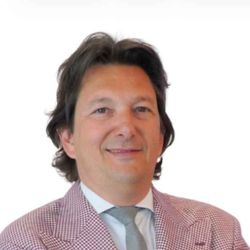
29. Wealth, wills and borders, the London barrister advising business families
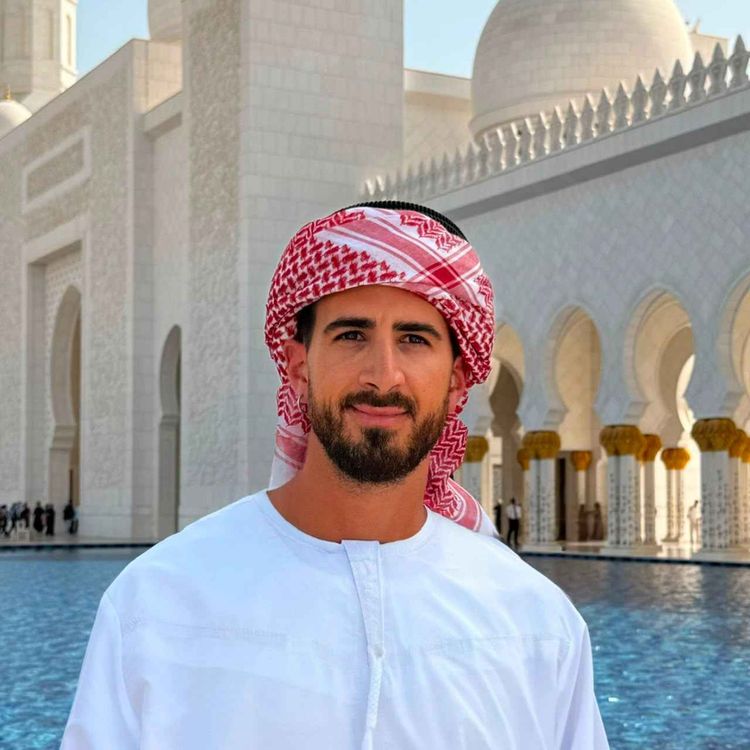
12:27||Season 1, Ep. 29In London, a barrister advises families whose money, businesses and children no longer sit in one place. None of his clients lives in a single city, and the planning has to follow them.Alessandro Belluzzo is a barrister in London and the founding partner of Belluzzo International Partners. He took the practice his father founded in Verona in 1982 to London, Singapore, Lugano and Abu Dhabi, under the motto “a family business firm for business families”. He also advises footballers, Formula One drivers and tennis players.In conversation he asks whether London’s wealthy are really leaving since the end of the non-dom regime, explains why he opened in Abu Dhabi, and describes why Italian families put off talking about succession. He also weighs up Italy’s higher flat tax for new residents and whether it still counts as a bargain.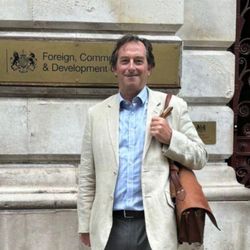
26. An ambassador’s olive groves restore the wild Maremma one tree at a time
10:24||Season 1, Ep. 26In an olive grove near the sea at Venturina, a digger driver nicknamed Michelangelo lifts boulders like a sculptor. He works for Nicholas Hopton, the former British ambassador to Yemen, Qatar, Iran and Libya, who traded some of the toughest postings on the planet for an old farmhouse in Tuscany.Hopton spent 35 years in the diplomatic service and also served at the British Embassy in Rome. He tells us why the Maremma won out over Chianti, what visitors come here for, and why negotiating with a Tuscan builder, a geometra, and the town hall matched or exceeded the challenges of Tehran or Tripoli.It is the story of a diplomat, a farmhouse, and a quiet act of restoration carried out one olive tree at a time.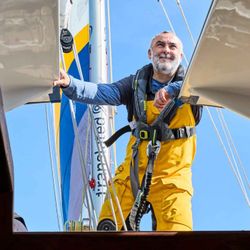
25. Marco Trombetti, the Roman who taught machines to translate with heart
11:06||Season 1, Ep. 25We speak to entrepreneur Marco Trombetti days after he was named one of Italy’s newest Cavalieri del Lavoro. He tells us how he went from studying astrophysics in France whilst chasing the origin of the universe, to building Translated with his wife Isabelle Andrieu in 1999, right when nobody else thought internet translation was worth building.What makes his story stand out is his refusal to pick sides in the AI versus human debate. While giants like Google and DeepL race to replace translators, Trombetti built something else, a system where machines learn from human corrections and get smarter every time, while people focus on the parts only they can do. It's why the company now supports 237 languages, works with over 700,000 translators worldwide, and counts Google, Airbnb and Uber among its clients.He's also convinced this could only have happened in Italy, where language barriers are felt every single day, not once you cross an ocean. This is a story about patience, naivety, and building a global business by keeping people at the centre of it.- 07:56||Season 1, Ep. 24In the lobby of Rome’s Hotel Mediterraneo, guests check in under the gaze of a second-century marble goddess. She spent over thirty years locked in a museum storeroom before anyone thought to bring her out. We meet Tracy Roberts, founder of Love Italy, who's on a mission to get Italy's hidden art off dusty shelves and into daily life through her project Arte Fuori dal Museo.The scale of the problem is wild. About 85 per cent of Italy's state-owned art sits in storage, unseen, while everyone crowds into the Colosseum and the Vatican. Tracy's solution is simple: hotels adopt a forgotten piece, pay to restore it, and display it around the clock, no ticket, no closing time. The goddess in the Mediterraneo was the first, discovered tucked in a corner of the National Roman Museum's storerooms. Tracy talks about finding her almost like meeting someone, not just uncovering an object.Ten hotels in Rome are already on board. Tracy's dream is bigger, though, with more museums, more cities, eventually banks, post offices, and maybe even hotels abroad. This is a story about art that's been waiting in the dark and one woman's case for finally letting it out.
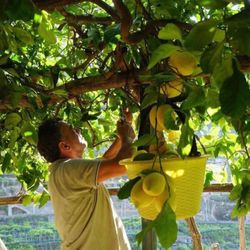
23. Lemons, cliffs and drones, the future of Amalfi’s terraces since 1825
06:02||Season 1, Ep. 23On a terrace clinging to a cliff in Amalfi’s Valle dei Mulini, Italy’s brightest lemons are still picked by hand. Italy's brightest lemons are still picked by hand, knee and back. We meet Salvatore Aceto, whose family has worked these near-vertical slopes since 1825, seven generations of a job so steep and punishing that he sometimes struggles to explain how it was ever possible, and how it still is.The prize at the top of all that climbing is the Sfusato Amalfitano, the coast's yellow gold, prized for its huge fragrant zest and its wealth of essential oils, grown organically with a few closely guarded secrets. Now Salvatore is preparing something new for the harvest. Drones. After a first demonstration just weeks ago, he believes he is ready to deploy them within the year to carry loads up and down terraces too steep for any machinery, a change he calls a revolution not only for growers but for the coast's many abandoned buildings.From spaghetti al limone and scialatielli to his wife's lemon cake and a properly served limoncello, poured cold like a white wine rather than frozen into a bomb of alcohol, this is the story of a fruit, a family and a vertical world finding a way to keep going.Climb up here once, taste the zest, and you will understand why they refuse to let go.