Share

The Ireland Podcast
124. Andrea Iadarola: Book Of Kells - Part 3
Episode 124 is the third and final episode of the 2024 series celebrating the Book of Kells that was recorded on at Trinity College, Dublin on Tues 1st October 2024. Fender is given a personal tour encompassing the Book and The Long Room, culminating in the Brian Boru Harp from Visitor Officer Andrea Iadarola.
Conversation includes: introductions; Anne-Marie Diffley (Visitor Services Manager at Trinity College); starting off from the exhibition entrance; Ogham alphabet stones; the pocket gospels; the materials used to create the Book Of Kells; how the book was made; a “tour” of some of the more important pages e.g. Four Evangelists, Chi Rho page, ; the importance of animals e.g. peacock, lion, eagle, veal, salmon, mice, cat, snake etc; the interlace and spirals representing the Christian and Celtic elements; Constantine the Great; coming face to face with the Book Of Kells; the close skirmishes; the case housing the book; the current pages on display; The Long Room; how to access the books of the library; the copy of the Proclamation of the Irish Republic from 1916; sculptures and busts; the redevelopment project; Prof. Gordon Foster who invented the International Standard Book Number (ISBN); 'From Decadence to Despair' Oscar Wilde Exhibition; Jonathan Swift; Ada Lovelace; Rosalind Franklin; Lady Gregory; Gaia by Luke Jerram; Prof. William Rowan Hamilton and quaternions; Neil Armstrong; Mary Pollard; Brian Boru’s harp; Guinness vs. The Irish Government as well as other topics.
Relevant Links
https://digitalcollections.tcd.ie/collections/ks65hc20t?locale=en
https://www.visittrinity.ie/book-of-kells-experience/
More episodes
View all episodes
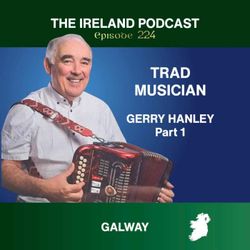
224. Gerry Hanley: Trad Musician - Part 1
51:28|In Part 1 of a two-part conversation, Galway accordion player Gerry Hanley reflects on a lifetime immersed in traditional music. He discusses the musicians who influenced him, the stories behind the tunes on his recent CD, sessions in Galway and London, and the role music has played throughout his life. The episode also captures a special moment as Gerry opens and plays a new accordion for the very first time!The episode features tracks from Gerry's CD, includingReels: The Land of Sunshine / Mulhaire's No. 9 / Laura Mulhaire'sJigs: Tommy Mulhaire's / Paddy Fahey's / The Piper's ChairSlow Air: Eanach DhinReels: Jackie Coleman's / The Bird in the Bush / Jenny's WeddingThe CD features Gerry Hanley on accordion, with Carl Hession on piano and production, Máirín Fahey on fiddle, and Eimear Coughlan on harp. Recorded by Eugene Killeen and mastered by Jack Talty.Note: At approximately 25 minutes in, Gerry opens a newly arrived accordion and plays its first notes. This section lasts about five minutes and includes some packaging and handling noise. Listeners who prefer to skip ahead can jump forward to the next music track or discussion segment.Relevant linkshttps://gerryhanleymusic.com
223. 223. Colin Murphy: How Ireland Thinks, Speaks and Remembers
01:07:26||Ep. 223What does Irish political culture reveal about how we think?Writer, journalist and playwright Colin Murphy joins The Ireland Podcast for a wide-ranging conversation on politics, culture, history and storytelling.Drawing on his new collection Colin Murphy's Political Plays: 100 Years of Irish History, Colin reflects on the relationship between political decision-making and national narratives, the influence of culture on public life, and why understanding politics requires more than understanding policy.The conversation explores Ireland's distinct political culture, the role of ambiguity in Irish literature, the impact of travel and lived experience, the responsibilities of writing about real people and events, and the tension between historical truth and dramatic storytelling.Along the way, we discuss Angola, South Africa, the financial crisis, documentary drama, David Hare, Jim Sheridan, Terence McKenna, consensus, individuality and the question of whether Irish culture encourages or resists dissent.Topics include:Irish political cultureStorytelling and national identityColin Murphy's Political PlaysThe Easter Rising and The TreatyThe Bank Guarantee and financial crisisTruth versus dramaConsensus and individualityIrish literature and ambiguityCulture, community and politicsTerence McKenna and the idea that "culture is not your friend"
222. Racist Attacks in Belfast | John Manley
24:22|John Manley, Political Correspondent with The Irish News, joins The Ireland Podcast to discuss the recent racist attacks in Belfast.We explore how the unrest developed, the role of social media, loyalism, political leadership, immigration, trust in institutions, and the wider social and political context in Northern Ireland.John also reflects on the challenges facing working-class unionist communities, the changing media landscape, and what gives him hope for the future.Recorded in Belfast on 15 June 2026.Relevant Linkshttps://www.irishnews.com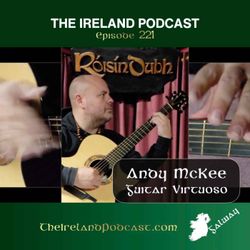
221. Andy McKee: Modern Fingerstyle Guitarist
27:35|Andy McKee is one of the world's best-known modern fingerstyle guitarists. His groundbreaking instrumental compositions and viral YouTube success helped introduce a new generation to acoustic guitar music.In this episode of The Ireland Podcast, Andy joins me in Galway to discuss his musical journey, the influence of Michael Hedges and Preston Reed, writing instrumental music, alternate tunings, fan-fret guitars and the enduring appeal of acoustic guitar.Andy also reflects on being invited to Paisley Park by Prince, the impact of YouTube on his career, his love of Irish-made guitars, and why Ireland always feels a little like coming home.Recorded in Galway during Andy's Irish tour.Topics include:Prince and Paisley ParkThe story behind DriftingModern fingerstyle guitarMichael Hedges and Preston ReedFan-fret and harp guitarsLowden and Avalon guitarsSongwriting and creativityTouring IrelandRelevant Linkshttps://andymckee.com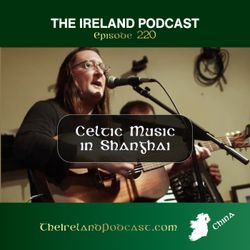
220. 220. The Tipsy Fiddler: Celtic Music in Shanghai
19:41||Ep. 220In Episode 220 of The Ireland Podcast, Fender Jackson visits The Tipsy Fiddler, a Celtic-themed pub in Shanghai owned by Scottish musician Alan Cowell.Having lived in China for two decades, Alan shares the story of how he arrived in Shanghai as a musician, why he opened The Tipsy Fiddler, and what keeps him there after all these years.The conversation explores life in modern Shanghai, the challenges of running a pub after Covid, and the surprising popularity of Irish and Scottish traditional music among Chinese musicians. Along the way, Alan discusses music sessions, cultural exchange, Scottish and Irish musical traditions, and what he misses most about home.A conversation about pubs, music, migration and the unexpected places where Celtic culture continues to thrive.Relevant Linkshttps://thesession.org/sessions/3780https://www.tripadvisor.ie/Restaurant_Review-g308272-d7362006-Reviews-Tipsy_Fiddler-Shanghai.html
219. Irish Voices In Shanghai: The Blarney Stone
12:42|A short visit to The Blarney Stone in Shanghai, meeting some of the people who find themselves in an Irish pub on a Saturday night in China.In this episode, Fender chats with Irish and international voices in Shanghai - including a Dublin toy developer, an Irish pharmaceutical worker, an English model, and a local Chinese regular.Topics include toy manufacturing in China, missing Irish conversation abroad, Shanghai life, Guinness, modelling, jazz clubs, Irish pubs overseas, and why places like The Blarney Stone matter when you are far from home.Part of the An Irishman in China mini-series.Relevant Linkhttps://www.tripadvisor.ie/Restaurant_Review-g308272-d4500480-Reviews-The_Blarney_Stone_Irish_Pub_Yong_Kang_Road-Shanghai.html
218. Fender Jackson: An Irishman in China - Shanghai
45:44|A couple of months ago I spent another week in Shanghai, one of the most fascinating cities I’ve ever visited. In this episode I revisit videos I filmed during the trip and reflect on the strange mixture of colonial history, futuristic architecture, live music, electric vehicles, museums, marriage markets and everyday life that makes Shanghai feel unlike anywhere else.Along the way:I get sketched by a street artist while recovering from gastroenteritisVisit the Shanghai Museum and a qipao exhibitionDiscover Shanghai’s marriage marketHear traditional Chinese music in the parkExplore the Bund and the French ConcessionReflect on China’s electric vehicle revolution and BYDEnd up in a Queen tribute night in an old temple-turned-music venueShanghai is one of those cities that feels like several different worlds happening at once.
217. Xishuangbanna - Southwest China After Dark
15:54|Xishuangbanna, in China’s Yunnan Province, is a tropical city near the borders of Laos and Myanmar, known for its temples, night markets and elephant tourism.This episode wanders through crowded markets filled with colour, karaoke, strange foods and the unforgettable smell of durian. There’s torrential rain, beautiful temples, incredible food, curious encounters with locals, and even some unexpected hotel entertainment.A loose, atmospheric travel diary from southwest China after dark.
216. Leaving China - Returning After Four Years
27:07|After living in China for eight years, Fender Jackson returns to Kunming for the first time since leaving during COVID.This episode is part travelogue, part memoir and part reflection on ordinary life in modern China.Topics include:housing complexes and skyscrapersoutdoor gymsChinese parks and public lifestreet food and night marketseBikes and urban designrobots and modern technologyteaching in Chinareturning to an old schoollife after COVIDcultural differences between China and the WestAlong the way, Fender reflects on memory, identity, creativity and the strange feeling of returning to a place that once felt like home.The episode closes with former students in China performing The Ecstasy of Gold by Ennio Morricone.New episodes from Xishuangbanna and Shanghai coming soon.