Share
The Impact Equation
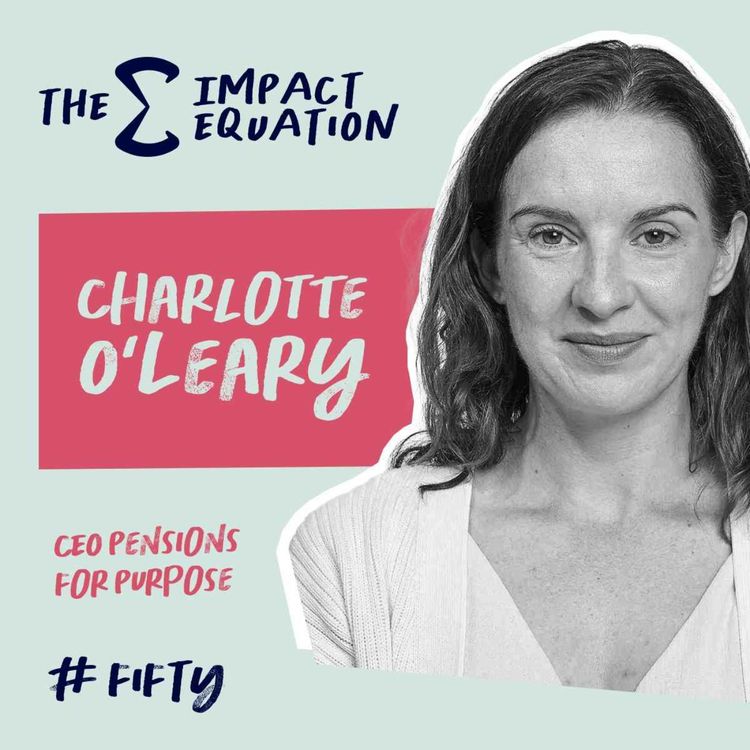
Charlotte O'Leary, CEO, Pensions for Purpose
Season 1, Ep. 50
•
In this conversation, Rafi sits down with Charlotte O’Leary, CEO of Pensions for Purpose; the collaborative network helping pension funds become a real force for good.
Charlotte’s vision is bold: a world where pensions drive a fairer, more sustainable economy. In this episode, she unpacks how psychology, governance and finance intersect - from fiduciary duty and systemic incentives to the need for new narratives around value, care and human motivation. Their conversation explores how we can shift from being consumers to citizens, and why aligning money with meaning might just be the key to fixing capitalism.
More episodes
View all episodes
103. Remi Sobomehin: From Oregon to Stanford & Palo Alto
39:26||Season 1, Ep. 103Remi Sobomehin is the founder and CEO of Ambition Angels, a Palo Alto based non-profit that delivers career exposure and skill building to teenagers through an app and pays them to use it. Only about 11 % of teens go to after school programming, while more than 95 % own a smartphone and spend roughly eight hours a day on it. Rather than compete with the phone, Remi and his team have built his programme inside it. Remi grew up in Portland, Oregon. With his childhood friend, Demetrius Sanders, he set his sights on Stanford and got there eight years later. After graduating, he went to Palo Alto to lead after-school programmes at the boys and girls clubs and kept hitting the same wall. He couldn't get teens to walk through the door. Demetrius, meanwhile, had joined Facebook's team building product for teens, and could see exactly what was reaching them at scale. This is the next episode in our series with our friends with US-based Fast Forward, empowering people to build technology for humanity.102. Education Financing Roundtable
41:16||Season 1, Ep. 102How do we solve a $97 billion global education funding shortfall when investments take decades to yield returns? In this episode of The Impact Equation, host Rafi Addlestone is joined by Karthik Krishnan (CEO of IFFEd), Hinah Mian (Jacobs Foundation), and Martina Gaus (UBS Optimus Foundation) to explore the innovative financial and pedagogical strategies needed to secure the future of global education. The guests dissect the structural barriers that often cause education to lose out to other sectors, showcase how a new guarantee model is turning every dollar invested into seven dollars of concessional financing, and discuss the critical need for evidence-based teaching that meets students at their specific competency levels. This conversation offers a masterclass on overcoming institutional hurdles to ensure that when it comes to philanthropic partnership, the sum is truly greater than its parts.
101. Phil Bentley: CEO of Mitie, providing critical infrastructure
33:59||Season 1, Ep. 101We’re joined by Phil Bentley, CEO of Mitie. A seasoned leader with a deep history of transformation at global companies - including Centrica, Cable & Wireless, and BP - Phil has redefined Mitie from a traditional facilities management firm into a critical partner to the fabric of our society and our national infrastructure, ensuring schools, hospitals, and airports remain operational every day. Phil’s leadership is defined by a relentless commitment to purpose-led growth and a clear-eyed approach to building a more sustainable future
100. Paul Ronalds: Can Venture Capital Save Lives?
28:50||Season 1, Ep. 100For the 100th episode of The Impact Equation, we’re joined by Paul Ronalds, CEO of Save the Children Global Ventures, to explore how venture capital, technology and innovative finance can scale solutions for children around the world. The episode closes our special series profiling three of its investments: Amparo, fitting prosthetic limbs in a single visit; PrimaKu, reaching 3 million+ parents across Indonesia; and reach52, bringing healthcare and medicines to underserved communities.We finish where we started the series: How do you find, fund and scale ideas that can change millions of lives?99. Circularity Roundtable
46:25||Season 1, Ep. 99In this episode, we sit down with Sam Staincliffe (Uplift360), Nicolas Brien (Wastetide), and Elisabeth Bröring (MWT GmbH & Co. KG) for a deep dive into the practical realities of the circular economy. While they approach the challenge from different angles—using AI, processing technology, and downstream applications—our guests share a singular mission: shifting the perception of "waste" into the reality of valuable secondary materials.98.98. 98up
19:35||Season 1, Ep. 98.98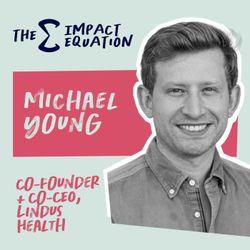
98. Michael Young: AI Drug Discovery & Clinical Trials
38:03||Season 1, Ep. 98Michael Young is co-founder and co-CEO of Lindus Health, an AI-native contract research organisation that runs clinical trials end-to-end and has begun licensing therapeutics to take through trials itself. A former special adviser in the Home Office and 10 Downing Street, where he worked on the UK Life Sciences Strategy, Michael joined Adam and Rafi to explain why running trials, not discovering drugs, has become the biggest bottleneck in medicine. He unpicks the incentives that keep contract research slow and expensive, reflects on Kate Bingham and the Vaccine Taskforce, describes how Lindus can now run five drug programmes for the cost of one a decade ago, and looks ahead to a wave of AI-discovered drug candidates the current system cannot absorb. He closes with a practical ask of every listener: sign up for a clinical trial.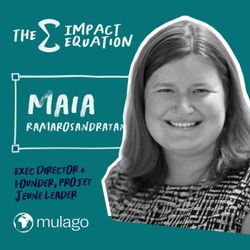
97. Maia Ramarosandratana: Scaling sex education in Madagascar
31:06||Season 1, Ep. 97Maia Ramarosandratana is the Founder of Projet Jeune Leader, an organisation she launched in 2013 and has since built into one of the most ambitious efforts to drive to deliver comprehensive sex education through public schools in Madagascar. Maia has led PJL from an early initiative to a scale model now serving more than 50,000 students each year. Maia has scaled while insisting on programme quality, investing in rigorous monitoring and evaluation, building partnerships with government, including the Ministry of Education, and expanding both budget and reach tenfold. Shantanu is a Mulago Fellow and this interview is the third in a series of three episodes with our friends at the Mulago Foundation https://www.mulagofoundation.org.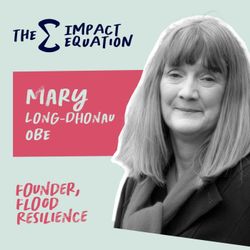
96. Mary Long-Dhonau OBE: Flood Mary (keep on advocatin')
36:44||Season 1, Ep. 96Mary Long-Dhonau OBE has spent more than 25 years helping people prepare for one of the UK's fastest-growing climate risks. Known across the country as Flood Mary, she became an advocate after her own family home flooded repeatedly with contaminated sewage. Faced with little practical support and caring for a young son with severe autism, she turned that experience into a mission to help others recover more quickly and prepare more effectively. In this episode of The Impact Equation, Mary explains why flooding is no longer something that only affects communities beside rivers. As our climate changes, surface water flooding is becoming an increasing threat, and she argues that homeowners, businesses and policymakers all need to rethink what resilience looks like.