Share
The Howie Severino Podcast
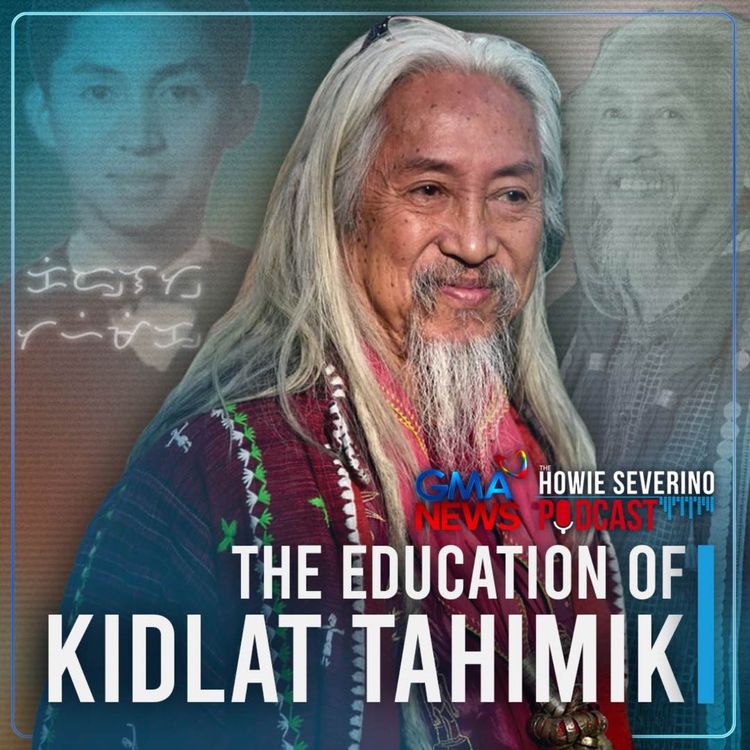
The Education of Kidlat Tahimik
When acclaimed filmmaker Kidlat Tahimik recently returned his National Artist medallion, it was a rare and striking act of protest. He was lamenting the Commission on Higher Education's (CHED) proposed policy to cut college general education requirements from 36 units to 18–21, which critics fear could weaken the humanities, history, ethics, and arts. CHED said the plan aims to streamline these fields rather than remove them and that the proposal remains under review.
In a recent conversation, journalist Howie Severino sat down with the artist in his home garden to discuss this unprecedented move. Their discussion turned to Tahimik's own eclectic education.
Long before his pivot to art and his self-described identity as a "culture warrior," his path was remarkably diverse:
The Accidental Leader: How he "accidentally" became the UP Student Council Chairperson while majoring in speech and drama.
The Corporate Ivy: How he went on to earn an MBA from Wharton, one of the world’s leading business schools.
The Global Economist: How he cut his teeth working as an economist in Paris, where he also engaged with its vibrant arts scene.
Looking back, the filmmaker explains how this unconventional journey provided him with both a practical understanding of the globalized world and the critical, creative tools needed to challenge it.
---
For more information on CHED’s proposal: CHED delays reduction of college GE units
More episodes
View all episodes
Can animation help us remember a massacre?
59:03|“‘Yun ang power ng animation. It gave life to the voiceless. Nabigyan namin sila ng itsura… ng boses ulit.” Director Carl Joseph Papa joins Howie Severino from the Busan International Film Festival in South Korea, where his groundbreaking animated documentary "58th" premiered. The film follows Reynafe Momay in her relentless search for closure for her father, photojournalist Reynaldo Momay — the officially missing 58th victim of the 2009 Maguindanao Massacre. A trained software engineer, Papa talks about his uncommon filmmaking journey and the deeply emotional toll of immersing himself in archives about the massacre. In this discussion, he explores how animation serves as a vital, empathetic medium to preserve a painful chapter of history and engage younger generations who may not have lived through it.
Barangay Elections postponed again; how will the Supreme Court Rule?
45:07|“Ipapabarangay kita.”The common neighborhood warning highlights the real authority at the most grassroots level of government. Barangays are not just community hubs; it is said their officials serve as vital foot soldiers in the political machinery of higher leaders.In this episode, analyst and professor Edmund Tayao talks to Howie Severino about how the postponement yet again of barangay elections may be connected to the high-stakes national elections.
From Bullets to Ballots — Unpacking the BARMM parliamentary elections
41:00|“Napatunayan po nila na war, guns, is not the only option of attaining peace and development in our communities.” As the Bangsamoro Autonomous Region in Muslim Mindanao (BARMM) concludes its historic first parliamentary elections, the region marks a monumental shift from decades of armed conflict to an experiment in democratic self-determination. In this episode, Mindanao State University (Marawi) political science professor Dr. Zainal Kulidtod discusses with Howie Severino how this political project aims to regulate dynasties, dismantle private armies, and deliver good governance for lasting peace. Dr. Kulidtod also talks about his personal experience of growing up in a conflict zone before becoming a leading scholar of the peace process.
On remote work — Can the Philippines export talent without exporting people?
50:00|Being a virtual assistant (VA) is now the dream job for most Filipinos, according to a new Remitly study. As one of the growing professions in the remote work sector, VA work has given Filipinos greater access to international job opportunities.Across the Philippines, a growing workforce of remote professionals is serving overseas clients from laid-back hubs like Bohol and El Nido. But behind the flexibility lies a tough reality: social isolation, job insecurity, and zero employee benefits.In this episode, Howie Severino talks to Maria Sucgang, a millennial CEO pioneering a model that networks freelancers to provide the safety nets that foreign employers don’t give. They discuss the potential to keep talent in the provinces, reducing the need for foreign migration, and whether AI threatens the future of remote work.
Ethan Hernandez brings environmental science to the masses
44:26|"Nakagaganda ng buhay ang may alam." Viral content creator, University of the Philippines Los Baños professor, and forester Ethan Hernandez shares his journey from overcoming poverty, including sleeping in an abandoned train station, to becoming a leading voice for environmental literacy.Ethan tells Howie Severino how he developed his distinct animated style of storytelling, including incorporating the scientific names of trees in familiar songs.With over 1.3 million followers, he goes beyond science education to shape public opinion on critical environmental issues such as mining, deforestation, and Pax Silica.He talks about training the next generation of science content creators as a vital strategy to combat the plague of online disinformation.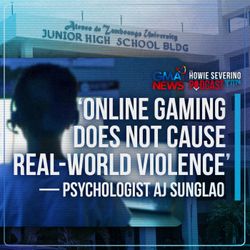
‘Online gaming does not cause real-world violence’ — Psychologist AJ Sunglao | The Howie Severino Podcast
38:40|TRIGGER WARNING: This episode contains discussions of sensitive topics that may be harmful or disturbing to some. Audience discretion is advised.Recent school shootings in Tacloban and Zamboanga — occurring just two months apart — have sparked national soul-searching and heavy speculation over what drives teenagers to commit deadly acts. While popular video games are often blamed, psychologist and crisis response specialist AJ Sunglao urges investigators to look instead at extremist online networks where vulnerable youth are radicalized to inflict harm.Sunglao emphasizes that while these toxic online communities exist globally, school shootings occur primarily in countries with widespread firearm availability, especially the United States which leads the world by far in mass shootings. In both Tacloban and Zamboanga, the teenage shooters accessed unsecured weapons owned by family members or acquaintances.Declaring that student-led shootings have "wrecked our sense of normalcy" (“nawarak ang normalcy"), Sunglao stresses the urgent need for school administrators and teachers to build a "new normal." This requires creating safe, supportive learning environments, even in unaffected schools where student anxiety remains high. Furthermore, he cautions against placing blame on youths, urging adults to take greater responsibility for protecting and guiding minors.Compounding this collective trauma, Sunglao warns, is the viral circulation of crime scene footage by content creators unbound by rules or ethics guidelines. He urges platforms and creators to remove these videos to allow communities to properly heal.
Is Green Technology Really Green?
54:00|Erratic oil prices and Middle East conflicts are accelerating the global shift toward solar power, a technology widely celebrated as planet-friendly. But the surge in electric vehicles and solar panels conceals a critical trade-off: scaling these technologies carries its own heavy environmental footprint. In an interview with Howie Severino, environmental scientist and geologist Dr. Rene Claveria examines the hidden costs of the green transition. He explains that the batteries needed to store solar energy relies on nickel — a mineral abundant in the Philippines — whose extraction strips fertile topsoil, destroys local vegetation, and threatens clean water supplies. Dr. Claveria also critiques the Philippine government's endorsement of Pax Silica, a global industrial initiative whose water-intensive manufacturing processes risk depleting community water reserves. Offsetting these concerns, he highlights his latest research on an ecological solution called phytoremediation — using specialized plants to absorb and neutralize toxic metals left in the wake of mining operations.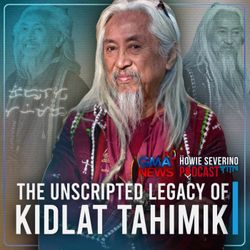
The Unscripted Legacy of Kidlat Tahimik
49:08|“When I make a film, it's like a mosaic glass window. It's not planned, it's not distilled like those Hollywood scripts are.” In Part 2 of his conversation with Howie Severino, National Artist for Film Kidlat Tahimik reflects on his extraordinary transformation from Wharton-educated economist to pioneer of independent Philippine cinema. Following a decision to leave his office life in Paris, Kidlat’s unconventional path led him to work as a jeepney-driving vendor at the 1972 Munich Olympics, live in an artist commune, and get discovered by famed German director Werner Herzog. This chance encounter sparked the creation of his masterpiece, Mababangong Bangungot (Perfumed Nightmare). Throughout his iconoclastic career, Kidlat has proudly worn the traditional bahag (loincloth), even at formal ceremonies. In this episode, he shares the philosophy behind this act, presenting an oral retrospective of an artist who continues to rewrite the rules of filmmaking.