Share
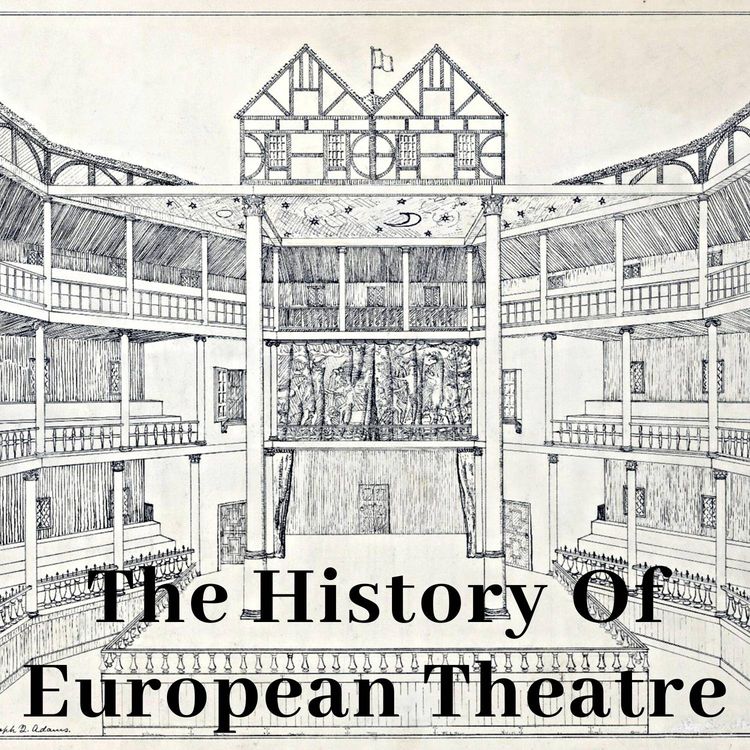
The History Of European Theatre
Consent and Other Big Questions in ‘Measure for Measure’: A Conversation with Roberta Barker
Episode 207:
It was just about this time last year I talked to Roberta Barker about her work on the boy actors of the Elizabethan period and she mentioned at the time that she was then working on a new edition of ‘Measure for Measure’ for Cambridge University Press and I’m pleased to say that she agreed to carve some time out of her busy schedule to discuss the play with us today. Having been immersed in the play for a long time there is no one better placed at the moment than Roberta to discuss the play so I was particularly pleased when she agreed to come back onto the podcast at this point.
Roberta Barker is a member of the Joint Faculty of King’s College, London, where she is Professor of Theatre teaching in the Foundation Year and Early Modern Studies programs, and Dalhousie University, Halifax Nova Scotia, where she teaches Theatre in the Fountain School of Performing Arts. Her research interests centre upon the relationship between performance and the social construction of identity and has explored such topics as the representation of gender and class in early modern tragedy, the early modern careers and modern afterlives of Shakespeare’s boy players, and the role played by the performance of illness on the nineteenth-century stage in the evolution of realist style. She is also a theatre and opera director.
Support the podcast at:
www.thehistoryofeuropeantheatre.com
More episodes
View all episodes

112. Shakespeare and Biblical Allusion: A Conversation with Paul Fried - Part 2
56:50||Season 6, Ep. 112Episode 225:Last time my guest Paul Fried and I discussed Biblical Allusion in Shakespeare with particular reference to Hamlet. This is the second part of our conversation, so please do make sure you have listened to part one before continuing here, things will make a lot more sense if you do. I first came across Paul’s Blog, Hamlet’s Bible, when I was researching my episodes on King Lear and I was very pleased to find that not only was it useful for those episodes but was a series of very interesting posts relating to Biblical allusion in Shakespeare, so, of course, I asked Paul, if he would like to come onto the podcast to share some of his insights into this subject. Paul is a retired college lecturer who has devoted years of study to Shakespeare and the bible and his blog, now in it’s tenth year, has become his way of sharing his research prior to what he hopes will be a published volume on Biblical allusion in Hamlet. He has also contributed several papers to Shakespeare conferences, most recently at the Shakespeare Association of America conference held in Denver in April 2026.I spoke to Paul from his home in Minnesota over a zoom call.Link to Paul’s blog ‘Hamlet’s Bible’: https://pauladrianfried.blogspot.com/Link to ‘Hamlet’s Bible’ on Instagram: https://www.instagram.com/hamletsbible/Link to Paul’s account on ‘X’: https://x.com/padrianfriedSupport the podcast at:www.thehistoryofeuropeantheatre.comwww.patreon.com/thoetpwww.ko-fi.com/thoetpYou can find an advertisement free version of the latest podcast episodes by joining on Patreon at the lowest paid tier level – that’s for just £1 per month.111. Shakespeare and Biblical Allusion: A Conversation with Paul Fried - Part 1
53:03||Season 6, Ep. 111Episode 224: While I was looking into some details while I was preparing for the episodes on King Lear I came across an article that was part of a blog called ‘Hamlet’s Bible’, which is written by Paul Fried and was very pleased to find a series of very interesting posts relating to Biblical allusion in Shakespeare, so, of course, I asked the author of the blog, Paul Fried, if he would like to come onto the podcast to share some of his insights into this subject. Paul is a retired college lecturer who has devoted years of study to Shakespeare and the bible and his blog, now in it’s tenth year, has become his way of sharing his research prior to what he hopes will be a published volume on Biblical allusion in Hamlet. He has also contributed several papers to Shakespeare conferences, most recently at the Shakespeare Association of America conference held in Denver in April 2026.I spoke to Paul from his home in Minnesota over a zoom call.Link to Paul’s blog ‘Hamlet’s Bible’: https://pauladrianfried.blogspot.com/Link to ‘Hamlet’s Bible’ on Instagram: https://www.instagram.com/hamletsbible/Link to Paul’s account on ‘X’: https://x.com/padrianfriedSupport the podcast at:www.thehistoryofeuropeantheatre.comwww.patreon.com/thoetpwww.ko-fi.com/thoetpYou can find an advertisement free version of the latest podcast episodes by joining on Patreon at the lowest paid tier level – that’s for just £1 per month.110. Macbeth Part 2: 'What’s Done Cannot Be Undone’
35:07||Season 6, Ep. 110Episode 223: Last time, in the first part of my look at ‘Macbeth’, I took you through the plot of the play and discussed the themes of ambition and guilt in it, with a focus on the character of Macbeth himself. I also looked at some of the language in the play and at the possibility that Thomas Middleton updated it for a revival in the 1610s or 1620s, and how he probably developed the scenes with the three witches at a time when devil plays and ideas about witches in the real world were very popular. This is the text that we most likely have in the First Folio, which is the first printed version of the play. Please do listen to that episode first before embarking on this one. Having spent some time on the character of Macbeth in the last episode I’m now going to pick up with a look at his wife. The character and actions of Lady MacbethReferences to equivocation in the playThe trial of Henry Garnet and the use of equivocationThe witches and the Macbeths as equivocatorsThe impact of the Porter’s speechThe Porter’s scene as a throwback to medieval cycle plays‘On The Knocking at the Gate in Macbeth’ by Thomas De QuinceyThe critical history of the playThe later performance history of the playThe curse of ‘the Scottish play’‘Macbeth’ as a very Jacobean play Support the podcast at:www.thehistoryofeuropeantheatre.comwww.patreon.com/thoetpwww.ko-fi.com/thoetpYou can find an advertisement free version of the latest podcast episodes by joining on Patreon at the lowest paid tier level – that’s for just £1 per month.109. Macbeth Part 1: ‘Look Like the Innocent Flower, But Be the Serpent Under’t’
35:13||Season 6, Ep. 109Episode 222:We can’t say for sure that ‘Macbeth’ was Shakespeare's next offering after 'Anthony and Cleopatra' as precise dating of these early 17th century plays is next to impossible, but whatever the case, it certainly has a very different feel and focus from it’s near contemporises. Although recounting historical events it is dominated by the presence and effect of the supernatural. This proved a mix that audiences have flocked to ever since and it remains one of Shakespeare’s most performed plays, for tragedy ranking only behind ‘Hamlet’.The dating of the playThe text in the First Folio and adaptations by Thomas MiddletonThe sources for the playA brief Synopsis of the playMacbeth and Julius CaesarMacbeth’s ambitionThe importance of the soliloquy in the playMacbeth’s feelings of guiltThe reports of the play by Simon ForemanBanquo’s ghost as a manifestation of Macbeth’s guiltBlood as a symbol of guiltThe torment of sleeplessnessThe tensions between destiny and free willThe three witchesLink to ‘That Shakespeare Life’ episode featuring Prof. Laurie Johnson on the ‘weird sisters’:https://podcasts.apple.com/gb/podcast/that-shakespeare-life/id1372846116?i=1000751203466Support the podcast at:www.thehistoryofeuropeantheatre.comwww.patreon.com/thoetpwww.ko-fi.com/thoetpYou can find an advertisement free version of the latest podcast episodes by joining on Patreon at the lowest paid tier level – that’s for just £1 per month.108. Anthony and Cleopatra: ‘Age Cannot Wither Her, Nor Custom Stale Her Infinite Variety’
35:09||Season 6, Ep. 108Episode 221:Last time I took you into the world of the court masque with the help of Kristen Macdermott who, I think you will agree, painted a very detailed picture of that very particular theatrical form and the way the Stuart court embraced it. As we heard, masques were often written by playwrights and performed by actors who also wrote for and performed in the public playhouse, so it’s no surprise that a few plays feature masques. We have already encountered short masques in ‘Much Ado About Nothing’ and ‘Timon of Athens’, with the best known example from ‘The Tempest’ still to come and Shakespeare’s next offering ‘Anthony and Cleopatra’ would, you might think, have been another opportunity to include a masque featuring exotic characters to add to the glamorous setting. In fact, Shakespeare chose not to include a masque specifically, but we can see that he uses the attributes of the masque throughout the play.Masque elements used in ‘Antony and Cleopatra’The dating of the playThe early print history of the playThe sources for the playThe different style of the play from it’s near neighboursA brief synopsis of the playHow the main characters and the political story and love story are balanced in the playThe hyperbolic language used in the playThe character of AntonyEquals and opposites in the play and how Antony deals with themThe character of OctaviusThe character of CleopatraThe death of CleopatraAntony and Cleopatra as a Stuart period playA short word on the history of criticism of the playThe later performance history of the play Support the podcast at:www.thehistoryofeuropeantheatre.comwww.patreon.com/thoetpwww.ko-fi.com/thoetpYou can find an advertisement free version of the latest podcast episodes by joining on Patreon at the lowest paid tier level – that’s for just £1 per month.107. Masques of Difference: A Conversation with Kristen McDermott part 2
46:22||Season 6, Ep. 107Episode 220: This is the second part of my conversation with Kristen McDermott about the court masque. In this part we discuss two masques and the later history of the art form.Kristen McDermott is professor of English at Central Michigan University and co-author with Ari Berk of ‘William Shakespeare his life and times’ and the collection ‘Masques of Difference’, as well as numerous papers on Shakespeare and renaissance theatre. I have put a link in the show notes to Kristen’s website where you can find further details of her work. Kris is also a listener and supporter of the podcast, so I was particularly happy to welcome her as a contributor on the microphone as well. I spoke to Kris over a zoom call from her home in Michigan. Find more about Kris at: https://kristen-mcdermott.comLinks to ‘Masques of Difference’https://www.amazon.co.uk/Masques-Difference-Revels-Student-Editions/dp/071905754X/ref=sr_1_1?https://www.amazon.com/Masques-Difference-masques-Student-Editions/dp/071905754X/ref=sr_1_1?https://manchesteruniversitypress.co.uk/9780719057540/ Links to Greer Gilman books: https://smallbeerpress.com/books/2014/09/23/exit-pursued-by-a-bear/Support the podcast at:www.thehistoryofeuropeantheatre.comwww.patreon.com/thoetpwww.ko-fi.com/thoetpYou can find an advertisement free version of the latest podcast episodes by joining on Patreon at the lowest paid tier level – that’s for just £1 per month.106. The Origins and Development of Masques: A Conversation with Kristen McDermott part 1
28:43||Season 6, Ep. 106Episode 219:In this episode I take a look at the court masques of the Jacobean period. To do this I’m very lucky to have the guidance of Kristen McDermott who edited and wrote an extensive introduction to a collection of Jonson’s Masques called Masques of Difference. It is a volume that has been in print for an impressive twenty years and one that I found immensely useful in aiding my understanding of the court masque, an art form that can seem very obscure to us now. In the first part of the conversation Kristen describes the development of the masque from it’s very early days through to its flowering in the court of James 1st largely under the care of Ben Jonson and Inigo Jones. Next time Kris and I continue the conversation and discuss some of those ‘masques of difference’ and the later years of the court masque.Kristen McDermott is professor of English at Central Michigan University and co-author with Ari Berk of ‘William Shakespeare His Life and Times’ and the collection ‘Masques of Difference’, as well as numerous papers on Shakespeare and renaissance theatre. Find more about Kris at: https://kristen-mcdermott.comLinks to ‘Masques of Difference’https://www.amazon.co.uk/Masques-Difference-Revels-Student-Editions/dp/071905754X/ref=sr_1_1?https://www.amazon.com/Masques-Difference-masques-Student-Editions/dp/071905754X/ref=sr_1_1?https://manchesteruniversitypress.co.uk/9780719057540/Support the podcast at:www.thehistoryofeuropeantheatre.comwww.patreon.com/thoetpwww.ko-fi.com/thoetpYou can find an advertisement free version of the latest podcast episodes by joining on Patreon at the lowest paid tier level – that’s for just £1 per month.105. King Lear Part 2: ‘Thou shouldst not have been old till thou hadst been wise’
34:23||Season 6, Ep. 105Episode 218:Last time I looked at the first part of ‘King Lear’ from the opening scene where Lear makes his disastrous decision to split his kingdom between his children, through to the renowned scene where the ex-king and his fool are caught in a raging storm on the moor and saved only by the loyalty of Kent. On the way I looked at the deliciously evil Edmund, the poor judgement of his father Gloucester, and the scheming of Lear’s oldest daughter Goneril. Now I will complete this look at the play and discuss it’s place as a very Jacobean play addressing the concerns of its time when King James was working hard at an attempt to unite his disparate kingdom. The role, character and purpose of the FoolThe mock trial sceneThe blinding of GloucesterThe character and cruelty of ReganEdgar and Gloucester on the cliffs at DoverHope before tragedy as Lear and Cordelia are reunitedA family dispute as the heart of the playWhy Lear resonates so strongly with audiencesThe sense of ‘no place’ in the playKing Lear as a message for King James The significance of the non-Christian setting of the playThe play as a tragedy and a history playA brief view of the later critical and performance history of the playA small selection of ‘King Lear’ on filmSupport the podcast at:www.thehistoryofeuropeantheatre.comwww.patreon.com/thoetpwww.ko-fi.com/thoetpYou can find an advertisement free version of the latest podcast episodes by joining on Patreon at the lowest paid tier level – that’s for just £1 per month.104. King Lear Part 1: ‘How Sharper Than a Serpent's Tooth it is to Have a Thankless Child!’
33:41||Season 6, Ep. 104Episode 217:‘King Lear’, the play that is now often regarded as Shakespeare’s finest and deepest work is most often compared to the other two great tragedies of this period in Shakespeare’s writing, ‘Hamlet’ and ‘Othello’, and of course there are thematic comparisons that can be made with those plays, but it has to be pointed out that ‘King Lear’ is also a very different play in tone and structure. Whether we rate ‘King Lear’ as Shakespeare’s best play or not it is a play that has deeply affected audiences and critics through the centuries and I can only imagine the mark it leaves on actors who take on the main roles. Sadly, what we lack is much detail about initial reactions to the play.The early performance and publishing history of the playThe influences and sources for the playThe opening scene of the play and the abandonment of the natural orderThe questions of judgement and miscommunication in the playThe character of GonerilEdmund as one of Shakespeare’s truly evil charactersKent as the voice of reason and loyaltyLear and the Fool in the stormLear’s moral awakeningSupport the podcast at:www.thehistoryofeuropeantheatre.comwww.patreon.com/thoetpwww.ko-fi.com/thoetpYou can find an advertisement free version of the latest podcast episodes by joining on Patreon at the lowest paid tier level – that’s for just £1 per month.