Share
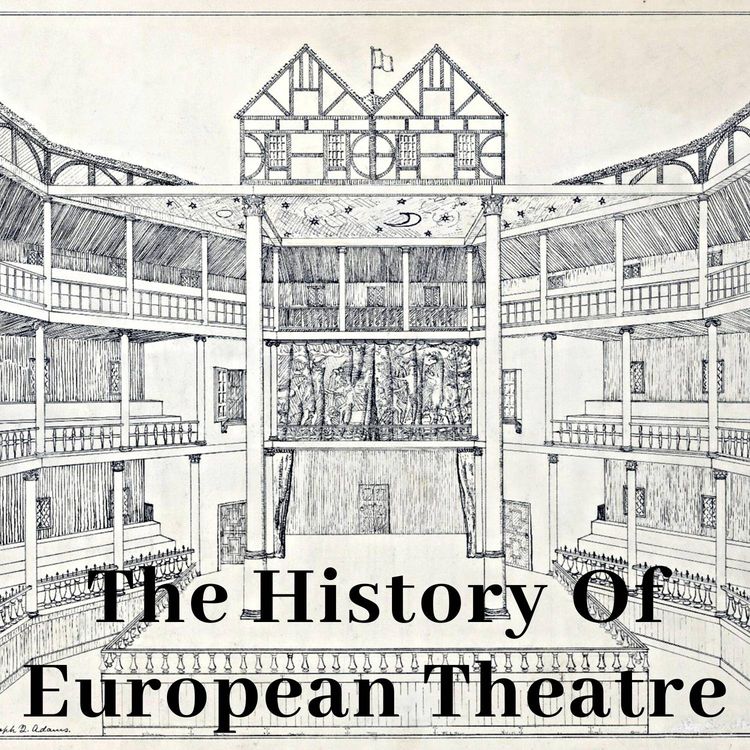
The History Of European Theatre
Who is King Henry?: A Conversation with Ricky Dukes
Episode 187:
This episode is both an ending and a beginning. An ending because it is the last of the recent run of consecutive guest episodes – next time we will be returning to Shakespeare, Jonson and their plays – but it is also the first of what I hope will be a series of guest episodes attached to each of the very significant Shakespeare plays that are coming up soon. With the very well-known and arguably greatest of Shakespeare’s plays the task of providing some meaningful commentary is, I have found, very daunting, so I thought it would be a good idea to have another view on these plays to bring another perspective to them besides my own. I am also keen for those views to be born from the practical experience of producing the plays and understanding them from an actor’s perspective and therefore as a result of close exploration of the text.
Ricky Dukes is an award-winning Director, Practitioner and Teacher based in the West Midlands and London. In 2007 he founded Lazarus Theatre Company and is the company’s current Artistic Director for which he won Best Artistic Director in the 2012 Fringe Report Awards. His work is ensemble led with actor detail at its heart creating large scale visual, visceral, and vibrant theatrical experiences. Ricky has gone on to direct over 40 productions for Lazarus Theatre Company including: The Changeling, Hamlet, Doctor Faustus, Oscar Wilde’s Salomé, Macbeth, Marlowe’s Edward II, The Caucasian Chalk Circle, Tis Pity She’s A Whore, and Dido, Queen of Carthage. Ricky also runs workshops for actors under the ‘Lazarus Gym’ banner, and I have put links in the show notes to his activities so you can follow that up further if you wish.
The photos used on social media posts for this episode are from the 2015 production of 'Henry V' with Colette O'Rourke as the king at the Union Theatre. Photo credit: Adam Trigg.
Check out Lazarus Theatre here: https://www.lazarustheatrecompany.co.uk
Support the podcast at:
More episodes
View all episodes

1. Prologue and Pre History
25:26||Season 1, Ep. 1Episode 1An Introduction to the podcast and your host.Pre-history and how the urge to mimic and present might have been the start of theatre.Religious ritual and Shamanism.The Abydos Passion play and the Egyptian Book of the Dead.The beginning of Greek Theatre.A note on dates and the nature of translations.This podcast uses the following third-party services for analysis: Chartable - https://chartable.com/privacy1. Trailer
03:52||Ep. 1An introduction to The History Of European Theatre PodcastThis podcast uses the following third-party services for analysis: Chartable - https://chartable.com/privacy2. Dionysus and the beginning of Greek Theatre
26:53||Season 1, Ep. 2Episode 2An overview of the history of Greece to the 5th Century BCE including Minoan and Mycenaean periods, the Greek dark age and the rise of the city state.The development of the religious festivals and their main featuresAn overview of the main playwrights and their plays:AeschylusSophoclesEuripidesAristophanesMenanderThis podcast uses the following third-party services for analysis: Chartable - https://chartable.com/privacy3. The Place Of Seeing
31:49||Season 1, Ep. 3Episode 3The vocabulary of the theatre we inherit from the GreeksThe layout of the Theatre of Dionysus in Athens and it's main featuresDevelopments in the theatre over timeThe ChorusStage MachineryMasks and costumeThe judging and prizesThis podcast uses the following third-party services for analysis: Chartable - https://chartable.com/privacy4. Aeschylus: The First Tragedies
27:38||Season 1, Ep. 4Episode 4The situation of Athens at the time of the first extant tragedies.The very earliest dramatists and the little we know of themThe life of Aeschylus including his service in the Persian WarsHis earliest surviving play 'The Persians'This podcast uses the following third-party services for analysis: Chartable - https://chartable.com/privacy5. The Oresteia part 1
28:21||Season 1, Ep. 5Episode 5A detailed review of Agamemnon, the first part of The Oresteia trilogy by AeschylusThis podcast uses the following third-party services for analysis: Chartable - https://chartable.com/privacy6. The Oresteia part 2
21:55||Season 1, Ep. 6Episode 6A detailed review of The Libation Bearers and Eumenides, the second and third part of The Oresteia trilogy by AeschylusThis podcast uses the following third-party services for analysis: Chartable - https://chartable.com/privacy7. Sophocles: That Charming Man
30:44||Season 1, Ep. 7Episode 7The life of Sophocles almost spanned the 5th Century BCE and included events from the defeat of the Persian invasion to the relentless grind of the Peloponnesian wars. We look at his life and times and get an overview of the surviving plays and theatrical innovations the he created.This podcast uses the following third-party services for analysis: Chartable - https://chartable.com/privacy8. Antigone: Nomos Vs Physis
27:47||Season 1, Ep. 8Episode 8A detailed look at the first of the Theban plays by Sophocles. Greek drama gets personal as the end of a great family drama is acted out, but it's also a political debate as Sophocles questions what happens when man made law bumps up against natural law.This podcast uses the following third-party services for analysis: Chartable - https://chartable.com/privacy