Share
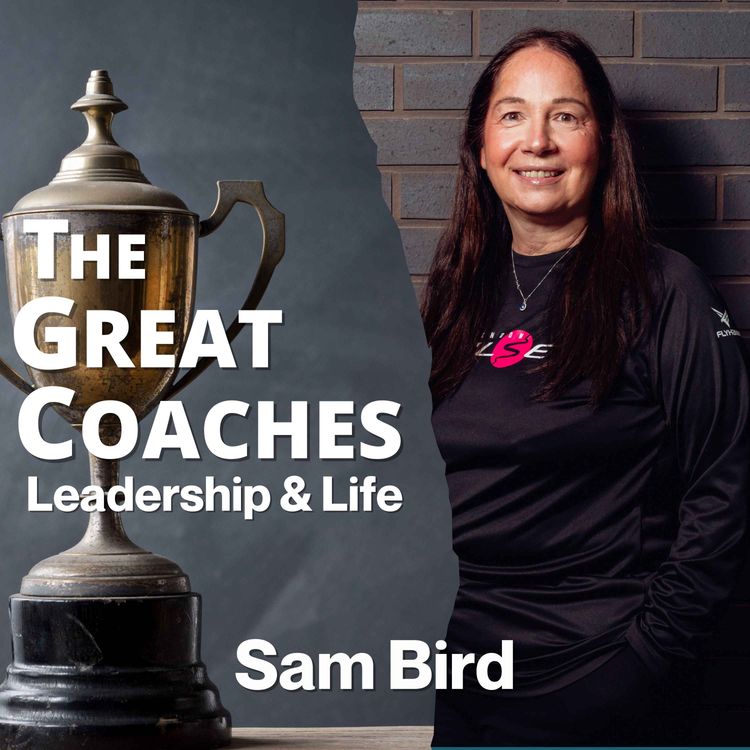
The Great Coaches: Leadership & Life
Leading with Integrity: Sam Bird's Coaching Philosophy
Sam Bird on Building London Pulse Through Service, Values, and World-Class Standards
We believe that there is no algorithm for leadership. So we ask the world's great coaches how they do it.
Sam Bird shares how seven knee operations ended her England netball playing career early, pushing her into a legal career with the Met Police that shaped her leadership through service, listening, and navigating high-stakes international negotiations—often as the only woman in the room. She explains how she rebuilt London Pulse from a last-place finish by recruiting “people before players,” prioritizing kindness, humility, hard work, loyalty, and a club-first mindset, while creating a supportive environment where athletes feel valued and can handle tough conversations. Taking on CEO duties in 2020, she learned to surround herself with trusted, capable people and grow the organization like a startup. Bird describes Lisa Alexander’s impact in raising standards, simplifying performance foundations, and strengthening “proud to be Pulse” identity across the pathway, while aiming to make Pulse the best club in the world and change lives through opportunity in London’s diverse community.
If you would like to send us any feedback or if you know a great coach, who has a unique story to share, then we would love to hear from you, please contact us at paul@thegreatcoachespodcast.com and if you would like to receive our newsletter with 5 ideas to help you improve your leadership, then sign up at: https://thegreatcoaches.beehiiv.com/subscribe
3 questions the interview with Sam challenged me with were:
• Is my organization the type of place where people know somebody will have their back if they are having a bad day?
• Am I engaging with me mentors enough to frame challenging questions of myself
• Am I calling out example of ambition and bravery enough?
If you would like to send us any feedback or if you know a great coach, who has a unique story to share, then we would love to hear from you, please contact us at paul@thegreatcoachespodcast.com or contact us through our website thegreatcoachespodcast.com
More episodes
View all episodes
Navigating Leadership Tensions: 10 Ways That Great Coaches Do It
33:01|There is no algorithm for leadership. So we ask the world's great coaches how they do it.In this special 71st leadership lesson episode, host Paul Barnett synthesizes audio and insights from 15 world-class sports coaches to explore 10 core leadership tensions that every great coach and leader must navigate. Drawing on real-world examples from championship-winning coaches across basketball, rugby, American football, ice hockey, volleyball, netball, and table tennis, this episode provides a practical framework for picking the right tool at the right time to resolve complex leadership challenges.Key Takeaways:Challenging vs. Demotivating: Finding the delicate balance between pushing individuals to improve and overstepping so far that they withdraw their discretionary effort.Full vs. Incomplete Information: Trading off decision accuracy with speed in high-pressure, time-compressed situations while keeping a sharp focus on WIN (What's Important Now).Setting Standards vs. Understanding Context: Navigating the tension between acting on standards when joining a new team and taking the time to observe group dynamics.Stretching Goals vs. Managing Unrealistic Expectations: Setting partnership goals that unlock sustained energy without robbing the team of the joy that comes from success.Closeness vs. Objectivity: Building authentic vulnerability to meet people at their point of need without losing the objective lens required for high performance.Role Alignment vs. Independent Decision-Making: Creating role clarity that fosters cohesion while empowering individuals to think independently in unpredictable moments.Consistency vs. Fairness: Applying principles fairly to unique individual situations rather than hiding behind rigid rules that lack flexibility.Self-Reflection vs. Rumination: Utilizing self-reflection for growth without allowing it to degenerate into a distraction from the present moment.Perfection vs. Progress: Recognizing when to apply the 80% rule today over 100% tomorrow, focusing on continuous improvement over perfectionism.Care for the Individual vs. Priority of the Team: Managing the painful reality of making hard decisions for the greater good of the collective team.If you would like to send us any feedback or if you know a great coach, who has a unique story to share, then we would love to hear from you, please contact us at paul@thegreatcoachespodcast.com and if you would like to receive our newsletter with 5 ideas to help you improve your leadership, then sign up at: https://thegreatcoaches.beehiiv.com/subscribe
30. Catching People Doing Good with Nick Mingione
42:34||Season 7, Ep. 30There is no algorithm for leadership. So we ask the world's great coaches how they do it.In this episode of The Great Coaches podcast, host Paul sits down with Nick Mingione, head baseball coach who led his program to their first-ever College World Series appearance. Nick shares deep personal reflections on his coaching evolution—transitioning from an assistant focused on quiet service to developing a clear vision statement inspired by legendary coach John Wooden's Pyramid of Success. He explores how catching players doing things right, asking intentional questions, and instilling a culture of daily service and gratitude builds high-performing teams capable of sustained growth.Key Takeaways:Servant Leadership & Focus on the Present: Approaching leadership by waking up each day asking, "How can I serve my coaches and players?" rather than constantly searching for the next job or promotion.The Vision Statement & Cultural Standards: Establishing a clear vision statement encompassing family, winning, continuous growth, and accountability to anchor team culture and set high expectations.Catching Players Doing Good: Shifting away from looking for mistakes toward actively identifying and celebrating positive actions, reinforcing desired behaviors under pressure.The Power of Intentional Questions: Asking daily questions like "Who was a great teammate today and why?" to build gratitude, mutual appreciation, and peer-to-peer accountability across the squad.The Detail Coordinator: Focusing on small, unglamorous tasks—such as noticing support staff contributions and expressing prompt gratitude—to set a championship standard.Controlling Your Response: Embracing the principle that life is 10% what happens to you and 90% how you respond to it, helping young athletes take ownership of their attitudes and behaviors.True Definition of Success: Measuring long-term success by ensuring that those who know you best love and respect you the most.3 self-reflective questions:· How consistently am I serving the people around me without focusing on recognition or my next opportunity?· Do I spend more time noticing what others do wrong, or recognising and celebrating what they do well?· When I face a setback, how quickly can I take ownership and focus on the next opportunity?If you would like to send us any feedback or if you know a great coach, who has a unique story to share, then we would love to hear from you, please contact us at paul@thegreatcoachespodcast.com and if you would like to receive our newsletter with 5 ideas to help you improve your leadership, then sign up at: https://thegreatcoaches.beehiiv.com/subscribe
29. Why Great Teams Don’t Focus on Gold Medals: Leigh Nugent
50:07||Season 7, Ep. 29There is no algorithm for leadership. So we ask the world's great coaches how they do it. In this episode, Paul and guest co-host David Pine speak with Leigh Nugent, one of Australian swimming’s most experienced coaches and performance leaders, about the people, principles and culture behind sustained success at the highest level.Leigh explains why elite teams should focus less on medals and more on executing well-made plans, creating the right environment and removing barriers for coaches and athletes. He shares how Australian swimming coaches move from being domestic rivals to a unified national coaching team—collaborating, sharing information and supporting one another under pressure.The conversation also explores athlete self-image, the importance of education and positive role models, and why technical expertise alone is not enough when selecting support staff. Leigh reflects on reading the tone of a group, acting quickly when issues emerge, communicating with the right message at the right time, and giving every team member genuine role clarity.Leigh discusses lifelong learning, authentic leadership and the mentors who stretched him before he felt ready. His advice to developing coaches is practical: stay open-minded, ask for help, take measured risks, act on what you learn and coach the person in front of you. He also speaks candidly about the demands of high-performance coaching and the need to deliberately create space for family, exercise and interests beyond the sport.This is a thoughtful conversation about developing people as well as performers, remaining present while planning for the future, and helping others see possibilities they may not yet see in themselves.If you would like to send us any feedback or if you know a great coach, who has a unique story to share, then we would love to hear from you, please contact us at paul@thegreatcoachespodcast.com and if you would like to receive our newsletter with 5 ideas to help you improve your leadership, then sign up at: https://thegreatcoaches.beehiiv.com/subscribe
28. Ending a 75-Year Drought: Cohesion, Mavericks, and Fun with Andy Moran
51:19||Season 7, Ep. 28There is no algorithm for leadership. So we ask the world's great coaches how they do it.In this episode of The Great Coaches podcast, host Paul Barnett sits down with Andy Moran, All-Ireland winning manager and former Mayo football star. Andy shares how he led Mayo to break a 75-year sporting drought after 11 consecutive All-Ireland final defeats, transitioning from a six-time losing player to the championship-winning manager. He discusses managing team personalities, building organic squad cohesion, adapting leadership styles, and preparing teams to navigate intense pressure.Key Takeaways:Impact of Mentorship: Learning early in his career from mentor John O'Mahony that leadership is defined by how you make people feel, ensuring every group member feels valued.Embracing Mavericks and Expressive Personalities: Encouraging players to bring their unique traits into the team culture rather than suppressing individual style to fit a rigid mold.Adapting Leadership Styles: Evolving from a loud, high-intensity coaching approach during his time with Monaghan to actively listening to athletes and meeting team members in the middle.Player-Driven Expectations: How a direct conversation with vice-captain Darren McHale challenged a long-term "three-year plan" mindset and refocused the squad on immediate success.Unstructured Connection Builds Cohesion: Facilitating informal touchpoints—like shared meals and coffee meetings—to bring quieter team members into conversations and build trust.Redefining Fun and Freedom to Fail: Viewing "fun" not as softness, but as releasing a player's core strengths, taking calculated risks, and eliminating the fear of making mistakes.Visualizing Adversity and Fear Setting: Using pre-game visualization and stoic "fear setting" (inspired by Eddie Jones and Ryan Holiday) to pre-empt and overcome periods of opponent momentum.Sustaining Intensity and Legacy: Balancing the personal toll of high-energy leadership with family and business demands, while focusing legacy on helping players realize their full potential.· Where am I asking people to fit into my system, rather than adapting the system to release what they are best at?· How am I bringing in more fun to the team environement?· How well do I prepare the team for the difficult moments before they arrive?If you would like to send us any feedback or if you know a great coach, who has a unique story to share, then we would love to hear from you, please contact us at paul@thegreatcoachespodcast.com and if you would like to receive our newsletter with 5 ideas to help you improve your leadership, then sign up at: https://thegreatcoaches.beehiiv.com/subscribe
27. Pressure, Pleasure and the Making of Championship Teams with Gordon Herbert
39:11||Season 7, Ep. 27We believe that there is no algorithm for leadership. So we ask the world's great coaches how they do it.In this episode, Paul speaks with Gordon Herbert about the leadership lessons behind a life in elite basketball. From early influences and painful setbacks to championship success with Germany, Gordon reflects on authenticity, adversity, mental fitness, role clarity and the importance of creating joy inside high-performing teams.In This Episode• Why great coaches are authentic, knowledgeable teachers with deep passion for their work.• How Gordon’s mother taught him to face adversity rather than make excuses.• The meaning behind his phrase, “Life’s a mountain, not a beach.”• Why asking better questions and listening more carefully became central to his leadership.• How pressure can never be allowed to exceed the pleasure of the journey.• The role of laughter, competition and care in championship environments.• Why elite teams need clear roles, strong individuals and a shared team mentality.• How mental health, psychological safety and the human element shape Gordon’s approach to coaching.Memorable Quotes• “Life’s a mountain, not a beach.”• “Pressure cannot exceed the pleasure of the journey.”• “I’d rather tame a lion than teach a cat to roar.”• “A committed person is focused on what he can give. A non-committed person is focused on what he can get.”• “One alone we cannot reach greatness. Together, united as one, we can.”Key Takeaways• Authentic leadership starts with knowing who you are and having the courage to lead from that place.• Adversity becomes useful when it is embraced as a chance to learn, adapt and improve.• Great teams are built on vision, direction and support, reinforced by values that leaders model every day.• Role clarity helps individuals understand how their contribution serves the team.• Joy, laughter and care are not distractions from performance; they are part of what makes performance sustainable.If you would like to send us any feedback or if you know a great coach, who has a unique story to share, then we would love to hear from you, please contact us at paul@thegreatcoachespodcast.com and if you would like to receive our newsletter with 5 ideas to help you improve your leadership, then sign up at: https://thegreatcoaches.beehiiv.com/subscribe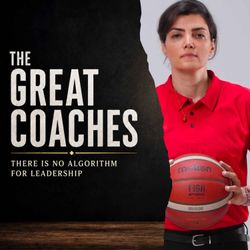
26. From Iran to Global Courts: Leadership Lessons with Naeimeh Zafar
34:54||Season 7, Ep. 26Naeimeh Zafar: Coaching Across Cultures, Resilience, and Leading Beyond BarriersWe believe that there is no algorithm for leadership. So we ask the world's great coaches how they do it. Naeimeh Zafar shares how coaching across Iran, Serbia, Qatar, Oman, Vietnam, Thailand, and France demanded cultural adaptation, humility, and clear communication when language and perceptions created barriers, and how she learned to respect athletes’ privacy and judge only commitment and performance. She describes building resilience amid restrictions in Iranian women’s sport, using her Serbian studies to raise coaching standards, and pursuing opportunities abroad when institutional constraints outweighed development. She reflects on the controversy and success of coaching a men’s team in Oman—reaching a grand final and being voted best coach—and on staying focused while unable to contact family during war. She hopes her legacy is defined by discipline, professional values, and six coaching books. If you would like to send us any feedback or if you know a great coach, who has a unique story to share, then we would love to hear from you, please contact us at paul@thegreatcoachespodcast.com and if you would like to receive our newsletter with 5 ideas to help you improve your leadership, then sign up at: https://thegreatcoaches.beehiiv.com/subscribe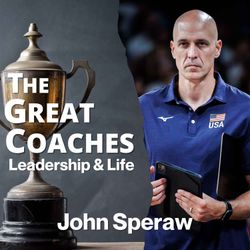
25. Coaching from the Court to the Boardroom with John Speraw
47:08||Season 7, Ep. 25John Speraw on Systems, Feedback, and Winning Under PressureWe believe that there is no algorithm for leadership. So we ask the world's great coaches how they do it. John Speraw reflects on how great coaches lean into singular strengths while staying humble and learning from staff, and how early mentors helped him see what was possible. He describes choosing coaching over medical school, building a “systems coach” identity at UC Irvine by maximizing limited resources, and returning to UCLA ready to follow Al Scates by being himself. Speraw shares practical lessons on feedback—asking athletes how they want to hear it, creating cultures that accept critical input, and using routines for mistake recovery—plus integrating visualization, breathwork, and journaling into practice to prepare for championship moments when things go sideways. Now as USA Volleyball CEO, he’s focused on scaling culture, improving communication, increasing volleyball’s cultural relevance, lowering barriers to play, and ensuring kids have great growth experiences through sport. Q. What are one or two strengths I naturally bring to a team, and how could I use them more intentionally?Q. what routine or mindset could help me stay composed and useful in high pressure moments?Q. Who has helped me see a possibility for myself that I could not yet see, and how can I now do that for someone else?If you would like to send us any feedback or if you know a great coach, who has a unique story to share, then we would love to hear from you, please contact us at paul@thegreatcoachespodcast.com and if you would like to receive our newsletter with 5 ideas to help you improve your leadership, then sign up at: https://thegreatcoaches.beehiiv.com/subscribe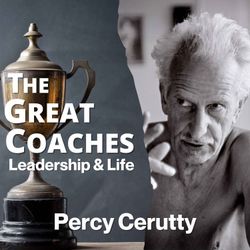
24. Book Club: Percy Cerutty
51:35||Season 7, Ep. 24This episode is a recording of our book club. The book we discuss is Why Die? The Extraordinary Percy Cerutty, 'Maker of Champions' by Graem Sims (Author).Percy Cerutty was an Australian athletics coach who transformed distance running in the 1950s and 1960s. Based at his rugged Portsea training camp, he developed the Stotan philosophy, blending Stoic discipline, Spartan toughness, natural diets, sand-hill running, weight training and intellectual growth. Best known for coaching Herb Elliott to world records and Olympic gold, Cerutty inspired athletes to pursue physical excellence and personal mastery. Our discussion is led by Dr David Turner, a Senior Lecturer in Sports Coaching at Anglia Ruskin University in the United Kingdom, and we are also joined by Andrew Gunn the author of Percy Cerutty: Life Lessons From A Remarkable Coach by Andrew Gunn.I scribbled down these 3 self-reflective questions:· Where in my life could I benefit from choosing growth over comfort?· What is one challenge I have already overcome that shows I am capable of reinvention?· How do I personally measure success: by outward achievement, or by how far I have come from where I started? If you would like to send us any feedback or if you know a great coach, who has a unique story to share, then we would love to hear from you, please contact us at paul@thegreatcoachespodcast.com and if you would like to receive our newsletter with 5 ideas to help you improve your leadership, then sign up at: https://thegreatcoaches.beehiiv.com/subscribe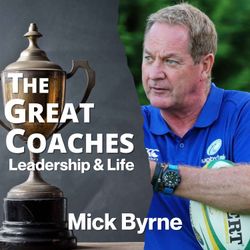
23. Coaching Across Continents: Lessons from Mick Byrne
01:02:18||Season 7, Ep. 23Mick Byrne on Preparation, Player Education, and Coaching Across Codes and CulturesWe believe that there is no algorithm for leadership. So we ask the world's great coaches how they do it. Mick Byrne reflects on elite coaching influences from Allan Jeans to Rod McQueen and the All Blacks, arguing great cultures are built on education, clarity of roles, consistent messaging, and disciplined weekly preparation so coaches and players can “sleep when the wind blows.” He explains his rare shift from AFL to rugby through skill transfer in kicking and high-ball work, and how he approached pressure roles by bringing an attacking kicking philosophy that manipulates defenses and makes fly-halves a triple threat. Byrne also shares how he tailors communication across countries through questioning rather than telling, helping players own solutions, recall them under pressure, and shape positive self-talk, while personally learning patience and healthy conflict. If you would like to send us any feedback or if you know a great coach, who has a unique story to share, then we would love to hear from you, please contact us at paul@thegreatcoachespodcast.com and if you would like to receive our newsletter with 5 ideas to help you improve your leadership, then sign up at: https://thegreatcoaches.beehiiv.com/subscribeThree self-reflective questions based on this conversation:1. Where in my own leadership do I need to create better preparation, so that I can “sleep when the wind blows” and respond calmly when pressure arrives?2. Am I telling people what to do too often, or am I asking the kinds of questions that help them discover the answer, build confidence, and take ownership?3. What part of my leadership has grown most over time?