Latest episode
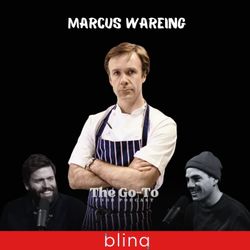
Marcus Wareing - Part 1: Surviving Britain’s Toughest Kitchens, The Lost Art Of Cooking & Winning His First Michelin Star
01:00:54|In Part One of our exclusive two-part interview with Marcus Wareing, we sit down with one of the most influential chefs of his generation to trace the extraordinary story of how a shy teenager from Southport became one of the defining figures of modern British cooking. Marcus takes us from working in his father’s fruit and veg warehouse as a boy to leaving home at 18 for The Savoy, before literally knocking on the door of Le Gavroche and asking for a job in one of the greatest kitchens in the world.Marcus then takes us inside the brutal, exhilarating kitchens that forged an extraordinary generation of British chefs, and recalls the first time he encountered a young Gordon Ramsay, describing him as a “f***ing machine” who nobody else in the kitchen could come close to. He reveals what it was really like becoming Gordon’s right-hand man at Aubergine, why they gave a young Angela Hartnett just two weeks to survive, and how the relentless intensity eventually pushed Marcus towards burnout.It’s a remarkable insight into a lost era of cooking: kitchens with no recipe books, where everything was done by eye, touch and feel, and where careers were forged through obsession, instinct and sheer endurance. Part One takes us all the way to Marcus winning his first Michelin star alongside Gordon, setting the stage perfectly for Part Two, where Marcus finally opens up about the explosive breakdown of their relationship and the 15-year feud that followed.
More episodes
View all episodes

Naz Hassan - Opening Restaurants With Theo James, Surviving Toxic Kitchens & The Problem With Chef Ego
41:12|This week we’re joined by Naz Hassan, the chef behind two of London’s most talked-about Italian restaurants, Lupa and Ornella, alongside co-founders Ed Templeton and Theo James. Naz tells us how a drunken conversation at a Christmas party somehow turned into opening restaurants with one of Hollywood’s biggest stars, why Lupa being fully booked for its first three months became both a blessing and a curse, and what it really takes to survive the hype surrounding a major London opening. Born in Bangladesh and raised in Milan, Naz also opens up about rejecting his Bengali identity as a teenager, experiencing racism in Italy and eventually finding his place in London’s restaurant world. We hear about his years in some of the city’s toughest kitchens, the infamous chef’s kitchen where he considered quitting almost every day, and how working with Chet Sharma helped him reconnect with his South Asian heritage. Plus, we get into chef egos, restaurant culture, the Bengali restaurant he still dreams of opening and the greatest dishes he’s ever eaten.
Mursal Saiq - Escaping War-Torn Afghanistan - Fighting Racism in Kitchens & Gordon Ramsay’s “Authenticity” Problem!
01:01:35|This week we sit down with the extraordinary Mursal Saiq for a conversation that goes far beyond food. Mursal takes us from a childhood shaped by war in Afghanistan and arriving in Britain as a refugee, to the devastating separation of her family at the UK border and the years that followed. She recalls the extraordinary places life subsequently took her — from Hackney to India and Italy, living on a fishing trawler in Portsmouth and even spending time with English showman families who couldn’t pronounce Mursal and instead called her “Roger” — before eventually finding her place in food.Her route into restaurants has been just as unconventional. We hear how she immersed herself in American barbecue, eventually took Afghan-Texan BBQ to competitions in the United States and remarkably finished second at the World Food Championships in Texas — beaten by a team of US Air Force veterans. She explains how Cue Point was born, how it survived the pandemic and why combining the food of Afghanistan with the techniques of American barbecue became about much more than creating something delicious: it became a way of preserving recipes, memories and a culture she fears could otherwise disappear.And then things get fiery. Mursal explains why Gordon Ramsay’s use of the word “authentic” infuriates her, and questions why an Afghan chef cooking outside Afghan cuisine can be challenged while celebrated white chefs are free to cook food from anywhere in the world. She reveals why her entire kitchen wears grey in protest at the hierarchy she believes traditional chef whites represent, discusses race and class within Michelin kitchens, the industry figures who told her to stop mixing conversations about race and heritage with food, and why she believes hospitality still excludes far too many of the people it claims to welcome. Funny, furious, moving and completely unfiltered — this is one of our most thought-provoking conversations yet.
Layo & Zoë Paskin - Opening London's Greatest Night Club 'The End' - Breaking Fat Boy Slim & Creating; The Palomar, Barbary & Evelyn's Table!
48:08|This week we’re joined by Layo and Zoe Paskin, the brother-and-sister duo behind Studio Paskin and some of London’s most celebrated restaurants, including The Palomar, The Barbary and Michelin-starred Evelyn’s Table. Before restaurants, they were at the heart of London nightlife, helping build legendary nightclub The End into one of the most influential clubs of its era. They reveal why they chose to walk away at the absolute peak of its success, the huge offer that tempted them to close the doors, and why, looking back, Layo wonders whether they made the right decision.We hear how the lessons they learnt in nightclubs became the blueprint for their restaurants: creating atmosphere, treating people generously and making sure guests leave in a better mood than when they arrived. Zoe recalls being told she wasn’t qualified to run a restaurant because she’d “only” run a nightclub, before the siblings travelled to Jerusalem and began putting together the idea that would become The Palomar. They also open up about its extraordinary launch, the messy split with their original chef partners and why they believe the mid-2010s really were a golden era for eating out in London.All of this unfolds over a feast at The Barbary Notting Hill, as we get stuck into lamb taftoon, Cornish cod, pork and the restaurant’s legendary hash cake. We discuss the rise of counter dining and open kitchens, winning a Michelin star at Evelyn’s Table, why they’d rather keep creating new restaurants than simply roll out 25 identical Barbaries, and what they think has become far too ubiquitous on London menus. Plus, Layo makes the case for Hanoi as one of the world’s great food cities — and may accidentally talk himself into his next restaurant concept.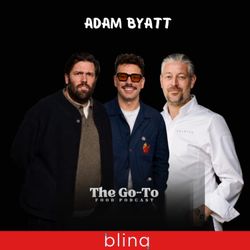
Adam Byatt Live - From Losing Everything to Building an Incredible Restaurant Empire
01:21:10|Michelin-starred chef Adam Byatt joins us for a raucous live edition of the Go To Food Podcast, recorded in front of a packed audience at Bird House Brewery. The man behind Trinity, Bistro Union, Charlie’s at Brown’s, and the newly opened Rosina reveals how his latest restaurant secured 11,000 reservations and opened at full capacity from its very first service.Adam explains why every great restaurant needs a signature dish, how he built a social media audience of more than one million followers without compromising his craft, and why telling his own story has proved more powerful than traditional PR. He also shares his philosophy on Michelin stars, profitability, hospitality, and his ambition for Trinity to remain the very best one-star restaurant in the country.We travel back through Adam’s extraordinary career, from discovering food on a childhood exchange trip to France and entering the Claridge’s kitchen at just 15, to the rock-and-roll atmosphere of The Square in the 1990s. He opens up about pioneering small-plate dining at Thyme, losing everything after moving the restaurant to Covent Garden, and rebuilding his career through resilience, determination, and the creation of Trinity.There is also an exclusive first look at Adam’s new Trinity cookbook, Ben attempts to impress him with homemade tongue tonnato and tiramisu, and Adam reveals his ultimate restaurants, comfort foods, death-row meal, and surprisingly controversial post-run Weetabix recipe. A funny, honest, and deeply insightful conversation with one of Britain’s most respected chefs, brought to you by Blinq and Dojo.
Keiran Mustafa - Behind The Scenes At 'Kismet' London's Sexiest New Restaurant
30:41|This week, we join Keiran Mustafa at Kismet in Borough Market, surrounded by bulgur kofte, fried liver, lamb neck, chicken shish and what may be the greatest spread we’ve ever had on the podcast. Keiran reveals how a completely mad three-day trip through Cyprus and Istanbul with Dom helped inspire the restaurant, and explains the meyhane culture of meze, raki, music and long nights that they are bringing to London. Keiran tells us about Sundays with his Turkish-Cypriot nan in Edmonton, where he was instructed to sit down and eat continuously before being sent home with bags of leftovers. We hear how those meals, particularly her bulgur kofte and dangerously addictive Turkish-Cypriot lasagne, eventually led him towards cooking. His first pub kitchen was microwaving cream and Stilton to pour over steaks and spooning jarred salsa onto frozen crayfish flatbreads, but his next job began with half a lamb on the worktop on day one and a lesson in filleting fish on day two. From there came Chez Bruce, where a pig’s trotter on his trial was repeatedly sent back until it was properly “mahogany”, followed by a year on the notorious vegetable section doing an almost unimaginable amount of onion work.We also discuss the endless Scotch egg production at The Harwood Arms, the job advert that took him to Le Bab, pitching his own Turkish restaurant idea to JKS and deciding within five minutes of meeting Chet Sharma that he had to work with him.
Only Scrans - Why Food Influencers Need a Licence, His £40k YouTube Gamble & Building LADbible’s 100 Million + Audience
01:03:31|This week, we’re joined by Only Scrans — one of the UK’s biggest and most engaged food creators, with more than 1.5 million followers and one of the most unusual career stories we’ve encountered. Jonny has toured the world as a guitarist, helped build LADbible’s audience past 100 million, launched FoodBible, worked with some of Britain’s biggest celebrities, built his own agencies and turned Only Scrans into a major food platform. Most recently, he has taken the ultimate step from commenting on hospitality to living it, opening his own sports bar and discovering exactly how difficult it is to make money from bricks and mortar.Jonny reveals why he spent £40,000 of his own money filming a huge long-form YouTube series across America, Canada and Mexico, visiting historic restaurants, Texas barbecue institutions and some of the world’s greatest taco spots. He explains why he refused to compromise the films with intrusive sponsorship demands, why he believes creators must be prepared to invest in themselves and how YouTube videos can suddenly return from the dead and collect another 100,000 views. He also takes us inside the obsessive world of retention graphs, thumbnails, titles and trial reels — while sharing the less glamorous reality of eating at 20 restaurants in a matter of days, including a disastrous final day in Mexico City after weeks of grasshoppers, tripe tacos and relentless filming.We also get into Jonny’s belief that food influencers should have to pass a test before they are allowed to review restaurants. He explains why somebody tasting their first-ever scallop has no business immediately declaring it a ten out of ten, calls out creators who deliberately attack brilliant independent restaurants to manufacture millions of views and comes to the defence of Bleecker after watching it receive a baffling six-out-of-ten review. At the same time, he acknowledges the extraordinary impact creators such as Eating With Tod can have on small businesses, explains why TopJaw’s combination of beautiful filmmaking and a divisive presenter works so well, and gives his verdict on the recent “shawarma wars” consuming the online food world.Jonny is equally candid about opening his sports bar, GO. The venue turned over £1 million in its first year, but he explains why that impressive figure looks very different once the money has gone back out again — leaving a profit of roughly ten per cent and nothing yet taken by Jonny personally. He recounts discovering chaotic wiring hidden above the ceiling, air-conditioning containing an illegal refrigerant and renovation costs that more than doubled almost overnight. Despite the financial pressure, he describes the extraordinary feeling of watching supporters stand on tables during England games, the pride of creating memories for customers and his ambition to expand the business rather than simply take the money.Finally, Jonny takes us back to his previous life in major-label rock band Blitz Kids. He reveals how the band could appear glamorous from the outside while its members were living on riders, drinking from morning until night and earning almost nothing, leaving him with memories of touring Helsinki, Stockholm and the rest of the world that he can barely recall. He speaks openly about alcohol, reaching a dark point and eventually becoming sober in his late thirties — before realising that he genuinely did still love food and football without the drinking attached. We then hear how he walked away from the band while living in his mum’s attic, joined LADbible as its eighth or ninth employee after an interview involving FIFA and several beers, created a viral livestream by melting ice lollies on a roof, used audience data to inform campaigns involving Craig David, and later found himself writing viral social posts for Georgia Toffolo. An extraordinary conversation about food, risk, addiction, creativity, hospitality and understanding what makes the internet click.