Share
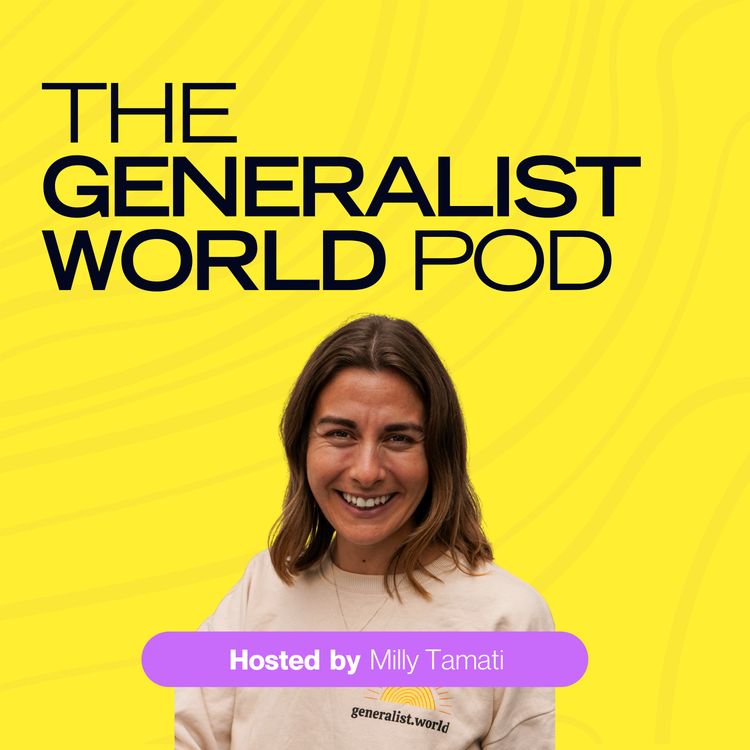
The Generalist World Pod
Exec coach shares why generalists are the future
Season 1, Ep. 15
•
What you'll learn:
- How to make business decisions that align with your company's values using simple goal-setting frameworks
- The life-profit-impact triangle for balancing what matters most in your career and business choices
- When to hire people who can do many different jobs versus experts who focus on one area
- Which people skills will stay important as AI becomes more common in the workplace
- A simple four-question method for getting past mental blocks and fears that hold you back
- How to do corporate volunteering and giving that actually makes a difference instead of wasting resources
- Ways to work as a part-time leader across multiple companies while coaching their teams
- Why more people will work alone but also need stronger communities to connect with others
Some takeaways:
- Making your business purpose-driven means asking the right questions at every decision
- Companies hire different types of people as they grow
- Corporate volunteering often wastes resources without good planning
- You can make good money and do good things by thinking about what happens after you earn it.
- The skills AI can't replace focus on human connection and asking good questions
- Political and tech changes create predictable patterns in how people engage with causes
- Good coaching in business means knowing when to give advice versus when to listen
- Smart career planning treats jobs as learning opportunities, not permanent life choices
- Future teams will be smaller but more capable because of AI tools
Where to find Ankita
- Linkedin: https://www.linkedin.com/in/ankitakochhar/
- Newsletter: https://heartled.beehiiv.com/
- Podcast: https://open.spotify.com/show/2feJiBQQ2sphZ1Qkhb8kRp?si=a9CytaarRt-YXlwmrWYkag&nd=1&dlsi=3e222ef85a8e49fc
Where to find Milly
- Linkedin: https://www.linkedin.com/in/milly-tamati/
- Website: http://www.millytamati.com/
Generalist World resources:
- Podcast: https://open.spotify.com/show/0qbGzMUMDCK5v3XbvRANmD?si=b1d7af51c24e43ee
- The Generalist Quiz: https://www.generalistquiz.com/
- Essays: https://www.generalistcareer.com/
- Upcoming events: https://lu.ma/generalist.events
- Positioning Guidebook: https://www.generalist.world/positioning
More episodes
View all episodes
5. He survived a performance improvement plan by refusing to abandon himself
34:25||Season 2, Ep. 5What You'll LearnWhy interpreting friction as personal failure keeps you stuck, and how to reframe it as a signal that something needs communication or changeHow building AI reflection bots as "survival scaffolding" during burnout can become tools that help entire teams work more clearly and honestlyWhy AI fluency will fail wherever it's treated as a tooling problem instead of a human orientation problemSome TakeawaysSelf-loyalty means designing systems that don't require people to abandon parts of themselves to be productive.Stop interpreting friction as personal failure and start seeing it as a signal that something isn't working or communication needs to happen. AI reflection bots built as survival scaffolding during crisis can become powerful team tools for making work clearer and safer.AI fluency success depends on understanding that AI amplifies existing cultural patterns rather than fixing broken systems.Where to find Peter HarrisonLinkedIn: https://www.linkedin.com/in/peter-harrison-z90/Where to find MillyLinkedIn: https://www.linkedin.com/in/milly-tamati/Website: http://www.millytamati.com/Generalist World Resources:Podcast: https://open.spotify.com/show/0qbGzMU...The Generalist Quiz: https://www.generalistquiz.com/Essays: https://www.generalistcareer.com/Upcoming events: https://lu.ma/generalist.eventsPositioning Guidebook: https://www.generalist.world/positioning
4. What happens when a cat matchmaker can't stop saying yes
30:26||Season 2, Ep. 4What You'll LearnWhy volunteering for nonprofits' behind-the-scenes operations work is an untapped opportunity to build new skills and meaningful connectionsHow following "breadcrumbs" of community connections can lead you to unexpected opportunities and networks you never knew existedWhy building vulnerability and genuine relationships in community beats transactional networking every timeSome TakeawaysVolunteer organisations desperately need behind-the-scenes operational help but rarely ask for it because they assume people only want glamorous hands-on work.Following community "breadcrumbs" rather than strategic networking creates unexpected pathways to opportunities you couldn't have planned.Creating space for vulnerability in community gatherings transforms transactional networking into genuine friendship and collaboration.The tough job market makes volunteering an underutilised strategy for skill building and career direction.Where to find Allie DonoLinkedIn: https://www.linkedin.com/in/allisondono/Where to find MillyLinkedIn: https://www.linkedin.com/in/milly-tamati/Website: http://www.millytamati.com/Generalist World resources:Podcast: https://open.spotify.com/show/0qbGzMU...The Generalist Quiz: https://www.generalistquiz.com/Essays: https://www.generalistcareer.com/Upcoming events: https://lu.ma/generalist.eventsPositioning Guidebook: https://www.generalist.world/positioning
3. The guy teaching robots to not destroy your suitcase
27:02||Season 2, Ep. 3What you'll learnHow to get diverse teams speaking the same language using glossaries and visual communication across global organisationsWhy using AI as a "trained co-pilot" on your own content creates better outputs than generic promptsHow treating your role like a customer experience helps you stay connected to the real problems you're solvingSome takeawaysCreating a shared language across technical and non-technical teams requires comprehensive glossaries and visual documentation.Using AI as a trained co-pilot on your own content produces far better results than generic prompting.Treating your role like a customer experience keeps you grounded in solving real problems rather than abstract technical challenges.Generalist World events succeed because they remove the transactional pressure typical of industry networking.Where to find Darren WuLinkedIn: https://www.linkedin.com/in/darrenwu/Website: https://tutxi.com/Where to find MillyLinkedIn: https://www.linkedin.com/in/milly-tamati/Website: http://www.millytamati.com/Generalist World resources:Podcast: https://open.spotify.com/show/0qbGzMU...The Generalist Quiz: https://www.generalistquiz.com/Essays: https://www.generalistcareer.com/Upcoming events: https://lu.ma/generalist.eventsPositioning Guidebook: https://www.generalist.world/positioning
2. How to answer “so what do you do” as a generalist
39:36||Season 2, Ep. 2What You'll LearnHow to answer "what do you do?" as a generalist using the "I'm at my best when [X], and that's when I step away" frameworkWhy identifying your zone of genius (not just competence or excellence) is critical for career clarity and satisfactionThe critical mistake companies make when implementing AI—focusing on productivity instead of reclaiming human timeHow passion and communication skills create more opportunities than technical specialisation for generalistsSome TakeawaysThe "I'm at my best when" positioning framework helps generalists explain their value without listing chronological job titles. Finding your zone of genius requires distinguishing between competence, excellence, and flow state.Self-awareness about your strengths often requires external input because you're blind to skills that feel effortless. Event planning should prioritise depth of experience over breadth of attendance by designing for specific community needs. LinkedIn succeeds as a professional platform because it offers authentic connection without performative pressure. AI should be repositioned as a tool for reducing work hours, not increasing productivity within the same hours. Passion is the most attractive quality in professional contexts, making it the secret weapon for generalist networking. Communication excellence creates more opportunities than technical skills through three core practices. Self-employment as a generalist requires accepting trade-offs while building success on passion and communication. Links:Where to find ZachLinkedIn: https://www.linkedin.com/in/zachary-reizes-832628106/Slowdown Summit: https://www.linkedin.com/company/the-slowdown-summit/Where to find MillyLinkedIn: https://www.linkedin.com/in/milly-tamati/Website: http://www.millytamati.com/Generalist World resources:Podcast: https://open.spotify.com/show/0qbGzMUMDCK5v3XbvRANmD?si=b1d7af51c24e43eeThe Generalist Quiz: https://www.generalistquiz.com/Essays: https://www.generalistcareer.com/Upcoming events: https://lu.ma/generalist.eventsPositioning Guidebook: https://www.generalist.world/positioning
1. How to build a team that actually wants to work for you
48:25||Season 2, Ep. 1What you'll learn:How to turn around failing teams by implementing honest leadership, accessible office hours, and graceful exit ritualsWhy building roles around people instead of business needs creates unsustainable organizational structuresThe CHAOS framework for systematically delegating, automating, or eliminating work that doesn't serve youHow training managers on hiring, retention, and self-management creates exponentially better team outcomesWhy teams must be healthy before they can be happy, and happy before they can be high-performingHow to budget correctly for hiring by adding 6-9 months to cover recruitment time and potential mishiresThe critical distinction between solving today's problems with contractors versus building tomorrow's team with full-time hiresWhy psychological safety and constructive disagreement are prerequisites for high-performing teams, not optional perksSome takeaways:Turn around toxic team cultures through radical honesty and permission to exit.Invest your leadership time in training managers, not doing their work.Implement weekly office hours where you only listen.Design graceful exits as carefully as you design onboarding.Stop building roles around people and start building around business needs.Budget for hiring reality, not hiring fantasy.Apply the CHAOS framework quarterly to reclaim your time and focus.Prioritise healthy teams over happy teams, and happy teams over high-performing teams.Recognise that chaotic structures inevitably lead to savage restructures.Links:Where to find Neda LinkedIn: https://www.linkedin.com/in/nedasahebelm/keshty: https://www.keshty.com/Newsletter: https://theminoritymisfit.beehiiv.com/subscribe@nedasahebelm if people want to follow her on IG!Where to find MillyLinkedIn: https://www.linkedin.com/in/milly-tamati/Website: http://www.millytamati.com/Generalist World resources:Podcast: https://open.spotify.com/show/0qbGzMUMDCK5v3XbvRANmD?si=b1d7af51c24e43eeThe Generalist Quiz: https://www.generalistquiz.com/Essays: https://www.generalistcareer.com/Upcoming events: https://lu.ma/generalist.eventsPositioning Guidebook: https://www.generalist.world/positioning
23. The community operator who made Milly "redundant"
35:43||Season 1, Ep. 23What you'll learn:How to build community with members rather than for them by co-creating value from the earliest stagesWhy successful community metrics focus on connections between members, not engagement rates or post volumeThe "win-win-win" framework for designing community programs that serve members, partners, and the organisationHow small teams leverage member-led initiatives to scale impact without burning outWhy community building requires slow, sustained effort rather than quick returns like social media marketingThe power of designing business operations around life priorities rather than sacrificing personal well-beingHow to identify if you're truly a "community person" by examining your emotional response to connecting with othersStrategic approaches to making founders and leaders "redundant" by building self-sustaining community systemsSome takeaways:Community requires fundamental mindset shifts from traditional growth strategies. Peer support within niche communities addresses isolation that broader networks cannot solve. The most valuable community metric is connection density between members, not platform engagement. Member-led programming scales impact while building ownership and deeper engagement. Small teams achieve outsized impact through strategic "win-win-win" thinking and clear constraints.Community cultures must balance consistency with experimentation to maintain energy and prevent stagnation. Businesses should plan life first, profit second and impact third to achieve sustainable community leadership. Breaking into community work requires emotional alignment more than specific skills or credentials. Links:Where to find EceLinkedIn: https://www.linkedin.com/in/ecekurtaraner/Where to find MillyLinkedIn: https://www.linkedin.com/in/milly-tamati/Website: http://www.millytamati.com/Generalist World resources:Podcast: https://open.spotify.com/show/0qbGzMUMDCK5v3XbvRANmD?si=b1d7af51c24e43eeThe Generalist Quiz: https://www.generalistquiz.com/Essays: https://www.generalistcareer.com/Upcoming events: https://lu.ma/generalist.eventsPositioning Guidebook: https://www.generalist.world/positioning
22. How to build a satisfying, sustainable career as a mid-life generalist
38:55||Season 1, Ep. 22What You'll LearnHow to leverage your network's second-degree connections rather than direct contacts when job hunting as a generalistWhy the 50+ demographic represents untapped talent with unique adaptability forged through decades of technological changeHow to position yourself as the "wild card candidate" when working with recruiters who prefer specialistsWhy listing multiple companies on LinkedIn actually increases your visibility to executive search firmsHow generalist skills become increasingly valuable in senior leadership roles where cross-functional translation is essentialWhy saying yes to opportunities that don't make immediate sense creates unexpected career pathwaysHow to lead teams of specialists without competing with their expertise through humility and translationWhy micro-networks like Generalist World are replacing broad platforms as the future of professional networkingSome TakeawaysNetwork relationships operate on delayed reciprocity and trust-building.Recruiters use LinkedIn as a competitor-mining tool, which disadvantages generalists but creates specific opportunities.The 50+ workforce faces structural disadvantages from demographic homogeneity in hiring rather than intentional ageism.Career progression for generalists follows a counterintuitive pattern where early-career sacrifice leads to senior-level advantage.Business failure is contextual and environmental rather than purely execution-based, making timing and market positioning crucial.Professional micro-networks are replacing broad platforms as the primary value creation mechanism in career development.Leading specialist teams requires deliberate humility and role clarity around being the translator rather than the smartest person.Career resilience requires accepting that lows make highs better while maintaining benchmarks for when to pivot.The entrepreneurship explosion driven by AI and shifting employment norms creates new pathways for midlife generalists.Links:Where to find JonathanLinkedIn: https://www.linkedin.com/in/jsimpsontarling/Twitter: https://x.com/JSimpsonTarlingWhere to find Milly LinkedIn: https://www.linkedin.com/in/milly-tamati/Website: http://www.millytamati.com/Generalist World resources:Podcast: https://open.spotify.com/show/0qbGzMUMDCK5v3XbvRANmD?si=b1d7af51c24e43eeThe Generalist Quiz: https://www.generalistquiz.com/Essays: https://www.generalistcareer.com/Upcoming events: https://lu.ma/generalist.eventsPositioning Guidebook: https://www.generalist.world/positioning
21. Lessons in career design from a Physicist turned Entrepreneur
41:51||Season 1, Ep. 21Karolina Sarna is a physicist-turned strategy coach and founder. Originally trained in atmospheric physics, she moved from research to applied space systems, then into data science and product leadership roles. Her work has ranged from building satellite mission components to designing end-to-end data pipelines to leading product and strategic initiatives for emerging tech teams. Karolina is also the founder of Rebel Strategy Lab, where she coaches mid-career “rebel leaders” and helps companies build strategy that aligns people, planet, and profit.What you'll learn:How to pivot your career using “A-to-B” moves—shifting just one variable at a time to evolve instead of start overWhy uncertainty can sometimes feel safer than certainty, and how to use that awareness to keep your options openA simple “hell yes or no” filter to choose which projects to say yes to when you have many possible pathsHow to give clear, timely, non-personal feedback that builds trust and helps people improve quicklyHow to build a consulting practice gradually, including setting a realistic 12–18 month runway and fallback criteriaWhy investing in tools that improve understanding of AI-generated output (like code visualizers) builds confidence and qualityWhere to find KarolinaLinkedin: https://www.linkedin.com/in/karolina-sarna/Website: https://rebelstrategylab.com/Unmute Newsletter:Where to find MillyLinkedin: https://www.linkedin.com/in/milly-tamati/Website: http://www.millytamati.com/Generalist World resources:Podcast on Spotify: https://open.spotify.com/episode/3aEZh5jzzPjVJW45MIl6Vc?si=6aa4a65865ab4ae1Podcast on Apple: https://podcasts.apple.com/us/podcast/expert-facilitator-shares-golden-advice/id1814092399?i=1000729702455Podcast on YouTube: https://youtu.be/yaxmJW7ogmgThe Generalist Quiz: https://www.generalistquiz.com/The AI fluency Quiz: https://www.aiskillsquiz.com/Upcoming events: https://lu.ma/generalist.eventsPositioning Guidebook: https://www.generalist.world/positioningThe Generalist Quiz: https://www.generalistquiz.com/
20. Expert facilitator shares GOLDEN advice
42:05||Season 1, Ep. 20What You'll LearnHow to design workshop experiences using the Kaos Pilots 5E model (excitement, entry, engagement, exit, extension) to guide groups from their current state to desired outcomesWhy maintaining neutrality as a facilitator—using clean questions and avoiding evaluative responses—creates psychological safety and equal participation across diverse groupsThe critical distinction between transactional, emotional, and social communication layers that remote organizations must address to build genuine connection beyond their immediate teamsHow "starter energy" versus "maintainer energy" defines career trajectories and why recognizing your natural inclination accelerates professional fulfillment and business successWhy the first 15 minutes of any large gathering determine engagement levels and how to create comfort through active welcoming, voice activation, and multiple participation pathwaysThe power of testing business ideas systematically before committing, allowing energy levels and genuine interest to guide strategic decisions rather than assumptionsHow simplicity and clarity in online facilitation trumps complex tools, with methods like liberating structures' "1-4-All" providing individual reflection time before group discussionWhy gathering people around cultural topics and human experiences—not just social hours—builds the emotional connections that remote teams desperately need for collaborationSome TakeawaysPurpose precedes gathering—clarity prevents cultural damageRemote work demands intentional emotional connectionNeutrality enables authentic participationStarter energy differs fundamentally from maintainer energyComfort creates engagement; safety remains subjectiveSystematic testing reveals sustainable business modelsBroad methodologies solve specific pain pointsAI amplifies the necessity for human facilitationJoy fuels impact; depletion destroys itLinks:Where to find PerleLinkedin: https://www.linkedin.com/in/perlelc/Website: www.needworkshops.comUnmute Newsletter: https://unmute.beehiiv.com/subscribeWhere to find MillyLinkedin: https://www.linkedin.com/in/milly-tamati/Website: http://www.millytamati.com/Generalist World resources:Podcast: https://open.spotify.com/show/0qbGzMUMDCK5v3XbvRANmD?si=b1d7af51c24e43eeThe Generalist Quiz: https://www.generalistquiz.com/Essays: https://www.generalistcareer.com/Upcoming events: https://lu.ma/generalist.eventsPositioning Guidebook: https://www.generalist.world/positioning