Share
The Gen Mess with Tess
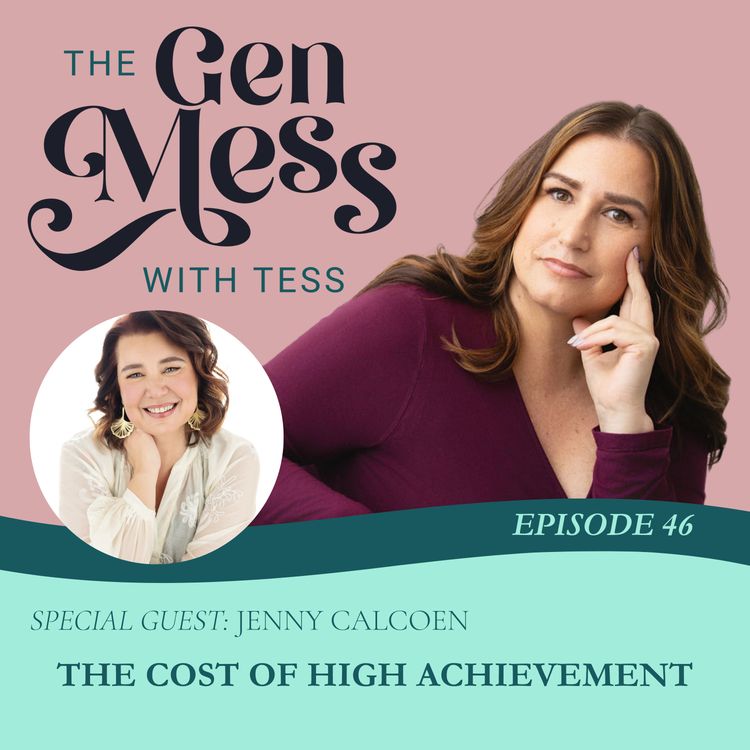
Ep 46: The Cost of High Achievement: Burnout, Identity, and Leadership Transitions with Jenny Calcoen
On this episode of The Gen Mess with Tess, Tess is joined by Jenny Calcoen, CEO and founder of Inner Earthquake LLC, former executive, and private coach to high-achieving women navigating burnout, grief, and major life transitions.
Jenny shares her own “inner earthquake” - the moment when outward success no longer matched inner truth - and how a life-altering diagnosis forced her to confront the cost of living according to expectations rather than values. Together, Tess and Jenny explore what happens when achievement masks disconnection, why burnout is often an identity crisis rather than a workload problem, and how leaders can recognize the early cracks before they become breaking points.
This conversation offers powerful insights for HR leaders, executives, and people managers navigating retention challenges, disengagement, and leadership fatigue. It reframes burnout not as a failure of resilience, but as a signal that both personal and organizational systems are misaligned.
If you’re responsible for developing leaders, shaping culture, or supporting high performers who look “fine” on paper but feel depleted inside, this episode offers a crucial lens for understanding what’s really happening beneath the surface.
Resource by Jenny Calcoen: "The Boundary Whisperer" is available as a translation tool for internal signals, or for people who know something is off but don't quite have the language yet so they can simply practice boundary literacy. Here it is - https://chatgpt.com/g/g-688fdd4aa33c8191b5503765ba20cee8-the-boundary-whisperer
00:01 – Welcome to The Gen Mess with Tess
00:52 – Jenny Calcoen’s story: success, identity, and the first “inner earthquake”
01:32 – When illness becomes a wake-up call
02:38 – Rebuilding life… while unknowingly repeating old patterns
04:30 – Burnout as an identity crisis, not a performance issue
06:45 – Why high achievers ignore early warning signs
09:10 – The danger of living by expectations instead of values
11:40 – What leaders misunderstand about burnout and resilience
14:20 – How HR and managers can spot “quiet breaking points”
17:10 – Supporting transitions without pathologizing employees
20:00 – Redefining success in leadership and work
22:40 – Final reflections: listening before the earthquake hits
More episodes
View all episodes
Ep 54: Why Work Feels So Personal (Part 1) The Psychology Behind Stress, Feedback, and Gen Z at Work
10:36|Why does one vague comment from your boss stay in your head all day? Why does being left off a meeting invite suddenly feel personal? Why can work feel emotionally exhausting even when you’re technically “doing fine”?In this episode of The Gen Mess with Tess, Tess Brigham explains why work is never just about tasks, productivity, or performance—it’s psychological.From feedback and comparison to belonging, safety, and identity, Tess breaks down what’s happening beneath the surface when work stress feels bigger than the moment itself. She also explains why so many leaders misread performance issues that are actually clarity issues, communication issues, or nervous-system responses.If you’ve ever replayed a Slack message, questioned yourself after feedback, or wondered why Gen Z seems to experience work differently, this episode explains why.This is part 1 of a 2-part solo series on the emotional reality of work, leadership, and what younger employees are actually experiencing in today’s workplace. Part 2 will be published next week. Chapter Timestamps00:00 Why work is more psychological than most people realize01:10 Why your brain treats work stress like threat02:20 Why vague feedback feels personal03:15 Work, identity, and self-worth04:10 Why comparison intensifies workplace anxiety04:45 What leaders misunderstand about Gen Z retention06:00 Why Gen Z isn’t “too sensitive”07:10 Communication problems are often anxiety problems08:05 Why retention is a mental health issue09:00 The key question leaders should ask instead visit tessbrigham.com to learn more
Ep 53: How High Achievers Burn Out Twice: Stress, Joy at Work, and What Leaders Still Get Wrong with Amy Leneker
53:34|In Episode 53 of The Gen Mess with Tess, Tess Brigham sits down with Amy Leneker, founder and CEO of the Center for Joyful Work, to explore why burnout keeps happening even to highly successful leaders who know better.Amy has helped more than 100,000 leaders and teams, including Fortune 100 companies, rethink leadership, workplace stress, and employee well-being. A former public policy executive and recovering workaholic, Amy shares how burning out twice forced her to confront the internal patterns that kept driving overwork, achievement, and chronic stress.Together, Tess and Amy unpack why burnout is not simply about workload; it is often tied to identity, workplace systems, leadership culture, and the stories people tell themselves about success.This conversation explores:why high performers often confuse overworking with worthhow burnout can repeat even after changing jobswhat workplace stress is doing to leadership pipelineswhy younger employees are redefining ambitionhow Gen Z experiences stress differently at workwhy recognition and appreciation matter more than many leaders realizethe three conditions that create joy at work: meaning, mattering, and momentumhow AI may force a new era of critical thinking in leadershipAmy also shares findings from her national workforce research showing that employees increasingly need joy at work to perform well, yet many leaders still operate inside systems that reward exhaustion instead of sustainability.For HR leaders, managers, and executives, this episode offers a practical framework for understanding employee burnout, generational tension, workplace stress, leadership development, and what healthy ambition may need to look like next.If your organization is asking why employees are disengaged, overwhelmed, or pulling back from leadership, this conversation explains what may be underneath it.Chapters with Timestamps00:00 – Why Amy Leneker Burned Out Twice02:14 – The Stress Story High Achievers Carry04:12 – Why Leadership Still Rewards Burnout06:45 – Why Joy Belongs in the Future of Leadership08:21 – Gen Z, Stress, and New Definitions of Work11:52 – Are Younger Workers Redefining Ambition?16:15 – The Three Conditions That Create Joy at Work20:23 – Why Gen Z Needs Appreciation More Than Leaders Think25:36 – The Exercise That Changed Amy’s Career31:13 – Parenting, Leadership, and Invisible Overwork35:01 – Why Workplace Systems Keep Breaking People40:13 – AI, Critical Thinking, and the Future of Work
Ep 52: Why Gen Z Keeps Asking Questions at Work
15:35|In Episode 52 of The Gen Mess with Tess, Tess explores one of the most misunderstood workplace dynamics right now: why younger employees keep asking for transparency, and why many leaders misread that as entitlement.While transparency is often described as a Gen Z workplace preference, Tess argues it is something much deeper: a psychological response to growing up in a world where trust has become increasingly fragile.From financial instability and public institutional failures to social media fabrication, layoffs over Zoom, and the rise of AI, younger workers have developed a sharper need to understand what is real, what is changing, and what leaders are not saying.In this episode, Tess explains why transparency is no longer just a communication style. and is now the foundation of trust in modern organizations.Why Gen Z’s questions are often about safety, not defianceHow uncertainty activates worst-case thinking in the brainWhy silence from leadership often increases workplace anxietyThe difference between transparency and oversharingHow honesty improves motivation, engagement, and retentionWhy every generation benefits when leaders communicate clearlyFor HR leaders and managers, this episode offers a practical lens on why communication gaps create disengagement — and why explaining reality clearly may be one of the most powerful leadership tools available today.Because in today’s workplace, transparency is not a bonus. It is how trust gets built.Chapters with Timestamps00:00 – Why Transparency Keeps Coming Up in Every Workplace Conversation 02:20 – Why Gen Z Grew Up Distrusting Systems 04:38 – What the Brain Does When Information Is Missing 06:15 – Why Transparency Matters More Than Perfection 07:04 – A CEO’s Silence During Uncertainty 08:45 – How Honesty Calms the Nervous System 09:26 – Why Motivation Drops When Trust Is Unclear 10:45 – Transparency vs Oversharing 11:46 – Why Every Generation Needs More Clarity 13:10 – The Leadership Advantage of Honest Communication 14:04 – Final Takeaway: Transparency Rebuilds Trust
Ep 51: Why Fast Growth Breaks Company Culture
59:10|In Episode 51 of The Gen Mess with Tess, Tess is joined by Corrine Ishio, founder of My Working Soul, to explore a challenge many fast-growing companies face but rarely talk about: scaling the business faster than the culture can keep up.When organizations grow quickly, hiring often becomes reactive. Leaders focus on roles and results, while the human side of the company quietly gets lost. The result? Misalignment, disengagement, and teams that no longer feel connected to the mission that once energized them.Corrine shares her perspective from years working in talent, recruiting, and HR; helping founders and leadership teams rethink how they hire, communicate, and define culture during periods of rapid growth.In this conversation, Tess and Corrine explore:Why companies struggle to maintain culture as they scaleThe complicated role HR plays between employees and leadershipHow generational misunderstandings shape today’s workplaceWhy Gen Z communication patterns are confusing many managersThe influence of social media on workplace behavior and identityWhy purpose is becoming central to work in the AI eraThey also discuss how leaders can create healthier workplaces by focusing less on rigid definitions of culture and more on communication, self-awareness, and intentional hiring. Because when companies grow quickly, it’s easy to forget the most important part of any organization: the humans building it.Chapters (Timestamps)00:00 – Introduction to Corrine Ishio & My Working Soul 01:05 – Corrine’s Path Into HR & Human-Centered Work 04:00 – What HR Actually Does (vs. what people think it does) 07:00 – Why HR Often Feels Stuck Between Employees & Companies 11:00 – The “Human” Lens Inside Business Operations 13:00 – The Meaning Behind “My Working Soul” 17:00 – Why Culture Breaks When Companies Grow Quickly 20:30 – What a Healthy Workplace Actually Looks Like 23:00 – Communication Differences Across Generations 29:30 – Why Younger Workers Are Often Misunderstood 34:30 – Purpose, Work, and the AI Era 38:30 – Are Younger Employees Harder to Manage? 43:00 – Millennials, Social Media, and Cultural Fragmentation 49:00 – Safety, Identity, and the Digital Workplace
Ep 50: Let Go of the Outcome
18:50|In Episode 50 of The Gen Mess with Tess, Tess explores a dynamic that quietly derails high performers at every level: the moment work starts to feel like a test.When every meeting feels evaluative and every decision feels like it determines your worth, anxiety rises, and performance often drops. Tess unpacks why this happens and why the solution isn’t caring less, but redefining what actually belongs to you.Drawing from her clinical work with emerging leaders, she breaks down:Why over-focusing on outcomes increases anxiety and self-consciousnessThe psychological difference between effort and approvalHow new managers get stuck trying to predict reactionsWhy Gen Z struggles uniquely in a metrics-driven cultureThe mindset shift that restores confidence, clarity, and flowFrom a first-time manager learning to lead without control, to unexpected lessons from Olympic figure skating and competitive design, Tess illustrates one central truth:Your job is the effort. The outcome was never yours to manage.For HR leaders and executives, this episode is also a leadership lens. When organizations unintentionally create constant evaluation environments, employees tighten up — and innovation suffers. If you’re navigating pressure, perfectionism, or performance anxiety — this episode will help you rethink control and reconnect with your best work.Chapters with Timestamps00:00 – Welcome: When Work Starts to Feel Like a Test 02:00 – Why Anxiety Increases When Outcomes Feel Personal 04:30 – What “Letting Go of the Outcome” Actually Means 06:00 – Effort vs. Approval: The Critical Distinction 07:30 – Case Study: Brittany’s Transition to Management 11:00 – The Office Hours Experiment 13:30 – Changing Your Relationship to Response 15:30 – Performance Pressure & Young Professionals 18:00 – The Gen Z Metrics Trap 21:00 – Why Measured Lives Create Outcome Attachment 23:30 – Flow State & Releasing Control 26:00 – Care Deeply About What’s Yours 28:30 – Final Reflection: Own the Effort, Release the Rest
Ep 49: AI Anxiety in the Workplace & The Future of Talent with Trent Cotton
50:49|Tess sits down with Trent Cotton - self-described “non-HR HR executive,” author of Sprint Recruiting and High Performance Recruiting, and Head of Talent Insights at iCIMS. Discussing the nuanced conversation about what the data tells us about AI, generational skepticism from Gen Z to Boomers, and what leaders are getting wrong about the future of work, including:Why leaders often hide behind data instead of using it to deepen human conversationsWhat current workforce data actually says about AI adoption across generationsWhy Gen Z may be more skeptical of AI than expectedThe risk of eliminating entry-level roles too quicklyThe emerging power skills of “agency” and “orchestration”How AI can both enhance human potential and erode connection if misusedThis is not a hype conversation about AI. It’s a grounded discussion about leadership responsibility, workforce redesign, emotional regulation, and the long-term talent implications organizations must prepare for now.If you’re an HR leader, executive, or people strategist navigating uncertainty around automation, layoffs, bias, and generational tension — this episode offers clarity without panic.Because the future of work isn’t just technological. It’s psychological.Chapters with Timestamps00:00 – Welcome + Meet Trent Cotton The “non-HR HR executive” and why business fluency matters in people strategy.04:20 – Data vs. Humanity: Where Leaders Get It Wrong Why hiding behind numbers erodes trust — and how to use data to deepen conversations.11:20 – AI Anxiety: Survival Instinct or Rational Fear? Why resistance to AI may be more about control than job loss.14:50 – The Early Career Crisis No One Is Talking About The danger of automating entry-level roles too quickly.21:00 – Is AI Replacing Human Connection? Attachment to tech, loss of discomfort, and emotional consequences.29:00 – How to Actually Use AI Without Losing Your Voice Practical examples of human-AI collaboration.38:45 – What the Data Says About Generations & AI Why Gen Z may be more skeptical than you think.43:05 – The New Power Skills: Agency & Orchestration What leaders should be developing now.48:05 – AI, Disability & Expanding Human Capability Where technology can increase access and inclusion.
Ep 48: When Your Boss Isn’t Safe | How to Protect Yourself Without Quitting
26:06|In Episode 49 of The Gen Mess with Tess, Tess tackles a reality many professionals experience but rarely have language for: what to do when your manager does not create psychological safety and you cannot simply walk away.Drawing on the research of Harvard Business School professor Amy Edmondson, who coined the term psychological safety, Tess breaks down the difference between discomfort and harm, high standards and humiliation, resilience and self-abandonment.This episode explores:Why unpredictable leadership activates the nervous systemHow generational conditioning shapes our response to toxic managementThe hidden cost of “enduring” unsafe environmentsFive strategic tools to protect your identity and regulate anxietyHow to decide whether to adapt, escalate, or exit intentionallyFor HR leaders and executives, this episode is also a mirror. Psychological safety is not about lowering performance expectations, it is about creating conditions where people can meet high standards without fear. Whether you are managing up, supporting emerging professionals, or building healthier leadership pipelines, Tess offers practical insight into how psychological safety shapes retention, burnout, and long-term performance.Chapters with Timestamps00:00 – Opening: Living in the Mess 01:00 – The Reality of Unsafe Managers 02:24 – “Paying Your Dues” and Toxic Normalization 04:45 – Defining Psychological Safety 07:07 – What Psychological Safety Is (and Isn’t) 09:28 – Your Nervous System at Work 11:52 – Generational Patterns: Gen Z, Millennials, Gen X 14:18 – Strategy #1: Containment (Observe, Don’t Absorb) 16:05 – Strategy #2: Clarity in Writing 17:45 – Strategy #3: Borrow Safety Elsewhere 19:03 – Strategy #4: Emotional Boundaries 20:30 – Strategy #5: Identity Protection & Your “Reality File” 21:23 – Discomfort vs. Harm 23:00 – Adapt, Escalate, or Exit? 24:45 – Psychological Safety Is Not Entitlement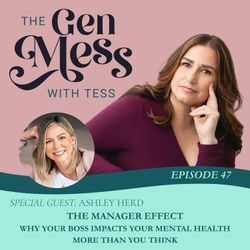
47. Ep 47: The Manager Effect | Why Your Boss Impacts Your Mental Health More Than You Think with Ashley Herd
46:32||Season 2026, Ep. 47In this episode of The Gen Mess with Tess, Tess is joined by Ashley Herd, founder and CEO of The Manager Method, employment attorney, former HR leader at McKinsey & Company and Yum Brands, co-host of the HR Besties podcast, and author of the newly released book The Manager Method: A Practical Framework to Lead, Support, and Get Results.Ashley brings a rare, inside view of management from every angle - frontline work, legal risk, HR leadership, and executive training - to unpack why managers have an outsized impact on employee mental health, engagement, and retention. Drawing on research showing that a manager can influence wellbeing as much as a spouse, Tess and Ashley explore how leadership behavior ripples far beyond performance metrics and into people’s lives at home.This conversation tackles the realities facing modern managers: promotion without training, identity loss when high performers become leaders, generational misunderstandings, and the crushing pressure placed on middle managers. Together, they offer practical, human-centered strategies for leading effectively without burning people out, including Ashley’s core framework: Pause, Consider, Act.This episode is essential listening for HR professionals, people managers, and executives responsible for building sustainable leadership pipelines and healthier workplace cultures in 2026 and beyond.Be sure to subscribe to The Gen Mess with Tess podcast for new episodes weekly. 00:01 – Welcome & Introducing Ashley Herd 02:02 – From employment attorney to leadership educator 03:29 – Why great individual contributors often struggle as managers 05:31 – Promotion myths and the cost of untrained leadership 07:59 – Identity loss when high performers become managers 10:06 – The “LinkedIn test” and chasing titles over fit 12:19 – Why work identity is so powerful (especially in the U.S.) 16:05 – Middle managers: too much responsibility, too little support 18:58 – Why one-on-ones still matter at every leadership level 21:33 – The data: managers impact mental health as much as spouses 24:20 – How leadership stress follows people home 27:58 – Generations at work: framework, not stereotypes 32:23 – Technology, boundaries, and modern burnout 38:22 – Overcorrection, distrust, and workplace isolation 41:16 – One shift every manager can make today: Pause, Consider, Act 44:33 – Ashley’s book, resources, and closing reflections