Share
Matters of Consequence: Meaningful Conversations for Curious People
Conversations about leadership, society, and the decisions that shape our world.
Latest episode
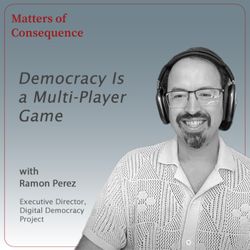
10. Democracy Is a Multi-Player Game - On the rules, the players, and how to restore accountability
34:18||Season 3, Ep. 10What happens when the systems designed to uphold democracy start to fail the people they’re meant to serve? In this episode of Matters of Consequence, Ramon Perez, former military officer, AI consultant, and democracy reformer, shares his journey from defending democracy abroad to confronting its erosion at home. After witnessing the shocks of January 6th and the unrest in Portland, Ramon realized that the ideals he fought for were under threat in the very places they were supposed to thrive. His work now focuses on exposing the systemic flaws that leave voters feeling powerless, gerrymandering, campaign finance, and legislative disconnection.Ramon reflects on the moral weight of accountability, the challenges of using AI to bridge gaps in democracy, and the global lessons that could help restore trust in governance. He also grapples with the unresolved tension of redesigning democracy for the 21st century, where technology, power, and human agency collide.Why listen?Understand the systemic flaws eroding trust in democracy and how they manifest in everyday governance.Explore the emotional and moral cost of realizing that the systems you once believed in are broken.Learn how technology, like AI, can be used to re-engage voters—and the risks of manipulation that come with it.Discover why accountability is not just a buzzword but a necessity for restoring faith in democratic institutions.Gain insights into global movements for democracy reform and how they intersect with local efforts.Whether you’re a citizen, a policymaker, or simply someone who cares about the future of democracy, Ramon’s story offers a thoughtful and urgent perspective on the challenges we face and the tools we have to address them.Keywords: democracy reform, civic engagement, accountability in governance, gerrymandering, campaign finance, AI in democracy, voter disenfranchisement, systemic flaws in democracy, political trust, legislative accountability, democracy in the 21st century, Ramon Perez, Digital Democracy Project, Matters of Consequence podcast
More episodes
View all episodes
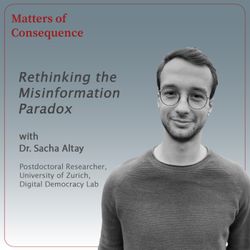
9. Rethinking the Misinformation Paradox - On distrust, power, and the real roots of deception
30:12||Season 3, Ep. 9Misinformation is often framed as a modern crisis, an unstoppable force shaping elections, fuelling division and eroding trust. But what if the problem is not what we think it is? What if the real issue lies not in the spread of false information but in how we perceive it, fear it and respond to it? In this episode of Matters of Consequence, host Michael Hanf speaks with Dr. Sacha Altay, an experimental psychologist and researcher at the University of Zurich, whose work challenges the alarmist narratives around misinformation. Sacha’s research reveals that exposure to misinformation is far lower than we assume, that people are less gullible than we think and that misinformation is often a symptom of deeper societal issues like distrust in institutions, polarization and the way power shapes what we believe. Sacha shares his journey from believing in conspiracy theories as a teenager to becoming a leading voice in misinformation research. He explains why social dynamics like group identity and conformity often play a bigger role in shaping beliefs than algorithms or micro targeting. And he offers a provocative perspective: What if the solution is not just fighting misinformation but rebuilding trust in reliable sources and strengthening the institutions that hold society together? Why listen?Discover why misinformation is less about exposure and more about perception and how this changes the way we should address it.Explore the psychological and social mechanisms that allow misinformation to spread, from the third person effect to the role of powerful actors.Understand why current interventions like fact checking and media literacy might be missing the mark and what alternatives could work better.Reflect on the tension between fear and reality in the misinformation debate and how we can move toward more effective, human centred solutions.Gain insights into how distrust in institutions fuels the problem and why rebuilding trust might be the key to combating misinformation. Whether you are a researcher, policymaker or simply someone trying to navigate the complexities of the modern information landscape, this conversation offers a thoughtful, nuanced and actionable perspective on one of the most pressing issues of our time. Keywords: misinformation, disinformation, trust, social media, psychology, cognitive science, polarization, third person effect, fact checking, media literacy, institutional trust, power dynamics, Sacha Altay, Matters of Consequence, information ecosystem, algorithmic bias, micro targeting, conspiracy theories, public discourse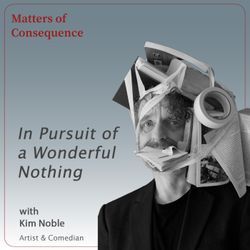
8. In Pursuit of a Wonderful Nothing - On absurdism, defiance, and the need to be seen
32:30||Season 3, Ep. 8What does it mean to create art that defies definition? In this episode of Matters of Consequence, Kim Noble, artist, comedian, provocateur and performance maker, takes us on a journey through the unresolved, the absurd and the deeply personal. Known for his work in Noble and Silver and his latest book In Pursuit of a Wonderful Nothing, Kim uses humour, provocation and vulnerability to expose the emotional weight of the human experience. But as he reveals, the meaning of his art often only emerges after the fact, shaped by interpretation, discourse and the passage of time.Kim shares his deeply personal and often contradictory relationship with his work. He reflects on why he does what he does, the process behind his creations and what it feels like to spend a life questioning the status quo. From his struggles with self-doubt and the need for validation to his defiance of societal norms, Kim’s story is one of raw honesty and unfiltered introspection. He discusses the emotional toll of constantly pointing out what others ignore, the tension between provocation and vulnerability and why laughter might just be the most subversive tool we have.This conversation explores the contextual nature of art and how its meaning is not fixed but evolves through the lens of those who engage with it. Kim’s work challenges us to laugh, squirm and ultimately see the world differently, as The Guardian once put it, "tilts your mind off its axis." But beneath the humour and absurdity lies a deeper question: What does it mean to create when the world resists understanding?Why listen?Discover how art can challenge norms and expose uncomfortable truths through humor and absurdism.Explore the emotional and psychological weight of creating work that defies easy categorization.Reflect on the role of interpretation and discourse in shaping the meaning of art and the artist’s journey.Understand the tension between provocation and the desire for acceptance and how this fuels creative expression.Gain insights into the personal struggles and triumphs of an artist who embraces vulnerability and defiance.Learn why laughter can be a powerful tool for subversion, connection and self-expression.Whether you are an artist, a creator, a thinker or simply someone who values raw, unfiltered conversations, Kim’s story offers a thoughtful and deeply human perspective on the power of questioning the status quo. His journey invites us to embrace the unresolved, to find meaning in the absurd and to recognize the quiet strength it takes to show up even when the world does not always understand.Keywords: Kim Noble, art and absurdism, performance art, humor as provocation, emotional weight of art, interpretation of art, vulnerability in creativity, defying norms, laughter as subversion, unfiltered conversations, Matters of Consequence, artist journey, meaning of art, creative process, subversive humour, contextual art, emotional toll of creativity, provocation and vulnerability, self-doubt in art, need for validation in creativity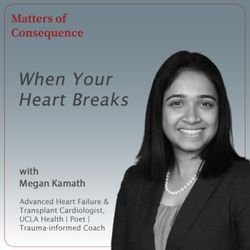
7. When Your Heart Breaks - On medicine, poetry and the quiet strength of those who show up
33:42||Season 3, Ep. 7What does it mean to heal others when the weight of their stories stays with you? In this episode of Matters of Consequence, host Michael Hanf speaks with Megan Kamath, an advanced heart failure and transplant cardiologist, poet, and trauma-informed coach, about the emotional toll of medicine and the power of showing up, again and again, for those who need it most.Megan’s career spans the cutting edge of cardiology and the deeply human work of relational medicine. But behind the titles and the technology lies a simpler, harder truth: that healing is as much about presence as it is about science. From her earliest memories of wanting to be a doctor to the moments where she realized the limits of what medicine could fix, Megan shares what it’s like to carry the stories of patients she couldn’t save, and why those experiences shaped not just her practice, but her poetry and her life.Through her book Resilient Cadence and her work with Clinician Thrive, Megan explores the tensions between the system and the oath, the metrics and the humanity, and the quiet strength required to keep going in a profession where the stakes are always high. She reflects on the moments that still weigh on her, the poems that helped her process them, and why the most meaningful work often happens in the spaces where medicine and art intersect.Why listen?Discover how relational medicine can restore dignity and connection in a system that often prioritizes efficiency over humanity.Explore the emotional burden of high-stakes medical work and how clinicians process the weight of their decisions.Understand the role of poetry and creativity in helping professionals navigate the unseen toll of their careers.Learn why systemic change in healthcare starts with acknowledging the gaps between what heals and what’s rewarded.Gain insights into how trauma-informed coaching can help clinicians reclaim their purpose and well-being.Whether you’re a healthcare professional, a patient, or simply someone who believes in the power of human connection, Megan’s story is a reminder that healing isn’t just about fixing bodies, it’s about holding space for the human experience, in all its complexity and beauty.Keywords:medicine, cardiology, heart failure, transplant, poetry, relational medicine, healthcare, emotional toll, clinician well-being, trauma-informed coaching, systemic change, patient care, healing, human connection, Megan Kamath, Resilient Cadence, Clinician Thrive, professional burnout, medical ethics, storytelling in medicine, Matters of Consequence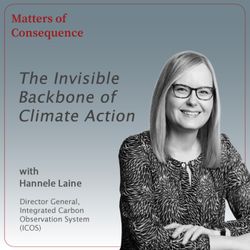
6. The Invisible Backbone of Climate Action - On the data that shapes our climate future
30:15||Season 3, Ep. 6What happens when the foundation of climate action relies on data that most people never see or even know exists? In the latest episode of Matters of Consequence, Hannele Laine, Director General of the Integrated Carbon Observation System (ICOS), takes us inside the unseen world of Europe's greenhouse gas observation network. The episode explores the systemic importance of standardized climate data, the tension between scientific rigor and political urgency and the quiet work of ensuring that the measurements we need today are not lost forever.Hannele Laine, a climate scientist and leader with decades of experience at the Finnish Meteorological Institute and the Finnish Climate Change Panel, shares the realities of her journey. From her transition from research to leadership to her role in shaping ICOS as a European research infrastructure, Hannele reveals the emotional weight of leading in a field where the stakes are high but the recognition is often invisible. Stories like the irrevocability of climate data, "If we don't make the measurements today, they are lost forever," illustrate the human cost of a system built on precision, trust and persistence. Yet, amid the challenges, Hannele also shares moments of hope, such as the potential of combining ground based measurements with satellite data to revolutionize climate observation.Why listen? Hear the realities of leading a foundational but often invisible climate research infrastructure, from standardization to global collaboration.Explore the systemic gaps in climate data, the cost of maintaining trust in science and the questions we are not asking about the future of climate action. Understand the emotional toll of working in a field where urgency clashes with the need for meticulous, long term observation. Discover moments of innovation and hope, like the integration of satellite and ground based data, that are shaping the next decade of climate science. Gain insights into how Europe can maintain its leadership in climate observation and the role of research infrastructures in global climate action.This episode is a must listen for scientists, policymakers, climate advocates or anyone who cares about the intersection of data, trust and the future of our planet. Whether you are working in climate science, interested in the politics of environmental action or simply want to understand the human side of systemic challenges, Hannele's story will leave you with new perspectives and a deeper appreciation for the unseen work that shapes our world.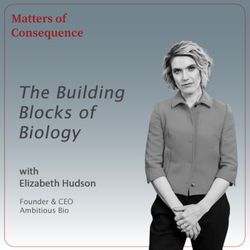
5. The Building Blocks of Biology - On biological AI, data gaps, and the questions we’re not asking
32:50||Season 3, Ep. 5What happens when the foundation of a field is built on a patchwork of accidents? In this deeply personal conversation, founder, neuroscientist, and technologist Elizabeth Hudson takes us inside the unseen world of biological AI infrastructure. The episode explores the systemic gaps in data, the cost of pioneering change, and the quiet work of laying the foundation for what comes next.Elizabeth Hudson, a founder at Ambitious Bio, former VP at Symbotic, and advisor at Omega Funds, shares the raw realities of her journey. From her years spent trying to convince others to tackle the lack of biological AI infrastructure to the moment she decided to build it herself, Elizabeth reveals the emotional weight of challenging the status quo: the importance of asking "stupid questions," the resistance to change, and the struggle to balance innovation with the risks of overreach. Stories like the "desert with narrow boreholes" of biological data illustrate the human cost of a system built on gaps. Yet, amid the challenges, Elizabeth also shares moments of hope and the potential of biological AI to redefine medicine.Why listen?Hear the realities of building biological AI infrastructure, from the first realization to the decision to act.Explore the systemic gaps in data, the cost of pioneering change, and the questions we’re not asking about the future of medicine.Understand the emotional toll of challenging the status quo, including frustration, resistance, and the struggle to balance progress with ethics.Discover moments of hope and the potential of biological AI to transform lives and medicine.Gain insights into how to support innovation in a system that often resists change.This episode is a must-listen for scientists, technologists, entrepreneurs, or anyone who cares about the intersection of data, progress, and the future of medicine. Whether you’re exploring the potential of biological AI, working in life sciences, or simply want to understand the human side of systemic innovation, Elizabeth’s story will leave you with new perspectives and a deeper understanding of the emotional journey of building something new.Keywords: Biological AI, life sciences, data infrastructure, Ambitious Bio, Symbotic, Omega Funds, neuroscience, innovation in medicine, systemic gaps in data, future of medicine, ethical challenges in AI, pioneering change, emotional toll of innovation, biological data, AI in healthcare, infrastructure of science, questions about biological AI, supporting innovation, challenges in life sciences.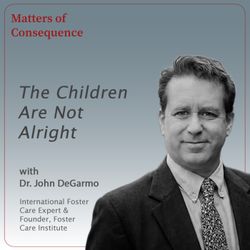
4. The Children Are Not Alright - On foster care, love, grief, and the lies we tell ourselves
34:09||Season 3, Ep. 4What does it feel like to love a child with all your heart, only to have the system tear them away? In this deeply personal conversation, international foster care expert and TEDx speaker Dr. John DeGarmo takes us inside the emotional world of fostering over 60 children. The episode explores the unseen toll of foster care, the grief, the love, and the quiet moments of betrayal that shape a foster parent’s life.John DeGarmo, a foster parent for over two decades, author, and global advocate for child welfare, shares the raw realities of his journey. From the first night he realized he wasn’t ready, to the heartbreak of failed adoptions, John reveals the emotional weight of fostering: compassion fatigue, burnout, and the struggle to keep going despite the system’s failures. Stories like that of Sydney, a girl who slipped through the cracks, illustrate the human cost of a broken child welfare system. Yet, amid the heartbreak, John also shares moments of joy and resilience that make the hard work worthwhile.Why listen?Hear the emotional realities of fostering, from the first child to the ones that changed John forever.Explore the grief, love, and lies we tell ourselves to keep going in a system that often feels stacked against you.Understand the emotional toll of foster care, including compassion fatigue, burnout, and the struggle to balance love with self-preservation.Discover moments of hope and healing that remind us why this work matters.Gain insights into how to support foster children and parents in a system that often fails them.This episode is a must-listen for foster parents, social workers, educators, or anyone who cares about the well-being of children. Whether you’re exploring foster care as a parent, working in child protection, or simply want to understand the human side of systemic failures, John’s story will leave you with new perspectives and a deeper understanding of the emotional journey of fostering.Keywords: Foster care, child welfare, emotional toll of fostering, foster parent burnout, grief and loss in foster care, systemic failures in child protection, parenting trauma, foster care stories, foster care challenges, foster parent experiences, child welfare system, foster care support, foster care advocacy, foster parent training, foster care and mental health, foster care and love, foster care and grief.