Share
The Free League
Miguel Font : How Geneva Became the Birthplace of World Basketball (3d part)
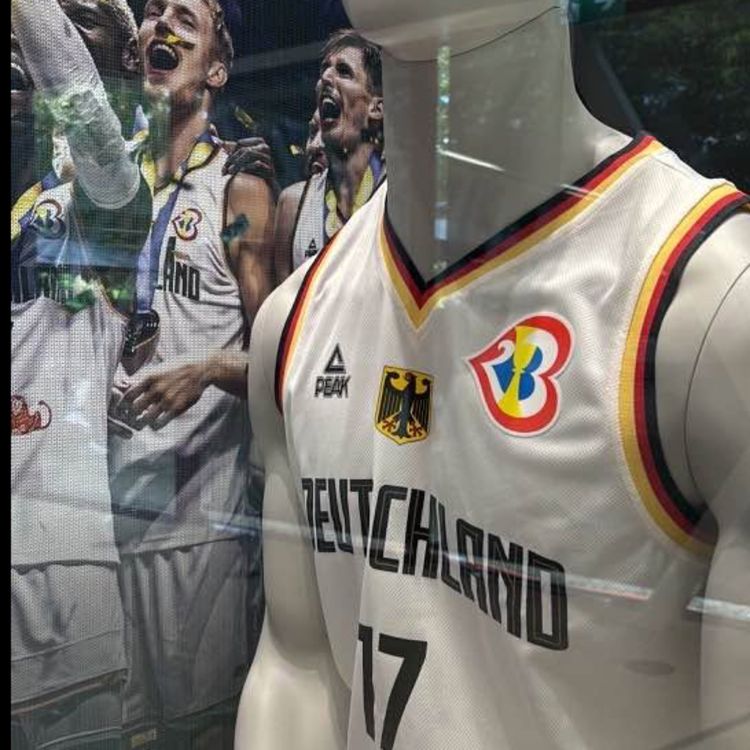
When I meet Miguel Font on an early December morning, the encounter feels almost disarmingly simple. We meet at the Patrick Baumann House of Basketball in Mies, just outside Geneva—a place that quietly houses the heart of global basketball governance. Despite basketball being the world’s second most popular team sport, with more than 3.3 billion fans worldwide, the sport remains oddly misunderstood in Switzerland. Yet here, a dozen kilometers from Geneva, sits the epicenter of its international memory.
The House of Basketball itself is a striking architectural gesture: shaped like a hand, its curves and structure subtly echo the geometry of a net. Far more than an office building, it is a cultural arena. The ground floor unfolds like a miniature world museum of basketball—objects, photos, documents, shoes, posters—each fragment narrating how the sport grew across continents and generations. At its core lies the world’s largest basketball library, open to researchers and curious visitors alike. Moving through the building feels like walking through the sport’s DNA.
Guiding this universe of stories is Miguel Font, FIBA Foundation Historical Curator. Spaniard by nationality, multicultural by upbringing, and international by vocation, Font embodies the borderless nature of basketball itself. Born in Madrid to Moroccan and Portuguese parents, he grew up “in the streets,” as he likes to recall, the fifth of seven children. Basketball offered him structure and belonging. With characteristic humor, he describes himself as “short, overweight, and a very bad player,” yet he became a coach at just fourteen—later working in wheelchair basketball and spending more than twenty years on the sideline.
What ultimately shaped his path was not athletic ambition, but curiosity. Font began collecting stories, objects, archives, and memories—anything that testified to the way basketball shapes people’s lives far beyond the court. This passion naturally aligned with the FIBA Foundation, where he now oversees the Cultural Heritage Unit. From Mies, his team manages collections, exhibitions, archives, research initiatives, and the storytelling arm of an organization that connects more than 200 national federations.
For Font, basketball is a cultural phenomenon before it is a sport. Sneakers that became icons of music and street culture, films that shaped collective imagination, political histories embedded in games, Cold War narratives playing out on the court—his work curates all these intersections. One of the Foundation’s major projects, From the Court to the Big Screen, draws on hundreds of films to explore basketball’s cinematic life.
Walking with Font through the House of Basketball feels like being guided by someone who not only knows the sport but feels its pulse. He speaks with equal passion about James Naismith’s legacy, the 1989 turning point that opened FIBA to professional players, the rise of 3x3 basketball, and the incredible multicultural ecosystem that now surrounds the game. His perspective is global yet grounded, historical yet forward-looking.
“History teaches humility,” he tells me. Basketball, in his view, is a lens through which to read the 20th century—and perhaps to glimpse what comes next. In many ways, Miguel Font is not just a curator of basketball’s past. He is one of the storytellers shaping how the world understands the game’s future.
More episodes
View all episodes
9. Nicolas Reichen, Global social media manager at the IOC
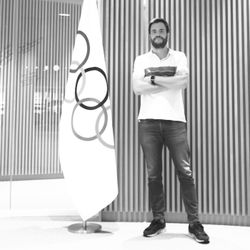
30:34||Season 1, Ep. 9In this episode of The Free League for 2026, we sit down with Nicolas Reichen — Bernese-Jurassian basketball player and coach, and a sports enthusiast through and through. A loyal supporter of HC Bienne, Olympiacos Basket, and the Seleção, he lives by a true team-first philosophy: for him, basketball is above all a school of sharing and collective growth — in victory and in defeat alike. A deeply Olympic mindset.We've known each other for over thirteen years, and that closeness shapes this conversation about his vision of sport: performances, world records, but also everything beyond the final score — fair play, values, and the memory of great sporting moments. A candid talk on what truly makes a team great.At the IOC, his job is telling Olympic stories that make people happy and curious to learn more about often-forgotten feats. Across YouTube, TikTok, and X, he shapes the live narrative during and after the Games. He recalls his first Olympics in Rio, where he interviewed New Yorker Carmelo Anthony, a Team USA standout at the time. We also talk Paris 2024 — home to one of the greatest Olympic basketball tournaments ever played.
8. Inside Paris Basketball with Isaiah Denzel, Sebastián Herrera and Francesco Tabellini
16:50||Season 1, Ep. 8This time, we are in Paris, inside the Adidas Arena, at the heart of one of Europe’s fastest-rising basketball clubs. For one night, we stepped into the noise, the lights, the music and the emotion surrounding the current French Betclic Elite champion Paris Basketball, a team trying to create not just wins, but a real culture.In this episode, you will hear Isaiah Denzel, a fashion influencer from Paris, on the way basketball and style now feed each other in the city. You will hear Sebastian Herrera, the captain, on the club’s identity, the fans, and the energy that makes this team different.And you will discover Francesco Tabellini, who spent nine months as head coach, speaking about fight, effort and the connection between the players and the crowd. This is more than a game-night report. It is a snapshot of a club, a city and a movement.This is Paris Basketball. This is The Free League.Thanks to the Paris Basketball for inviting me in their wonderful arena. Thanks to the two team Paris Basketball and ASVEL Lyon Villeurbanne. Thanks to Clara Desfoux.Photo : Nadir Hifi, best scorer in the current EuroLeague 2025/2026, warming up. Audio, text and photo by David Glaser
7. Randoald Dessarzin : The Jurassian Foxes Coach Who Refused Limits
31:58||Season 1, Ep. 7Randoald Dessarzin is, before anything else, a Jurassian. The Pully-Lausanne Foxes head coach carved from the stubborn rock of his region, driven by an unwavering belief in basketball as both a craft and a calling. He is the coach who once carried the modest BC Boncourt squad to the highest levels of Swiss professional basketball. That achievement opened the doors of the storied JDA Dijon, in France’s top league, launching him into a journey marked by triumphs and turbulence.Looking back, he speaks calmly of the storms that sometimes circled his career toward the end of his Burgundy chapter. He himself never felt personally endangered by the media squalls. What troubled him, rather, was the thought that his young children, fortunately still too small to read the papers or hear schoolyard whispers, might one day feel the weight of those public tempests.During a season that had begun with promise (five wins, one loss, tied with Cholet) tragedy struck. A young prospect of the club, Jonathan Bourhis, also a member of the French junior national team, died in a car accident. When the sporting management refused to allow the entire team to attend the funeral, permitting only two foreign players to go, the decision tore the locker room apart. Two camps emerged, bitter and irreconcilable. Dessarzin never managed to heal the wound. It remains a dark memory in a long career that nevertheless carried him to the European Cup and later to Africa, where he led the Ivory Coast national team.He reflects on how the modern basketball game demands as much psychology as strategy. Once, players simply followed directions. Now they question everything, search for shortcuts, enter the business world of agents at fifteen, and chase personal statistics, with defense, the invisible currency of champions, too often left in the shadows. He misses the earlier era, when loyalty to a club had weight and the horizon of a career was not constantly shifting.Interview by David Glaser
6. Mouna Skaria: Bringing a New Basketball Venue to the Pully Lausanne Foxes
27:46||Season 1, Ep. 6Mouna Skaria, a dermatologist and surgeon based in Vevey since 2005, entered basketball largely through her children, who joined the club in 2016, shortly before the formation of the Pully Lausanne Foxes in 2017. What began as volunteer work, from helping at club events to fundraising and managing teams, evolved into leadership roles, culminating in her becoming president five years later.Under her guidance, the Foxes have developed a more strategic vision, strengthened marketing and communication, and built a strong volunteer base, 60% of whom are women. This inclusive environment has created a unique energy that drives the club forward.A major challenge for the Foxes is accommodating young players. Despite a Swiss Olympic label and programs from U6 to U23, plus senior teams, several hundreds children are reportedly on waiting lists due to limited facilities. Mouna Skaria emphasizes that growth requires better infrastructure.More professionalism aheadFinancially, the Foxes operate on a modest budget of around 350,000 francs, far below larger Swiss clubs such as Fribourg or Geneva. Yet, the team’s cohesion and dedication allowed them to finish third in the national championship last season. The President envisions further professionalization, possibly converting the club into a joint-stock company to increase investment capacity and staff professionalism.The Foxes have expanded sponsorships from zero to more than thirty-five partners and continue to enhance the fan experience with events, VIP subscriptions, and growing merchandising. Skaria also stresses the educational and social role of basketball, teaching discipline, respect, and teamwork while fostering community solidarity, recently reinforced after the tragic loss of a young player followind the fire of the Bar Constellation in Crans-Montana the 1st of January 2026.Looking ahead, her ambitions are clear: to win a national championship and establish a modern basketball arena in Lausanne, complete with fan zones, VIP areas, and community spaces, securing the Foxes’ place in the city’s sporting and social life. Interview by David Glaser.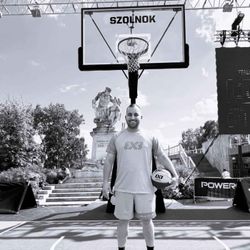
5. Miloš Jovanović : The Referee Bridging 5x5 and 3x3 Basketball
29:37||Season 1, Ep. 5International referee and lifelong basketball enthusiast, Miloš Jovanović moves between two worlds: traditional 5x5 basketball and the fast‑growing 3x3 format. Originally from Serbia and now based in Switzerland, he explains how an unexpected calling led him to officiate at the highest level. With a mix of physical preparation, strict rule mastery, and sharp on‑court communication, he describes a demanding role that is often underestimated. In this interview, he also reflects on the rapid rise of 3x3, a spectacular discipline booming in Switzerland and across the world.Interview by David Glaser. Read it on suississimo.com
4. Miguel Font : How Geneva Became the Birthplace of World Basketball (6th)
13:51||Season 1, Ep. 4When I meet Miguel Font on an early December morning, the encounter feels almost disarmingly simple. We meet at the Patrick Baumann House of Basketball in Mies, just outside Geneva—a place that quietly houses the heart of global basketball governance. Despite basketball being the world’s second most popular team sport, with more than 3.3 billion fans worldwide, the sport remains oddly misunderstood in Switzerland. Yet here, a dozen kilometers from Geneva, sits the epicenter of its international memory.The House of Basketball itself is a striking architectural gesture: shaped like a hand, its curves and structure subtly echo the geometry of a net. Far more than an office building, it is a cultural arena. The ground floor unfolds like a miniature world museum of basketball—objects, photos, documents, shoes, posters—each fragment narrating how the sport grew across continents and generations. At its core lies the world’s largest basketball library, open to researchers and curious visitors alike. Moving through the building feels like walking through the sport’s DNA.Guiding this universe of stories is Miguel Font, FIBA Foundation Historical Curator. Spaniard by nationality, multicultural by upbringing, and international by vocation, Font embodies the borderless nature of basketball itself. Born in Madrid to Moroccan and Portuguese parents, he grew up “in the streets,” as he likes to recall, the fifth of seven children. Basketball offered him structure and belonging. With characteristic humor, he describes himself as “short, overweight, and a very bad player,” yet he became a coach at just fourteen—later working in wheelchair basketball and spending more than twenty years on the sideline.What ultimately shaped his path was not athletic ambition, but curiosity. Font began collecting stories, objects, archives, and memories—anything that testified to the way basketball shapes people’s lives far beyond the court. This passion naturally aligned with the FIBA Foundation, where he now oversees the Cultural Heritage Unit. From Mies, his team manages collections, exhibitions, archives, research initiatives, and the storytelling arm of an organization that connects more than 200 national federations.For Font, basketball is a cultural phenomenon before it is a sport. Sneakers that became icons of music and street culture, films that shaped collective imagination, political histories embedded in games, Cold War narratives playing out on the court—his work curates all these intersections. One of the Foundation’s major projects, From the Court to the Big Screen, draws on hundreds of films to explore basketball’s cinematic life.Walking with Font through the House of Basketball feels like being guided by someone who not only knows the sport but feels its pulse. He speaks with equal passion about James Naismith’s legacy, the 1989 turning point that opened FIBA to professional players, the rise of 3x3 basketball, and the incredible multicultural ecosystem that now surrounds the game. His perspective is global yet grounded, historical yet forward-looking.“History teaches humility,” he tells me. Basketball, in his view, is a lens through which to read the 20th century—and perhaps to glimpse what comes next. In many ways, Miguel Font is not just a curator of basketball’s past. He is one of the storytellers shaping how the world understands the game’s future.David Glaser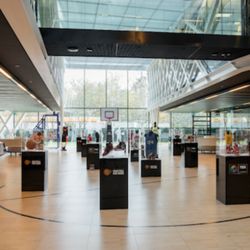
4. Miguel Font : How Geneva Became the Birthplace of World Basketball (5th part)
11:38||Season 1, Ep. 4When I meet Miguel Font on an early December morning, the encounter feels almost disarmingly simple. We meet at the Patrick Baumann House of Basketball in Mies, just outside Geneva—a place that quietly houses the heart of global basketball governance. Despite basketball being the world’s second most popular team sport, with more than 3.3 billion fans worldwide, the sport remains oddly misunderstood in Switzerland. Yet here, a dozen kilometers from Geneva, sits the epicenter of its international memory.The House of Basketball itself is a striking architectural gesture: shaped like a hand, its curves and structure subtly echo the geometry of a net. Far more than an office building, it is a cultural arena. The ground floor unfolds like a miniature world museum of basketball—objects, photos, documents, shoes, posters—each fragment narrating how the sport grew across continents and generations. At its core lies the world’s largest basketball library, open to researchers and curious visitors alike. Moving through the building feels like walking through the sport’s DNA.Guiding this universe of stories is Miguel Font, FIBA Foundation Historical Curator. Spaniard by nationality, multicultural by upbringing, and international by vocation, Font embodies the borderless nature of basketball itself. Born in Madrid to Moroccan and Portuguese parents, he grew up “in the streets,” as he likes to recall, the fifth of seven children. Basketball offered him structure and belonging. With characteristic humor, he describes himself as “short, overweight, and a very bad player,” yet he became a coach at just fourteen—later working in wheelchair basketball and spending more than twenty years on the sideline.What ultimately shaped his path was not athletic ambition, but curiosity. Font began collecting stories, objects, archives, and memories—anything that testified to the way basketball shapes people’s lives far beyond the court. This passion naturally aligned with the FIBA Foundation, where he now oversees the Cultural Heritage Unit. From Mies, his team manages collections, exhibitions, archives, research initiatives, and the storytelling arm of an organization that connects more than 200 national federations.For Font, basketball is a cultural phenomenon before it is a sport. Sneakers that became icons of music and street culture, films that shaped collective imagination, political histories embedded in games, Cold War narratives playing out on the court—his work curates all these intersections. One of the Foundation’s major projects, From the Court to the Big Screen, draws on hundreds of films to explore basketball’s cinematic life.Walking with Font through the House of Basketball feels like being guided by someone who not only knows the sport but feels its pulse. He speaks with equal passion about James Naismith’s legacy, the 1989 turning point that opened FIBA to professional players, the rise of 3x3 basketball, and the incredible multicultural ecosystem that now surrounds the game. His perspective is global yet grounded, historical yet forward-looking.“History teaches humility,” he tells me. Basketball, in his view, is a lens through which to read the 20th century—and perhaps to glimpse what comes next. In many ways, Miguel Font is not just a curator of basketball’s past. He is one of the storytellers shaping how the world understands the game’s future.David Glaser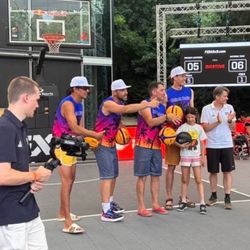
4. Miguel Font : How Geneva Became the Birthplace of World Basketball (4th part)
18:34||Season 1, Ep. 4When I meet Miguel Font on an early December morning, the encounter feels almost disarmingly simple. We meet at the Patrick Baumann House of Basketball in Mies, just outside Geneva—a place that quietly houses the heart of global basketball governance. Despite basketball being the world’s second most popular team sport, with more than 3.3 billion fans worldwide, the sport remains oddly misunderstood in Switzerland. Yet here, a dozen kilometers from Geneva, sits the epicenter of its international memory.The House of Basketball itself is a striking architectural gesture: shaped like a hand, its curves and structure subtly echo the geometry of a net. Far more than an office building, it is a cultural arena. The ground floor unfolds like a miniature world museum of basketball—objects, photos, documents, shoes, posters—each fragment narrating how the sport grew across continents and generations. At its core lies the world’s largest basketball library, open to researchers and curious visitors alike. Moving through the building feels like walking through the sport’s DNA.Guiding this universe of stories is Miguel Font, FIBA Foundation Historical Curator. Spaniard by nationality, multicultural by upbringing, and international by vocation, Font embodies the borderless nature of basketball itself. Born in Madrid to Moroccan and Portuguese parents, he grew up “in the streets,” as he likes to recall, the fifth of seven children. Basketball offered him structure and belonging. With characteristic humor, he describes himself as “short, overweight, and a very bad player,” yet he became a coach at just fourteen—later working in wheelchair basketball and spending more than twenty years on the sideline.What ultimately shaped his path was not athletic ambition, but curiosity. Font began collecting stories, objects, archives, and memories—anything that testified to the way basketball shapes people’s lives far beyond the court. This passion naturally aligned with the FIBA Foundation, where he now oversees the Cultural Heritage Unit. From Mies, his team manages collections, exhibitions, archives, research initiatives, and the storytelling arm of an organization that connects more than 200 national federations.For Font, basketball is a cultural phenomenon before it is a sport. Sneakers that became icons of music and street culture, films that shaped collective imagination, political histories embedded in games, Cold War narratives playing out on the court—his work curates all these intersections. One of the Foundation’s major projects, From the Court to the Big Screen, draws on hundreds of films to explore basketball’s cinematic life.Walking with Font through the House of Basketball feels like being guided by someone who not only knows the sport but feels its pulse. He speaks with equal passion about James Naismith’s legacy, the 1989 turning point that opened FIBA to professional players, the rise of 3x3 basketball, and the incredible multicultural ecosystem that now surrounds the game. His perspective is global yet grounded, historical yet forward-looking.“History teaches humility,” he tells me. Basketball, in his view, is a lens through which to read the 20th century—and perhaps to glimpse what comes next. In many ways, Miguel Font is not just a curator of basketball’s past. He is one of the storytellers shaping how the world understands the game’s future.David Glaser