Share
The Diabetic Mammy Podcast
After Christmas With Type 1 Diabetes:
For many families, the 6th of January marks the true end of Christmas. In Ireland, it is known as Nollaig na mBan, Women’s Christmas, a day that traditionally honours the invisible work carried by women and offers a long-overdue pause.
In this reflective episode of The Diabetic Mammy Podcast, I explore what it means to return to diabetes routines after the holidays without guilt, rigidity, or pressure. We talk about the hidden labour of Christmas when living with or parenting type 1 diabetes, the emotional dip that often follows the festivities, and why blood sugars, energy, and routines rarely realign at the same pace.
This is a gentle conversation about recalibration rather than correction. A push back against “New Year, New You” culture, and an invitation to choose kind, realistic, and sustainable intentions for the year ahead.
If January feels heavy, if decision fatigue is creeping in, or if you’re finding the transition back to routine harder than expected, this episode is for you.
A soft landing. A moment of recognition. And permission to move slowly.
The Diabetic Mammy is the heartfelt, no-nonsense podcast where type 1 diabetes meets motherhood, community, and a whole lot of real talk. Hosted by Catherine, a mammy navigating the highs and lows of type 1 diabetes, each episode blends personal insight with practical wisdom, offering support for parents, carers, and anyone living with or loving someone with diabetes. From tech transitions and hospital diagnoses to school lunches and stolen sleep, this podcast embraces the messy, meaningful moments that make up life with chronic illness. Whether you’re newly diagnosed or a seasoned warrior, The Diabetic Mammy is your space to feel seen, supported, and never alone.
Connect with Catherine by email on catherine@abundantlydiabetes.com or reach her on Instagram: TheDiabeticMammy
More episodes
View all episodes

50. The Lion on My Shoulder: Why Hypoglycaemia Changes Behaviour (#50)
11:58||Ep. 50When blood sugar drops, behaviour can change in ways that confuse or alarm the people around us. In this episode of The Diabetic Mammy, Catherine explores the psychology of hypoglycaemia and why people with low blood sugar may appear argumentative, emotional, or unwilling to accept help. Through practical insight and lived experience, she explains the biology behind these moments and offers gentle strategies for supporting someone through a low. A helpful listen for parents, partners, teachers, and anyone wanting to better understand hypoglycaemia behaviour.
49. Inside Hypoglycaemia: When Help Turns Into Takeover and Dignity is Lost (#49)
06:42||Ep. 49What does low blood sugar (hypoglycaemia) really feel like from the inside? In this episode of The Diabetic Mammy Podcast, Catherine explores why people often panic when someone with type 1 diabetes is going low, and why the instinct to call an ambulance is not always the right response. We unpack the reality of hypoglycaemia behaviour, the dignity and autonomy of the person experiencing it, and the simple question that helps most: “What do you need?” A compassionate look at supporting someone through a low blood sugar safely.
48. High Blood Sugar Symptoms Hiding in Plain Sight: What Hyperglycaemia Actually Feels Like (#48)
11:04||Ep. 48In this episode of The Diabetic Mammy, we explore hyperglycaemia (high blood sugar) in type 1 diabetes, not just as a number on a glucose monitor, but as a real physical and emotional experience in the body. Catherine explains the symptoms of high blood sugar including fatigue, brain fog, thirst, irritability and dehydration, and why people living with diabetes can slowly lose awareness of how unwell high glucose levels make them feel. This episode gently explains why reducing high blood sugar improves energy, mood and quality of life, and why gradual improvement matters more than perfection.
47. The Low Before the Low: Understanding Looming Hypoglycaemia in Type 1 Diabetes (#47)
14:01||Ep. 47In this episode of The Diabetic Mammy, Catherine explores looming hypoglycaemia: the moment when blood glucose is falling but hasn’t yet reached a clinical low. Why can a perfectly “in-range” number suddenly feel frightening?Using the powerful comparison of a migraine aura, this episode unpacks the physiology, psychology and parenting realities of downward arrows, anticipatory fear and decision-making in type 1 diabetes. A gentle, practical conversation about recognising the signals, responding calmly, and living with the uncertainty that diabetes sometimes brings.
46. Making Extraordinary Look Ordinary (#46)
16:59||Ep. 46This special International Women’s Day episode of The Diabetic Mammy is an homage to the women who quietly carry diabetes in their bodies, their homes, and their hearts.In this reflective episode, Catherine explores the powerful parallels between the cultural figure of the Irish Mammy and the modern “diabetes mammy”, women who hold families together while simultaneously managing the relentless mental load of type 1 diabetes. From tracking glucose trends and midnight alarms to translating medical language into family life, the invisible labour of diabetes care often sits heavily on women’s shoulders. But this episode goes beyond motherhood.It honours every woman living with diabetes: navigating hormones, work, relationships, pregnancy, and everyday life while managing a condition that requires constant vigilance. It also recognises the partners, sisters, grandmothers, healthcare professionals and advocates who quietly sustain others through the daily realities of diabetes. With warmth, humour and honesty, Catherine reflects on the invisible load, the resilience, the community that forms between women in diabetes, and the quiet strength that makes extraordinary effort look completely ordinary.This episode is both recognition and permission: recognition for the immense work women do every day, and permission to acknowledge that carrying diabetes: whether personally or within a family is both powerful and exhausting.A tribute.A moment of solidarity.And a reminder that none of us carry this alone.
45. Growing Bodies-Moving Targets (#45)
10:49||Ep. 45What worked last month may stop working tomorrow.In this gentle educational episode within The Things We Were Not Taught series of The Diabetic Mammy Podcast, Catherine explores one of the most unsettling realities of parenting a child with type 1 diabetes: growth changes everything.From pre-puberty’s quiet insulin resistance to puberty’s loud hormonal shifts, this episode explains why insulin needs can suddenly rise, why ratios stop behaving, and why beautiful patterns can unravel overnight, even when you are doing everything “right”.We unpack the physiology behind growth hormone, cortisol and sex hormones, and how they increase insulin resistance. More importantly, we name the emotional whiplash that comes with changing baselines: the grief, the self-doubt and the quiet fear that you are losing control.This episode is a reframe: adjusting insulin is not regression. It is recalibration. Stability is not the goal, responsiveness is.If you are navigating rising insulin needs, creeping blood sugars, or the unpredictability of puberty with type 1 diabetes, this conversation will steady you. Growth is not mismanagement. It is biology. And you are allowed to move with it.🎧 A compassionate listen for parents, carers and anyone living with T1D who needs reminding that adaptation is not failure.
44. Decision Fatigue in Type 1 Diabetes (#44)
10:04||Ep. 44In Episode 9 the idea of decision burden in type 1 diabetes was introduced.In this episode, we go deeper. Because every number comes with a choice. And every choice carries weight.On their own, these decisions seem small. Together, they are relentless.Episode 44 explores the invisible toll of decision fatigue - the constant cognitive load, the pressure to get it right, and the quiet emotional thinning that follows. From everyday “should I bring backup?” moments to high-stakes insulin calls, we name the mental labour that so often goes unseen.If your brain feels like it is always on, this one is for you.We talk empathy, practical ways to ease the load, and why naming the burden matters.You are not weak. You are carrying more than most can see.🎧 Tune in for understanding, solidarity, and a little grace.
43. Why Blood Sugars Rise in the Morning - The Dawn Phenomenon Explained (#43)
13:12||Ep. 43In this gentle and grounding episode of The Diabetic Mammy Podcast, we explore one of the most frustrating and misunderstood parts of living with Type 1 diabetes: waking up high before the day has even begun.If you’ve ever opened your eyes, checked the monitor, and felt that sinking feeling of being “behind” before breakfast, this episode is for you.Catherine explains the dawn phenomenon in clear, compassionate terms, breaking down what is actually happening in the early hours of the morning. As part of The Things We Were Not Taught series, this episode fills in a crucial gap in diabetes education: understanding the body’s natural diurnal rhythm and the role of hormones like cortisol and growth hormone.This episode moves beyond numbers and into the emotional weight of starting the day in correction mode. It gently challenges the self-blame that so often accompanies morning highs and offers a softer, more biologically informed perspective, allowing us to reframe early morning highs as information, not failure.Because you cannot out-organise cortisol. You cannot out-care growth hormone. And perfectionism does not override physiology.If mornings have been feeling relentless, this conversation will help you start the day with understanding rather than criticism.You are not behind. You are informed.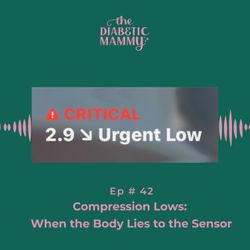
42. Compression Lows: When the Body Lies to the Sensor (#42)
14:01||Ep. 42Compression lows are one of those diabetes experiences that can feel frightening, disruptive, and deeply unsettling - yet are rarely explained clearly at diagnosis.In this episode of The Diabetic Mammy Podcast, Catherine explores what compression lows actually are, why they happen most often at night, and why they can so easily shake confidence in both the technology and ourselves.Through a real-life endocrinology appointment moment, this episode gently unpacks how pressure on a continuous glucose monitor during sleep can mimic falling glucose levels, triggering alarms that feel urgent - even when blood glucose is actually stable. These false alarms can lead to repeated night-time wakings, unnecessary treatments, broken sleep, and the familiar morning spiral of highs, frustration, and self-doubt.This episode is not about “doing better” or reacting perfectly at 3am.It’s about understanding what you’re seeing, reducing panic, and naming the invisible emotional load that compression lows carry - especially for parents and long-term carers who feel they “should know better by now.”Listeners are invited to reflect on the tension between trusting diabetes technology and trusting lived experience, and to recognise that there is no flawless decision-making in the middle of the night - only human decisions made with the best information we have available to us.Above all, this episode offers reassurance: Not all hypos are real. But the fear around them absolutely is.This conversation is part of The Things We Were Not Taught series - created to give families language, context, and permission where education may have left gaps short.A grounding listen for parents of children with Type 1 diabetes, adults living with diabetes themselves, and anyone who has ever been jolted awake by an alarm and left questioning their judgement.