Share
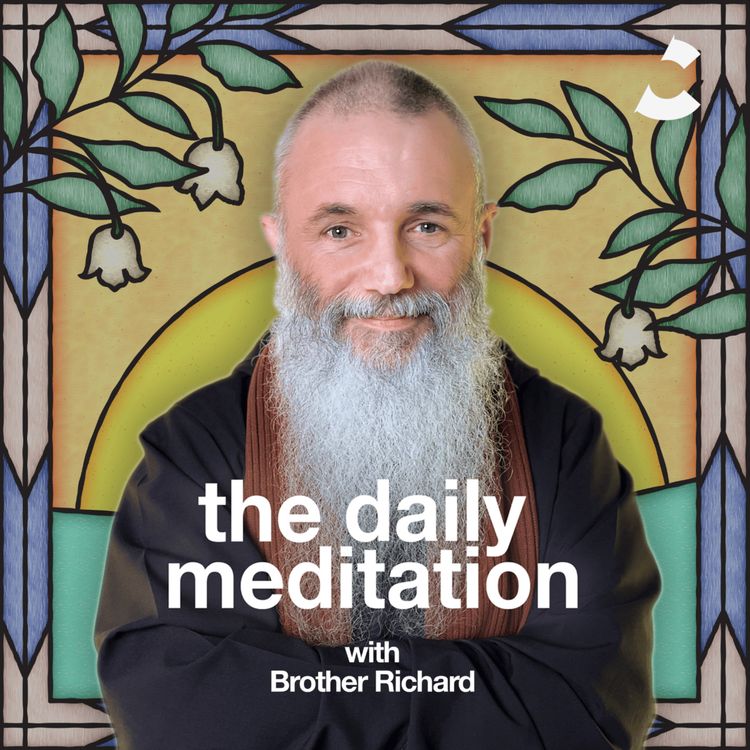
The Daily Meditation with Brother Richard
Elijah Meditation (Part 3): The Earthquake
In this meditation, I return to the story of Elijah in the First Book of Kings and to the archetypal map of meditation practice we find in his experience of the cave.
In previous meditations, we considered the storm as an image of the thoughts, sensations and emotions that can distract us when we seek stillness, and the fire as an image of our desire for reality to be different from what it is. Today we encounter Elijah’s third trial: the earthquake.
The earthquake represents those periods of life when what once seemed secure begins to shake. A relationship may end, a job may be lost, an identity may change, or an understanding we have carried about ourselves may begin to break down.
Elijah teaches us to abide. We return to the cave of stillness, to the breath, to the present moment and to divine grace. Every trial has a beginning and an end. The storm comes and goes. The fire comes and goes. The earthquake comes and goes.
Our practice cannot prevent difficult circumstances from arising, but it can help us discover a deeper stability from which to meet them. In the midst of change, uncertainty and suffering, we learn to abide in stillness, equanimity and peace.
Chapters:
00:00 – Introduction: Elijah and the earthquake
01:09 – Opening bell
01:25 – Entering the cave of stillness
02:07 – Grounding in the body and earth
02:53 – Anchoring ourselves in the breath
03:29 – The storm of thoughts and emotions
04:12 – Allowing the storm to come and go
04:36 – The fire of desire
05:05 – Working with reality as it is
05:27 – Abiding in sacred stillness
05:52 – The trial of the earthquake
06:28 – When what seemed secure begins to shake
06:57 – The breakdown of identity and ego
07:13 – Abiding through difficult times
08:07 – Returning to breath, stability and grace
08:33 – Growing in equanimity and peace
08:47 – Storm, fire and earthquake
09:37 – Nothing can remove our inner stability
10:21 – Remembering the teaching in difficult moments
10:55 – Closing bell
More episodes
View all episodes
250. Gratitude Meditation: Giving Thanks for Others
11:24||Ep. 250In this meditation, I return to the practice of gratitude and focus particularly on giving thanks for the people who have brought goodness, love and connection into our lives.Gratitude is one of the values at the heart of meditation. Learning to count our blessings and recognise what is good, even when circumstances are difficult, can help us develop greater equanimity and stability.After settling into the body and breath, we begin to bring to mind the people closest to us. They might be family members, friends, colleagues, teachers or simply people who have offered us kindness or inspiration along the way. We picture their faces, perhaps remember their voices, and notice the warmth that arises as we hold them in awareness.We consider the ways these people have blessed our lives and what we may have learned from them. At the same time, we acknowledge the nuanced reality of human relationships. Gratitude does not require us to pretend that relationships have been perfect. Sorrow and difficulty can coexist with genuine love and goodness.As we remember the support we have received, we make a resolution to become more loving, present and compassionate ourselves, allowing gratitude for others to shape the way we move through the world.Chapters:00:00 – Introduction: Gratitude for others 01:05 – Opening bell 01:16 – Settling into meditation 02:05 – Gratitude for the opportunity to meditate 02:53 – Finding the breath 03:27 – Breathing out stress and breathing in peace 03:55 – Bringing loved ones to mind 04:27 – Feeling the warmth of connection 05:11 – Recognising the gifts others bring 05:43 – Giving thanks for each person 06:13 – Holding someone in awareness 06:45 – What can we learn from others? 07:14 – Acknowledging the complexity of relationships 08:11 – Becoming more loving and compassionate 08:35 – Resting in a circle of connection 09:17 – Offering deliberate thanks 09:38 – What can these people teach us? 10:05 – Allowing the images to fade 10:41 – Returning to the body 11:15 – Resolving to walk in compassion and love 11:25 – Closing bell249. Prayer of Saint Francis Meditation (Part 3): Faith, Hope and Love
12:12||Ep. 249In this meditation, I continue our exploration of the meditative prayer of Saint Francis, moving from the search for light towards the fruits that can emerge from that search: faith, hope and love.We begin by deliberately choosing the time of meditation and settling into the stability of the body and breath. Returning to the prayer of Francis, we ask the Most High and glorious God to bring light to the darkness of our hearts, imagining that light filling our entire being.We then allow the prayer to deepen through three great virtues: right faith, certain hope and perfect love.Faith invites us to trust in the fundamental goodness at the heart of existence and in the grace of the present moment. Hope is not a naive belief that circumstances will automatically improve, but a deliberate choice that influences how we act and enables us to become bringers of hope to others. Love moves outward through compassion for ourselves, for others and for all that is.The prayer ultimately becomes a challenge as well as a comfort: to choose faith, choose hope and choose love, and in doing so to become a place where light can enter the world.Chapters:00:00 – Introduction: Faith, hope and love 00:39 – Opening bell 00:50 – Deliberately choosing meditation 01:19 – Settling into the breath 02:14 – Breathing out tension and breathing in peace 03:15 – Bring light to the darkness of my heart 03:40 – Filling the whole being with light 04:37 – Right faith, certain hope, perfect love 05:29 – The light of faith 06:18 – Choosing hope as a discipline 07:27 – Becoming bringers of hope 08:00 – Perfect love and compassion 08:55 – Knowing ourselves as beloved 09:04 – Returning to the prayer of Saint Francis 09:42 – Choosing faith, hope and love 10:18 – Becoming a place where light enters 10:30 – Pursuing truth, goodness and compassion 11:00 – Carrying the prayer into daily life 11:52 – Closing bell248. Heart Meditation: Engaging the Heart
13:27||Ep. 248In this meditation, I explore the importance of engaging the heart in our contemplative practice. Meditation is sometimes imagined as something purely cerebral, distancing us from feelings or emotions. In the tradition to which I belong, the opposite is true. Our emotional life is acknowledged as part of the fullness of who we are.We begin by noticing our emotional weather without judgement. Whatever feelings are present are allowed to be present. As the body settles, we gently release tension from the jaw, throat, chest, shoulders and abdomen, areas where emotion and physical tension can often be held.We then bring our awareness to the centre of the chest and imagine a field of rose-white light emerging from the heart. This heart is more than the physical organ. It represents the affective centre of our being: a place of true desire, love, longing and our hunger for communion with the divine.Resting in this awareness, we consider the heart as an inner compass capable of orientating our decisions, relationships and actions towards compassion, grace and love.Drawing on the words of Saint Augustine, we finish by recognising the deep restlessness of the human heart and its longing to rest in divine love.Chapters:00:00 – Introduction: Engaging the heart 01:06 – Opening bell 01:17 – Checking our emotional weather 02:36 – Settling the body and breath 03:03 – Releasing tension from the jaw and face 04:09 – Relaxing the chest and shoulders 05:10 – Emotions and the solar plexus 05:56 – Following the breath through the body 06:36 – Resting awareness in the heart 07:18 – Visualising the rose-white light 08:19 – The heart as the centre of desire and love 09:23 – The heart as an inner compass 10:02 – Expanding the field of love 10:57 – Aligning our lives with the heart 11:59 – Returning the light to the heart 12:41 – Resolving to live from love and compassion 13:19 – Saint Augustine and the restless heart 13:57 – Returning to the day 14:11 – Closing bell247. Reset Meditation: Recovering the Form
11:06||Ep. 247In this meditation, I return once again to the basic form of relaxation that leads us towards stillness. Repeating this foundational practice from time to time helps us develop what we might call the muscle memory of meditation, making it easier to enter a meditative state whatever circumstances we find around us or within us.We begin by deliberately crossing the threshold into meditation, perhaps using a simple ritual gesture to mark this time as sacred and special. From there, we establish a stable sitting posture and become aware of our connection with the ground, the earth and everything supporting the body.Moving slowly through the body, we notice areas of stress or tension and allow the breath to bring relaxation, warmth and calm. We then turn towards our thoughts and emotions, observing them without judgement or censorship.As the practice deepens, we recognise that while we have a body, thoughts and feelings, we are more than any one of these things. At the centre of the breath, we encounter a place of stillness and rest our attention there.This is a useful meditation for anyone beginning a meditation practice, returning after some time away, or simply wanting to reconnect with the foundational form that supports a deeper contemplative practice.Chapters:00:00 – Introduction: Recovering the form00:49 – Opening bell00:58 – Crossing the threshold into meditation01:40 – Finding a stable sitting posture02:13 – Grounding through the earth03:12 – Asking: How am I?03:50 – Scanning the body04:33 – Releasing tension and stress05:26 – Relaxing the whole body06:42 – I have a body, but I am more than my body06:58 – Noticing thoughts and emotions07:35 – More than thoughts and feelings08:10 – Finding the still point of the breath09:15 – Resting in pure awareness09:39 – Choosing to meditate for ourselves and others10:14 – Returning to the body and the earth10:44 – Carrying peace into the day10:57 – Closing bell246. Peace and Joy Meditation: The Fruits of Practice
12:31||Ep. 246In this meditation, I reflect on the fruits of meditation practice and the difference our practice can make beyond the time we spend sitting in stillness. Meditation can offer relaxation and rest, but its deeper value is found in the way it gradually shapes how we relate to ourselves, to others and to the circumstances of daily life.We begin by noticing what it is like simply to enter meditation. There may be openness, resistance, discipline or a hunger for stillness. Rather than judging any of these reactions, we meet them with curiosity and allow ourselves to become present to the body, the breath, our thoughts and our feelings.From this place of awareness, we consider what our meditation practice is producing in our lives. Can we notice a difference between the days when we meditate and the days when we do not? Can we recognise the beginnings of greater peace, stability or joy?The meditation then focuses on peace and joy as fruits of practice. Peace is not a flatness or withdrawal from life, but the ability to remain connected to an inner stillness even when circumstances around us are unsettled. Joy, similarly, is more than a response to happy circumstances. It can emerge from the deeper knowledge that we are held in unconditional and infinite divine love.This meditation offers an opportunity to reflect on your own daily meditation practice and to gently cultivate the seeds of peace and joy already present within it.Chapters:00:00 – Introduction: The fruits of meditation00:50 – Opening bell01:04 – Entering the time of meditation01:56 – Sitting with awareness02:52 – Noticing body, thoughts and emotions03:57 – Deepening into the breath04:58 – What is the truth of my meditation practice?06:38 – How meditation permeates our lives07:10 – The fruit of peace08:22 – Touching the peace within08:38 – The fruit of joy09:31 – Resting as the beloved10:28 – Breathing in peace and breathing out joy11:03 – Seeking the seeds of peace and joy12:11 – Returning to the day12:25 – Closing bell245. Moon Meditation: Trusting the Changing Phases
10:23||Ep. 245In this meditation, I turn to the moon as an ancient image of the contemplative life.Across many meditation traditions, the changing phases of the moon have been used as a symbol of our own inner experience. The moon grows towards fullness, gradually fades, disappears and then begins again.Our meditation practice can move through similar phases.There are times when awareness feels clear, full and bright. At other times, we may experience distraction, tiredness, uncertainty or even a sense that our practice has disappeared altogether.The moon reminds us that none of these phases is permanent.We begin by settling into the body and breath before recalling the last time we noticed the moon. From there, we allow its different phases to become images of growth, fullness, decline and renewal within our own lives.In the Franciscan tradition, the moon is affectionately called Sister Moon, accompanying us through the darkness with reflected light.This meditation offers a gentle practice of patience, perseverance and acceptance, reminding us to continue through every phase and trust that light will return.Chapters: 00:00 – Introduction: The moon as an image of meditation 01:57 – Opening bell 02:30 – Settling through the senses 03:10 – Resting in the breath 04:20 – Remembering the moon 05:29 – Learning from its changing phases 06:00 – Seasons of growth and decline 06:25 – Accepting the phase you are in 06:59 – Visualising the cycle of the moon 07:26 – The changing phases of meditation 08:10 – Resting beneath the night sky 08:59 – Letting the image fade 09:19 – Carrying the moon’s lesson forward 09:45 – Returning from meditation 09:55 – Closing bell244. Versiculum Meditation: Returning to the Little Word
09:39||Ep. 244In this meditation, I return to the ancient contemplative practice of the versiculum — the “little word.”A versiculum is a short sacred word or phrase repeated inwardly during meditation. Used alongside the breath, it becomes a strong anchor that can help steady attention and draw us away from distraction.We begin by settling into the body and senses before bringing awareness gently to the rhythm of breathing. When thoughts, emotions or inner narratives arise, we simply notice them and return to the breath.From there, we choose a word or short phrase that feels appropriate for this particular meditation. It might be a traditional sacred word such as Maranatha, a simple word such as “peace” or “calm,” or another phrase that arises naturally.Rather than forcing the word to match the breath, we allow each to find its own rhythm until word and breath begin to work together.Eventually the word fades, leaving only the breath and the present moment.This meditation offers a practical method for developing concentration, contemplative prayer and a simple anchor that can also be used throughout everyday life.Chapters:00:00 – Introduction: Returning to the versiculum01:22 – Opening bell01:54 – Settling into the body and senses02:46 – Bringing awareness to the breath03:41 – Returning when distraction arises04:33 – Choosing a sacred word or phrase04:52 – Examples of the little word05:19 – Finding the word that calls to you05:48 – Learning the shape and sound of the word06:32 – Repeating the word in stillness07:22 – Silent practice with the versiculum08:03 – Bringing word and breath together08:42 – Allowing the word to fade09:06 – Using the word throughout the day09:26 – Returning to the body09:39 – Closing bell243. Autumn Meditation: Embracing the Season You Are In
11:32||Ep. 243In this meditation, I use the changing seasons — particularly the movement into autumn — as a way of reflecting on change within our own lives.Meditation invites us into the present moment, but the present moment itself is always moving. Seasons change, weather shifts and our own circumstances continually unfold.We begin by grounding ourselves in the earth beneath us and becoming aware of its constant movement. Just as nature gradually passes from spring into summer, autumn and winter, our lives also move through different seasons.The tree becomes our central image. It does not resist the season it finds itself in. Bud, leaf, fruit and bare branch each belong to a different moment.In the same way, meditation can help us ask what response is appropriate to this particular season of our own life. What needs nourishment? What needs to be released? What might peace or joy look like here, rather than in some other season?This practice offers support during periods of transition and change, encouraging acceptance, grounding, compassion and trust in the present moment.Chapters: 00:00 – Introduction: Meditation and the changing seasons 00:52 – Opening bell 01:21 – Receiving meditation as a gift 02:24 – Grounding in the earth 03:18 – Moving through the seasons 03:56 – Entering autumn 04:54 – Our emotional response to change 05:32 – Learning from the tree 06:13 – Accepting the season of your life 06:40 – Letting go of the narrative 07:16 – Responding appropriately to the moment 08:07 – What does this season ask of me? 09:00 – Rooted like the tree 09:21 – Growing towards the future 10:18 – Returning to the body 10:32 – Intending to live seasonally 11:08 – Preparing to return 11:16 – Closing bell